
lovethailand home >North Travel Attractions >Chiang Mai Travel Attractions >Muang Chiang Mai >Pa Daet > Wat Ton Tan Ton
TL;DR: Wat Ton Tan Ton is located at Pa Daet Subdistrict, Mueang Chiang Mai District, Chiang Mai Province, open Daily, hours 08.00 – 17.00.

Wat Ton Tan Ton
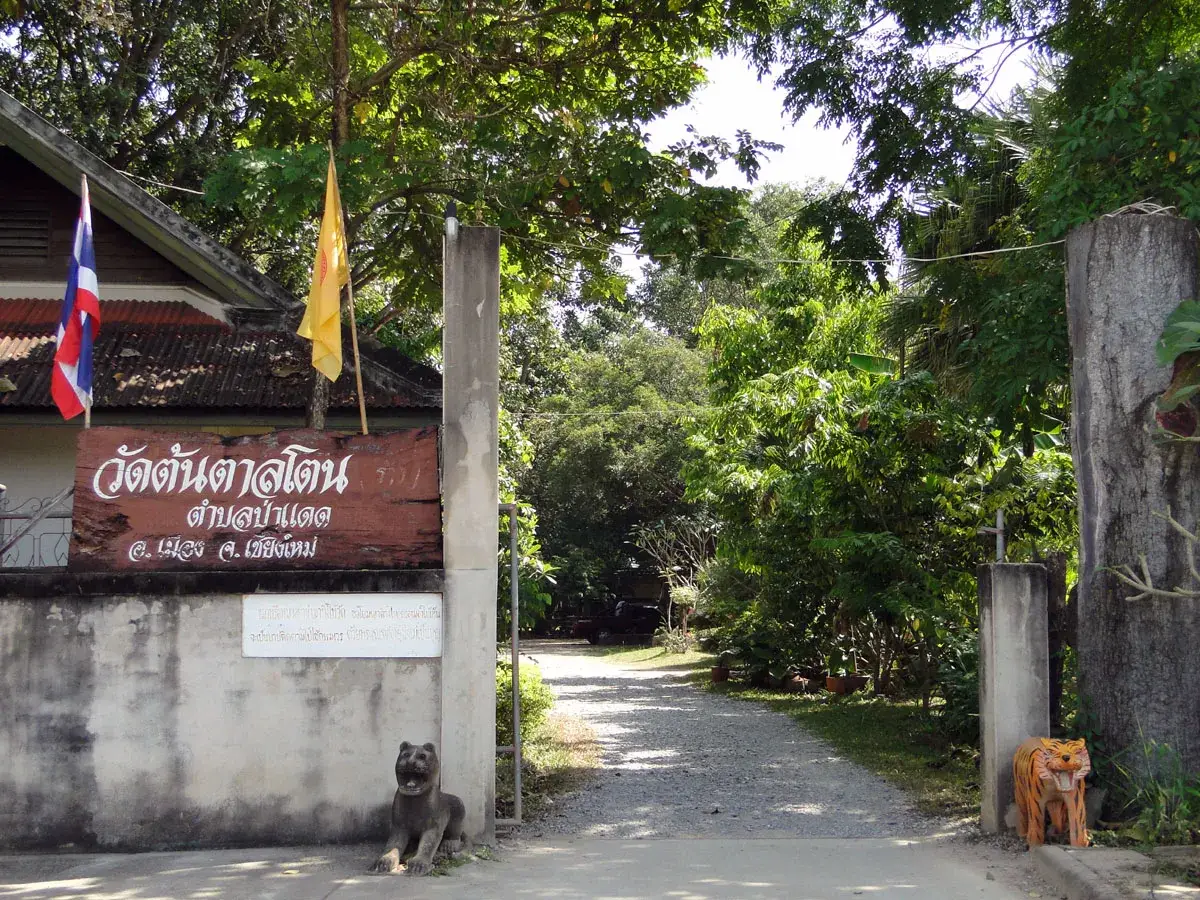
Open Days: Daily
Opening Hours: 08.00 – 17.00
Wat Ton Tan Ton is a historic Buddhist temple and meditation-oriented monastery in Pa Daet Subdistrict, Mueang Chiang Mai District, Chiang Mai Province. Located southeast of central Chiang Mai, about 6 km from the city, the temple is suitable for travelers who want to make merit, pay respect, observe a quieter side of Chiang Mai, and learn about a former abandoned temple that was revived as a peaceful religious site in 1980. Its key features include a shaded and quiet atmosphere, the Yim Hall for chanting and meditation, a viharn, a kitchen building, monastic residences, an old well, the original temple base, and its connection with Luang Por Sanong Katapunyo of Wat Sanghathan in Nonthaburi.
Wat Ton Tan Ton shows a side of Chiang Mai that is different from the famous temples inside the Old City. Pa Daet is a southern community area of Mueang Chiang Mai, located near the Ping River and connected with older settlements, local roads, Buddhist temples, and cultural routes around Wiang Kum Kam. The temple is therefore meaningful for travelers who want a calm, local, and less commercial temple experience.
The name Ton Tan Ton evokes the image of tall palm trees and an old natural landscape. The name fits the character of the temple, which is known for its greenery, stillness, and meditative atmosphere. It is not a temple designed mainly for sightseeing. It is a place where visitors should slow down, keep quiet, and approach the space with respect.
Local history describes Wat Ton Tan Ton as an old temple southeast of Chiang Mai city. According to the account preserved by local elder Pho Nan Intha, aged 90, the site became a temple after Burmese forces withdrew from military campaigns against northern Chiang Mai. This story gives the temple a deep layer of community memory and shows how local people understand the site as an old sacred place rather than a newly established religious compound.
The local account also states that Wat Ton Tan Ton may have been established around 600–700 years ago, close to the period associated with the founding of Chiang Mai. The narrative mentions King Mengrai of Chiang Mai, King Ramkhamhaeng of Sukhothai, and King Ngam Muang of Phayao. Although this history is preserved as local oral tradition, it is important because it shows how strongly the temple is connected with the cultural memory of Pa Daet and northern Thailand.
Another important historical layer is the account that King Mueang Kaeo of the Mangrai dynasty restored the temple in B.E. 2065, corresponding to 1522. This links Wat Ton Tan Ton with Lanna history and the wider Buddhist landscape of Chiang Mai. The temple should therefore be understood through several periods: the early local memory, a period of prosperity, abandonment after flooding, and its modern revival as a meditation-oriented monastery.
In the past, Wat Ton Tan Ton was said to have been a prosperous temple with around 50–60 rai of land. It had a viharn to the north and monks’ residences to the west of the well. Around 200 years ago, a major flood caused the temple to fall into abandonment, and the religious center was moved eastward by about 3 km, linking the history of this site with Wat Pa Daet in the present day. This part of the story shows the strong relationship between temples, waterways, and settlement patterns in southern Chiang Mai.
Several old traces still help visitors understand the temple’s earlier life. A field record from a Chiang Mai temple documentation blog notes that the current ordination hall was built on the original temple base and that an old well remains within the temple area, with old brickwork below. These details make Wat Ton Tan Ton more than a revived meditation place. It is a site where the old sacred ground and the present religious community meet.
The modern revival of Wat Ton Tan Ton began in B.E. 2523, corresponding to 1980, when a wandering monk named Phra Ajarn Phongsak discovered the site. He was the younger brother of Luang Por Sanong Katapunyo of Wat Sanghathan in Nonthaburi. At that time, the area was a bamboo grove of a little over 2 rai, quiet, secluded, and suitable for meditation. Phra Ajarn Phongsak cleaned the area, practiced meditation there, and gradually brought religious life back to the site.
When nearby villagers saw the monk practicing there, they began to make merit and support the site. His disciplined conduct and quiet practice inspired local faith. Some villagers came to listen to Dhamma teachings, while others helped provide the basic support needed for monks to stay. The revival of Wat Ton Tan Ton therefore began not from large buildings, but from meditation, local faith, and the cooperation between monks and lay supporters.
In the early stage of revival, basic monastic structures were built, including monks’ residences, toilets, and bathrooms. As more lay supporters came to make merit, another hall was built for chanting, worship, and meditation. This hall was named Sala Yim, or Yim Hall. The name gives a gentle and welcoming feeling, matching the temple’s role as a place for calm practice rather than display. Later, a viharn and kitchen were added to serve monks, devotees, and meditation practitioners.
Luang Por Sanong Katapunyo later accepted Wat Ton Tan Ton under his care as the 9th branch of Wat Sanghathan in Nonthaburi. Monks from the Sanghathan lineage continued to stay at the temple, giving Wat Ton Tan Ton a clear identity as a place of simple practice, discipline, chanting, meditation, and Buddhist observance. This connection distinguishes the temple from general sightseeing temples in Chiang Mai.
Luang Por Sanong gave the place the name Samnak Pa Anthawan, meaning a dark and quiet forest. The name reflects the intended character of the site: a shaded, secluded, and peaceful place for inner training. Today, the temple is known as Wat Ton Tan Ton and covers a little over 6 rai. Its atmosphere still reflects the idea of a forest retreat within the urban edge of Chiang Mai.
Wat Ton Tan Ton remains important as a place where laymen and laywomen come to make merit and observe precepts on Buddhist holy days. This ongoing practice gives the temple real religious life. It is not merely a place to view buildings. It is a space for chanting, meditation, merit-making, ethical training, and quiet reflection. Visitors should therefore understand the temple as an active spiritual place rather than a conventional attraction.
The temple’s setting is shaded, peaceful, and set back from the busier roads. It is not a highly visible roadside temple. Travelers need to enter local lanes within Pa Daet and the Ban Rong Ruea Kham area. This tucked-away location strengthens the atmosphere of seclusion. Visitors will find a quieter rhythm, more trees, and a feeling of retreat from the city, even though the temple is still not far from central Chiang Mai.
The ordination hall is one of the most meaningful areas because it stands on the original temple base. Temples that were abandoned and later revived often carry a special character: the old site is not erased, but given a new role. At Wat Ton Tan Ton, the old foundation helps connect the ancient religious ground with the present-day meditation community.
The old well is another valuable element of the temple compound. In traditional Thai temple communities, wells were linked with settlement, daily use, monastic life, and ritual functions. The continued presence of the well in the temple’s history gives the site a cultural-landscape dimension. It shows that Wat Ton Tan Ton was once connected with the ordinary life of monks and villagers, not only with formal religious structures.
Some religious structures were built after the revival period. A later record notes that a stupa was constructed around B.E. 2546, corresponding to 2003, and that its base is connected with the cremation structure of a former abbot. The craftsmanship involved artisans from outside Chiang Mai as well as Lanna artisans. These details show how revived temples often combine old sacred memory with new devotional construction supported by lay faith.
Sala Yim is a central space for chanting and meditation. Its name may sound simple, but it carries a gentle meaning. Buddhist practice is not only about strictness. It is also about returning to calmness, kindness, and clarity. The hall represents the welcoming spirit of Wat Ton Tan Ton as a place where people can practice Dhamma in a simple and approachable way.
The viharn serves as another worship area, while the kitchen supports temple activities when laypeople and meditation practitioners gather. The presence of a kitchen, monastic residences, and meditation spaces shows that Wat Ton Tan Ton functions as a living religious site. It supports real activity: offering food, chanting, observing precepts, staying for practice, and gathering during important Buddhist occasions.
The significance of Wat Ton Tan Ton lies in the way it brings together ancient local memory, abandonment, revival by a wandering monk, support from Luang Por Sanong Katapunyo, and the faith of Pa Daet residents. Its value is not based on size or grandeur. Its value comes from continuity, revival, and its role as a quiet place for spiritual practice.
For travelers interested in local history, Wat Ton Tan Ton is a strong example of a temple with both old oral tradition and modern revival history. It was once remembered as a large and prosperous temple, later abandoned after flooding, and then brought back to life through meditation and community support. This shows that a Thai temple can change over time: it can be abandoned, revived, renamed, re-supported, and returned to the spiritual life of the community.
Wat Ton Tan Ton is best suited for visitors who want a peaceful temple visit rather than a fast sightseeing stop. A meaningful visit should begin with worship in the main temple area, followed by quiet observation of Sala Yim, the ordination hall, the old temple base, the old well, the viharn, the kitchen, and the meditation spaces. If visitors arrive on a Buddhist holy day, they should be especially careful not to disturb those who are observing precepts or practicing meditation.
Proper conduct is important at Wat Ton Tan Ton. Visitors should dress modestly, speak quietly, avoid entering monastic or meditation areas without permission, avoid touching sacred objects unnecessarily, and photograph respectfully. Since the temple is an active meditation and merit-making place, respect for monks and practitioners should come before photography or sightseeing.
Getting to Wat Ton Tan Ton is convenient from central Chiang Mai. Travelers can head south toward Pa Daet using Chiang Mai-Hod Road, Mahidol Road, or the ring road, then enter the smaller lanes leading toward the temple. Visitors using a private car, taxi, or ride-hailing service should search specifically for Wat Ton Tan Ton, Pa Daet, Mueang Chiang Mai to avoid confusion with similarly named places.
Wat Ton Tan Ton can be combined with several nearby cultural attractions. A half-day route can include Wat Pa Daet, Wat Don Chai, Wat Tha Mai I, Wat Chedi Liam, Wat That Khao Archaeological Site, and Wiang Kum Kam. This route is suitable for travelers who want to explore Chiang Mai’s southern cultural landscape and avoid the busiest Old City temple circuit.
The best time to visit Wat Ton Tan Ton is in the morning or late afternoon, when the weather is more comfortable and the temple atmosphere is calm. On Buddhist holy days, visitors may see local merit-making and precept-observance activities. Those who want a quieter visit should come on a weekday and allow enough time to walk slowly and respectfully through the compound.
Wat Ton Tan Ton is a valuable destination for travelers who want to understand Chiang Mai beyond its famous landmarks. The temple carries local memory, Lanna religious history, traces of an abandoned sacred site, revival by a wandering monk, and an ongoing role as a meditation-oriented temple in Pa Daet. It is not famous because of spectacle. It is meaningful because it continues to offer peace, practice, and spiritual refuge within the southern edge of Chiang Mai city.
For those interested in Chiang Mai temples, northern Thai Buddhist culture, and quieter faith-based travel, Wat Ton Tan Ton adds an important layer to the city’s story. It shows how one temple can hold ancient memory, forest atmosphere, meditation practice, local devotion, and community activity in the same place. A visit to Wat Ton Tan Ton is therefore a short journey with lasting value: a chance to experience a peaceful temple that still serves as a living spiritual space in Pa Daet.
| Name | Wat Ton Tan Ton |
| Location | Pa Daet Subdistrict, Mueang Chiang Mai District, Chiang Mai Province |
| Address | Pa Daet Subdistrict, Mueang Chiang Mai District, Chiang Mai 50100, Thailand, near the Chiang Mai-Hod Road area |
| Highlights | A revived historic temple and meditation-oriented monastery with a shaded atmosphere, Sala Yim, ordination hall on the old temple base, old well, viharn, kitchen building, and connection with Luang Por Sanong Katapunyo of Wat Sanghathan |
| History | Local tradition says the temple was established around 600–700 years ago, restored by King Mueang Kaeo in B.E. 2065, later abandoned after major flooding, and revived from B.E. 2523 onward |
| Name Origin | The name relates to the palm-tree landscape and the temple’s quiet forest atmosphere; Luang Por Sanong Katapunyo also named the place Samnak Pa Anthawan, meaning a dark and peaceful forest |
| Distinctive Features | A quiet Pa Daet temple and meditation site suitable for worship, merit-making, precept observance, and meditation |
| Important Areas | Sala Yim, viharn, ordination hall on the old temple base, old well, monastic residences, kitchen building, and meditation spaces |
| Traditions / Rituals | Buddhist holy day merit-making, precept observance, chanting, worship, meditation practice, and community Buddhist activities |
| Travel Information | Travel south from central Chiang Mai toward Pa Daet by private car, taxi, or ride-hailing service; search specifically for Wat Ton Tan Ton, Pa Daet, Mueang Chiang Mai |
| Current Status | Open for visits, worship, merit-making, and meditation practice |
| Open Days | Daily |
| Opening Hours | 08.00 – 17.00 |
| Fees | No admission fee |
| Facilities | Parking, worship area, chanting area, meditation area, toilets, and kitchen building |
| Main Areas / Zones | Sala Yim, viharn, ordination hall, old temple base, old well, monastic residences, kitchen building, and shaded meditation spaces |
| Main Contact Number | 053-272-143 |
| Nearby Tourist Attractions | 1. Wat Pa Daet, about 1 km 2. Wat Don Chai, about 1 km 3. Wat Chedi Liam, about 2 km 4. Wat That Khao Archaeological Site, about 2 km 5. Wiang Kum Kam, about 3 km 6. Wat Tha Mai I, about 3 km |
| Nearby Restaurants | 1. Im Jai Cut Fruit - Soi Warun, about 0.1 km, Tel. 093-005-6435 2. Connect Coffee, about 1 km, Tel. 095-697-5445 3. Kaewnamah, about 1 km, Tel. 088-626-4159 4. Café Amazon - DD4352 Nakara Petroleum Station, about 1 km, Tel. 061-212-1564 5. Ros Khon Nam Ya Pu Chiang Mai, about 1 km, Tel. 097-253-5996 6. MK Restaurants Tesco Lotus Hang Dong Chiang Mai, about 1 km, Tel. 083-099-6243 |
| Nearby Accommodations | 1. The Connect Chiang Mai, about 1 km, Tel. 095-697-5445 2. Hom Baan Chiang Mai, about 1 km, Tel. 092-157-6497 3. Joy Homes Private Pool Villa, about 1 km, Tel. 064-159-9989 4. PHU FA GARDEN HOME, about 1 km, Tel. 095-698-8138 5. CHEVA Gallery Boutique Hotel, about 1 km, Tel. 065-348-6866 6. Harmony Resort Hotel, about 2 km, Tel. 053-271-616 |
Frequently Asked Questions (FAQ)
Q: Where is Wat Ton Tan Ton located?
A: Wat Ton Tan Ton is located in Pa Daet Subdistrict, Mueang Chiang Mai District, Chiang Mai Province, about 6 km southeast of central Chiang Mai.
Q: What are the opening hours of Wat Ton Tan Ton?
A: Wat Ton Tan Ton is open daily from 08.00 to 17.00 for worship, merit-making, and meditation practice.
Q: Is there an admission fee for Wat Ton Tan Ton?
A: No. Visitors can enter the temple without an admission fee.
Q: What is the history of Wat Ton Tan Ton?
A: Local tradition says the temple dates back around 600–700 years, was restored during the time of King Mueang Kaeo, later became abandoned after major flooding, and was revived in 1980 by a wandering monk and local supporters.
Q: What is Wat Ton Tan Ton known for?
A: The temple is known for its peaceful forest-like atmosphere, Sala Yim, ordination hall on the old temple base, old well, viharn, kitchen building, and connection with the Wat Sanghathan lineage.
Q: What type of visit is Wat Ton Tan Ton suitable for?
A: It is suitable for merit-making, quiet temple visits, precept observance, meditation, and a cultural route through Pa Daet and Wiang Kum Kam.
Q: How should visitors behave at Wat Ton Tan Ton?
A: Visitors should dress modestly, speak quietly, avoid disturbing monks or meditation practitioners, and photograph respectfully within the temple compound.
 Category: ●Places of Worship
 Group: ●Temple
Last Update : 1 WeekAgo
 Last Update : 1 WeekAgo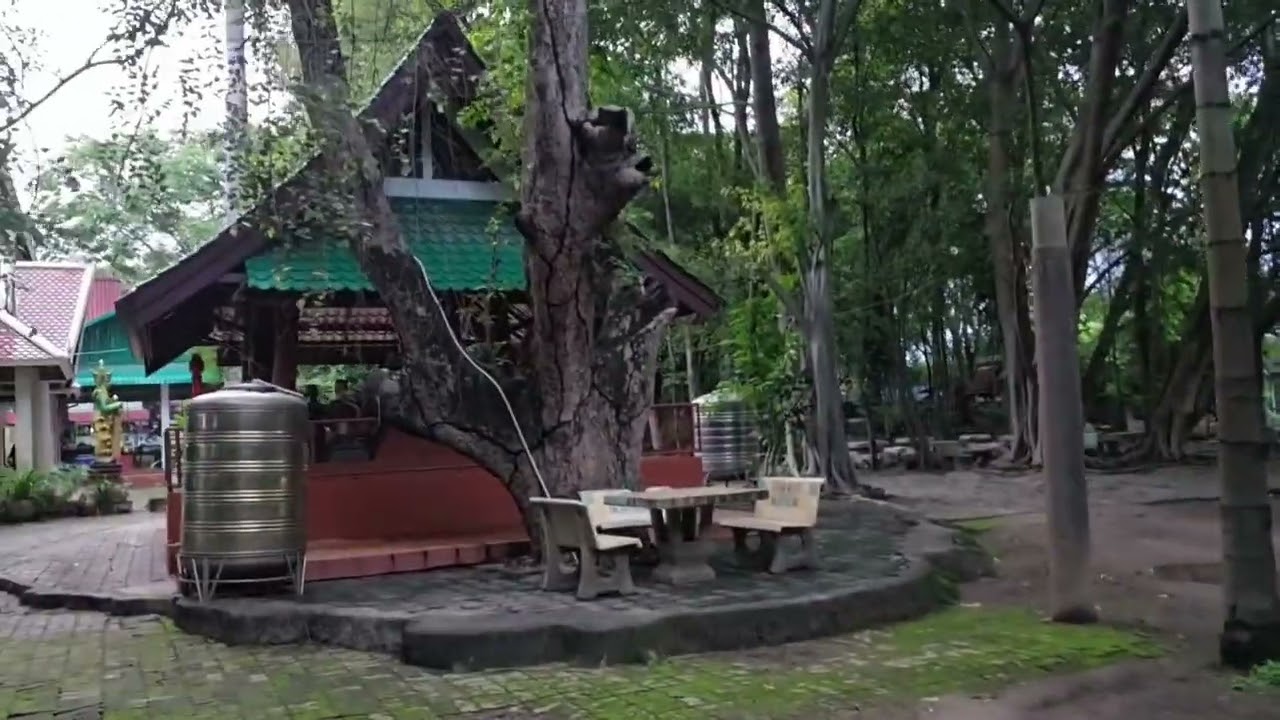
 Click to Access the Navigation Map GPS
Wat Ton Tan Ton Map
Recommend

 Muang Chiang Mai(121)Chom Thong(47)Mae Chaem(25)Chiang Dao(33)Doi Saket(68)Mae Taeng(85)Mae Rim(69)Samoeng(29)Fang(71)Mae Ai(59)Phrao(70)San Pa Tong(103)San Kamphaeng(66)San Sai(73)Hang Dong(74)Hot(32)Doi Tao(22)Omkoi(11)Saraphi(74)Wiang Haeng(15)Chai Prakan(28)Mae Wang(32)Mae On(22)Doi Lo(34)Galyani Vadhana(1)


