
lovethailand home >North Travel Attractions >Chiang Mai Travel Attractions >Muang Chiang Mai >Pa Daet > Wat Don Chai
TL;DR: Wat Don Chai is located at Moo 4, Ban Don Chai, Pa Daet Subdistrict, Mueang Chiang Mai District, Chiang Mai Province, open Daily, hours 08.00 – 17.00.
Wat Don Chai
Open Days: Daily
Opening Hours: 08.00 – 17.00
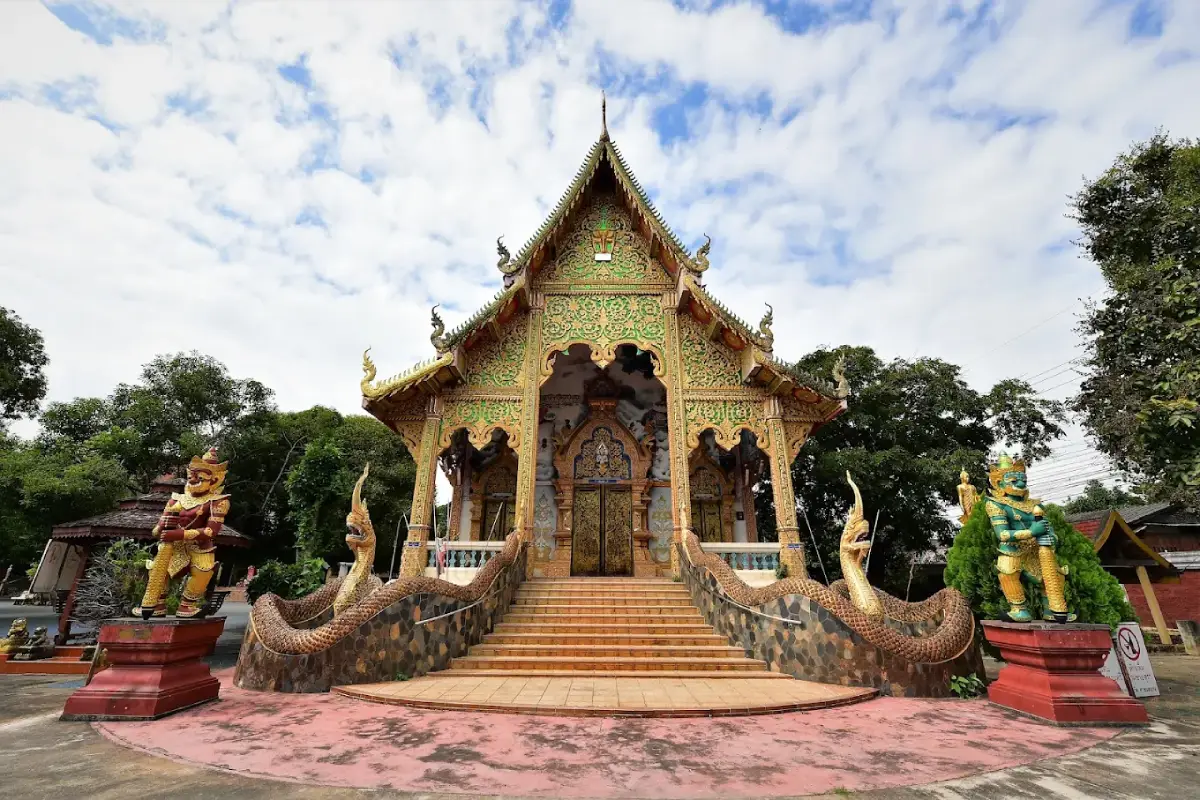
Wat Don Chai is a long-established community temple in Moo 4, Ban Don Chai, Pa Daet Subdistrict, Mueang Chiang Mai District, Chiang Mai Province. Built in 1880, corresponding to B.E. 2423, the temple covers about 2 rai and remains closely connected with the local Buddhist community south of Chiang Mai city. It is a suitable temple for merit-making, quiet prayer, local cultural study, and a combined half-day route with Pa Daet temples and the Wiang Kum Kam historical area. The main highlights include a viharn with murals of the Vessantara Jataka, a nine-spired chedi, local beliefs connected with the Naga beneath the chedi base, a brass seated Buddha image, brass disciple statues, Phra Chao Than Chai, a reclining Buddha hall, and a simple Lanna community-temple atmosphere.
Wat Don Chai gives visitors a quieter view of Chiang Mai beyond the Old City’s major temples. Pa Daet lies on the southern side of Mueang Chiang Mai and is connected with riverside communities, old settlement patterns, and cultural routes leading toward Wiang Kum Kam. The temple is not large or highly commercialized, but that is exactly where its value lies. It remains a living religious space for local residents, a place for Buddhist ceremonies, a venue for merit-making, and a community gathering point during temple events.
Ban Don Chai is part of Pa Daet, an area close to the Ping River and the historic southern approach to Chiang Mai. Around this zone, travelers can find old temples, local roads, community markets, and historic sites linked with Wiang Kum Kam. Wat Don Chai can therefore be visited as part of a cultural route that includes Wat Pa Daet, Wat Tha Mai I, Wat Chedi Liam, Wat Chang Kham, and Wat That Khao. This route is especially suitable for travelers who want to see Chiang Mai’s local Buddhist culture without the density of the Old City’s main tourist circuit.
The name Wat Don Chai reflects both geography and local memory. In Thai, “don” refers to raised ground, while “chai” conveys victory and auspiciousness. Local accounts also mention earlier names connected with Mae Kha Wak and Wat Pong Sanuk. The Mae Kha connection relates to the waterway west of the temple, while the name Pong Sanuk preserves an older layer of community memory. These names show how the temple’s identity is linked not only with Buddhism, but also with terrain, water, settlement, and the stories remembered by local people.
Because Wat Don Chai was built in 1880, it has stood for more than 140 years as a community temple of Pa Daet. A temple of this age survives through the continuing support of monks, lay devotees, village leaders, and local families. Wat Don Chai has served generations of residents as a place for prayer, Kathina merit-making, Buddhist Lent activities, local ceremonies, and community gatherings. Its historical importance therefore comes from continuity rather than scale.
Upon entering the temple grounds, visitors can sense the character of a local Lanna temple. The compound is open and modest, with space for community activities and religious gatherings. During temple events, local residents help prepare offerings and organize the area, while announcements or local music may be heard through the temple’s speakers. This atmosphere gives Wat Don Chai a distinctly lived-in quality. It is not a temple staged only for tourism, but a religious and social space still used by the community.
The most important religious building is the viharn, the main hall used for worship and ceremonies. Inside the viharn are murals depicting the Vessantara Jataka, one of the most important Buddhist birth stories. The Vessantara Jataka teaches generosity, sacrifice, patience, and moral commitment through the story of Prince Vessantara. Murals like these are not merely decorative. They act as visual teachings, allowing visitors to learn Buddhist values through painted scenes, figures, and narrative composition.
The principal Buddha image in the viharn is a brass seated Buddha in meditation posture. Brass disciple images are also enshrined in front of the main Buddha image. The meditation posture represents calmness, concentration, and inner stability, making the viharn a suitable place for prayer, chanting, and quiet reflection. For visitors who prefer a peaceful temple experience, the atmosphere inside Wat Don Chai’s viharn is one of the temple’s strongest qualities.
Behind the viharn stands a nine-spired chedi, one of the temple’s most distinctive features. The chedi is associated with relic veneration and local devotional practice. Around the chedi are Buddha images for the days of the week, while the base area includes the twelve zodiac animals. This combination links Buddhist worship with Lanna-style auspicious symbolism, birth-day devotion, and cosmological imagery. The chedi is therefore both an architectural feature and a focus of local belief.
Local belief also connects the chedi base with the Naga, a sacred serpent figure deeply important in northern Thai Buddhist culture. In Buddhist and local traditions, the Naga is associated with water, protection, guardianship, and devotion to the Buddha. The belief in a Naga presence beneath the chedi gives Wat Don Chai another layer of spiritual meaning, especially because the temple’s identity is also linked with waterways and the old landscape of Pa Daet.
Another important area is the Mongkhon Thepmuni Hall, also known as the Luang Por Sodh Hall. This hall enshrines Phra Mongkhon Thepmuni, Phra Chao Than Chai, and the Naga image. Phra Chao Than Chai is especially meaningful in northern Thai devotional culture, where the image is commonly associated with strong faith, swift completion, and sincere wishes. Visitors often include this hall in their worship route after paying respect in the main viharn.
Wat Don Chai also has a reclining Buddha hall, where a golden reclining Buddha image is enshrined. The reclining Buddha posture traditionally recalls the Buddha’s passing into final nirvana and invites reflection on impermanence. This hall adds another devotional dimension to the temple, allowing visitors to pay respect to different Buddha postures and the teachings they represent.
The multipurpose hall is also significant because it supports community functions. It is used for selected ceremonies and village meetings, showing how Thai community temples often serve both religious and civic roles. Wat Don Chai is therefore part of the local social structure, not only a place where people visit for worship. The temple supports communication, gathering, and shared responsibility within Ban Don Chai.
Other sacred objects in the temple include Buddha images in contemplation posture, Naga-protected posture, walking posture, the reclining Buddha, Phra Chao Than Chai, Phra Mongkhon Thepmuni, and the Naga image. These elements create several points of worship within a compact temple compound. A meaningful visit should move slowly from the viharn to the chedi, then to the Mongkhon Thepmuni Hall, the reclining Buddha hall, and the community areas.
The murals of the Vessantara Jataka are especially important for visitors interested in Buddhist art. In many Thai communities, Jataka murals functioned as moral instruction for people of all ages. They presented stories in visual form at a time when temple art was one of the most accessible forms of public education. At Wat Don Chai, the murals help preserve this older educational role of the temple and give cultural depth to the viharn.
During important Buddhist periods, especially Buddhist Lent and Kathina season, Wat Don Chai becomes more active. Local residents participate in offering candles, bathing cloths, robes, donations, and support for temple maintenance. These activities show how the temple remains woven into community life. The temple also appears in local religious and community programs in Pa Daet, confirming its ongoing role in the religious landscape of the subdistrict.
Wat Don Chai is also associated with auspicious ceremonies and local Lanna beliefs, including Suep Chata Luang, Satวง-style offerings, and merit-making rituals intended to strengthen morale and invite good fortune. These practices reflect the way northern Thai Buddhism often works together with local cultural wisdom. For many residents, the temple is not only a place to worship the Buddha, but also a place to seek emotional strength, protection, and renewal during important moments in life.
The latest identified abbot is Phra Athikan Wutthiphong Wutthiyano (Saengngam). In a community temple, the abbot’s role is essential. He oversees the temple compound, leads Buddhist activities, coordinates with lay supporters, and helps maintain the continuity of religious and community work. A temple such as Wat Don Chai depends on cooperation between monks, local residents, and devotees who continue to support the temple’s role in Ban Don Chai.
For travelers, Wat Don Chai is best understood as a local cultural temple rather than a major sightseeing landmark. Its value lies in the details: the Vessantara Jataka murals, the brass Buddha images, the nine-spired chedi, the Naga belief, the reclining Buddha hall, and the ongoing connection with Pa Daet residents. Visitors who take time to observe these elements will understand more about Chiang Mai’s community temples and Lanna Buddhist life.
A good visiting route begins at the main viharn, where visitors can pay respect to the brass seated Buddha image and observe the murals. After that, walk to the chedi behind the viharn and look for the Buddha images for the days of the week and the zodiac details around the base. Continue to the Mongkhon Thepmuni Hall, the reclining Buddha hall, and the multipurpose hall area. If a temple event is taking place, visitors should observe respectfully without interrupting monks or local residents.
Proper conduct is important when visiting Wat Don Chai. Visitors should dress modestly, keep their voices low, avoid touching Buddha images or sacred objects unnecessarily, and photograph respectfully, especially inside the viharn and around sacred images. Because this is an active community temple, the needs of monks and local worshippers should come before photography or sightseeing.
Getting to Wat Don Chai is convenient from central Chiang Mai. Travelers can head south toward Pa Daet by private car, taxi, or ride-hailing service. Useful routes include Mahidol Road, the Chiang Mai-Hang Dong corridor, and local roads leading into Ban Don Chai. Because there are several temples named Wat Don Chai in northern Thailand, visitors should search specifically for Wat Don Chai, Pa Daet, Mueang Chiang Mai.
For a half-day itinerary, Wat Don Chai can be combined with Wat Pa Daet, Wat Tha Mai I, Wat Ton Tan Ton, and the Wiang Kum Kam historical zone. Travelers interested in archaeology and local history can continue to Wat Chedi Liam, Wat Chang Kham, and Wat That Khao. This route gives a strong overview of Chiang Mai’s southern cultural landscape without relying only on the crowded Old City temple route.
The best time to visit Wat Don Chai is in the morning or late afternoon, when the weather is more comfortable and the temple atmosphere is calm. On Buddhist holy days, during Buddhist Lent, and around Kathina season, visitors may see more local merit-making activity. Those who prefer a quieter visit should come on a weekday and allow enough time to walk slowly through the temple compound.
Wat Don Chai is a meaningful stop for travelers who want to understand Chiang Mai at community level. The temple combines history, Buddhist art, sacred objects, Naga belief, local ceremonies, and everyday religious life in one modest compound. Its importance does not come from size or fame, but from the way it continues to serve Ban Don Chai as a spiritual center and cultural anchor south of Chiang Mai city.
| Name | Wat Don Chai |
| Location | Moo 4, Ban Don Chai, Pa Daet Subdistrict, Mueang Chiang Mai District, Chiang Mai Province |
| Address | Ban Don Chai, Moo 4, Pa Daet Subdistrict, Mueang Chiang Mai District, Chiang Mai 50100, Thailand |
| Coordinates | 18.73494, 98.98103 |
| Highlights | Viharn with Vessantara Jataka murals, nine-spired chedi, Naga belief beneath the chedi base, brass seated Buddha image, brass disciple images, Phra Chao Than Chai, reclining Buddha hall, and local Lanna community-temple atmosphere |
| History | Built in 1880, corresponding to B.E. 2423, as a long-established community temple in Pa Daet, Mueang Chiang Mai |
| Name Origin | The name is linked with raised ground and auspicious victory; local accounts also mention older names connected with Mae Kha Wak and Wat Pong Sanuk |
| Distinctive Features | A private Buddhist temple under the Maha Nikaya order, covering about 2 rai, with a viharn, chedi, Mongkhon Thepmuni Hall, reclining Buddha hall, multipurpose hall, and community ceremonial spaces |
| Sacred Objects | Brass seated Buddha image, brass disciple images, contemplation-posture Buddha image, Naga-protected Buddha image, walking Buddha image, reclining Buddha, Phra Chao Than Chai, Phra Mongkhon Thepmuni, and Naga image |
| Traditions / Rituals | Buddhist Lent merit-making, Kathina, worship, local merit-making, Suep Chata Luang, Satวง-style offerings, and auspicious community ceremonies |
| Travel Information | Travel south from central Chiang Mai toward Pa Daet and Ban Don Chai by private car, taxi, or ride-hailing service; search specifically for Wat Don Chai, Pa Daet, Mueang Chiang Mai |
| Current Status | Open for visits, worship, and merit-making |
| Open Days | Daily |
| Opening Hours | 08.00 – 17.00 |
| Facilities | Worship area, ceremonial spaces, multipurpose hall, and parking area within the temple compound |
| Main Areas / Zones | Viharn, nine-spired chedi, Mongkhon Thepmuni Hall, reclining Buddha hall, multipurpose hall, and community merit-making area |
| Abbot / Caretaker | Phra Athikan Wutthiphong Wutthiyano (Saengngam) |
| Nearby Tourist Attractions | 1. Wat Ton Tan Ton, about 1 km 2. Wat Tha Mai I, about 2 km 3. Wat Pa Daet, about 2 km 4. Wat That Khao Archaeological Site, about 2 km 5. Wiang Kum Kam, about 3 km 6. Wat Chedi Liam, about 3 km 7. Wat Chang Kham or Wat Kan Thom, about 3 km |
| Nearby Restaurants | 1. MUHO Taiwan Grass Jelly Pa Daet, about 0.1 km, Tel. 092-492-5276 2. COFFEE HOUSE Pa Daet Ban Don Chai Branch, about 0.1 km 3. Chaem Pork and Beef Waterfall Noodles, about 0.1 km 4. Donchai House Cafe, about 0.1 km, Tel. 081-421-3875 5. GoodVibes Cafe-Cnx, about 1 km, Tel. 089-266-5909 6. S Coffee & Goody Steak, about 1 km, Tel. 097-923-6676 |
| Nearby Accommodations | 1. Donchai House Guest House & Cafe, about 0.1 km, Tel. 081-421-3875 2. Baan Vartika at Ping, about 0.5 km, Tel. 088-253-6936 3. DE ROSE Hotel Chiang Mai, about 1 km, Tel. 087-173-1895 4. Sri Ping Resort, about 1 km, Tel. 089-556-6080, 053-447-077 5. Ping Pura Riverside Resort & Spa Chiang Mai, about 3 km, Tel. 053-270-555 |
Frequently Asked Questions (FAQ)
Q: Where is Wat Don Chai located?
A: Wat Don Chai is located in Moo 4, Ban Don Chai, Pa Daet Subdistrict, Mueang Chiang Mai District, Chiang Mai Province.
Q: What are the opening hours of Wat Don Chai?
A: Wat Don Chai is open daily from 08.00 to 17.00 for worship, merit-making, and temple visits.
Q: What is the history of Wat Don Chai?
A: Wat Don Chai was built in 1880, corresponding to B.E. 2423, and has long served as a community temple in Ban Don Chai, Pa Daet.
Q: What is Wat Don Chai known for?
A: The temple is known for its Vessantara Jataka murals, nine-spired chedi, brass seated Buddha image, brass disciple images, Phra Chao Than Chai, reclining Buddha hall, and local Naga belief beneath the chedi base.
Q: Are there any local rituals connected with Wat Don Chai?
A: Yes. The temple is associated with Buddhist Lent merit-making, Kathina, worship, Suep Chata Luang, Satวง-style offerings, and auspicious community ceremonies.
Q: What type of trip is Wat Don Chai suitable for?
A: It is suitable for merit-making, quiet temple visits, Lanna cultural study, and a half-day route with Wat Pa Daet, Wiang Kum Kam, Wat Chedi Liam, and nearby archaeological sites.
Q: How can travelers get to Wat Don Chai?
A: Travelers can go south from central Chiang Mai toward Pa Daet by private car, taxi, or ride-hailing service and search specifically for Wat Don Chai, Pa Daet, Mueang Chiang Mai.
 Category: ●Places of Worship
 Group: ●Temple
Last Update : 22 HourAgo
 Last Update : 22 HourAgo
 Click to Access the Navigation Map GPS
Wat Don Chai Map
Recommend

 Muang Chiang Mai(121)Chom Thong(47)Mae Chaem(25)Chiang Dao(33)Doi Saket(68)Mae Taeng(85)Mae Rim(69)Samoeng(29)Fang(71)Mae Ai(62)Phrao(70)San Pa Tong(105)San Kamphaeng(66)San Sai(73)Hang Dong(74)Hot(32)Doi Tao(22)Omkoi(11)Saraphi(74)Wiang Haeng(15)Chai Prakan(28)Mae Wang(32)Mae On(22)Doi Lo(34)Galyani Vadhana(1)


