
lovethailand home >North Travel Attractions >Chiang Mai Travel Attractions >Muang Chiang Mai >Pa Daet > Wat Ko Klang
TL;DR: Wat Ko Klang is located at Ban Ko Klang, Pa Daet Subdistrict, Mueang Chiang Mai District, Chiang Mai Province, open Daily, hours 08.00 – 17.00.

Wat Ko Klang
Open Days: Daily
Opening Hours: 08.00 – 17.00
Wat Ko Klang is a long-established community temple in Ban Ko Klang, Pa Daet Subdistrict, Mueang Chiang Mai District, Chiang Mai Province. It is a private Buddhist temple under the Maha Nikaya order and remains closely connected to the religious and social life of the local community. The temple is suitable for visitors who want to make merit, pay respect to an important local Buddha image, explore a quieter side of Chiang Mai, and combine the visit with nearby historical sites such as Wiang Kum Kam.
Wat Ko Klang offers a different view of Chiang Mai from the more crowded temples inside the Old City. Pa Daet lies south of central Chiang Mai and is connected with old riverside communities, historic routes, local temples, and archaeological sites. Visiting Wat Ko Klang is therefore not only a short temple stop, but also an opportunity to understand Chiang Mai as a city shaped by communities beyond the moat, where local temples continue to preserve faith, memory, and everyday cultural life.
The temple is located at 67 Moo 8, Ban Ko Klang, Pa Daet Subdistrict, Mueang Chiang Mai District, Chiang Mai Province. The name Ko Klang is directly connected with Ban Ko Klang, the community where the temple stands. Many northern Thai temples are named after their surrounding villages, showing how closely a temple and its community share the same identity. Wat Ko Klang is therefore both a Buddhist sanctuary and a cultural marker of Ban Ko Klang.
Wat Ko Klang was established in 1867, corresponding to B.E. 2410, and was formerly known as Wat Pang Sanuk Nang Liao. This older name preserves a trace of local memory before the temple became widely known by its present community-based name. The presence of both an older name and a current name shows how the temple has grown alongside local settlement, waterways, village routes, and the changing landscape south of Chiang Mai city.
With a history of more than 150 years, Wat Ko Klang is one of the older community temples in Pa Daet and Mueang Chiang Mai. A temple of this age usually serves more than a ritual function. It becomes a spiritual center, a place for Buddhist ceremonies, a venue for local merit-making, a learning space, and a community gathering point. Wat Ko Klang continues to carry those roles through its religious buildings, sacred objects, educational activities, and relationship with local residents.
Local historical accounts connect Wat Ko Klang with the terrain and waterways around Pa Daet. The older temple site was affected by low-lying land and seasonal flooding, leading to later relocation and development on more suitable ground. The rebuilding of religious structures, the raising of the temple area, and the continued care of the compound reflect the cooperation of monks, village leaders, and lay supporters in keeping the temple active through changing periods of Chiang Mai’s urban expansion.
The present name of the temple also reflects its relationship with the surrounding landscape. The idea of “Ko Klang” evokes a place set within a particular local environment and community. Temples around southern Chiang Mai often developed in relation to the Ping River, old waterways, small roads, and settlement patterns. Wat Ko Klang belongs to this wider cultural landscape, linking Pa Daet, the southern part of Chiang Mai, and the historic zone around Wiang Kum Kam.
The temple compound covers 1 rai, 2 ngan, and 24 square wah. It also has two plots of monastic land totaling 7 rai, 3 ngan, and 87 square wah. Although the main temple area is not large compared with major temples in Chiang Mai’s Old City, it contains the essential functions of a living community temple: religious halls, areas for ceremonies, monks’ residences, spaces for merit-making, and facilities used by the local community.
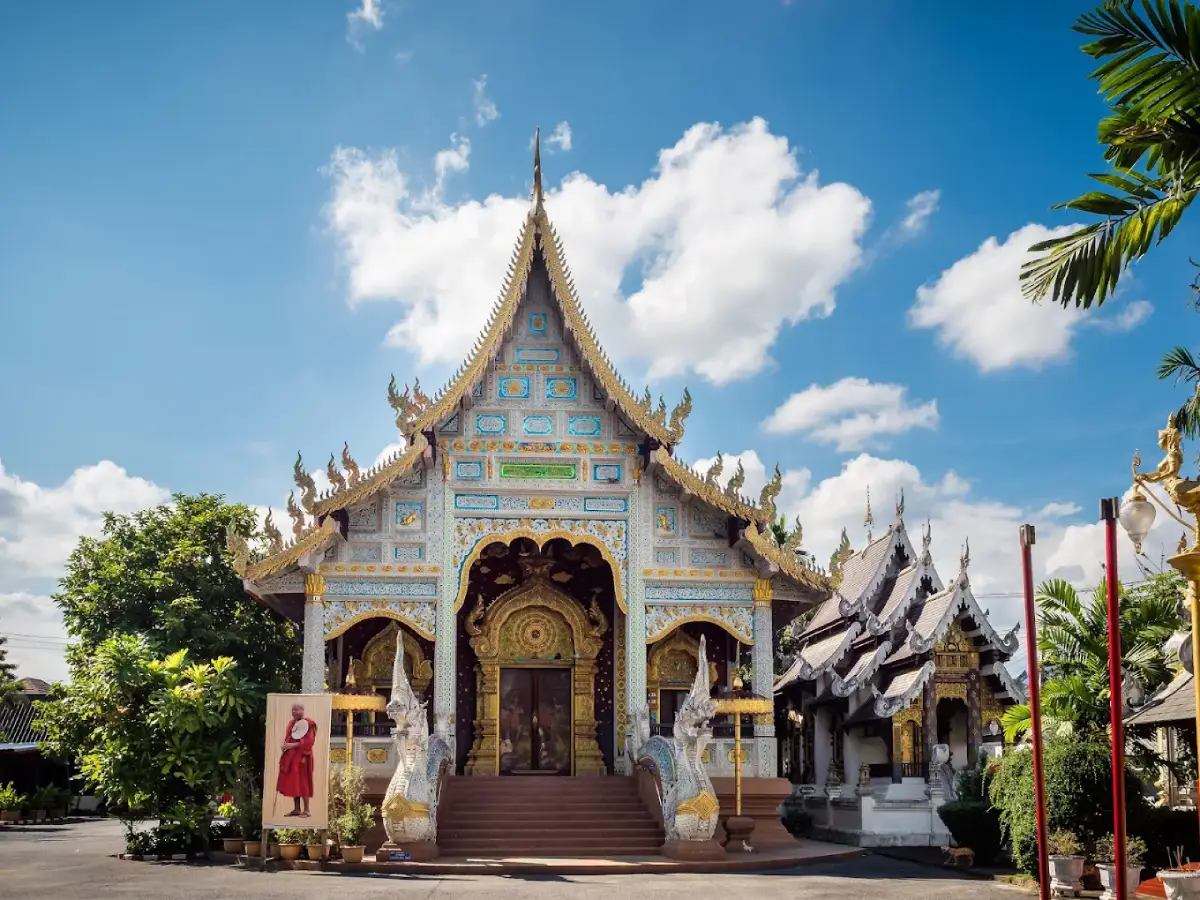
The main monastic structures at Wat Ko Klang include a white viharn, a sermon hall, monks’ residences, an ordination hall, a chedi, and a scripture repository. The white viharn is the most visually distinctive feature of the temple. Its clean, calm appearance creates a peaceful atmosphere that suits the scale and character of a local temple. Rather than overwhelming visitors with grandeur, the viharn conveys quietness, balance, and dignity.
The white viharn is more than a ceremonial building. Inside, visitors can see paintings related to Wat Ko Klang and the surrounding community. These murals function as visual records of the temple’s story, local faith, and shared memory. Visitors should spend time quietly inside the viharn, not only to pay respect to the Buddha image but also to observe how art, devotion, and community history are brought together within a sacred space.
The history of the viharn reflects how the temple adapted to its environment. The older wooden viharn was affected by flooding and deterioration over time. A later viharn was built in an applied Lanna style, and the temple grounds were raised to make the area more suitable for long-term use. These details make Wat Ko Klang a useful example of a community temple that has adjusted to floods, changing transport routes, and the needs of the surrounding community.
The artistic details of Wat Ko Klang are linked with Lanna design and regional inspiration from significant northern sites, including Wiang Kum Kam, Wihan Lai Kham, Wat Phra That Lampang Luang, and old Chiang Mai chedi forms. These influences give the temple cultural depth beyond its modest size. They also show how local temples can preserve regional design language through renovation, stucco patterns, murals, and architectural planning.
Within the compound, visitors can also see the ordination hall near the viharn, a golden chedi behind the viharn, and a scripture repository near the entrance. These elements give the temple a complete functional layout. A good visit can begin with paying respect inside the viharn, continue with a quiet walk around the ordination hall and chedi, and end with observing the peaceful atmosphere of the wider compound.
The most important sacred object at Wat Ko Klang is Phra Sing Nueng, a revered Buddha image associated with Lanna Buddhist culture. Buddha images in the Phra Singh tradition are deeply respected in northern Thailand, and the presence of Phra Sing Nueng gives Wat Ko Klang clear spiritual significance. Visitors who come to pray or make merit can experience a quieter and more intimate form of local devotion than at major tourist temples.
Paying respect to Phra Sing Nueng at a community temple has a different atmosphere from visiting a large landmark temple. The surroundings are calmer, the rhythm is slower, and visitors can spend more time with the feeling of the place. Wat Ko Klang is therefore well suited to travelers who want a peaceful temple experience, a merit-making stop, or a deeper understanding of Lanna Buddhist life at community level.
Wat Ko Klang also has an educational role. Its Phra Pariyatti Dhamma school, Dhamma section, opened in B.E. 2517, corresponding to 1974. Such schools support the formal study of Buddhist teachings for monks, novices, and learners. The presence of this school shows that Wat Ko Klang is not only a place for ceremonies, but also a space for transmitting Buddhist knowledge within the community.
The temple also has a public training unit for Pa Daet Subdistrict. This role reflects the traditional function of Thai temples as centers of learning, ethics, and community development. Wat Ko Klang therefore supports local life not only through religious observance, but also through education, moral training, and community-oriented activities.
The abbot of Wat Ko Klang is Phra Athikan Niwat Kittisobhano. In a community temple, the abbot plays an essential role as caretaker of the religious site, leader of Buddhist activities, coordinator with lay supporters, and guardian of the temple’s continuity. The preservation of a long-established temple such as Wat Ko Klang depends on the cooperation of monks, local residents, and supporters who value its religious and cultural role.
Wat Ko Klang is valuable for cultural travel because it helps visitors understand Chiang Mai at the level of local community life. The temple tells its story through the viharn, murals, Buddha images, sermon hall, monks’ residences, chedi, and ongoing Buddhist activities. Travelers interested in quiet Chiang Mai temples, Lanna culture, and less crowded historical routes will find the temple meaningful despite its modest size.
A visit to Wat Ko Klang should begin at the white viharn, where visitors can pay respect and observe the murals related to the temple and community. After that, they can walk quietly around the compound to see the ordination hall, chedi, scripture repository, sermon hall, and monks’ residences. Visitors should remain respectful at all times, especially near areas used by monks and local worshippers.
Appropriate conduct is important when visiting Wat Ko Klang. Visitors should dress modestly, keep their voices low, avoid touching sacred objects unnecessarily, and refrain from disturbing monks or local people who are making merit. Photography should be done respectfully, especially inside religious buildings and near Buddha images. A community temple is best appreciated with patience, quiet attention, and awareness of its sacred role.
Getting to Wat Ko Klang is convenient because the temple is located within Mueang Chiang Mai District. From Chiang Mai Old City, visitors can travel south toward Pa Daet and Ban Ko Klang by private car, taxi, or ride-hailing service. Useful access routes include major roads around the southern part of the city, such as Mahidol Road and routes leading toward Ban Ko Klang. To avoid confusion with similarly named places, visitors should search for Wat Ko Klang in Pa Daet, Mueang Chiang Mai.
Pa Daet connects easily with several important cultural and historical attractions, especially Wiang Kum Kam, the ancient city south of Chiang Mai. Wat Ko Klang can be included in a half-day cultural route with Wiang Kum Kam, Wat Chedi Liam, Wat Chang Kham, Wat That Khao, and nearby riverside communities. This makes the temple a practical stop for travelers who want to avoid the busiest tourist areas while still experiencing Chiang Mai’s Buddhist and historical heritage.
The best time to visit Wat Ko Klang is in the morning or late afternoon, when the weather is more comfortable and the atmosphere is suitable for quiet temple visits. On Buddhist holy days or important religious occasions, visitors may see more local merit-making activities. Travelers who prefer a quieter experience should visit on weekdays and avoid large community event periods.
Wat Ko Klang is also appropriate for merit-making in a local setting. Visitors can offer alms, make donations for temple maintenance, join Buddhist activities on important days, or simply spend time in quiet reflection. The merit-making atmosphere here is simple and close to community life, making it different from more commercialized temple visits.
For visitors interested in local history, Wat Ko Klang is a compact but rich site. It brings together an origin dating to 1867, an older temple name, a white viharn, community murals, Phra Sing Nueng, a Dhamma school, a public training role, and several important religious structures. These elements make the temple a meaningful cultural destination in southern Chiang Mai.
The relationship between the old name and the present name is one of the most interesting parts of the temple’s identity. Wat Pang Sanuk Nang Liao preserves an earlier layer of local memory, while Wat Ko Klang reflects the present community of Ban Ko Klang. This layered naming is common in older Lanna communities, where temples evolve together with settlement patterns, roads, waterways, and local identity.
Wat Ko Klang stands out because it combines community history, Buddhist faith, and Lanna artistic character in one quiet place. Visitors do not need a long visit to appreciate the temple, but they should allow enough time to notice its details. Its value does not come from size or spectacle. It comes from continuity, local devotion, and the way the temple remains part of everyday life in Ban Ko Klang.
For travelers who want a deeper understanding of Chiang Mai, Wat Ko Klang adds an important layer to the city’s story. Beyond the famous temples of the Old City and Doi Suthep, Chiang Mai has many community temples that preserve local histories through buildings, Buddha images, murals, and religious practice. Wat Ko Klang is one of those temples: peaceful, meaningful, and closely tied to the cultural landscape of Pa Daet.
| Name | Wat Ko Klang |
| Location | Ban Ko Klang, Pa Daet Subdistrict, Mueang Chiang Mai District, Chiang Mai Province |
| Address | 67 Moo 8, Ban Ko Klang, Pa Daet Subdistrict, Mueang Chiang Mai District, Chiang Mai 50100, Thailand |
| Coordinates | 18.74148, 98.98437 |
| Highlights | White viharn, peaceful community atmosphere, murals about the temple and local community, Phra Sing Nueng, and easy access to the Wiang Kum Kam historical route |
| History | Established in 1867, corresponding to B.E. 2410, and recognized as an old community temple of Pa Daet and Ban Ko Klang |
| Name Origin | Formerly known as Wat Pang Sanuk Nang Liao, later known as Wat Ko Klang after Ban Ko Klang and its local community context |
| Distinctive Features | A private temple under the Maha Nikaya order with a white viharn, murals, ordination hall, chedi, scripture repository, sermon hall, and monks’ residences |
| Important Sacred Object | Phra Sing Nueng |
| Educational Role | The temple has a Phra Pariyatti Dhamma school, Dhamma section, opened in B.E. 2517, and a public training unit for Pa Daet Subdistrict |
| Travel Information | Travel south from central Chiang Mai toward Pa Daet by private car, taxi, or ride-hailing service, and search for Wat Ko Klang, Pa Daet, Mueang Chiang Mai |
| Current Status | Open for visits and merit-making |
| Open Days | Daily |
| Opening Hours | 08.00 – 17.00 |
| Fees | No admission fee |
| Facilities | Parking, worship area, and spaces for Buddhist activities |
| Main Areas / Zones | White viharn, ordination hall, chedi, scripture repository, sermon hall, monks’ residences, and Phra Pariyatti Dhamma school area |
| Abbot / Caretaker | Phra Athikan Niwat Kittisobhano |
| Main Contact Number | 089-553-0643 |
| Nearby Tourist Attractions | 1. Wiang Kum Kam, about 2 km 2. Wat Chedi Liam, about 2 km 3. Wat Chang Kham, Wiang Kum Kam, about 3 km 4. Wat That Khao, Wiang Kum Kam, about 3 km 5. Wat I Khang, Wiang Kum Kam, about 3 km |
| Nearby Restaurants | 1. Malao Malao at The Chiang Mai Riverside, about 1 km, Tel. 053-447-211 2. Phi Am Bubble Tea at Ko Klang Pa Daet Market, about 1 km, Tel. 063-352-3515 3. Phuket Fish Ball Noodle, Wiang Kum Kam, about 2 km, Tel. 080-724-5664 4. Krua Pa Fong Pa Daet, about 2 km, Tel. 089-434-1072 5. FUFU Taiwanese Shabu Chiang Mai Airport Branch, about 4 km, Tel. 082-158-7677 |
| Nearby Accommodations | 1. The Chiang Mai Riverside, about 1 km, Tel. 053-447-211 2. Sriping Resort, about 2 km, Tel. 053-447-077 3. Harmony Resort Hotel, about 4 km, Tel. 053-271-616 4. Win Place Hotel Chiang Mai, about 4 km, Tel. 053-812-702 5. TL Residence Hotel, about 5 km, Tel. 053-274-629 |
Frequently Asked Questions (FAQ)
Q: Where is Wat Ko Klang located?
A: Wat Ko Klang is located at 67 Moo 8, Ban Ko Klang, Pa Daet Subdistrict, Mueang Chiang Mai District, Chiang Mai Province.
Q: What are the opening hours of Wat Ko Klang?
A: Wat Ko Klang is open daily from 08.00 to 17.00.
Q: Is there an admission fee for Wat Ko Klang?
A: No. Visitors can enter the temple, pay respect, and explore the compound without an admission fee.
Q: What is Wat Ko Klang known for?
A: The temple is known for its white viharn, community murals, Phra Sing Nueng, ordination hall, chedi, scripture repository, and peaceful local atmosphere in Pa Daet.
Q: How old is Wat Ko Klang?
A: Wat Ko Klang was established in 1867, corresponding to B.E. 2410, making it more than 150 years old.
Q: What kind of trip is Wat Ko Klang suitable for?
A: It is suitable for merit-making, quiet temple visits, Lanna cultural study, local history exploration, and a combined trip with Wiang Kum Kam.
Q: How can travelers get to Wat Ko Klang?
A: Travelers can go south from central Chiang Mai toward Pa Daet by private car, taxi, or ride-hailing service and search for Wat Ko Klang, Pa Daet, Mueang Chiang Mai.
 Category: ●Places of Worship
 Group: ●Temple
Last Update : 5 DayAgo
 Last Update : 5 DayAgo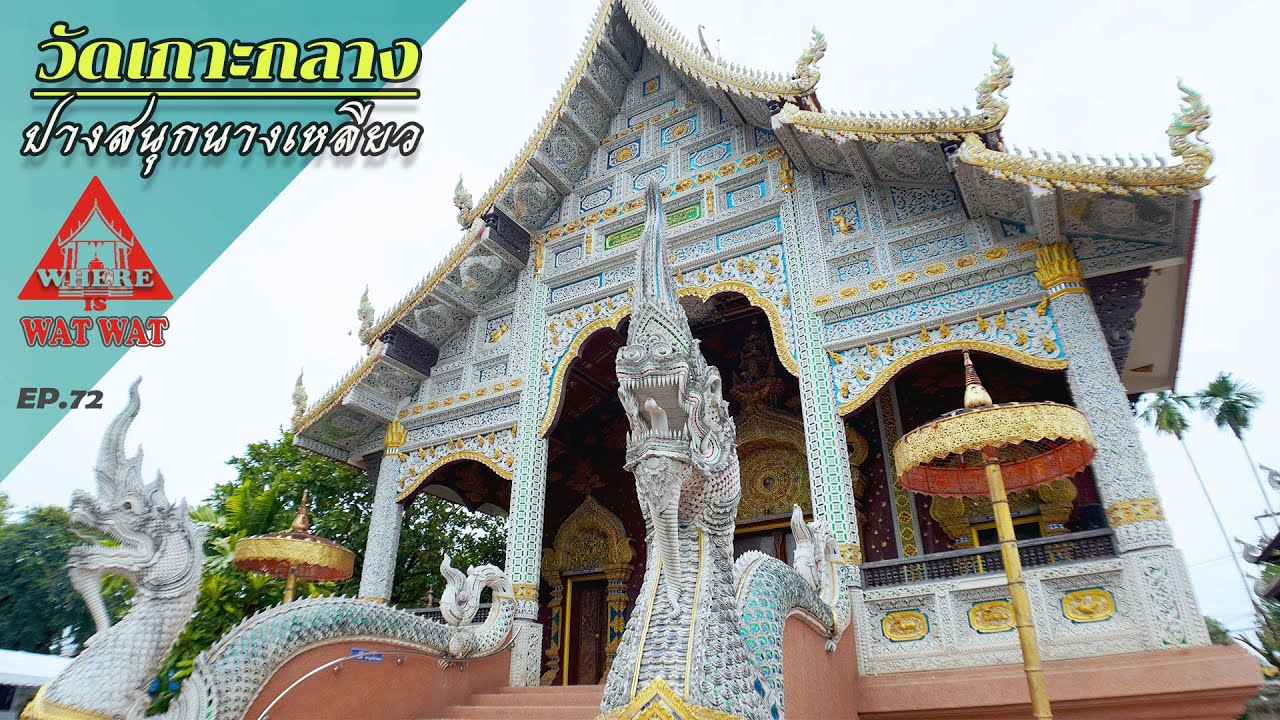
 Click to Access the Navigation Map GPS
Wat Ko Klang Map
Recommend

 Muang Chiang Mai(121)Chom Thong(47)Mae Chaem(25)Chiang Dao(33)Doi Saket(68)Mae Taeng(85)Mae Rim(69)Samoeng(29)Fang(71)Mae Ai(62)Phrao(70)San Pa Tong(105)San Kamphaeng(66)San Sai(73)Hang Dong(74)Hot(32)Doi Tao(22)Omkoi(11)Saraphi(74)Wiang Haeng(15)Chai Prakan(28)Mae Wang(32)Mae On(22)Doi Lo(34)Galyani Vadhana(1)


