
lovethailand home >North Travel Attractions >Chiang Mai Travel Attractions >Muang Chiang Mai >Tha Sala > Wat Don Chan
TL;DR: Wat Don Chan is located at Ban Don Chan, Moo 4, Tha Sala Subdistrict, Mueang Chiang Mai District, Chiang Mai Province, Thailand, open Daily, hours 08.00 - 17.00.

Wat Don Chan
Open Days: Daily
Opening Hours: 08.00 - 17.00
Wat Don Chan in Tha Sala Subdistrict, Mueang Chiang Mai District, Chiang Mai Province, is an important community temple with a strong social mission. It is known not only as a Buddhist temple where local people come to make merit and take part in religious ceremonies, but also as a place that provides care, education, food, shelter, and life opportunities for orphans, poor children, underprivileged youth, and children from remote areas of northern Thailand. The temple’s Life Quality Development Project for orphans, poor children, and underprivileged children, founded in 1985, is the heart of Wat Don Chan’s identity.
The distinctive value of Wat Don Chan lies in the way it combines Buddhist faith with practical social welfare. Visitors do not come here only to worship, donate, or spend time in a calm temple atmosphere. They also encounter a working model of compassion in action: a temple functioning as a home, school, and support system for hundreds of children. For travelers who want to understand Thai temples beyond architecture and sightseeing, Wat Don Chan offers a meaningful view of how Buddhism, education, and community care can work together.
Wat Don Chan is located in Ban Don Chan, Moo 4, Tha Sala Subdistrict, on the eastern side of Chiang Mai city. The temple is accessible from central Chiang Mai, Chiang Mai Railway Station, Nong Hoi, Tha Sala, and the middle ring road. Travelers can reach the temple by private car, ride-hailing service, local transport, or a hired vehicle. Those coming from the city center can travel toward Chiang Mai-Lampang Road or the ring road and continue into the Don Chan area. When using local transport, it is practical to mention Wat Don Chan, Tha Sala, or Wat Don Chan School as the destination.
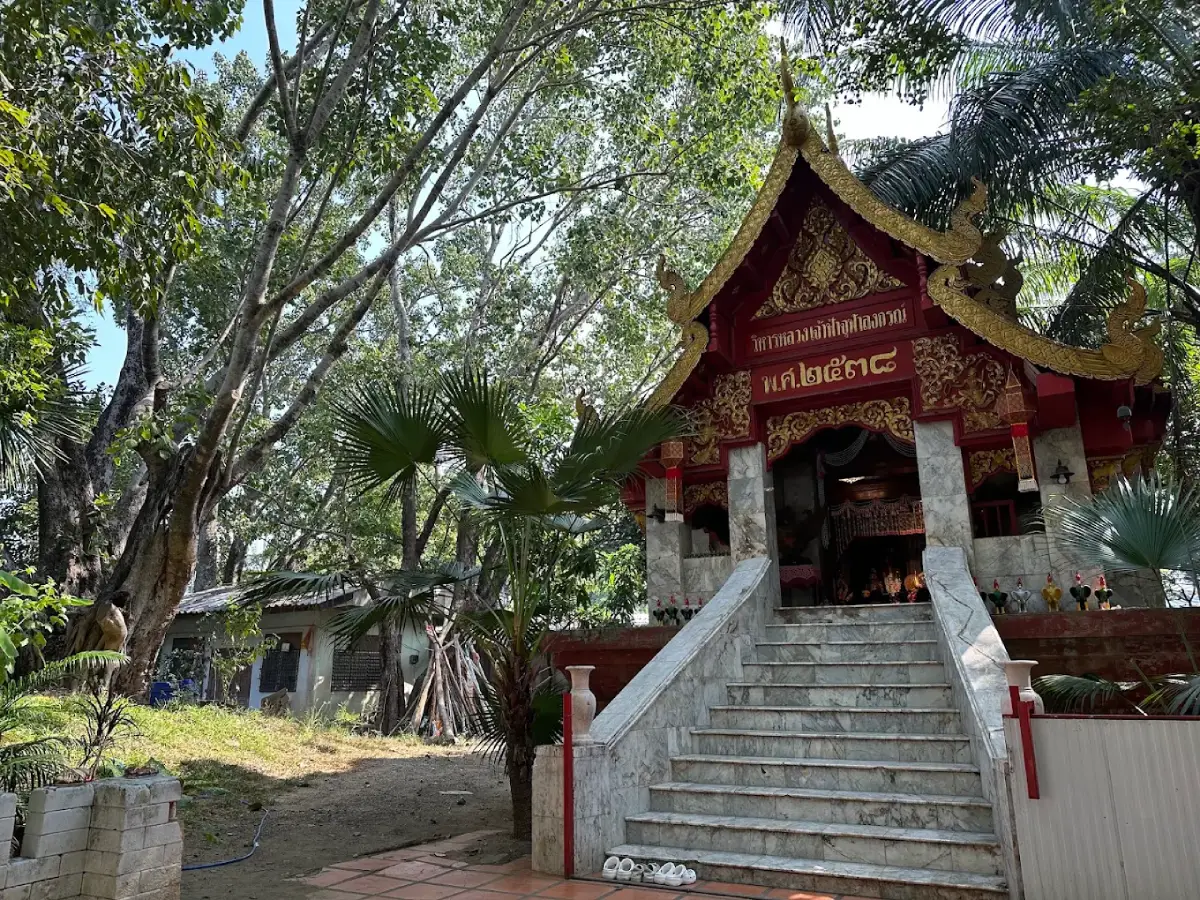
The temple has deep roots in the local community. Wat Don Chan was established in 1917 and received its royal consecrated boundary on 5 November 1927. This means the temple had already served the religious life of the Tha Sala community for many decades before the child development project began. Its religious structures include an ordination hall, sermon hall, viharn, monks’ residences, dining hall, Tripitaka hall, and bell tower. These buildings reflect the traditional role of a Thai Buddhist temple as a center for worship, learning, community gathering, and merit-making.
Wat Don Chan belongs to the Mahanikaya order and serves several roles at the same time. It is a temple, a community center, an educational space, and a welfare center for children. Visitors will notice that the grounds are not limited to worship areas. The temple also includes school facilities, dormitory areas, dining spaces, activity areas, and spaces for receiving donations. This layered use of the temple grounds makes Wat Don Chan different from many tourist temples, because it is a living place where religious practice and daily social care take place side by side.
The temple’s most important mission is the Life Quality Development Project for orphans, poor children, and underprivileged children, established in 1985 by Phra Khru Pramote Prachanukul, also known as Phra Prachanatmuni, the abbot of Wat Don Chan. The project was created to give vulnerable children access to education, accommodation, food, clothing, health care, and a supportive environment. Its guiding principles are rooted in Buddhist values of moral conduct, concentration, and wisdom, which are applied to the children’s everyday lives.
The children cared for by Wat Don Chan come from many different backgrounds. They include orphans, children from poor families, children whose parents have separated, children affected by family hardship, and children whose families cannot support their education. Many are from ethnic groups and remote highland communities in northern Thailand, including Karen, Hmong, Yao, Lahu, Akha, Lisu, Shan, Chin Haw, and Thai communities in rural mountain areas. They come from provinces such as Tak, Phayao, Chiang Rai, Lampang, Mae Hong Son, and Chiang Mai. Wat Don Chan therefore acts as a bridge between Chiang Mai city and children from remote communities who need educational opportunity.
The temple’s care model can be described as “living, eating, studying, and growing at the temple.” Children under the temple’s care receive food, accommodation, clothing, education, and daily support. Life in the temple helps them learn discipline, cooperation, responsibility, and how to live with others. Older students help care for younger children through a senior-junior support system, creating a large family-like environment. The children are not supported only with basic necessities; they also learn resilience, kindness, gratitude, and social responsibility.
Education is one of the core pillars of Wat Don Chan’s work. The temple supports learning from basic education through vocational training, and some students continue to higher education when they are ready. Children study through Wat Don Chan School and through cooperation with government agencies, private organizations, and educational partners. Vocational training is also an important part of the temple’s mission, because it gives young people practical skills that can help them earn a living in the future. This makes the project more than short-term charity. It is a long-term effort to build a more stable future for children who would otherwise have limited opportunities.
The importance of Wat Don Chan lies in its belief that underprivileged children are future members of society who deserve a real chance to develop. The temple aims to help them become good, educated, self-reliant adults who can work honestly and support their families and home communities. Many children who have grown through the temple’s care have used their education and skills in everyday life, employment, and family support. In this sense, Wat Don Chan shows how a Thai temple can function as a social institution, not merely a place for rituals.
Phra Khru Pramote Prachanukul, or Phra Prachanatmuni, is the central figure behind the temple’s modern social mission. He is the abbot of Wat Don Chan and the founder of the Life Quality Development Project for orphans, poor children, and underprivileged youth. Born Anan Khamsaen in Hot District, Chiang Mai Province, he entered the monastic life at a young age and was appointed abbot of Wat Don Chan on 1 January 1990. Under his leadership, the temple developed into a religious site, a community center, and a place of learning for children from difficult backgrounds.
His role extends beyond normal temple administration. He serves as a spiritual leader, social worker, guardian figure, and coordinator among the temple, school, community, government agencies, private supporters, and donors. His work demonstrates a form of Buddhist leadership grounded in practical compassion. At Wat Don Chan, merit-making is not abstract. Donations become meals, school materials, shelter, education, vocational training, and a better future for children who need support.
Inside Wat Don Chan, visitors will find several important areas. The ordination hall is used for formal monastic ceremonies. The viharn and sermon hall provide space for worship, Dhamma activities, and community gatherings. Monks’ residences support the monastic community, while the dining hall plays a key role in daily life. The Tripitaka hall and bell tower reflect the temple’s traditional religious identity. In addition, the school, dormitories, dining spaces, and activity areas show the temple’s continuing commitment to the children in its care.
A visit to Wat Don Chan should be approached with respect for both its religious and residential functions. Visitors may pay respect to sacred areas, make merit, donate funds, donate useful supplies, or sponsor meals for the children. Commonly needed items include rice, cooking oil, eggs, fresh food, dry food, vegetables, seasoning, soap, toothpaste, detergent, school supplies, clothing, books, and other daily necessities. Donations should be clean, usable, and appropriate for a place that cares for many children every day.
Those who would like to sponsor a meal for the children should contact the temple in advance. Meal sponsorship is a popular form of merit-making at Wat Don Chan because donors can support the temple’s daily responsibilities directly. The children receive a proper meal, the temple’s regular expenses are reduced, and the donors become part of a wider educational and welfare effort. This activity is suitable for families, groups of friends, schools, companies, offices, and anyone looking for a meaningful volunteer or donation activity in Chiang Mai.
Wat Don Chan also runs and supports several social projects beyond the main child development program. These include food support for schools in need, welfare assistance for poor communities, ethnic community support, Children’s Day activities, support for elderly people in difficult circumstances, vocational development for underprivileged youth, and Buddhist study and meditation activities. These projects show that the temple’s work covers religion, education, social welfare, and community development.
For cultural travelers, Wat Don Chan is a valuable destination because it reveals a side of Chiang Mai that is often less visible than famous old temples and major tourist landmarks. The temple shows how Buddhist space can be used to build social opportunity. It also demonstrates how merit-making in Thailand can involve education, welfare, food security, and long-term care. A visit here gives travelers both a peaceful temple experience and a deeper understanding of the social role of temples in Thai communities.
The best time to visit Wat Don Chan is in the morning or late afternoon, when the weather is more comfortable for walking, worship, and donation activities. On days with large religious or community events, such as merit-making ceremonies, food donation activities, or Children’s Day programs, the temple can be livelier than usual. Travelers seeking a quieter visit may prefer weekdays. Those planning to donate supplies or sponsor meals should contact the temple before visiting so that the donation matches the temple’s current needs.
Visitors should dress modestly, keep their voices low, respect monks’ areas, and remember that Wat Don Chan is also a residential and educational environment for children. Photography should be handled with care, especially around children, school areas, and dormitory spaces. Asking permission before taking photos in sensitive areas is the proper approach. Responsible travel here means respecting the dignity, privacy, and safety of the children and the monastic community.
Getting to Wat Don Chan from central Chiang Mai is straightforward. From the Old City, travelers can head east toward Charoen Mueang Road or Chiang Mai-Lampang Road and continue toward Tha Sala and Don Chan. From Chiang Mai Railway Station, the distance is short enough for a taxi, ride-hailing service, or private car. Travelers staying around the Night Bazaar, Nong Hoi, Tha Phae, or Nimman areas can plan Wat Don Chan as a half-day merit-making visit, then continue to nearby restaurants, cultural sites, or historical areas on the eastern side of the city.
Several nearby places can be added to the same itinerary, including the Chiang Mai 700 Years Park, Wat Buak Khrok Luang, Chiang Mai Railway Station, Wiang Kum Kam, and Art in Paradise Chiang Mai. This route is suitable for visitors who want a slower and more meaningful view of Chiang Mai. A trip can begin with merit-making and learning about Wat Don Chan’s social mission, then continue to nearby cultural, historical, or family-friendly attractions.
What makes Wat Don Chan stand apart is the continuity of its mission. This is not a place created for tourism. It is a working temple, school-linked community, and living environment for children. Visitors should therefore approach it with awareness and respect. A small donation, useful supplies, meal sponsorship, or appropriate public support can become part of the temple’s long-term effort to care for children and help them grow into capable adults.
For travelers looking for a meaningful temple visit in Chiang Mai, Wat Don Chan is a strong choice. Merit-making here is directly connected to the lives of children and young people. Visitors can see how faith is transformed into food, shelter, education, and opportunity. This is why Wat Don Chan is especially suitable for social merit-making, volunteer-minded visits, and cultural learning about Buddhism in everyday Thai life.
Wat Don Chan is a place worth visiting with intention. Whether visitors come to worship, donate useful items, sponsor meals, learn about the temple’s social work, or understand a different side of Chiang Mai, the temple offers a meaningful experience rooted in compassion and practical support. For anyone who wants to see a Thai temple where faith, kindness, education, and social responsibility meet, Wat Don Chan deserves a place in a Chiang Mai travel plan.
| Name | Wat Don Chan |
| Type | Buddhist temple under the Mahanikaya order and a life quality development center for orphans, poor children, and underprivileged youth |
| Location | Ban Don Chan, Moo 4, Tha Sala Subdistrict, Mueang Chiang Mai District, Chiang Mai Province, Thailand |
| Address | 2 Moo 4, Tha Sala Subdistrict, Mueang Chiang Mai District, Chiang Mai Province 50000, Thailand |
| Coordinates | 18.76017, 99.03258 |
| Highlights | A community temple and a long-running life quality development project where underprivileged children live, eat, study, and grow within the temple environment |
| History | Established in 1917, granted its royal consecrated boundary on 5 November 1927, and home to the Life Quality Development Project founded in 1985 |
| Distinctive Features | A temple that combines Buddhist practice, education, child welfare, and community development in one place |
| Travel Information | Accessible from central Chiang Mai via Chiang Mai-Lampang Road or the middle ring road toward Tha Sala and Don Chan. Private cars, ride-hailing services, and local transport are convenient options. |
| Current Status | Open as a Buddhist temple, merit-making site, and care project for orphans, poor children, and underprivileged youth in Chiang Mai |
| Open Days | Daily |
| Opening Hours | 08.00 - 17.00 |
| Fees | No admission fee |
| Facilities | Parking area, merit-making area, donation area, dining hall, school facilities, children’s dormitories, and activity areas |
| Main Areas / Zones | Ordination Hall Sermon Hall Viharn Monks’ Residences Dining Hall Tripitaka Hall Bell Tower Wat Don Chan School Children’s Dormitory Areas Donation And Activity Areas |
| Abbot / Caretaker | Phra Khru Pramote Prachanukul, also known as Phra Prachanatmuni |
| Main Contact Number | 053-240-184, 081-111-1006, 081-757-9981, 086-118-9380 |
| Official Website / Official Page | watdonchan.org |
| Nearby Tourist Attractions | 1. Chiang Mai 700 Years Park, about 1 km 2. Wat Buak Khrok Luang, about 2 km 3. Chiang Mai Railway Station, about 3 km 4. Wiang Kum Kam, about 5 km 5. Art in Paradise Chiang Mai, about 5 km |
| Nearby Restaurants | 1. Nath Pochana Don Chan, about 1 km, Tel. 087-197-1507 2. Funky Grill Don Chan, about 1 km, Tel. 095-449-6427 3. Mali Sukhothai Tom Yum Noodles, Don Chan Branch, about 2 km 4. Im Pla Phao Don Chan, about 2 km 5. Tengoku De Cuisine Tha Sala, about 3 km, Tel. 053-850-111 |
| Nearby Accommodations | 1. Donchan Residence, about 1 km, Tel. 053-244-560 2. Donchan Grand Hotel, about 1 km, Tel. 053-240-699 3. Pillows Boutique Hotel, about 2 km, Tel. 062-453-6928 4. Mira Residence & Resort, about 3 km, Tel. 063-114-8430 5. Asia Hotels Group Poonpetch Chiangmai, about 4 km, Tel. 053-015-111 |
Frequently Asked Questions (FAQ)
Q: Where is Wat Don Chan located?
A: Wat Don Chan is located at 2 Moo 4, Tha Sala Subdistrict, Mueang Chiang Mai District, Chiang Mai Province 50000, Thailand, in the Don Chan area on the eastern side of Chiang Mai city.
Q: Why is Wat Don Chan important?
A: Wat Don Chan is an old community temple and the home of a long-running Life Quality Development Project that provides care, food, accommodation, education, and support for hundreds of orphans, poor children, and underprivileged youth.
Q: When was the child development project at Wat Don Chan founded?
A: The Life Quality Development Project for orphans, poor children, and underprivileged children was founded in 1985 by Phra Khru Pramote Prachanukul, also known as Phra Prachanatmuni.
Q: What are the opening hours of Wat Don Chan?
A: Wat Don Chan is open daily from 08.00 to 17.00. Visitors who plan to donate supplies or sponsor meals should contact the temple in advance.
Q: Is there an admission fee?
A: No. Wat Don Chan has no admission fee. Visitors may make merit, donate useful items, or support the children’s project voluntarily.
Q: What should visitors donate to Wat Don Chan?
A: Useful donations include rice, fresh food, dry food, eggs, cooking oil, seasoning, soap, toothpaste, detergent, school supplies, clothing, books, and other daily necessities in good condition.
Q: How can travelers get to Wat Don Chan?
A: Travelers can go from central Chiang Mai toward Tha Sala and Don Chan via Chiang Mai-Lampang Road or the middle ring road. Private cars, ride-hailing services, and local transport are convenient options.
Q: Which nearby places can be visited with Wat Don Chan?
A: Nearby places include Chiang Mai 700 Years Park, Wat Buak Khrok Luang, Chiang Mai Railway Station, Wiang Kum Kam, and Art in Paradise Chiang Mai.
 Category: ●Places of Worship
 Group: ●Temple
Last Update : 2 WeekAgo
 Last Update : 2 WeekAgo
 Click to Access the Navigation Map GPS
Wat Don Chan Map
Recommend

 Muang Chiang Mai(121)Chom Thong(47)Mae Chaem(25)Chiang Dao(33)Doi Saket(68)Mae Taeng(85)Mae Rim(69)Samoeng(29)Fang(71)Mae Ai(59)Phrao(70)San Pa Tong(103)San Kamphaeng(66)San Sai(73)Hang Dong(73)Hot(32)Doi Tao(22)Omkoi(11)Saraphi(74)Wiang Haeng(15)Chai Prakan(28)Mae Wang(32)Mae On(22)Doi Lo(34)Galyani Vadhana(1)


