
lovethailand home >North Travel Attractions >Chiang Mai Travel Attractions >Muang Chiang Mai >Mae He Ya > Wat Tha Kham (Mae Hia)
TL;DR: Wat Tha Kham (Mae Hia) is located at Ban Tha Kham, Moo 4, Mae Hia Subdistrict, Mueang Chiang Mai District, Chiang Mai Province, open Daily, hours 08.00 – 17.00.

Wat Tha Kham (Mae Hia)
Open Days: Daily
Opening Hours: 08.00 – 17.00
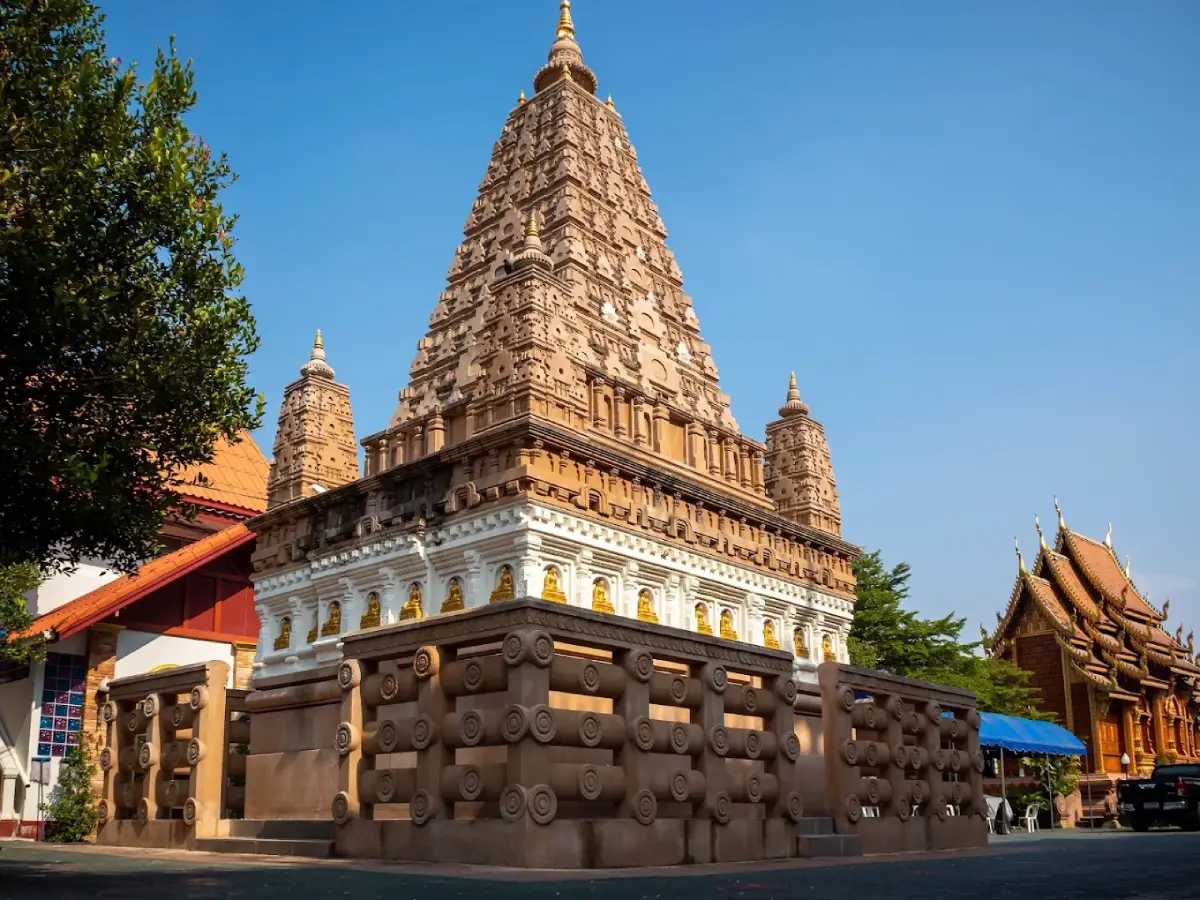
Wat Tha Kham (Mae Hia) in Chiang Mai is a community Buddhist temple under the Mahanikaya order, located at 18 Ban Tha Kham, Moo 4, Mae Hia Subdistrict, Mueang Chiang Mai District, Chiang Mai Province. The temple is an important spiritual center for Ban Tha Kham and is closely connected with the old crossing point over the Mae Hia stream. Its main highlights include a gilded teakwood ubosot in applied Lanna style, a viharn with murals of the Vessantara Jataka and local Lanna traditions, a bell tower, a Bodh Gaya-style replica chedi, and Phra Phuttha Thong Thip, formerly known as Duang Thip, the temple’s important Buddha image.
Wat Tha Kham is suitable for travelers who want to explore Chiang Mai through the local communities of Mae Hia rather than only through the famous temples inside the old city moat. The temple lies south of central Chiang Mai, near Chiang Mai–Hang Dong Road, the Canal Road route, Wat Ton Pin, Wat Tamnak Suan Khwan Sirimangkhalachan, Wat Ubosot Mae Hia, Wat Phra That Doi Kham, Royal Park Rajapruek, and Chiang Mai Night Safari. A visit here adds local depth to a Mae Hia itinerary by connecting temple art, village memory, water routes, local craftsmanship, and community faith.
The name “Tha Kham” comes directly from the old landscape and the way people used the area. In the past, Ban Tha Kham was an open area with the Mae Hia stream flowing through the village. Travelers from southern Chiang Mai areas such as Hang Dong, San Pa Tong, Chom Thong, Hot, and nearby districts used this place as a crossing point before continuing toward Chiang Mai city. The area served as a water crossing, resting place, trading point, and meeting place. The temple name therefore preserves the practical function of the old community landscape.
The history of Ban Tha Kham is also connected with the procession of sacred relics from Wat Phra That Si Chom Thong to Chiang Mai city. The procession traveled from the south, passed Wat Ton Kwen, and rested at the Tha Kham area so that local people could pay respect before the relics continued to the pavilion or residence of northern rulers, associated today with the Wat Tamnak area. When the relic procession returned, it passed this crossing again. This memory gives Wat Tha Kham significance as a place where local devotion, travel routes, and sacred procession traditions met.
Ban Tha Kham was formerly known as Ban Mae Hia because the Mae Hia stream flowed through the village. Later, local people began referring to the area by its function as a stream-crossing point, and the name Ban Tha Kham became established. The temple was then built as the village temple and spiritual center. Wat Tha Kham therefore grew from water, movement, trade, rest, and community faith. It should be understood together with the Mae Hia stream and the historical movement of people through this part of Chiang Mai.
The name Mae Hia is itself meaningful. It is related to an older term, Nam Mae Hia, which combines the stream with a local plant known as mai hia. This plant had bamboo-like segmented stems and grew along the stream banks. Over time, the name Nam Mae Hia became the modern Mae Hia. Understanding this place name helps visitors see Wat Tha Kham as part of an older water-and-plant landscape that once shaped the southern edge of Chiang Mai.
The area around Wat Tha Kham was once a resting and trading place for people passing through the village. The western side of the temple had been a wooded, overgrown area with vines and dense vegetation. Later, local leaders and residents cleared and improved the space until it became a broad village market area where agricultural goods were sold for many years. When local trade patterns changed, the old market area was given to the temple for community activities. This history shows how closely the temple was tied to village life, local economy, and public use.
Road and irrigation development also changed the landscape around the temple. A road was later built along the Mae Hia stream from Ban Ton Pin past the front of Wat Tha Kham, improving movement within the community. Around 1959, an irrigation canal was dug behind the temple to support agriculture. These changes placed Wat Tha Kham at the meeting point between the old stream-crossing landscape and modern roads, irrigation systems, residential development, and expanding suburban life.
The temple compound covers 2 rai and 41 square wa, with an additional monastic land plot of 1 ngan. Important temple structures include the ubosot, sermon hall, monks’ residences, viharn, multipurpose hall, bell tower, Bodh Gaya-style replica chedi, merit-making areas, and community activity spaces. Although the compound is compact, it functions as a complete village temple, supporting worship, Buddhist ceremonies, community events, religious learning, and local gatherings.
The gilded teakwood ubosot is one of Wat Tha Kham’s main highlights. The older ubosot once stood near the temple entrance and faced south toward the Mae Hia stream. After it deteriorated, it was removed and rebuilt near the front-left side of the viharn, facing east. Construction began in 1999, took 9 years, and was celebrated with a traditional poy luang ceremony in 2008. The present ubosot is made of teakwood in applied Lanna style and gilded throughout, making it one of the most visually striking structures in the temple.
The beauty of the teakwood ubosot lies not only in its golden surface but also in the use of teak, the applied Lanna form, and the workmanship that reflects community faith. As the ubosot is an important building for monastic acts, visitors should view it respectfully, avoid touching gilded woodwork or decorative details, and observe the building as both sacred architecture and evidence of local craftsmanship.
The viharn is another important structure. It was restored from the older building and ceremonially celebrated in 1996. The restoration involved several groups of craftsmen, including artisans from San Pa Tong and Lamphun, who worked on the structure, doors, windows, carved patterns, railings, gables, and decorative details. This shows how temple restoration in Lanna communities often brings together faith, craftsmanship, and cooperation from different local artisan groups.
The murals inside the viharn are among the most valuable features of Wat Tha Kham. The upper section of the walls depicts the Vessantara Jataka, while the lower section shows local Lanna life and traditions. These paintings are not simply decorative. They serve as visual teaching tools, communicating generosity, sacrifice, moral cultivation, and community memory. The local scenes also preserve images of northern Thai life, dress, activities, and customs inside a sacred space.
Phra Phuttha Thong Thip, formerly known as Duang Thip, is the temple’s important Buddha image and a major focus of local devotion. The image is connected with the story of “Phra Phi Phra Nong,” or sibling Buddha images, shared between Wat Tha Kham and Wat Ton Pin. Local memory tells of 2 ancient Buddha images found near an old temple area across the Mae Hia stream. The larger image was brought to Wat Tha Kham, while the smaller image was enshrined at Wat Ton Pin.
The sibling Buddha image story is also linked with the former Aeo Phra tradition during Songkran. In this tradition, the younger Buddha image from Wat Ton Pin was carried in procession to visit Wat Tha Kham. The practice shows how temple communities in Mae Hia used Buddha images, processions, Songkran, and inter-temple visits to strengthen social and spiritual bonds. Even though the tradition is no longer continuously held, it remains an important cultural memory for the community.
The area where the old Buddha images were found is associated with a large Bodhi tree and a community guardian shrine known as San Po Ban or San Chao Ban. This makes the sacred geography of Wat Tha Kham broader than the temple compound itself. Local devotion extends to the Bodhi tree, the guardian shrine, the Mae Hia stream, and the remembered old temple site. Visitors should therefore understand Wat Tha Kham as part of a network of sacred places in Ban Tha Kham.
The bell tower adds another layer to the temple compound. In Thai temples, a bell tower has both practical and symbolic functions. It marks time, calls attention to activities, and creates an acoustic rhythm for temple life. Seen together with the ubosot, viharn, sermon hall, monks’ residences, and activity areas, the bell tower helps visitors understand Wat Tha Kham as a working community temple rather than a single sightseeing monument.
The Bodh Gaya-style replica chedi was built in 2018 and inspired by Bodh Gaya in India, the place of the Buddha’s enlightenment. This structure connects the local faith of Mae Hia with one of the most important Buddhist sites in the world. Its presence in a village temple shows how Thai Buddhist communities adapt global Buddhist symbolism into local sacred space, allowing devotees to reflect on the Buddha’s enlightenment within their own community temple.
The merit-making pavilion near the entrance is a two-storey multipurpose building. The lower level is used for general activities, while the upper level has been associated with religious education. Wat Tha Kham formerly operated a Dhamma and Pali study program from 1988 and opened a Sunday Buddhist school in 1990. Although that older teaching system is no longer active in the same form, this history shows that the temple has also served as a place of Buddhist learning and moral education.
Ban Tha Kham is also known for the local knowledge of din kho roof tiles. These traditional clay tiles are connected with Lanna building culture and local craftsmanship. The presence of this craft heritage around the community shows that Wat Tha Kham is linked not only with religion but also with material culture, architecture, and local construction knowledge. A visit to the temple can therefore help travelers understand how temples, houses, craft skills, and community memory are connected in northern Thailand.
Wat Tha Kham continues to play an active role in the present community. It is used for Buddhist ceremonies, merit-making, local gatherings, and municipal community activities, including Lanna New Year events and ceremonies honoring elders. This confirms that Wat Tha Kham remains a living temple. It is not only a historical stop or a photography location, but a religious and social space still used by the people of Ban Tha Kham and Mae Hia.
The abbot recorded in contemporary community information is Phra Maha Pongpreeda Paripunno. He has played a role in preserving and transmitting the history of Ban Tha Kham and Wat Tha Kham together with local leaders. This is important because much local temple history survives through memory, interviews, community narratives, and the cooperation of monks and residents. Wat Tha Kham is therefore also a center for preserving village history.
Getting to Wat Tha Kham is convenient from central Chiang Mai. From the Airport Intersection or Central Chiang Mai Airport, take Chiang Mai–Hang Dong Road south toward Mae Hia and Hang Dong, then connect to Ban Tha Kham, Moo 4. Another route is to follow Canal Road south from Ton Payom Market for about 6 kilometers. Visitors using navigation should enter “Wat Tha Kham Mae Hia” to avoid confusion with other temples named Wat Tha Kham in Chiang Mai Province.
Public transport options include red songthaews, tuk-tuks, taxi-app services, or local transport from the Chiang Mai–Hang Dong route. The destination should be given as “Wat Tha Kham, Moo 4, Mae Hia.” Travelers coming from the airport, Tha Phae Gate, Nimmanhaemin, or the old city should allow extra time during morning and evening traffic, especially on Chiang Mai–Hang Dong Road and Canal Road.
The best time to visit Wat Tha Kham is in the morning or late afternoon. Morning is suitable for worship and quiet observation, while late afternoon is good for photographing the teakwood ubosot, gilded details, viharn murals, bell tower, and Bodh Gaya-style chedi. A typical visit takes around 30–60 minutes, but visitors interested in murals and local history should spend more time observing the details carefully.
Visitors should follow standard Thai temple etiquette. Dress modestly, remove shoes before entering sacred buildings, keep voices low, do not climb on chedi bases, and avoid touching Buddha images, gilded woodwork, murals, or old architectural elements. If a religious ceremony, merit-making event, or community activity is taking place, visitors should allow monks and local residents to use the space first.
Wat Tha Kham is suitable for cultural and architectural photography. Good subjects include the gilded teakwood ubosot, viharn murals, bell tower, Bodh Gaya-style chedi, merit-making pavilion, and the broader setting of Ban Tha Kham and the Mae Hia stream. The best photographs are those that show the temple as a living village temple, not only as a collection of beautiful structures.
Wat Tha Kham can be combined easily with Wat Ton Pin, Wat Tamnak Suan Khwan Sirimangkhalachan, Wat Ubosot Mae Hia, Wat Phra That Doi Kham, Royal Park Rajapruek, Chiang Mai Night Safari, Wat Ton Kwen, and Baan Kang Wat. This route works well for travelers exploring southern Chiang Mai, Mae Hia, Hang Dong, and the Rajapruek area. It offers temples, community heritage, gardens, family attractions, and local neighborhoods without needing to return repeatedly to the old city.
Compared with more famous temples in Chiang Mai, Wat Tha Kham stands out through its community-based story. It preserves the memory of the Mae Hia stream crossing, the sacred relic procession from Chom Thong, the sibling Buddha images shared with Wat Ton Pin, the former Aeo Phra tradition, the gilded teakwood ubosot, the Vessantara Jataka murals, the Bodh Gaya-style chedi, and the local din kho tile heritage. These details make it a compact temple with a dense cultural narrative.
Overall, Wat Tha Kham (Mae Hia) is a historic community temple worth visiting when exploring southern Chiang Mai and Mae Hia. It brings together local water-route history, Buddhist devotion, Lanna craftsmanship, village memory, religious education, and active community life. Travelers who want to understand Chiang Mai through temples, streams, old routes, and local faith should include Wat Tha Kham in their itinerary.
| Name | Wat Tha Kham (Mae Hia) |
| Location | Ban Tha Kham, Moo 4, Mae Hia Subdistrict, Mueang Chiang Mai District, Chiang Mai Province |
| Address | 18 Ban Tha Kham, Moo 4, Mae Hia Subdistrict, Mueang Chiang Mai District, Chiang Mai 50100, Thailand |
| Coordinates | 18.743014, 98.946995 |
| Temple Type | Community Buddhist Temple Under The Mahanikaya Order |
| Temple Area | 2 rai and 41 square wa, with an additional monastic land plot of 1 ngan |
| Highlights | Gilded teakwood ubosot in applied Lanna style, viharn murals of the Vessantara Jataka and Lanna traditions, bell tower, Bodh Gaya-style replica chedi, Phra Phuttha Thong Thip, and the history of the Mae Hia stream crossing |
| History | Built as the village temple of Ban Tha Kham, connected with the Mae Hia stream crossing and the sacred relic procession from Wat Phra That Si Chom Thong to Chiang Mai city |
| Consecrated Boundary | Granted in 1950 |
| Name Origin | The name comes from the old crossing point over the Mae Hia stream, formerly used by travelers, traders, and local residents moving between southern Chiang Mai and the city. |
| Sacred Objects | Phra Phuttha Thong Thip, formerly known as Duang Thip, an important Buddha image associated with the sibling Buddha image tradition between Wat Tha Kham and Wat Ton Pin |
| Ubosot Features | Gilded teakwood ubosot in applied Lanna style. Construction began in 1999, took 9 years, and was celebrated with a poy luang ceremony in 2008. |
| Viharn Features | The viharn contains murals depicting the Vessantara Jataka in the upper section and Lanna community life and traditions in the lower section. |
| Important Chedi | Bodh Gaya-style replica chedi built in 2018, inspired by Bodh Gaya in India, the place of the Buddha’s enlightenment |
| Community Tradition | The temple is linked with the Aeo Phra tradition during Songkran, when the younger Buddha image from Wat Ton Pin was carried in procession to Wat Tha Kham. |
| Local Craft Heritage | Ban Tha Kham is associated with din kho clay roof tile craftsmanship, an important local building tradition in Lanna culture. |
| Current Abbot / Caretaker | Phra Maha Pongpreeda Paripunno |
| Open Days | Daily |
| Opening Hours | 08.00 – 17.00 |
| Current Status | Open for worship, merit-making, temple visits, and community activities for Ban Tha Kham and Mae Hia |
| Facilities | Ubosot, viharn, sermon hall, monks’ residences, multipurpose hall, bell tower, merit-making pavilion, activity courtyard, merit-making areas, and walking areas |
| Main Areas / Zones | Gilded teakwood ubosot, mural viharn, Phra Phuttha Thong Thip, bell tower, Bodh Gaya-style replica chedi, merit-making pavilion, multipurpose hall, monks’ residences, and community activity area |
| Travel Information | Accessible from central Chiang Mai via Chiang Mai–Hang Dong Road or Canal Road. From the Airport Intersection, travel south for about 6 km toward Ban Tha Kham, Moo 4, Mae Hia. |
| Visitor Guidelines | Dress modestly, remove shoes before entering sacred buildings, do not touch Buddha images, gilded woodwork, or murals, do not climb chedi bases, and respect monks and community activities. |
| Nearby Tourist Attractions | 1. Wat Ton Pin, About 1 km 2. Wat Tamnak Suan Khwan Sirimangkhalachan, About 2 km 3. Wat Ubosot Mae Hia, About 2 km 4. Wat Phra That Doi Kham, About 4 km 5. Royal Park Rajapruek, About 4 km 6. Chiang Mai Night Safari, About 5 km 7. Wat Intharawat Or Wat Ton Kwen, About 5 km 8. Baan Kang Wat, About 7 km |
| Nearby Restaurants | 1. Poom’s Fried Meatballs With Spicy Sauce Wat Tha Kham, About 0.2 km, Tel. 099-239-1999 2. Vibhavadi Chicken Rice Mae Hia–Don Pin Branch, About 1 km, Tel. 093-243-8572 3. Im Aroi Rice Porridge 1 Baht Mae Hia, About 3 km, Tel. 088-829-1666, 062-445-9444, 095-446-3363 4. Cup Fine Day Coffee & Cuisine, About 4 km, Tel. 081-992-2249 5. Baan Suan Coffee, About 5 km, Tel. 084-821-7357, 093-228-4958 6. Khaomao-Khaofang Chiang Mai, About 5 km, Tel. 063-665-5838 |
| Nearby Accommodations | 1. Pimlada Hotel, About 0.3 km, Tel. 099-269-4256 2. Mina Garden Villa Resort, About 0.4 km, Tel. 053-281-658 3. Pool Suite Chiang Mai, About 2 km, Tel. 099-236-3222, 063-798-3444, 053-908-456 4. Donpin No.8, About 2 km, Tel. 099-103-4820 5. Vdara Resort and Spa, About 3 km, Tel. 061-270-5888 6. Mountain Creek Resort, About 5 km, Tel. 053-111-424 |
Frequently Asked Questions (FAQ)
Q: Where is Wat Tha Kham (Mae Hia) located?
A: Wat Tha Kham is located at 18 Ban Tha Kham, Moo 4, Mae Hia Subdistrict, Mueang Chiang Mai District, Chiang Mai Province. It is south of central Chiang Mai near Chiang Mai–Hang Dong Road and Canal Road.
Q: What are the opening hours of Wat Tha Kham?
A: Wat Tha Kham is open daily from 08.00 to 17.00.
Q: What does the name Wat Tha Kham mean?
A: The name comes from an old crossing point over the Mae Hia stream, once used by travelers, traders, and local residents moving between southern Chiang Mai and the city.
Q: What should visitors see inside Wat Tha Kham?
A: Key features include the gilded teakwood ubosot in applied Lanna style, the viharn murals of the Vessantara Jataka and Lanna traditions, the bell tower, the Bodh Gaya-style replica chedi, and Phra Phuttha Thong Thip.
Q: Why is Phra Phuttha Thong Thip important?
A: Phra Phuttha Thong Thip, formerly known as Duang Thip, is an important Buddha image of Wat Tha Kham and is connected with the sibling Buddha image tradition between Wat Tha Kham and Wat Ton Pin.
Q: What community tradition is associated with Wat Tha Kham?
A: The temple is associated with the former Aeo Phra tradition during Songkran, when the younger Buddha image from Wat Ton Pin was carried in procession to visit Wat Tha Kham.
Q: How can travelers get to Wat Tha Kham?
A: From central Chiang Mai, travelers can use Chiang Mai–Hang Dong Road or Canal Road. From the Airport Intersection, travel south for about 6 km toward Ban Tha Kham, Moo 4, Mae Hia. Private cars, red songthaews, tuk-tuks, and taxi-app services are practical options.
Q: What nearby places can be visited with Wat Tha Kham?
A: Nearby places include Wat Ton Pin, Wat Tamnak Suan Khwan Sirimangkhalachan, Wat Ubosot Mae Hia, Wat Phra That Doi Kham, Royal Park Rajapruek, Chiang Mai Night Safari, Wat Ton Kwen, and Baan Kang Wat.
 Category: ●Places of Worship
 Group: ●Temple
Last Update : 3 DayAgo
 Last Update : 3 DayAgo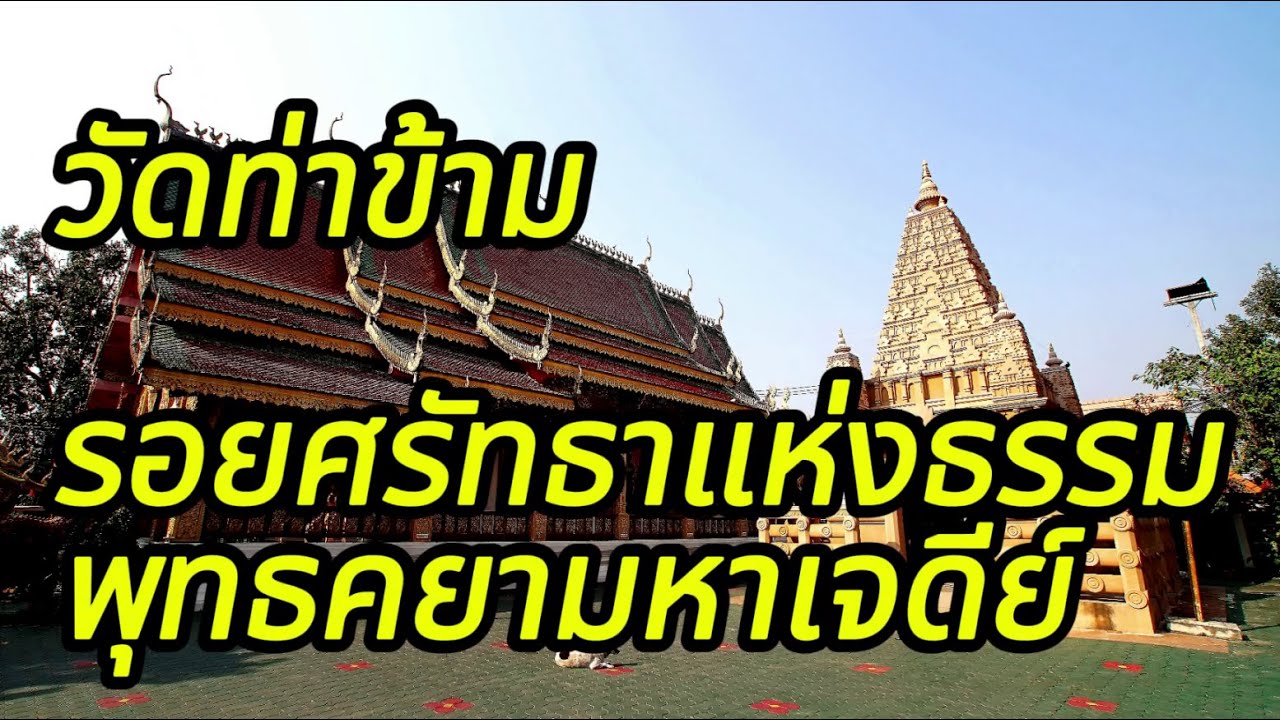
 Click to Access the Navigation Map GPS
Wat Tha Kham (Mae Hia) Map
Recommend

 Muang Chiang Mai(121)Chom Thong(47)Mae Chaem(25)Chiang Dao(33)Doi Saket(68)Mae Taeng(85)Mae Rim(69)Samoeng(29)Fang(71)Mae Ai(62)Phrao(70)San Pa Tong(105)San Kamphaeng(66)San Sai(73)Hang Dong(74)Hot(32)Doi Tao(22)Omkoi(11)Saraphi(74)Wiang Haeng(15)Chai Prakan(28)Mae Wang(32)Mae On(22)Doi Lo(34)Galyani Vadhana(1)


