
lovethailand home >North Travel Attractions >Chiang Mai Travel Attractions >Muang Chiang Mai >Chang Moi > Wat Nong Kham
TL;DR: Wat Nong Kham is located at Chang Moi Road, Chang Moi Subdistrict, Mueang Chiang Mai District, Chiang Mai Province, open Daily, hours 08.00 – 17.00.

Wat Nong Kham
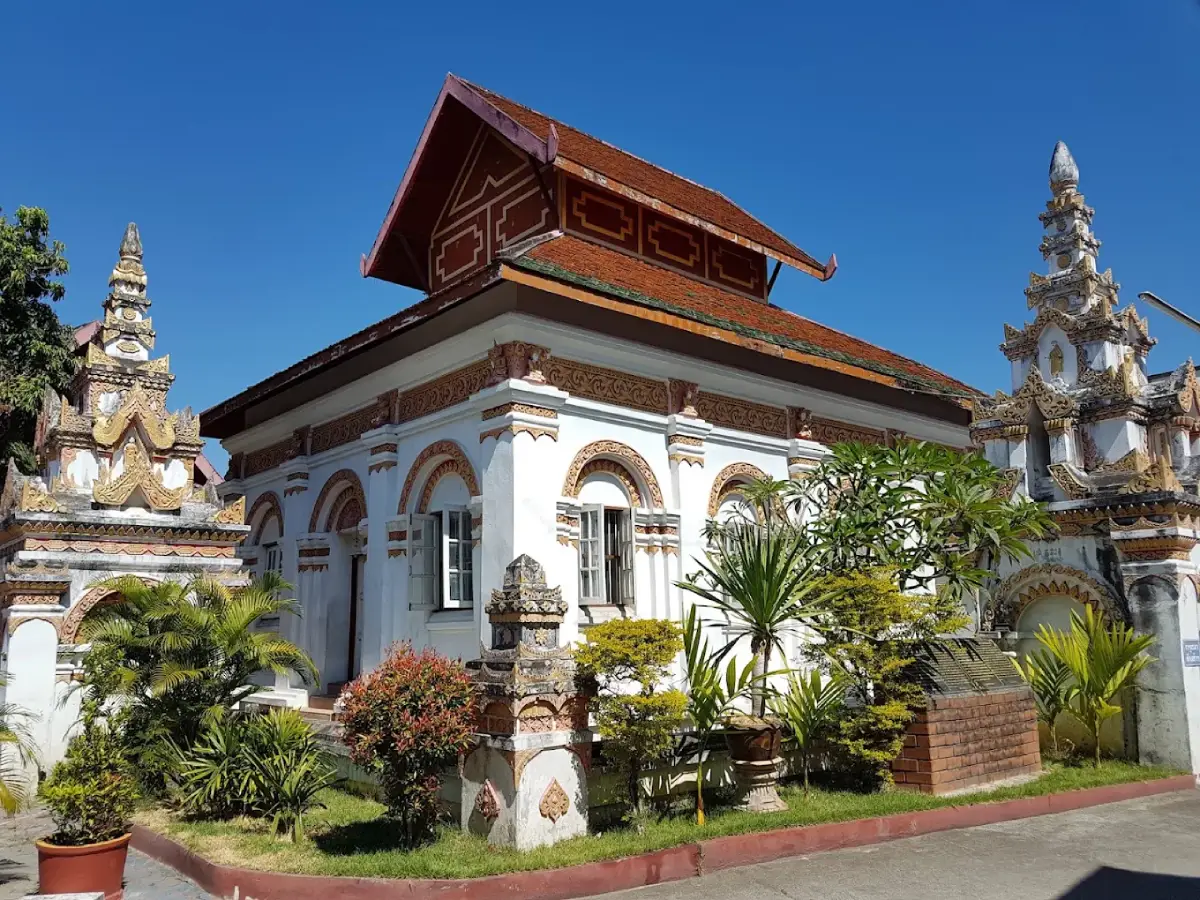
Open Days: Daily
Opening Hours: 08.00 – 17.00
Wat Nong Kham in Chiang Mai is a community Buddhist temple under the Mahanikaya order, located at 182 Chang Moi Road, Chang Moi Subdistrict, Mueang Chiang Mai District, Chiang Mai Province. Founded in 1837, the temple is especially important for its Pa-O, Shan, Burmese, and Lanna cultural layers. It was established through the shared faith of Pa-O or Taungthu devotees, Shan or Tai Yai communities, and Thai Buddhists in Chiang Mai. Today, Wat Nong Kham remains open daily for worship, merit-making, and cultural visits in the old Chang Moi area, close to Tha Phae Gate, Warorot Market, Tha Phae Road, Somphet Market, and Chiang Mai’s historic trading neighborhoods.
Wat Nong Kham is one of the most meaningful temples for understanding Chiang Mai as a multi-ethnic city. It does not represent only the familiar Lanna style seen in many large temples inside the old city moat. Instead, it preserves the religious and artistic identity of Pa-O, Shan, Burmese-influenced, and local Chiang Mai communities. For travelers, the temple offers a compact but rich cultural experience: a working neighborhood temple, a site of Pa-O religious art, and a rare example of a temple architecture that differs from the standard Lanna viharn and ubosot forms.
The name Wat Nong Kham comes from the old landscape of the temple site. In the past, the area was still wooded and had a large pond to the north behind the temple. Beyond the pond was a waterway stretching eastward toward the main road in front of the temple. Local memory says that there was gold at the bottom of this deep pond. The pond and waterway also acted as a natural boundary for the temple compound. The name “Nong Kham,” meaning golden pond, therefore records both the former geography and the cultural memory of the place before Chang Moi became a dense urban district.
The temple’s foundation is closely connected with the Pa-O, also known locally as Taungthu. The Pa-O have their own language, dress, and cultural identity, and the majority are Buddhists. In Chiang Mai, their religious life developed alongside Lanna, Shan, and Burmese Buddhist traditions. Wat Nong Kham became a center of faith where several communities could gather, make merit, support monks, and preserve their identity through Buddhist practice. This makes the temple valuable not only as an architectural site but also as evidence of how different ethnic groups helped shape Chiang Mai’s religious landscape.
In the past, Wat Nong Kham was under the administration of Burmese monastic authority. Because of this, many people came to think of the temple simply as a Burmese temple. However, its foundation and identity are strongly connected with the Pa-O community. Understanding the temple properly requires distinguishing Burmese monastic influence and artistic features from Pa-O cultural identity. Wat Nong Kham is therefore best seen as a Pa-O-rooted temple with Shan, Burmese, and Lanna connections, rather than being reduced to a single label.
The temple compound covers 6 rai and 15 square wa under land title deed number 2584. Its location on Chang Moi Road is highly significant. Chang Moi is one of Chiang Mai’s old commercial districts and links Tha Phae Gate, Tha Phae Road, Warorot Market, Ton Lam Yai Market, and the Ping River area. The neighborhood around the temple contains shops, old houses, cafés, restaurants, guesthouses, markets, and other historic temples. Wat Nong Kham is therefore a true urban temple, embedded in everyday local movement and community life.
Wat Nong Kham received its consecrated boundary on 5 July 1902. The boundary measures 11 meters by 12 meters. In Buddhist practice, this boundary is important because it marks the formal space for Sangha rites, especially ordination and other monastic ceremonies. Although the temple began through the faith of ethnic and local communities, it later acquired a secure official religious status and continues to function as an active Buddhist temple in Chiang Mai.
The temple’s most distinctive feature is its Pa-O and Lanna mixed architecture. The large viharn is a half-masonry, half-wooden building. It functions both as a religious ceremonial space and as a living area for monks and novices. This design differs from many standard Lanna viharns, which usually feature chofa, bairaka, and other Thai roof ornaments. Wat Nong Kham’s main hall is more restrained, functional, and strongly connected with Pa-O and Shan-Burmese temple traditions.
The large viharn was begun in 1917 and completed in 1927. The lower level is masonry, while the upper level is built of wood. The upper left side is divided into rooms for monks and novices. The right wing provides seating for the monastic community during religious ceremonies. The middle section is an open hall used for Buddhist activities. This flexible spatial arrangement makes the viharn both a sacred hall and a practical monastic residence. It is one of the most important features to observe when visiting the temple.
The polished wooden floor inside the viharn is an important part of the temple’s atmosphere. Long wooden planks, worn and cared for over time, create a warm and quiet feeling. The floor is not merely a structural element. It records the long use of the hall by monks, novices, villagers, and devotees who have gathered here for ceremonies and merit-making across generations. Visitors should move carefully and respectfully through this space.
The interior of the viharn contains attractive murals around the ceiling and light openings, together with finely carved wooden details. These elements are central to the temple’s artistic value. The craftsmanship is not designed for monumental display, but for a living religious space. The murals, carved wood, light openings, and wooden upper structure work together to create an atmosphere that is very different from more famous Lanna temples. Visitors interested in architecture should take time to observe these details quietly and avoid touching painted or carved surfaces.
The principal Buddha image inside the viharn is a large seated image in the diamond meditation posture, with both soles turned upward. This posture and style connect the image with Burmese, Pa-O, and Shan artistic traditions. The image shows clearly that Chiang Mai’s Buddhist art is not limited to one Lanna form. It developed through the movement of people, faith, trade, and cultural contact across northern mainland Southeast Asia.
Other important sacred objects at Wat Nong Kham include Burmese-style brick-and-plaster Buddha images and a chedi. These objects reflect the temple’s Burmese and Shan-related artistic influences. Burmese-style Buddha images often differ from Lanna images in facial form, body modeling, and devotional expression. Their presence at Wat Nong Kham makes the temple useful for visitors who want to compare Buddhist art styles within Chiang Mai.
The ubosot of Wat Nong Kham also shows strong Shan and Pa-O characteristics. It is a brick-and-plaster building without the chofa, bairaka, and hang hong roof ornaments commonly associated with Thai temple architecture. Its simpler profile makes the building visually distinct from many Lanna temples. Exterior murals related to Pa-O artistic expression add another layer of identity to the building and reinforce the temple’s role as a Pa-O-rooted religious site.
The principal Buddha image in the ubosot is a large brick-and-plaster image in Pa-O style. It sits in the diamond meditation posture, has a white body, the left hand resting palm-up on the lap, and the right hand resting palm-down on the right knee. This image is significant for visitors interested in Buddhist art beyond mainstream Lanna examples. It shows how ethnic communities expressed Buddhist devotion through their own artistic language.
The area outside the temple is an important part of the experience. Chang Moi Road is filled with restaurants, dessert shops, coffee shops, guesthouses, local businesses, and old commercial buildings. Wat Nong Kham therefore stands in the middle of a living urban neighborhood. It is not a temple created only for tourism. Local people pass by, stop for worship, make merit, and continue their daily lives around it. This close relationship between temple and street is one of the strongest reasons to visit.
Wat Nong Kham remains active today. In 2026, the Chiang Mai Provincial Office of Buddhism visited the temple as part of the Wat Pracha Rat Sang Suk temple development project for Mueang Chiang Mai District. This confirms that the temple continues to be used, maintained, and connected with current religious and community activity. Wat Nong Kham is therefore not only a historical temple; it is a living Buddhist institution in the Chang Moi district.
The current abbot recorded in recent public temple sources is Phra Samu Anon Indawongso. His role is connected with the care of the temple and public Buddhist activities. The presence of resident monks and an active abbot confirms that Wat Nong Kham should be approached as a living place of worship. Visitors should respect monks, local worshippers, and areas used for religious practice.
Getting to Wat Nong Kham is very convenient. From Tha Phae Gate, travelers can walk toward Tha Phae Road and Chang Moi Road. From Warorot Market or Ton Lam Yai Market, the temple is only a short walk west along the Chang Moi area. Visitors staying near the Night Bazaar, Chang Khlan Road, Loi Kroh Road, or the Ping River area can reach the temple by red songthaew, tuk-tuk, taxi app, private car, or a short walk.
Travelers using a private car should allow extra time for traffic and parking. Chang Moi is an old commercial district, with narrow roads, many shops, and steady local movement. During weekends, evenings, and market hours, walking from a nearby parking point is often easier than driving directly to the temple entrance. For a cultural visit, walking is usually the best option because it allows visitors to experience nearby markets, food shops, and old streets at the same time.
A good walking route can connect Wat Nong Kham with Chang Moi Road, Tha Phae Gate, Warorot Market, Ton Lam Yai Market, Wat Ou Sai Kham, Wat Chomphu, Wat Chetawan, Wat Mahawan, and Wat Buppharam. This route gives visitors a compact view of Chiang Mai’s eastern old town through markets, trade streets, Pa-O and Shan-Burmese temple art, Lanna temples, and everyday local life. It can be done comfortably within a half-day itinerary.
The best time to visit Wat Nong Kham is in the morning or late afternoon. Morning is suitable for worship and quiet observation. Late afternoon works well for visitors continuing to Warorot Market, Tha Phae Gate, or the Night Bazaar. Some interior areas may not always be open because the temple is an active religious and monastic space. Visitors should stay within areas open to the public and follow temple etiquette at all times.
Standard Thai temple etiquette should be followed. Dress modestly, remove shoes before entering sacred buildings, keep voices low, and avoid touching Buddha images, murals, carved wood, or old architectural elements. Do not climb chedi bases or enter monastic areas without permission. Photography should be respectful, without flash near murals or carved wood, and without disturbing monks or worshippers.
For cultural photography, Wat Nong Kham offers several interesting subjects: the half-masonry half-wooden viharn, the upper ceremonial hall, polished wooden floors, light openings, carved wood, murals, Pa-O-style Buddha images, Burmese-style sacred objects, and the temple’s urban setting on Chang Moi Road. Good photographs should capture both the temple’s architectural details and its relationship with the surrounding old commercial neighborhood.
Wat Nong Kham is especially valuable for visitors interested in ethnic history in Chiang Mai. It demonstrates that the city was shaped by many communities, including Lanna, Pa-O, Shan, Burmese, and merchant groups in the old trade districts. The temple’s buildings, Buddha images, murals, and community memory all show how Buddhism became a shared cultural space where different groups could preserve identity while living together in the city.
Compared with more famous temples in Chiang Mai, Wat Nong Kham stands out because of its specific cultural identity. It brings together the story of the golden pond, Pa-O and Shan devotion, a half-masonry half-wooden viharn, ceremonial and residential use in the same structure, Pa-O-style Buddha images, Burmese-influenced sacred objects, murals, carved wood, and a location in one of Chiang Mai’s busiest old neighborhoods. These elements make it a compact temple with dense historical and cultural meaning.
Overall, Wat Nong Kham is a worthwhile stop for travelers exploring Chang Moi Road, Tha Phae Gate, Warorot Market, and the Night Bazaar area. Founded in 1837, it preserves Pa-O, Shan, Burmese, and Lanna religious layers within a living neighborhood temple. Visitors who want to understand Chiang Mai beyond the most popular temple circuit should include Wat Nong Kham in their itinerary. The temple offers calm, history, craftsmanship, and a clear view of the city’s multi-ethnic Buddhist heritage.
| Name | Wat Nong Kham |
| Location | Chang Moi Road, Chang Moi Subdistrict, Mueang Chiang Mai District, Chiang Mai Province |
| Address | 182 Chang Moi Road, Chang Moi Subdistrict, Mueang Chiang Mai District, Chiang Mai 50300, Thailand |
| Coordinates | 18.78993, 98.99611 |
| Temple Type | Community Buddhist Temple Under The Mahanikaya Order |
| Temple Area | 6 rai and 15 square wa |
| Highlights | Historic Chang Moi temple with Pa-O, Shan, Burmese, and Lanna cultural layers, a half-masonry half-wooden viharn, Pa-O-style Buddha images, Burmese-style sacred objects, and a convenient location near Warorot Market and Tha Phae Gate |
| History | Founded in 1837 by Pa-O or Taungthu devotees, Shan or Tai Yai communities, and Thai Buddhists in Chiang Mai. The temple received its consecrated boundary on 5 July 1902. |
| Name Origin | The name comes from an old pond and waterway behind the temple. Local memory says that gold lay at the bottom of the pond, giving rise to the name “Nong Kham,” or golden pond. |
| Ethnic Significance | The temple is connected with Pa-O or Taungthu, Shan or Tai Yai, Burmese-influenced Buddhist traditions, and Thai communities in Chiang Mai. |
| Architectural Features | The large viharn is a half-masonry, half-wooden building. The lower level is masonry and the upper level is wood. It combines ceremonial use with monastic residence and differs from standard Thai temple architecture by not using typical chofa and bairaka roof ornaments. |
| Main Viharn | Begun in 1917 and completed in 1927. The upper floor includes monks’ and novices’ rooms, monastic seating areas for ceremonies, and a central open hall for religious activities. |
| Sacred Objects | Large principal Buddha image seated in the diamond meditation posture, Burmese-style brick-and-plaster Buddha images, Pa-O-style Buddha images, chedi, murals, carved wood, ceiling details, and light openings inside the viharn |
| Current Abbot / Caretaker | Phra Samu Anon Indawongso |
| Open Days | Daily |
| Opening Hours | 08.00 – 17.00 |
| Current Status | Open for worship, merit-making, and temple visits during operating hours, and still active as a community temple in Chang Moi |
| Facilities | Viharn, ubosot, monks’ residences, funeral pavilion, dhamma hall, merit-making areas, walking areas, and nearby local shops along Chang Moi Road |
| Main Areas / Zones | Half-masonry half-wooden viharn, ubosot, Pa-O-style principal Buddha image, Burmese-style Buddha images, chedi, murals, carved wood, monks’ residences, funeral pavilion, and dhamma hall |
| Travel Information | Accessible from Tha Phae Gate, Tha Phae Road, Chang Moi Road, Warorot Market, Ton Lam Yai Market, and the Night Bazaar area by red songthaew, tuk-tuk, taxi app, private car, or on foot from nearby landmarks |
| Visitor Guidelines | Dress modestly, remove shoes before entering sacred buildings, do not touch Buddha images, murals, carved wood, or old architectural elements, do not climb chedi bases, and respect monks and worshippers. |
| Nearby Tourist Attractions | 1. Warorot Market, About 0.4 km 2. Tha Phae Gate, About 0.4 km 3. Tha Phae Walking Street, About 0.6 km 4. Three Kings Monument, About 1 km 5. Wat Phan Tao, About 1 km 6. Wat Chedi Luang Worawihan, About 1.1 km 7. Khlong Mae Kha Rakaeng, About 1.4 km 8. Wat Phra Singh Woramahawihan, About 1.6 km 9. Wat Lok Moli, About 1.6 km 10. Jing Jai Market Chiang Mai, About 2 km |
| Nearby Restaurants | 1. AmoreTiramisu.cnx, About 0.1 km 2. Chef’s Table by All About Beef, About 0.1 km 3. Sa-ad Chang Moi Branch 3, About 0.1 km 4. Khanom Wan Chang Moi, About 0.1 km 5. Kaprao Nueanuea Chang Moi, About 0.1 km, Tel. 094-989-3241 6. Samurai Kitchen 1 Chang Moi, About 0.1 km, Tel. 097-970-0104 7. Kasem Old-Style Noodles, About 0.1 km, Tel. 086-197-7314 8. JaiLoy Cafe & Rooftop, About 0.1 km, Tel. 096-542-6079 9. Chez Marco, About 0.6 km |
| Nearby Accommodations | 1. NAPTEL Chang Moi, About 0.3 km, Tel. 062-753-7888, 065-095-5997 2. The Warehouse Chiang Mai, About 0.4 km, Tel. 065-429-2021 3. Hotel M Chiang Mai, About 0.5 km, Tel. 053-211-069 4. De Chai The Deco Chiang Mai, About 0.6 km, Tel. 053-273-700 5. Meliá Chiang Mai, About 0.8 km, Tel. 052-090-699 6. Darley Hotel Chiangmai, About 0.8 km, Tel. 080-099-8881 7. Chiang Mai Marriott Hotel, About 0.8 km, Tel. 053-253-666 |
Frequently Asked Questions (FAQ)
Q: Where is Wat Nong Kham located?
A: Wat Nong Kham is located at 182 Chang Moi Road, Chang Moi Subdistrict, Mueang Chiang Mai District, Chiang Mai Province, near Warorot Market, Tha Phae Gate, Tha Phae Road, and the old Chang Moi neighborhood.
Q: What are the opening hours of Wat Nong Kham?
A: Wat Nong Kham is open daily from 08.00 to 17.00.
Q: What is the history of Wat Nong Kham?
A: Wat Nong Kham was founded in 1837 by Pa-O or Taungthu devotees, Shan or Tai Yai communities, and Thai Buddhists in Chiang Mai. It received its consecrated boundary on 5 July 1902.
Q: What does the name Wat Nong Kham mean?
A: The name comes from the former pond behind the temple. Local memory says that gold lay at the bottom of the pond, so the temple became known as Wat Nong Kham, or the temple of the golden pond.
Q: What architectural style is Wat Nong Kham known for?
A: The temple is known for Pa-O and Lanna mixed architecture with Shan-Burmese influence, especially its half-masonry half-wooden viharn, Pa-O-style Buddha images, Burmese-style sacred objects, murals, and carved woodwork.
Q: What should visitors see inside Wat Nong Kham?
A: Important features include the half-masonry half-wooden viharn, ubosot, large principal Buddha image in the diamond meditation posture, Burmese-style brick-and-plaster Buddha images, chedi, murals, ceiling details, light openings, and carved wood.
Q: Who is the current abbot of Wat Nong Kham?
A: The current abbot is Phra Samu Anon Indawongso.
Q: How can travelers get to Wat Nong Kham?
A: Travelers can reach the temple from Tha Phae Gate, Tha Phae Road, Chang Moi Road, Warorot Market, Ton Lam Yai Market, and the Night Bazaar area by red songthaew, tuk-tuk, taxi app, private car, or on foot from nearby landmarks.
 Category: ●Places of Worship
 Group: ●Temple
Last Update : 2 WeekAgo
 Last Update : 2 WeekAgo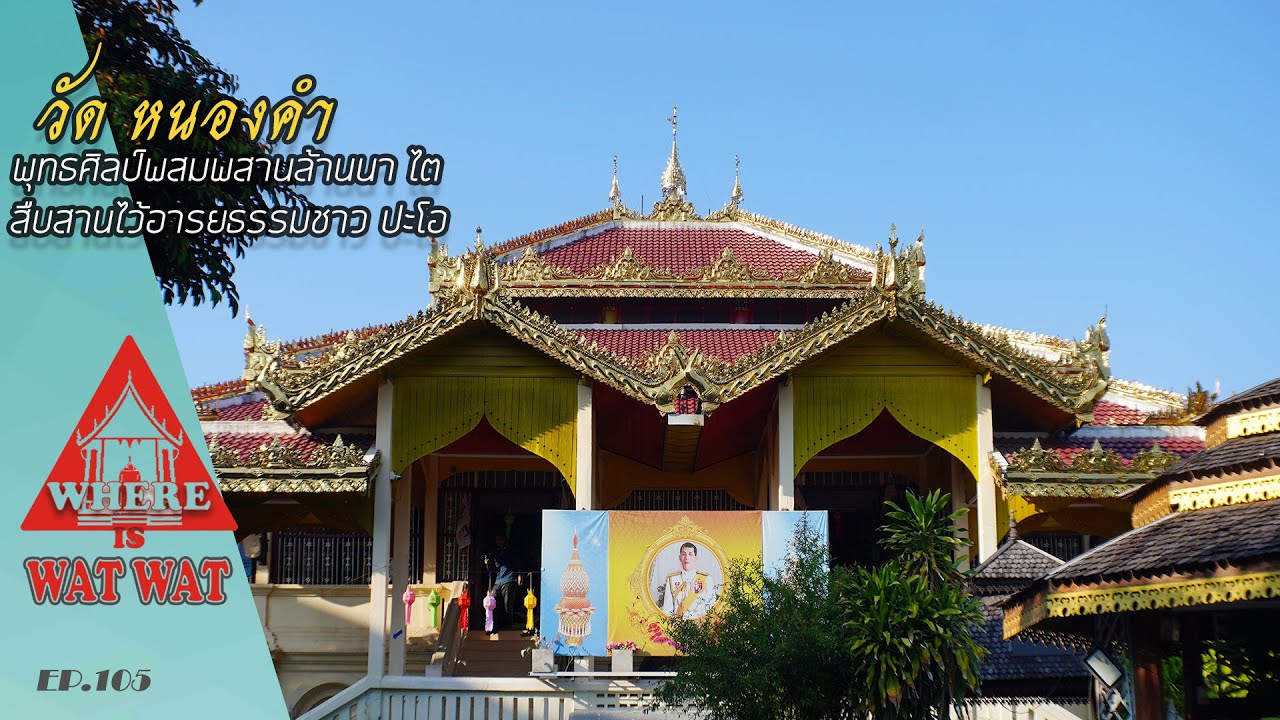
 Click to Access the Navigation Map GPS
Wat Nong Kham Map
Recommend

 Muang Chiang Mai(121)Chom Thong(47)Mae Chaem(25)Chiang Dao(33)Doi Saket(68)Mae Taeng(85)Mae Rim(69)Samoeng(29)Fang(71)Mae Ai(59)Phrao(70)San Pa Tong(103)San Kamphaeng(66)San Sai(73)Hang Dong(73)Hot(32)Doi Tao(22)Omkoi(11)Saraphi(74)Wiang Haeng(15)Chai Prakan(28)Mae Wang(32)Mae On(22)Doi Lo(34)Galyani Vadhana(1)


