
lovethailand home >North Travel Attractions >Chiang Mai Travel Attractions >Muang Chiang Mai >Chang Moi > Wat Chetawan
TL;DR: Wat Chetawan is located at Ban Chang Moi, Tha Phae Road, Chang Moi Subdistrict, Mueang Chiang Mai District, Chiang Mai Province, open Daily, hours 08.00 – 17.00.

Wat Chetawan
Open Days: Daily
Opening Hours: 08.00 – 17.00
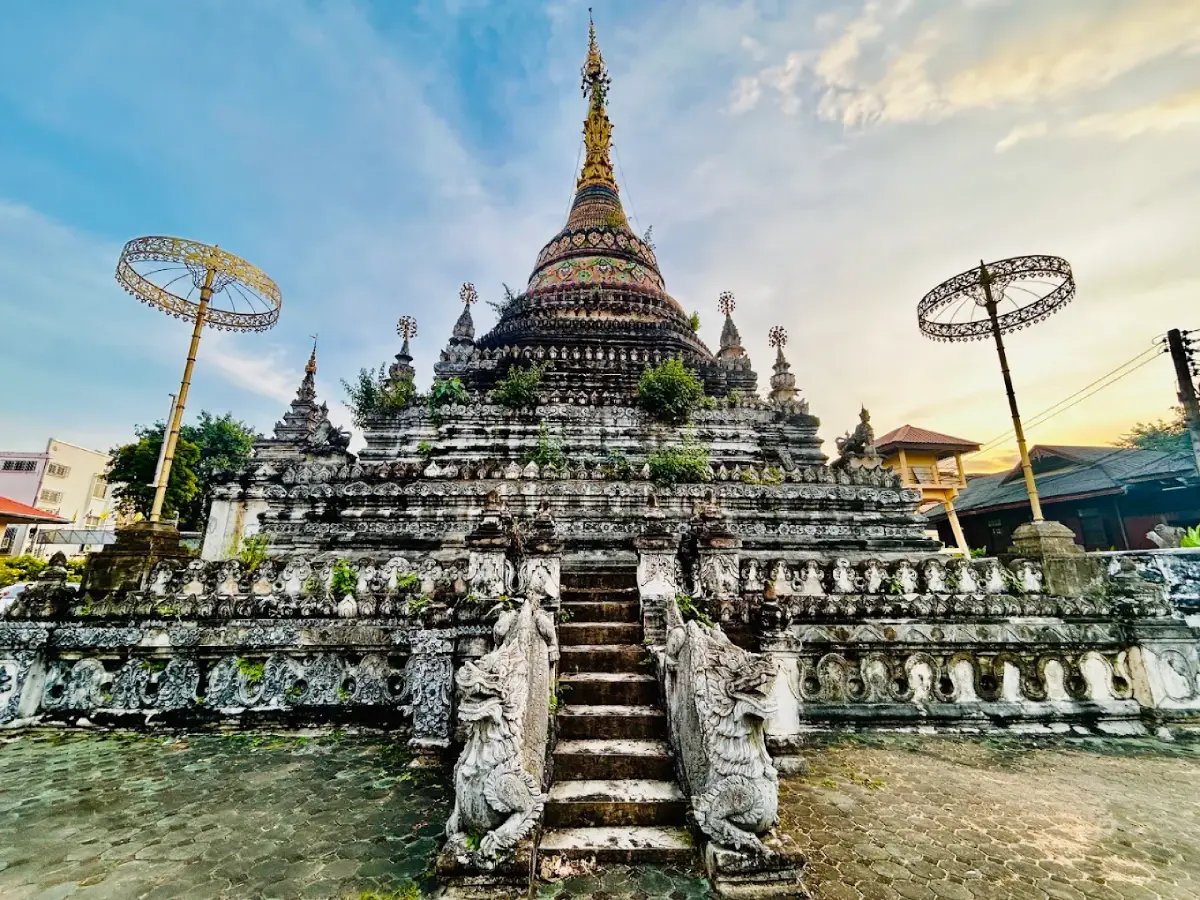
Wat Chetawan in Chiang Mai is a historic community Buddhist temple located at 314 Ban Chang Moi, Tha Phae Road, Chang Moi Subdistrict, Mueang Chiang Mai District, Chiang Mai Province. It is a private temple under the Mahanikaya order and is one of the most interesting temples on Tha Phae Road for visitors who want to see a combination of Lanna and Burmese Buddhist art. The temple is known for its north–south viharn orientation, 3 Burmese-influenced chedis resembling the form of Shwedagon Pagoda, a Burmese-style principal Buddha image, Chiang Saen-style bronze Buddha images, and its close relationship with Wat Mahawan directly across the road.
The value of Wat Chetawan does not come from a large temple compound. Instead, its appeal lies in the density of history, architecture, and cultural memory within a compact urban site. The temple stands on Tha Phae Road, the old route linking Tha Phae Gate with the Ping River. This area has long been connected with trade, movement, markets, hotels, temples, and communities of different cultural backgrounds. Visitors can easily combine Wat Chetawan with Wat Mahawan, Wat Buppharam, Wat Upakhut, Warorot Market, Chiang Mai Night Bazaar, Wat Ou Sai Kham, Somphet Market, and Tha Phae Gate.
Wat Chetawan’s history is closely connected with Wat Mahawan. Local tradition says that “Wat Mahawan was built by the elder, Wat Chetawan by the younger.” Archaeological and local historical accounts relate the two temples to the Mangrai dynasty period, especially the reign of King Tilokarat between 1441 and 1488. Although Wat Chetawan was officially registered as a temple in 1897 and received its consecrated boundary in 1923, the temple’s site, artistic features, and local memory suggest a deeper historical layer connected with Chiang Mai’s older urban development.
The position of Wat Chetawan opposite Wat Mahawan makes this section of Tha Phae Road especially meaningful. The two temples help explain the growth of Chiang Mai’s eastern urban quarter. In earlier periods, Tha Phae Road connected the walled city with the river, markets, trade routes, and communities of merchants and religious patrons. Wat Chetawan therefore shows that Chiang Mai’s Buddhist landscape was shaped not only by royal Lanna temples but also by Burmese influence, mercantile patronage, local craftsmen, and mixed urban communities.
The name “Chetawan” has Buddhist significance. It recalls Jetavana, one of the most important monasteries in the Buddhist tradition. A temple bearing this name suggests a place connected with Buddhist learning, practice, sermons, and religious continuity. The name gives Wat Chetawan a meaning that extends beyond its local neighborhood identity and connects it with the wider Buddhist world.
The temple compound covers 8 rai, 2 ngan, and 73 square wa. Its boundaries adjoin public roads and nearby commercial buildings, including shops and buildings along Tha Phae Road. This setting clearly shows Wat Chetawan as an urban temple. It is not isolated from daily life; it is embedded in a living district of traffic, markets, local businesses, guesthouses, hotels, and walking routes. This close relationship between temple and city is one of the most distinctive features of Wat Chetawan.
Important structures and sacred objects inside the temple include the viharn, the local-style sermon hall, monks’ residences, the consecrated area associated with the viharn, 3 chedis, a brick-and-plaster Burmese-style Buddha image, bronze Buddha images seated in the diamond meditation posture, and bronze Buddha images in the Chiang Saen style. These features make the temple especially valuable for travelers interested in Buddhist art and the multicultural character of old Chiang Mai.
The viharn is the most important building to observe carefully. Unlike many Lanna temple halls, the viharn at Wat Chetawan is oriented along a north–south axis. This unusual orientation resulted from the compact size and spatial limits of the temple compound. Instead of following a more conventional layout, the temple adapted its architecture to the site. A surrounding verandah was also built to support multipurpose use and circumambulation during candlelit rituals. This makes the viharn an excellent example of practical religious architecture in an urban setting.
Inside the viharn, the central principal Buddha image is Burmese in style and does not have a crown-like headdress. The image was originally pink before being gilded. The 2 Buddha images on the left and right sides are Thai in style and have crown-like headdresses. This combination of different Buddha-image traditions in the same hall shows the artistic diversity of Wat Chetawan. The central Burmese image creates a calm and distinctive presence, while the Thai-style flanking images add balance and show the coexistence of different artistic languages within Chiang Mai Buddhism.
Behind the principal Buddha image, the painted background is not a Bodhi tree, as often seen in many temples. Instead, it is a decorative pavilion-like arch. This choice was made because the viharn ceiling is relatively low, making it difficult to paint a complete Bodhi tree composition. The arch design therefore responds intelligently to the architectural limitations of the building while still preserving the sacred visual focus behind the Buddha image.
The murals inside the viharn are another major reason to visit Wat Chetawan. The wall paintings include scenes from the Ten Birth Stories of the Buddha, images of local traditions near the windows, and a large painting opposite the principal Buddha image depicting the Buddha’s 8 victories over Mara. The color palette is bright and vivid, and the visual treatment gives some scenes a low-relief or three-dimensional effect. These paintings differ from older, more subdued temple murals and give the viharn a distinct visual energy.
The murals showing local traditions are particularly valuable because they preserve aspects of northern Thai cultural memory. Temple murals in Lanna communities were not merely decorative. They functioned as visual teaching tools, recording Buddhist stories, moral lessons, rituals, festivals, and ways of life. At Wat Chetawan, the paintings help visitors see how Buddhist teaching and community memory were transmitted through images inside a sacred space.
The temple’s 3 chedis are among its most recognizable features. They show Burmese influence and are often compared with the form of Shwedagon Pagoda. Local accounts associate them with Burmese or Shan merchant patrons. The existing chedis were built over earlier chedis, so the exact number and form of the original inner structures are not fully visible. This layering is common in older temples, where sacred monuments were repaired, expanded, or encased over time to preserve their religious importance.
The Burmese artistic influence at Wat Chetawan is essential for understanding Chiang Mai’s Tha Phae Road heritage. During the period of teak trade and regional movement, Burmese merchants and patrons supported several temples in Chiang Mai. Their patronage introduced Burmese architectural details, chedi forms, guardian figures, and decorative styles into the Lanna urban landscape. Wat Chetawan is therefore not simply a local temple; it is evidence of cultural exchange, religious generosity, and the movement of people across northern Thailand and Myanmar.
The chedis at Wat Chetawan were restored in 1974. Another notable event occurred on 22 April 2002, when heavy rain and lightning caused the top of a chedi to break. Local memory also records that the finial of Wat Mahawan’s chedi broke around the same time. This event reinforced the association between the two temples across Tha Phae Road and also shows how historic religious monuments remain vulnerable to weather, time, and structural stress. Visitors should treat the chedi area with care and avoid climbing or touching any old architectural elements.
Wat Chetawan also has significance in the history of Chiang Mai’s monastic administration. It was once associated with senior monks and former Chiang Mai provincial ecclesiastical leaders, including Phra Aphai Saratha Konkaeo Anutachako, the 3rd former ecclesiastical governor of Chiang Mai, Phra Mongkhon Ratchamuni Somboon Chanthawongso, the 6th former ecclesiastical governor of Chiang Mai, and Phra Palat Koson, also known as Phra Khru Mongkhon Silawong, who served as acting leader during 1963–1964 and later received the ecclesiastical title Phra Thep Wisitthikhun. This background gives Wat Chetawan importance beyond art and architecture.
The current abbot recorded in recent public temple sources is Phra Athikan Wirat Pannawuttho. The temple remains an active religious site with resident monks, confirming that it is not an abandoned temple or a purely archaeological attraction. Visitors should therefore approach Wat Chetawan as a living Buddhist temple. It is a place of worship, monastic residence, merit-making, and community religious activity.
The atmosphere of Wat Chetawan is distinctly urban. Outside the temple are cars, shops, hotels, street activity, and the steady movement of people along Tha Phae Road. Inside the compound, the viharn, Buddha images, chedis, and sacred spaces create a quieter environment. This contrast between city energy and temple calm makes Wat Chetawan a practical place to pause during a walking itinerary in central Chiang Mai.
A good visit should begin inside the viharn. Pay respect to the principal Buddha image, then observe the Burmese-style central image, the Thai-style flanking images, the pavilion-like background, and the murals on the walls. After that, walk outside to view the 3 chedis, noting their Burmese-influenced forms and decorative details. Continue to the local-style sermon hall, monks’ residences, and other areas of the temple compound. A careful visit usually takes around 30–60 minutes.
Getting to Wat Chetawan is simple. From Tha Phae Gate, walk east along Tha Phae Road for about 300 meters. The temple stands on the north side of the road, directly opposite Wat Mahawan. From Warorot Market or the Ping River area, visitors can follow Tha Phae Road west toward Tha Phae Gate. Travelers staying around Chiang Mai Night Bazaar, Chang Moi Road, Loi Kroh Road, or the eastern side of the old city can also walk or take a short local ride to the temple.
Visitors arriving by private car should allow time for traffic and parking, because Tha Phae Road is a busy central street with temples, shops, hotels, markets, and tourist routes close together. Red songthaews, tuk-tuks, taxi apps, and short walks are often more convenient. When giving directions, use “Wat Chetawan on Tha Phae Road, opposite Wat Mahawan” to avoid confusion with temples of similar names in other provinces.
The best time to visit Wat Chetawan is in the morning or late afternoon. Morning is suitable for worship and quiet observation. Late afternoon is convenient for combining the temple with Warorot Market, Chiang Mai Night Bazaar, Tha Phae Gate, or nearby restaurants. Visitors who want to study the murals and Buddha images should come when natural light is sufficient and avoid disturbing monks or worshippers inside the viharn.
Standard Thai temple etiquette should be followed. Dress modestly, remove shoes before entering the viharn, keep voices low, and do not touch Buddha images, murals, old architectural elements, or sacred objects. Do not climb the chedi base. Photography should be done respectfully, without flash near murals or sacred objects, and without photographing monks or worshippers at close range without permission.
Wat Chetawan is also a good site for cultural photography. Important subjects include the 3 Burmese-style chedis, the decorative umbrellas, the north–south viharn, the Burmese-style principal Buddha image, and the vivid murals inside the hall. The best photographs are those that respect the religious character of the place while also showing the temple’s urban context on Tha Phae Road.
For itinerary planning, Wat Chetawan pairs especially well with Wat Mahawan because the 2 temples stand directly opposite each other. From there, visitors can continue to Wat Buppharam, Wat Upakhut, Warorot Market, Chiang Mai Night Bazaar, Wat Ou Sai Kham, Somphet Market, or Tha Phae Gate. This route is ideal for travelers who want to explore Chiang Mai through temples, markets, old trading streets, and the river approach to the city.
In the wider context of Burmese-influenced Buddhist art in Chiang Mai, Wat Chetawan can be considered together with Wat Mahawan, Wat Buppharam, Wat Saen Fang, and Wat Upakhut. These temples help explain how Burmese and Shan patrons, traders, and craftsmen contributed to the city’s religious landscape. Their chedis, Buddha images, and decorative details show that Chiang Mai’s heritage was shaped by movement, trade, devotion, and cultural exchange across northern mainland Southeast Asia.
The strength of Wat Chetawan lies in its layered identity. It is a historic temple connected with Wat Mahawan, an urban temple on Tha Phae Road, a site of Burmese-influenced Buddhist art, a place associated with senior Chiang Mai monks, and an active community temple. These layers make it more meaningful than a quick roadside stop. Visitors who spend time reading the details will understand Chiang Mai more deeply as a city of temples, markets, cross-cultural exchange, and living Buddhist practice.
Overall, Wat Chetawan is a worthwhile stop for travelers exploring Tha Phae Road, Tha Phae Gate, Chang Moi, Warorot Market, and Chiang Mai Night Bazaar. Its unusual viharn orientation, Burmese-style Buddha image, vivid murals, 3 Burmese-influenced chedis, and relationship with Wat Mahawan make it one of the most distinctive small temples in central Chiang Mai. For visitors who want an accessible temple with strong historical and artistic depth, Wat Chetawan deserves a place in a walking route through the eastern old city area.
| Name | Wat Chetawan |
| Location | Ban Chang Moi, Tha Phae Road, Chang Moi Subdistrict, Mueang Chiang Mai District, Chiang Mai Province |
| Address | 314 Ban Chang Moi, Tha Phae Road, Chang Moi Subdistrict, Mueang Chiang Mai District, Chiang Mai 50300, Thailand |
| Coordinates | 18.7884461, 98.9957329 |
| Temple Type | Community Buddhist Temple Under The Mahanikaya Order |
| Highlights | North–south viharn orientation, Burmese-style principal Buddha image, murals of the Ten Birth Stories and the Buddha’s 8 victories over Mara, 3 Burmese-influenced chedis resembling Shwedagon Pagoda, and a location directly opposite Wat Mahawan on Tha Phae Road |
| History | Associated with Wat Mahawan and the Mangrai dynasty period during the reign of King Tilokarat between 1441 and 1488. Officially registered as a temple in 1897 and granted its consecrated boundary in 1923. |
| Temple Area | 8 rai, 2 ngan, and 73 square wa |
| Relationship With Nearby Temple | Located opposite Wat Mahawan. Local tradition describes Wat Mahawan as the elder temple and Wat Chetawan as the younger temple. |
| Viharn Features | The viharn is oriented north–south because of the limited temple space. Its verandah supports multipurpose use and candlelit circumambulation. Inside are a Burmese-style principal Buddha image and Thai-style Buddha images on both sides. |
| Sacred Objects | 3 chedis, a brick-and-plaster Burmese-style Buddha image, bronze Buddha images in the diamond meditation posture, and bronze Buddha images in the Chiang Saen style |
| Restoration / Important Event | The chedis were restored in 1974. On 22 April 2002, heavy rain and lightning caused the top of a chedi to break. |
| Travel Information | From Tha Phae Gate, walk east along Tha Phae Road for about 300 meters. The temple is on the north side of the road opposite Wat Mahawan. It is accessible by private car, red songthaew, tuk-tuk, taxi app, or on foot from Tha Phae Gate, Warorot Market, and the Night Bazaar area. |
| Current Status | Open for worship, merit-making, and temple sightseeing during operating hours |
| Open Days | Daily |
| Opening Hours | 08.00 – 17.00 |
| Fees | Free Entry |
| Facilities | Viharn, consecrated area, local-style sermon hall, monks’ residences, merit-making areas, walking areas, and nearby shops along Tha Phae Road |
| Main Areas / Zones | Viharn, Burmese-style principal Buddha image, Thai-style Buddha images, murals, viharn verandah, 3 chedis, local-style sermon hall, monks’ residences, and merit-making areas |
| Abbot / Caretaker | Phra Athikan Wirat Pannawuttho |
| Main Contact Number | 053-233-178 |
| Visitor Guidelines | Dress modestly, remove shoes before entering the viharn, do not touch Buddha images, murals, or old architectural elements, do not climb the chedi base, and respect worshippers inside the temple. |
| Nearby Tourist Attractions | 1. Wat Mahawan, About 0.1 km 2. Wat Buppharam, About 0.3 km 3. Tha Phae Gate, About 0.3 km 4. Wat Upakhut, About 0.4 km 5. Chiang Mai Night Bazaar, About 0.6 km 6. Wat Ou Sai Kham, About 0.7 km 7. Warorot Market, About 0.8 km 8. Somphet Market, About 0.9 km |
| Nearby Restaurants | 1. Pulcinella da Stefano, About 0.3 km, Tel. 053-874-189, 085-037-1653 2. Aroon Rai Restaurant, About 0.5 km, Tel. 053-276-947 3. Under the House, About 0.6 km, Tel. 086-407-5460 4. Cat House Chiang Mai, About 0.7 km, Tel. 094-756-0128 5. The Swan Burmese Cuisine, About 0.8 km, Tel. 082-893-6670 6. The Hideout, About 0.8 km, Tel. 081-960-3889 |
| Nearby Accommodations | 1. De Chai The Deco Chiang Mai, About 0.2 km, Tel. 053-273-700 2. At Gate Thaphae Hotel, About 0.4 km, Tel. 053-272-878, 092-694-9798 3. The Guest Chang Moi Hotel, About 0.5 km, Tel. 081-150-4424 4. Hotel M Chiang Mai, About 0.6 km, Tel. 053-211-069, 088-258-8362 5. Amora Tapae Hotel Chiang Mai, About 0.7 km, Tel. 053-251-531 6. Vieng Mantra Hotel, About 0.8 km, Tel. 096-984-7461 |
Frequently Asked Questions (FAQ)
Q: Where is Wat Chetawan located?
A: Wat Chetawan is located at 314 Ban Chang Moi, Tha Phae Road, Chang Moi Subdistrict, Mueang Chiang Mai District, Chiang Mai Province. It stands opposite Wat Mahawan and is only a short walk from Tha Phae Gate.
Q: What are the opening hours of Wat Chetawan?
A: Wat Chetawan is open daily from 08.00 to 17.00.
Q: Is there an entrance fee at Wat Chetawan?
A: No. General entry to Wat Chetawan is free.
Q: Why is Wat Chetawan historically important?
A: Wat Chetawan is closely connected with Wat Mahawan and the Mangrai dynasty period. Local tradition describes Wat Mahawan as the elder temple and Wat Chetawan as the younger temple. The temple was officially registered in 1897 and received its consecrated boundary in 1923.
Q: What should visitors see inside Wat Chetawan?
A: Key features include the north–south viharn, Burmese-style principal Buddha image, Thai-style flanking Buddha images, vivid murals, 3 Burmese-influenced chedis, the local-style sermon hall, and Chiang Saen-style bronze Buddha images.
Q: What makes the chedis at Wat Chetawan distinctive?
A: The temple has 3 chedis with Burmese influence. Their forms are often compared with Shwedagon Pagoda, making them visually different from many standard Lanna chedis in Chiang Mai.
Q: How can travelers get to Wat Chetawan?
A: From Tha Phae Gate, walk east along Tha Phae Road for about 300 meters. The temple is on the north side of the road opposite Wat Mahawan. Visitors can also arrive by private car, red songthaew, tuk-tuk, taxi app, or on foot from Warorot Market and the Night Bazaar area.
Q: What nearby places can be visited with Wat Chetawan?
A: Nearby places include Wat Mahawan, Wat Buppharam, Tha Phae Gate, Wat Upakhut, Chiang Mai Night Bazaar, Wat Ou Sai Kham, Warorot Market, and Somphet Market.
 Category: ●Places of Worship
 Group: ●Temple
Last Update : 5 DayAgo
 Last Update : 5 DayAgo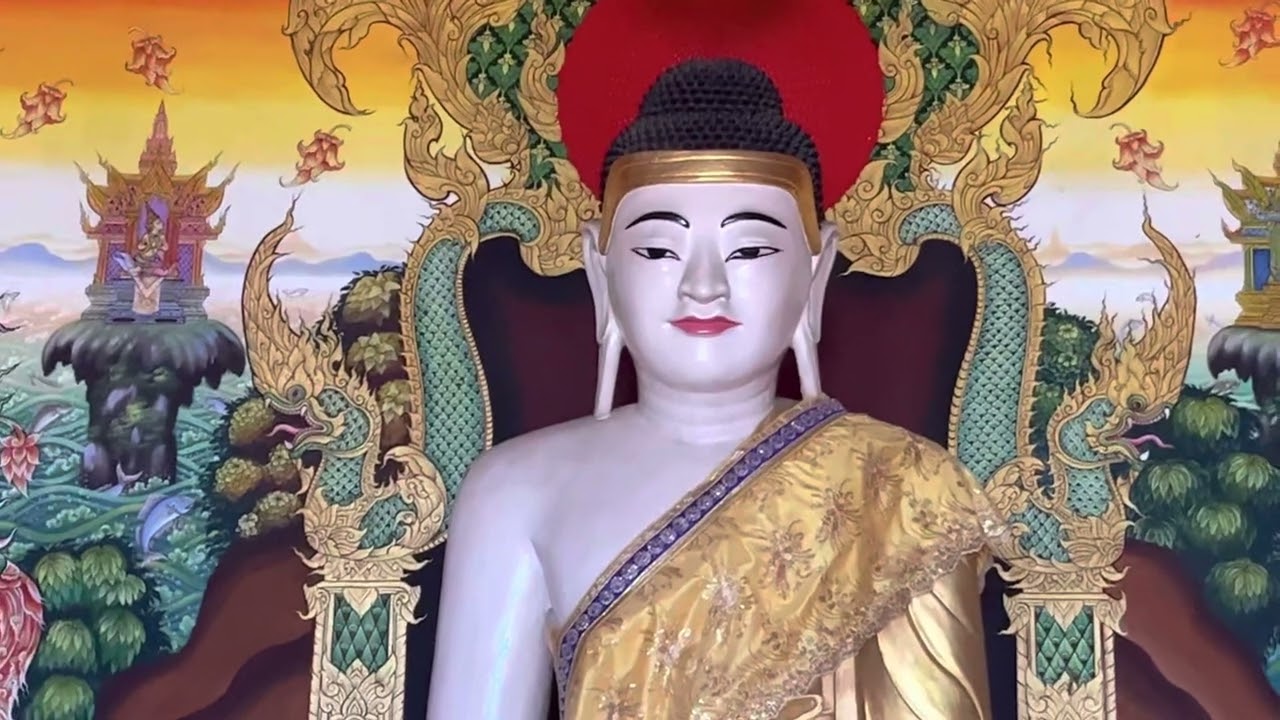
 Click to Access the Navigation Map GPS
Wat Chetawan Map
Recommend

 Muang Chiang Mai(121)Chom Thong(47)Mae Chaem(25)Chiang Dao(33)Doi Saket(68)Mae Taeng(85)Mae Rim(69)Samoeng(29)Fang(71)Mae Ai(62)Phrao(70)San Pa Tong(105)San Kamphaeng(66)San Sai(73)Hang Dong(74)Hot(32)Doi Tao(22)Omkoi(11)Saraphi(74)Wiang Haeng(15)Chai Prakan(28)Mae Wang(32)Mae On(22)Doi Lo(34)Galyani Vadhana(1)


