
lovethailand home >North Travel Attractions >Chiang Mai Travel Attractions >Muang Chiang Mai >Chang Phueak > Wat Chang Khian
TL;DR: Wat Chang Khian is located at Ban Chang Khian, Huay Kaew Road, Chang Phueak Subdistrict, Mueang Chiang Mai District, Chiang Mai Province, open Daily, hours 08.00 – 17.00.

Wat Chang Khian
Open Days: Daily
Opening Hours: 08.00 – 17.00
Wat Chang Khian in Chiang Mai is a historic Buddhist temple located at 1 Ban Chang Khian, Huay Kaew Road, Chang Phueak Subdistrict, Mueang Chiang Mai District. It is a community temple under the Mahanikaya order and is closely connected with the old Ban Chang Khian community, the foothills of Doi Suthep, the legend of Wat Phra That Doi Suthep, the former elephant camp of the Chiang Mai ruler, and the old transport route used for carrying construction materials up to Doi Suthep. Today, the temple remains open daily for worship, merit-making, and quiet cultural visits.
Wat Chang Khian is a useful stop for travelers who want to understand Chiang Mai beyond the best-known temples inside the old city wall. The temple sits in the Chang Phueak and Huay Kaew area, close to Chiang Mai University, Wat Chet Yot, Chiang Mai Zoo, Nimmanhaemin Road, and Maya Lifestyle Shopping Center. Its location makes it easy to include in a half-day route that combines an old community temple, Lanna architecture, a museum, a university district, cafés, and modern Chiang Mai neighborhoods.
The temple’s history has several important layers. Thai temple records identify Wat Chang Khian as a temple founded in 767 and granted its consecrated boundary in 1512. The consecrated boundary measures 20 meters wide and 40 meters long. These details show the temple’s long religious status and its role as a place for formal Buddhist rites. At the same time, local community history adds another layer related to the revival of Chiang Mai after the Kawila period, the settlement of Ban Chang Khian, and the movement of people around the foothills of Doi Suthep.
The name “Chang Khian” is especially interesting in local linguistic and cultural terms. In Northern Thai usage, temple names beginning with “chang” can be associated with craft communities, such as temples linked with paper-making, goldsmithing, or ornament-making. The word “khian” can mean turning or lathe work, so one explanation connects the name with a community of wood-turners or skilled artisans. This reading places the temple within the wider history of craft communities that helped shape Chiang Mai after the restoration of the city.
Another explanation comes from local oral history. According to the account of Pho Oui Moi Intachan, an elderly resident of Ban Chang Khian, he did not remember seeing wood-turners or lathe craftsmen in the village during his lifetime. In the legend of Wat Phra That Doi Suthep, the area was called “Chang Khian,” a name that can be connected with elephants and the old Doi Suthep route. This gives the temple’s name a second layer of meaning, linking it not only with craft vocabulary but also with elephants, local memory, and sacred geography.
Pho Oui Moi’s account also preserves an important story about the temple site. The present temple area was once an elephant camp of the Chiang Mai ruler. The elephants kept there were used to carry construction materials and supplies up the mountain for the restoration of Wat Phra That Doi Suthep. This makes Wat Chang Khian significant because it stands in a landscape that once supported the physical and spiritual connection between the city and the mountain.
In 1934, Khruba Srivichai, one of the most revered monks in Lanna history, led the building of the modern road to Wat Phra That Doi Suthep along a route connected with the earlier elephant path. This connection gives Wat Chang Khian a deeper place in Chiang Mai’s sacred landscape. Wat Phra That Doi Suthep is widely recognized as a major symbol of the city, and Wat Chang Khian helps explain the older network of people, animals, labor, and devotion that made the mountain temple accessible.
The original Wat Chang Khian stood north of the Huay Chang Khian stream. Over time, the old temple area deteriorated, and the temple was moved to the former elephant-camp site that forms the present compound. This movement is important for understanding the temple. Wat Chang Khian is not only a fixed monument but a living religious space that adapted to watercourses, settlement patterns, transport routes, and the needs of the community.
In earlier times, Ban Chang Khian was a semi-rural community at the edge of Chiang Mai. The area was described as wooded and lightly populated, with only around 50–60 households. Many residents farmed small rice fields that depended on rainfall because the village stood near the foothills of Doi Suthep. Local land-use memory also mentions a village head named Saen Sangha, who allowed settlers to cultivate land for 3 years before the fields were measured and registered for taxation. This background shows how the temple was connected with farming, land organization, water, and everyday village life.
Ban Chang Khian is also historically connected with nearby areas such as Chet Yot and Khuang Sing. These communities form part of the northern side of Chiang Mai, where old temples, schools, roads, streams, and settlement routes developed together. A visit to Wat Chang Khian can therefore be combined naturally with Wat Chet Yot, Chiang Mai National Museum, Chiang Mai Zoo, and the Huay Kaew-Nimmanhaemin area.
The temple compound covers 5 rai and 49 square wa. Its northern boundary adjoins Huay Chang stream, the southern side adjoins a public road, the eastern side adjoins private land, and the western side adjoins a public road. The temple also has 1 plot of monastic land measuring 1 rai and 1 ngan. These details show that the temple belongs to a living local setting shaped by water, roads, homes, and community use.
The main monastic buildings at Wat Chang Khian include an ubosot, a 2-storey sermon hall, 3 monks’ residences, a viharn, a multipurpose hall, a funeral hall, a bat hall, and a chedi. These structures make the temple a complete community religious space. It supports formal monastic rites, public worship, merit-making, community ceremonies, and the daily life of resident monks.
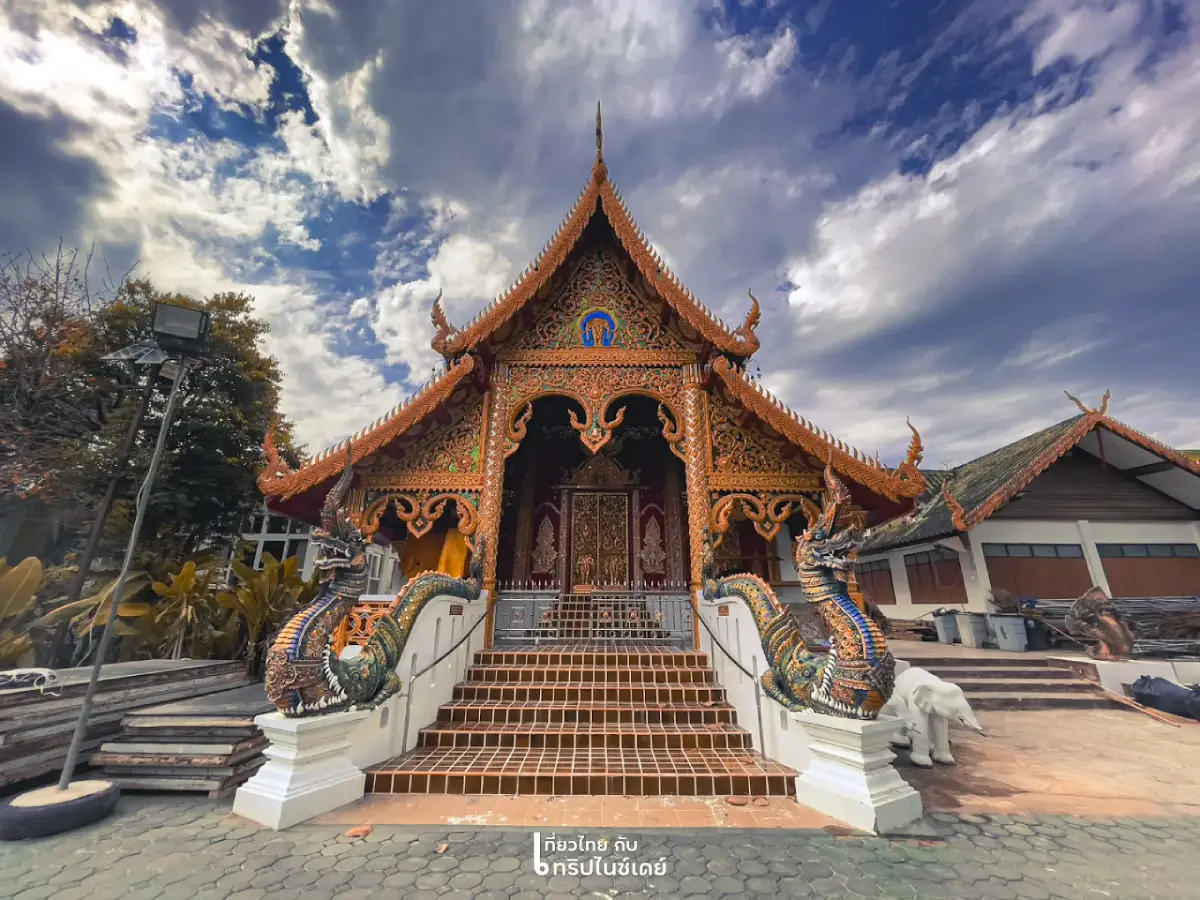
The ubosot is a Lanna-style structure built in plaster and masonry, with an upper wooden section. The front roof has 2 tiers extending over the front porch, and side stairways provide access. Inside the ubosot is a bronze Buddha image. The building reflects the way many northern temples combine older wooden elements with stronger masonry structures for long-term use. It is one of the key areas to observe when visiting the temple.
The viharn is another important architectural feature. It follows Lanna design and has a 3-tiered roof. The gable has a blue background decorated with scrolling vine patterns, with a stucco image of Vishnu at the center. The column capitals have layered lotus forms, while the arched decorative elements include stucco kanok patterns. The hang hong, naga details, and lamyong elements are decorated with colored glass. These features make the viharn one of the most visually rewarding parts of the temple.
One detail that distinguishes the viharn is the absence of naga balustrades on the staircase. Many Lanna temples have prominent naga stairways, so the lack of naga railings at Wat Chang Khian gives the building a specific character. This is useful for visitors interested in temple architecture because it shows that Lanna religious buildings were not made from a single fixed model. Their forms varied according to period, community resources, craftsmen, and local preferences.
The chedi is the temple’s main sacred monument. It is a 12-indented square-form structure with 2 tiers. The octagonal moulding section has 7 stacked levels. The body is built of brick and plaster, with a rounded bell shape decorated with colored glass and covered with gilded metal sheets. The chedi combines form, symbolic meaning, and craftsmanship, making it an important point for careful observation and respectful photography.
The 2-storey sermon hall supports religious gatherings and community activities. The 3 monks’ residences provide living space for monks. The multipurpose hall and funeral hall support merit-making, ceremonies, and community events. The bat hall relates to temple offerings and monastic routines. Together, these areas show how Wat Chang Khian functions as a living temple, not only as a place for sightseeing.
Wat Chang Khian also has a strong educational role. Wat Chang Khian School was established in 1938, and the temple has long been connected with education in the local community. The temple also opened a Dhamma school in 1982, a Pali study section in 1985, and a Sunday Buddhist study center in 1982. These educational functions show that the temple supports learning for monks, novices, children, and laypeople.
This educational role reflects the traditional Thai relationship between home, temple, and school. Wat Chang Khian is not only a place for worship on Buddhist holy days; it is also part of the moral and social education of the community. Children growing up around the temple encounter local religion, architecture, community history, and Buddhist values as part of daily life.
The recorded abbots of Wat Chang Khian include Phra Athikan Intha Thawaro, Phra Athikan Konkaeo Khanthawangso, and Phra Khru Thammathorn Arun Aruno, who served from 1973 onward. The current abbot recorded in recent temple-related public sources is Phra Khru Samuh Chatuthip Chandako. His role is connected with the temple’s current community activities and its participation in Buddhist and public development programs.
Wat Chang Khian remains active in contemporary community life. In 2025, it was selected as Chiang Mai Province’s representative for the northern regional evaluation of the “Wat Pracha Rat Sang Suk” project. The project emphasizes clean, orderly, and peaceful temple environments, stronger relationships between temples and communities, and the use of Buddhist values in local development. This confirms that Wat Chang Khian is still a functioning community temple, not an abandoned or inactive historical site.
A good visit to Wat Chang Khian should begin with paying respect inside the main worship area. After that, visitors can observe the ubosot, the bronze Buddha image, the Lanna-style viharn, the blue gable, the Vishnu stucco work, lotus capitals, kanok patterns, colored-glass lamyong decoration, the chedi, and the surrounding monastic buildings. A slow walk reveals much more than a quick stop, especially for travelers interested in Lanna craftsmanship.
Wat Chang Khian is also meaningful for travelers interested in the route to Doi Suthep. The story of the former elephant camp and the transport of construction materials helps explain the older relationship between Chiang Mai city and the mountain. Wat Phra That Doi Suthep is the famous destination, but Wat Chang Khian helps tell the story of the communities and routes that supported devotion to the mountain shrine.
Getting to Wat Chang Khian is convenient from central Chiang Mai. Travelers can follow Huay Kaew Road toward Chang Phueak, Chiang Mai University, and the Ban Chang Khian area. From the old city or Chang Phueak Gate, the route continues west toward Maya, Nimmanhaemin, and Chiang Mai University before entering the Chang Khian neighborhood. Visitors can travel by private car, red songthaew, tuk-tuk, taxi app, or on foot from nearby accommodation in the Chang Khian and Huay Kaew area.
Wat Chang Khian works well as part of a half-day itinerary around Chang Phueak, Huay Kaew, and Nimmanhaemin. Travelers can combine the temple with Wat Chet Yot, Chiang Mai National Museum, Chiang Mai Zoo, Ang Kaew Reservoir at Chiang Mai University, Maya Lifestyle Shopping Center, Nimmanhaemin Road, or Wat Suan Dok. This route offers a balanced mix of temple history, Lanna art, city nature, cafés, restaurants, and modern Chiang Mai life.
The best time to visit is in the morning or late afternoon. Morning is suitable for worship, quiet walking, and photography of the temple buildings. Late afternoon works well for travelers combining the temple with Huay Kaew Road, Chiang Mai University, or the Nimmanhaemin area. Visitors who want to photograph architectural details should come when natural light is sufficient and avoid disturbing monks, students, or local residents using the temple grounds.
Visitors should follow standard Buddhist temple etiquette. Dress modestly, remove shoes before entering sacred buildings, keep voices low, and avoid touching Buddha images, stucco work, old wooden elements, the chedi, or other sacred objects. Do not enter monastic or school areas without permission. Respectful behavior helps preserve the temple’s atmosphere and supports better cultural tourism in the local community.
Wat Chang Khian is suitable for cultural photography, especially for visitors who enjoy architectural details. Important subjects include the 3-tiered viharn roof, the blue gable, scrolling vine patterns, the Vishnu stucco image, lotus capitals, kanok work, hang hong elements, colored-glass lamyong decoration, the half-plaster half-wood ubosot, and the glass-decorated chedi. Photography should be done respectfully and without flash near sacred or old objects.
Overall, Wat Chang Khian is a valuable old temple in Chiang Mai’s Chang Phueak district. It preserves a story that connects language, local legend, craft identity, the former elephant camp, Doi Suthep, Lanna architecture, Buddhist education, and active community development. For travelers who want to see a quieter temple near Huay Kaew Road while learning more about Chiang Mai’s foothill communities, Wat Chang Khian is a worthwhile cultural stop.
| Name | Wat Chang Khian |
| Location | Ban Chang Khian, Huay Kaew Road, Chang Phueak Subdistrict, Mueang Chiang Mai District, Chiang Mai Province |
| Address | 1 Ban Chang Khian, Huay Kaew Road, Chang Phueak Subdistrict, Mueang Chiang Mai District, Chiang Mai 50300, Thailand |
| Coordinates | 18.803219, 98.981050 |
| Highlights | Historic temple in Chang Phueak linked with Ban Chang Khian, the old elephant camp of the Chiang Mai ruler, the Doi Suthep transport route, and Lanna architecture |
| History | Founded in 767, granted its consecrated boundary in 1512, and connected with community history after the Kawila-period restoration of Chiang Mai |
| Name Origin | The name is linked with “khian,” meaning turning or lathe work, and with the name “Chang Khian” found in the legend of Wat Phra That Doi Suthep |
| Distinctive Features | Lanna-style ubosot with plaster and wooden elements, 3-tiered Lanna viharn, blue gable, Vishnu stucco work, colored-glass lamyong decoration, and 12-indented chedi |
| Temple Boundary And Monastic Land | The temple covers 5 rai and 49 square wa. It adjoins Huay Chang stream to the north, public roads to the south and west, and private land to the east. It also has 1 plot of monastic land measuring 1 rai and 1 ngan. |
| Travel Information | Accessible from central Chiang Mai via Huay Kaew Road toward Chang Phueak, Chiang Mai University, and Ban Chang Khian. Visitors can use a private car, red songthaew, tuk-tuk, taxi app, or walk from nearby accommodation. |
| Current Status | Open for worship, merit-making, and temple sightseeing during operating hours. It was selected as Chiang Mai Province’s representative for the northern regional evaluation of the Wat Pracha Rat Sang Suk project in 2025. |
| Open Days | Daily |
| Opening Hours | 08.00 – 17.00 |
| Facilities | Ubosot, viharn, sermon hall, monks’ residences, multipurpose hall, funeral hall, bat hall, merit-making areas, and walking areas inside the temple compound |
| Main Areas / Zones | Ubosot, bronze Buddha image, Lanna viharn, chedi, sermon hall, monks’ residences, multipurpose hall, funeral hall, and community temple areas |
| Abbot / Caretaker | Phra Khru Samuh Chatuthip Chandako |
| Nearby Tourist Attractions | 1. Wat Chet Yot, About 2 km 2. Chiang Mai National Museum, About 2 km 3. Chiang Mai Zoo, About 2 km 4. Ang Kaew Reservoir, Chiang Mai University, About 2 km 5. Nimmanhaemin Road, About 2 km 6. Maya Lifestyle Shopping Center, About 2 km 7. Chiang Mai University Art Center, About 3 km 8. Wat Suan Dok, About 4 km |
| Nearby Restaurants | 1. Jungle Cafe Wat Chang Khian Branch, About 0 km, Tel. 088-267-3803 2. Shizen Chang Khian, About 1 km, Tel. 098-990-7931 3. Cha Chang, About 1 km, Tel. 096-265-2301 4. Tia Ku Boat Noodles Chang Khian, About 1 km, Tel. 093-136-6652 5. Som Tum Yum Saep Yok Niu Chang Khian, About 1 km, Tel. 088-254-0722 6. Fried Chicken Chang Khian Road, About 0 km, Tel. 063-979-9194 |
| Nearby Accommodations | 1. BED Changkian, About 0 km, Tel. 053-217-300 2. SYN Boutique Hotel, About 2 km, Tel. 053-215-215 3. ibis Styles Chiang Mai, About 2 km, Tel. 053-908-888 4. Chiang Mai Phucome Hotel, About 2 km, Tel. 053-211-026 5. B2 Mountain Pano Residence Chiang Mai, About 2 km, Tel. 052-009-161 6. The Core Gallery Hotel, About 2 km, Tel. 053-218-163 |
Frequently Asked Questions (FAQ)
Q: Where is Wat Chang Khian located?
A: Wat Chang Khian is located at 1 Ban Chang Khian, Huay Kaew Road, Chang Phueak Subdistrict, Mueang Chiang Mai District, Chiang Mai Province, near Chiang Mai University, Wat Chet Yot, and the Huay Kaew area.
Q: What are the opening hours of Wat Chang Khian?
A: Wat Chang Khian is open daily from 08.00 to 17.00.
Q: Why is Wat Chang Khian historically important?
A: The temple is an old Chiang Mai community temple linked with Ban Chang Khian, an old elephant camp of the Chiang Mai ruler, the Doi Suthep transport route, and the wider history of Lanna religious restoration.
Q: What does the name Wat Chang Khian mean?
A: The name is connected with “khian,” meaning turning or lathe work, and also with “Chang Khian,” a place name found in the legend of Wat Phra That Doi Suthep and linked with elephants and the old mountain route.
Q: What should visitors see inside Wat Chang Khian?
A: Key features include the Lanna-style ubosot, bronze Buddha image, 3-tiered Lanna viharn, blue gable, Vishnu stucco work, colored-glass lamyong decoration, and the 12-indented chedi.
Q: How can travelers get to Wat Chang Khian?
A: Travelers can reach the temple via Huay Kaew Road toward Chang Phueak, Chiang Mai University, and Ban Chang Khian by private car, red songthaew, tuk-tuk, taxi app, or on foot from nearby accommodation.
Q: Who is Wat Chang Khian best suited for?
A: Wat Chang Khian is suitable for travelers interested in old Chiang Mai temples, Lanna architecture, Ban Chang Khian community history, the Doi Suthep route, and quiet cultural sites near Huay Kaew Road.
Q: What nearby places can be visited with Wat Chang Khian?
A: Nearby places include Wat Chet Yot, Chiang Mai National Museum, Chiang Mai Zoo, Ang Kaew Reservoir, Nimmanhaemin Road, Maya Lifestyle Shopping Center, Chiang Mai University Art Center, and Wat Suan Dok.
 Category: ●Places of Worship
 Group: ●Temple
Last Update : 1 DayAgo
 Last Update : 1 DayAgo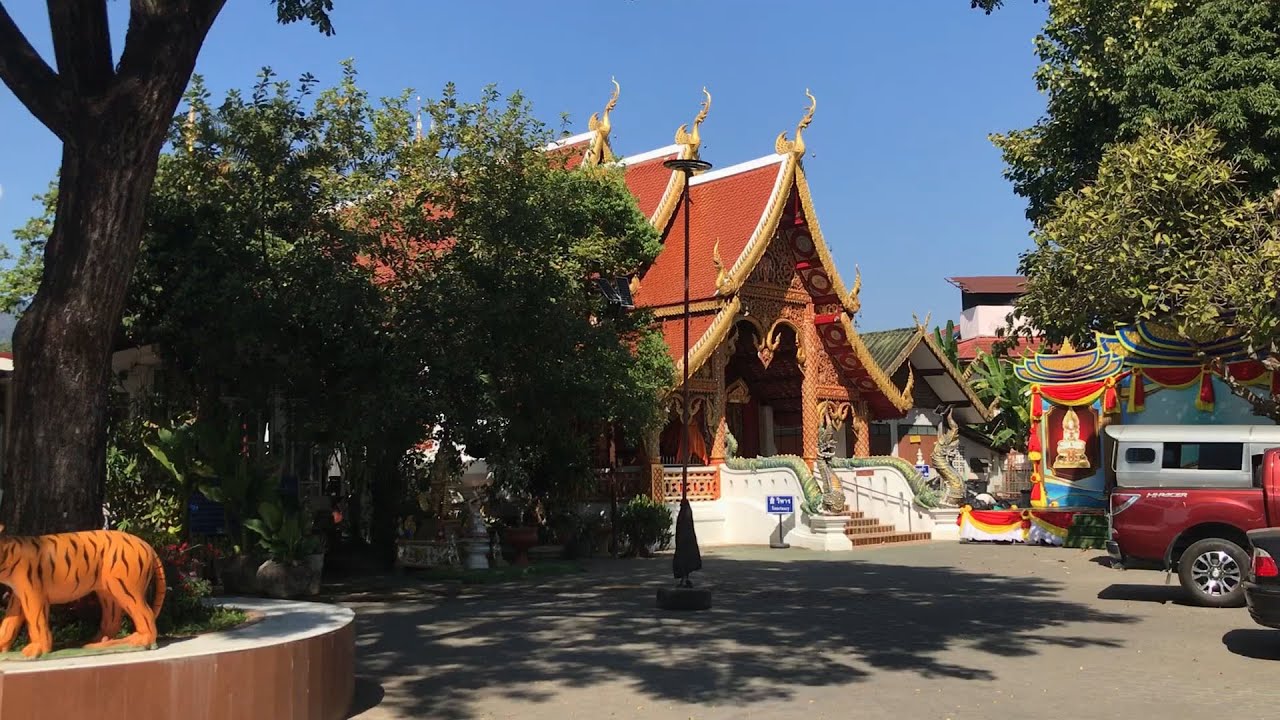
 Click to Access the Navigation Map GPS
Wat Chang Khian Map
Recommend

 Muang Chiang Mai(121)Chom Thong(47)Mae Chaem(25)Chiang Dao(33)Doi Saket(68)Mae Taeng(85)Mae Rim(69)Samoeng(29)Fang(71)Mae Ai(62)Phrao(70)San Pa Tong(105)San Kamphaeng(66)San Sai(73)Hang Dong(74)Hot(32)Doi Tao(22)Omkoi(11)Saraphi(74)Wiang Haeng(15)Chai Prakan(28)Mae Wang(32)Mae On(22)Doi Lo(34)Galyani Vadhana(1)


