
lovethailand home >North Travel Attractions >Chiang Mai Travel Attractions >Muang Chiang Mai >Chang Khlan > Wat Chai Mongkhon
TL;DR: Wat Chai Mongkhon is located at Charoen Prathet Road, Chang Khlan Subdistrict, Mueang Chiang Mai District, Chiang Mai Province, open Daily, hours 05.00 – 18.00.
Wat Chai Mongkhon
Open Days: Daily
Opening Hours: 05.00 – 18.00
Wat Chai Mongkhon in Chiang Mai is a historic Buddhist temple on Charoen Prathet Road in Chang Khlan, Mueang Chiang Mai District. Set beside the Ping River, the temple is known for its Mon heritage, its former names “Wat Maloe” or “Wat Malaeng,” its Mon-style chedi, the principal Buddha image known as Phra Phuttha Chai Mongkhon, and its riverside merit-making area. The temple remains open to visitors daily for worship, merit-making, and quiet cultural sightseeing.
For travelers looking for a temple in central Chiang Mai that is easy to reach, spiritually active, and historically meaningful, Wat Chai Mongkhon is a practical and rewarding stop. The temple stands close to Chiang Mai Night Bazaar, Anusarn Market, the Iron Bridge, riverside hotels, restaurants, and the old commercial routes near the Ping River. This makes it suitable for a short cultural visit, a morning merit-making trip, or a calm stop before exploring the night market area in the evening.
Wat Chai Mongkhon is a community temple under the Mahanikaya order of Thai Buddhism. Its address is 133 Charoen Prathet Road, Chang Khlan Subdistrict, Mueang Chiang Mai District, Chiang Mai 50100. The temple compound borders the Ping River to the east and Charoen Prathet Road to the west, giving it a distinctive riverside setting within the city. Although it is located in one of Chiang Mai’s busiest tourist districts, the temple still keeps the character of an active local place of worship.
The temple’s history is closely linked with the Mon community in Chiang Mai. Before it became known as Wat Chai Mongkhon, it was called Wat Maloe or Wat Malaeng, names associated with the meaning of dawn or daybreak. It was later also known as Wat Upa Pheng or Wat Upa Phok. These former names preserve traces of the temple’s older cultural identity and show how the Ping River area once served as a living corridor for trade, migration, religious life, and cultural exchange.
The name “Wat Chai Mongkhon” became established during the reign of King Chulalongkorn, Rama 5. The new name carries an auspicious meaning related to victory, blessing, and prosperity. This meaning still shapes how local worshippers and Thai visitors experience the temple today. Many come to make merit, offer alms, receive blessings, pour ceremonial water, make offerings, or release fish at the riverside merit-making area.
Wat Chai Mongkhon has a long history of about 600 years and reflects the layers of Mon, Burmese, and Lanna cultural influence that shaped Chiang Mai over time. One of the most visible elements is the temple’s Mon-style chedi, an architectural feature that distinguishes it from many Lanna-style temples inside the old city. For visitors interested in Buddhist architecture, this chedi is one of the key features to observe during a visit.
An important episode in the temple’s history is connected with Khruba Duangkaeo Kanthiya, a former abbot of Wat Chai Mongkhon. When erosion along the Ping River affected the temple’s access and layout, Khruba Duangkaeo negotiated a land exchange with the French authorities whose property bordered the temple area. This allowed the temple compound and the neighboring land to be reorganized more appropriately. The episode shows that the temple’s survival depended not only on religious devotion but also on careful local leadership and practical management of land and access.
The old chedi, which had once stood near the French consular boundary, was moved and rebuilt in a Mon style. As a result, the chedi at Wat Chai Mongkhon is not just a religious monument but also a physical record of the temple’s adaptation to changing urban and riverside conditions. It connects the temple’s sacred space with the wider history of the Ping River, foreign presence in Chiang Mai, and the development of the Charoen Prathet area.
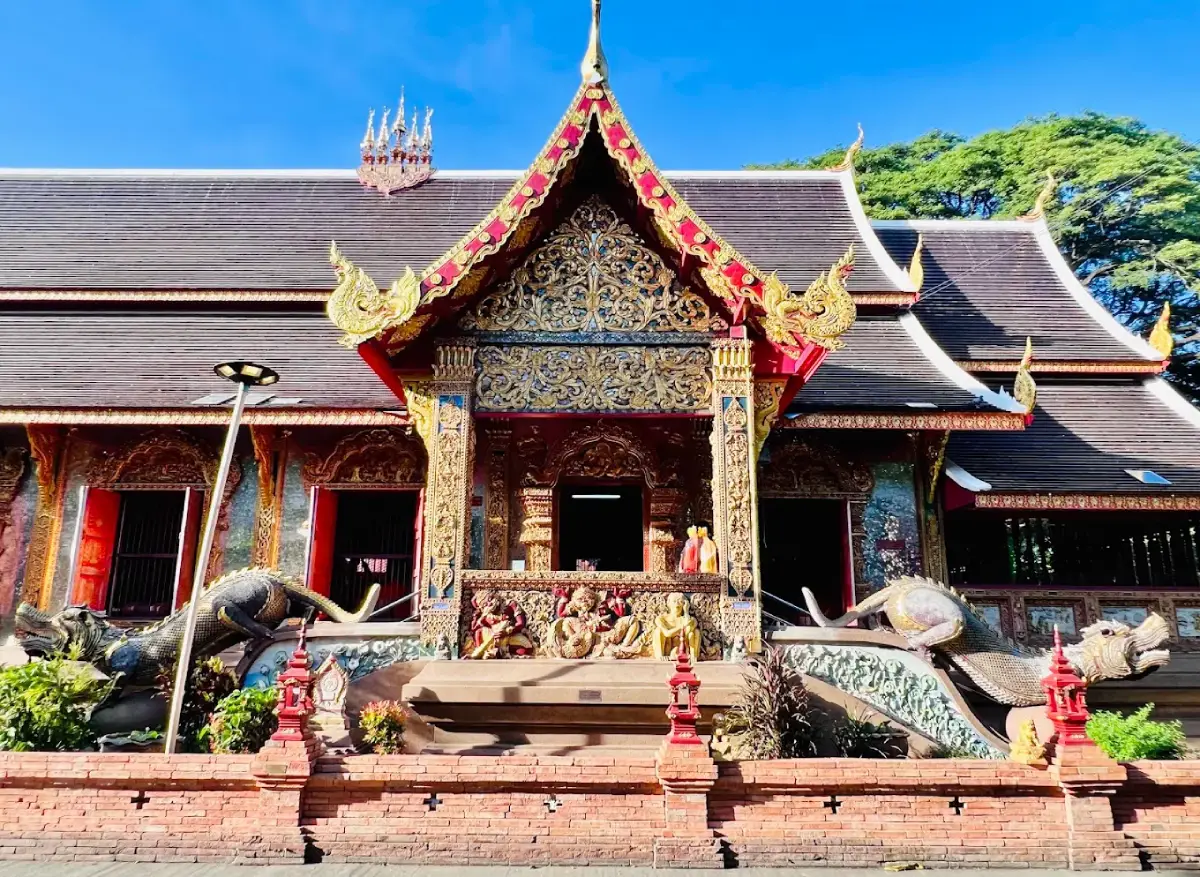
Another important feature is the ordination hall and viharn, which are combined into a single main building. This layout is tied to the temple’s historical relocation and restoration of its ritual space. The temple received its consecrated boundary for ordination purposes in 1936, and the present religious building has continued to serve both monastic ceremonies and public worship. For visitors, this combined structure is one of the clearest signs that Wat Chai Mongkhon has a specific architectural history of its own.
Inside the viharn, the principal image is Phra Phuttha Chai Mongkhon, a seated Buddha image in the Subduing Mara posture. The image is made with brickwork or finished with lacquer and gold leaf and serves as the central object of worship inside the temple. Most visitors begin their visit here by paying respect, offering flowers or candles, and taking a quiet moment for reflection before walking around the rest of the compound.
The temple also preserves a teakwood pulpit carved with a seven-headed naga motif, dating to 1933. This pulpit is a valuable example of devotional woodwork and reflects the importance of teak craftsmanship in Northern Thai religious art. The naga motif carries symbolic weight in Buddhist and Lanna traditions, and the pulpit remains an important object for visitors who appreciate temple art beyond the larger architectural structures.
Another notable sacred object is a teakwood Buddha image in the “Opening the Worlds” posture, about 500 years old. Wooden Buddha images are especially meaningful in Northern Thailand because teak has long been associated with Lanna craftsmanship, temple building, and sacred art. The presence of this old teak image gives Wat Chai Mongkhon added historical and artistic depth, making the temple more than a simple sightseeing stop.
Wat Chai Mongkhon is also widely known as a riverside merit-making temple. Many visitors come to release fish or aquatic animals near the Ping River as an act of merit. Travelers should approach this practice responsibly and choose only suitable species that do not harm the river ecosystem. A respectful visit to the temple should combine faith, cultural understanding, and environmental awareness, especially because the temple is directly connected with one of Chiang Mai’s most important waterways.
Many Thai visitors describe Wat Chai Mongkhon as a place where several forms of merit-making can be completed in one visit. People come to offer sangha dana, pour water for dedication of merit, receive blessings, make offerings, pray for good fortune, and spend time in the calm atmosphere of the viharn. This practical role is part of why the temple remains active and relevant to the local community rather than functioning only as a historical attraction.
The atmosphere at Wat Chai Mongkhon differs from many temples inside Chiang Mai’s old city. Although it is central and easy to reach, the riverside setting gives the temple a more open and restful feel. Morning is a good time for a quieter visit, while late afternoon works well for travelers who plan to continue to nearby markets or riverside restaurants. The temple is compact enough for a short stop yet rich enough to reward a slower visit.
Getting to Wat Chai Mongkhon is straightforward. Visitors can arrive by private car, red songthaew, tuk-tuk, taxi app, or on foot from nearby hotels in the Chang Khlan and Night Bazaar area. Charoen Prathet Road is the main access route. From Chiang Mai International Airport, travel time is usually around 15–25 minutes depending on traffic. From Tha Phae Gate or Chiang Mai Night Bazaar, the temple can be reached quickly by a short ride or a manageable walk from nearby accommodation.
When giving directions to local drivers, it is useful to say “Wat Chai Mongkhon by the Ping River” or “Wat Chai Mongkhon on Charoen Prathet Road” because there are other temples with similar names in Chiang Mai Province. Visitors should dress modestly, remove shoes before entering the viharn, keep their voices low, and respect areas reserved for monks and temple activities.
The current abbot recorded in recent temple-related sources is Phra Khru Sujitarattanathorn. He has been associated with the development of Wat Chai Mongkhon as an accessible merit-making temple, with attention to welcoming worshippers, maintaining the viharn, and supporting religious activities for the community. This active religious role is one of the reasons the temple still feels alive rather than merely preserved as a monument.
Key areas to see inside the temple include the viharn and ordination hall, Phra Phuttha Chai Mongkhon, the Mon-style chedi, the teakwood pulpit with the seven-headed naga carving, the old teak Buddha image in the Opening the Worlds posture, the general merit-making area, and the Ping River pier. Each area carries a different meaning: the viharn is the center of worship, the chedi preserves the Mon artistic identity, the pulpit reflects devotional craftsmanship, and the riverside area shows the temple’s continuing connection with public merit-making.
For travelers interested in Chiang Mai history, Wat Chai Mongkhon offers a useful perspective beyond the old city walls. It highlights the importance of the Ping River as a route of settlement, trade, and cultural contact. The Mon background of the temple, the riverside location, the French land-exchange episode, and the later development of the Chang Khlan area all make this temple a meaningful stop for understanding Chiang Mai as a river city as well as a temple city.
A typical visit takes about 30–60 minutes. Start at the viharn, pay respect to the principal Buddha image, observe the pulpit and sacred objects, walk to the Mon-style chedi, and then continue to the riverside area. Visitors with more time can combine the temple with Anusarn Market, Chiang Mai Night Bazaar, the Iron Bridge, Wat Upakhut, Warorot Market, or Art in Paradise Chiang Mai.
Wat Chai Mongkhon is also suitable for cultural photography. The temple offers views of the golden chedi, ornate temple architecture, sacred images, a riverside atmosphere, and quiet corners of the compound. Photography should be done respectfully. Avoid interrupting worshippers, do not photograph monks too closely without permission, and keep flash and loud behavior away from sacred indoor spaces.
Overall, Wat Chai Mongkhon is one of the most accessible historic temples in central Chiang Mai. It combines Mon heritage, Lanna Buddhist practice, riverside merit-making, meaningful sacred objects, and a convenient location near major tourist areas. For foreign travelers who want to visit a working temple with real local use and a deeper cultural background, Wat Chai Mongkhon is a strong addition to a Chiang Mai itinerary.
| Name | Wat Chai Mongkhon |
| Location | Charoen Prathet Road, Chang Khlan Subdistrict, Mueang Chiang Mai District, Chiang Mai Province |
| Address | 133 Charoen Prathet Road, Chang Khlan Subdistrict, Mueang Chiang Mai District, Chiang Mai 50100, Thailand |
| Coordinates | 18.780802, 99.004665 |
| Highlights | Historic Mon temple by the Ping River, with a Mon-style chedi, Phra Phuttha Chai Mongkhon, a teakwood naga pulpit, and a riverside merit-making area |
| History | A temple with about 600 years of history, formerly known as Wat Maloe or Wat Malaeng, later renamed Wat Chai Mongkhon during the reign of King Rama 5. It was officially permitted as a temple in 1927 and received its consecrated boundary in 1936. |
| Name Origin | The former names Wat Maloe or Wat Malaeng refer to dawn or daybreak. The current name Wat Chai Mongkhon carries an auspicious meaning related to victory and blessing. |
| Distinctive Features | Combined ordination hall and viharn, Mon-style chedi, old teak Buddha image in the Opening the Worlds posture, and a riverside setting beside the Ping River |
| Travel Information | Accessible by private car, red songthaew, tuk-tuk, taxi app, or on foot from the Chang Khlan and Night Bazaar area. Charoen Prathet Road is the main access route. |
| Current Status | Open to visitors for worship, merit-making, and temple sightseeing during operating hours |
| Open Days | Daily |
| Opening Hours | 05.00 – 18.00 |
| Fees | Free Entry |
| Facilities | Merit-making area, viharn, riverside pier by the Ping River, parking area inside the temple, and a coffee shop near the temple pier |
| Main Areas / Zones | Viharn and ordination hall, Phra Phuttha Chai Mongkhon, Mon-style chedi, teakwood pulpit with seven-headed naga carving, old teak Buddha image in the Opening the Worlds posture, merit-making area, and Ping River pier |
| Abbot / Caretaker | Phra Khru Sujitarattanathorn |
| Main Contact Number | 053-820-671 |
| Nearby Tourist Attractions | 1. Ping River And Wat Chai Mongkhon Pier, About 0 km 2. Anusarn Market, About 1 km 3. Iron Bridge, About 1 km 4. Chiang Mai Night Bazaar, About 1 km 5. Wat Upakhut, About 1 km 6. Art In Paradise Chiang Mai, About 1 km, Tel. 052-009-595, 098-660-0051 7. Warorot Market, About 2 km, Tel. 053-232-592 8. Tha Phae Gate, About 2 km |
| Nearby Restaurants | 1. Kafae Tha Ruea Wat Chai Mongkhon, About 0 km, Tel. 053-274-822 2. TIME Riverfront Cuisine & Bar, About 0 km, Tel. 053-280-988 3. Billy Italian Restaurant, About 1 km, Tel. 081-288-1480 4. Aroon Rai Restaurant, About 1 km, Tel. 053-276-947 5. Hinlay Curry House, About 1 km, Tel. 053-324-621 |
| Nearby Accommodations | 1. Na Nirand Romantic Boutique Resort, About 0 km, Tel. 053-280-988, 093-629-9998 2. Anantara Chiang Mai Resort, About 0 km, Tel. 053-253-333 3. Amata Lanna Chiang Mai, About 1 km, Tel. 053-818-628, 094-642-8339 4. Ping Nakara Boutique Hotel & Spa, About 1 km, Tel. 053-252-999 5. Yaang Come Village Hotel, About 1 km, Tel. 053-237-222 6. CM Night Bazaar Boutique Hotel, About 1 km, Tel. 095-456-4192 |
Frequently Asked Questions (FAQ)
Q: Where is Wat Chai Mongkhon in Chiang Mai?
A: Wat Chai Mongkhon is located at 133 Charoen Prathet Road, Chang Khlan Subdistrict, Mueang Chiang Mai District, Chiang Mai 50100, near the Ping River and Chiang Mai Night Bazaar.
Q: What are the opening hours of Wat Chai Mongkhon?
A: Wat Chai Mongkhon is open daily from 05.00 to 18.00.
Q: Is there an entrance fee at Wat Chai Mongkhon?
A: No. General entry to Wat Chai Mongkhon is free.
Q: Why is Wat Chai Mongkhon historically important?
A: The temple was formerly a Mon temple known as Wat Maloe or Wat Malaeng and was later renamed Wat Chai Mongkhon during the reign of King Rama 5.
Q: What should visitors see inside Wat Chai Mongkhon?
A: Key features include Phra Phuttha Chai Mongkhon, the Mon-style chedi, the teakwood pulpit carved with a seven-headed naga, the old teak Buddha image in the Opening the Worlds posture, and the riverside merit-making area.
Q: How can travelers get to Wat Chai Mongkhon?
A: Travelers can reach the temple by private car, red songthaew, tuk-tuk, taxi app, or on foot from the Chang Khlan and Night Bazaar area, using Charoen Prathet Road as the main route.
Q: What nearby places can be combined with a visit to Wat Chai Mongkhon?
A: Nearby places include Anusarn Market, the Iron Bridge, Chiang Mai Night Bazaar, Wat Upakhut, Warorot Market, Art In Paradise Chiang Mai, and Tha Phae Gate.
Q: What is the main contact number for Wat Chai Mongkhon?
A: The main contact number is 053-820-671.
 Category: ●Places of Worship
 Group: ●Temple
Last Update : 1 DayAgo
 Last Update : 1 DayAgo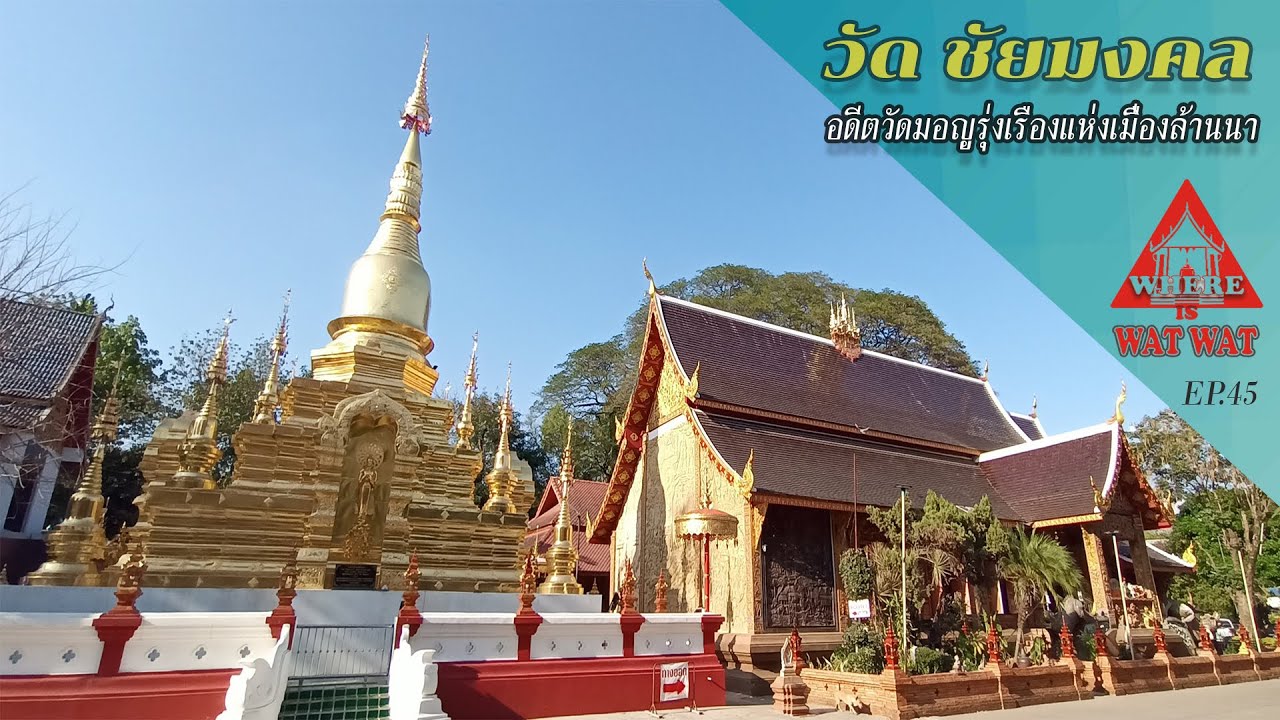
 Click to Access the Navigation Map GPS
Wat Chai Mongkhon Map
Recommend

 Muang Chiang Mai(121)Chom Thong(47)Mae Chaem(25)Chiang Dao(33)Doi Saket(68)Mae Taeng(85)Mae Rim(69)Samoeng(29)Fang(71)Mae Ai(62)Phrao(70)San Pa Tong(105)San Kamphaeng(66)San Sai(73)Hang Dong(74)Hot(32)Doi Tao(22)Omkoi(11)Saraphi(74)Wiang Haeng(15)Chai Prakan(28)Mae Wang(32)Mae On(22)Doi Lo(34)Galyani Vadhana(1)


