
lovethailand home >North Travel Attractions >Chiang Mai Travel Attractions >Mae Taeng >Khi Lek > Wat Phra Phutthabat Khuang Pao
TL;DR: Wat Phra Phutthabat Khuang Pao is located at Moo 9, Ban Huai Rai, Khi Lek Subdistrict, Mae Taeng District, Chiang Mai Province, open Daily, hours Open for worship at all times.
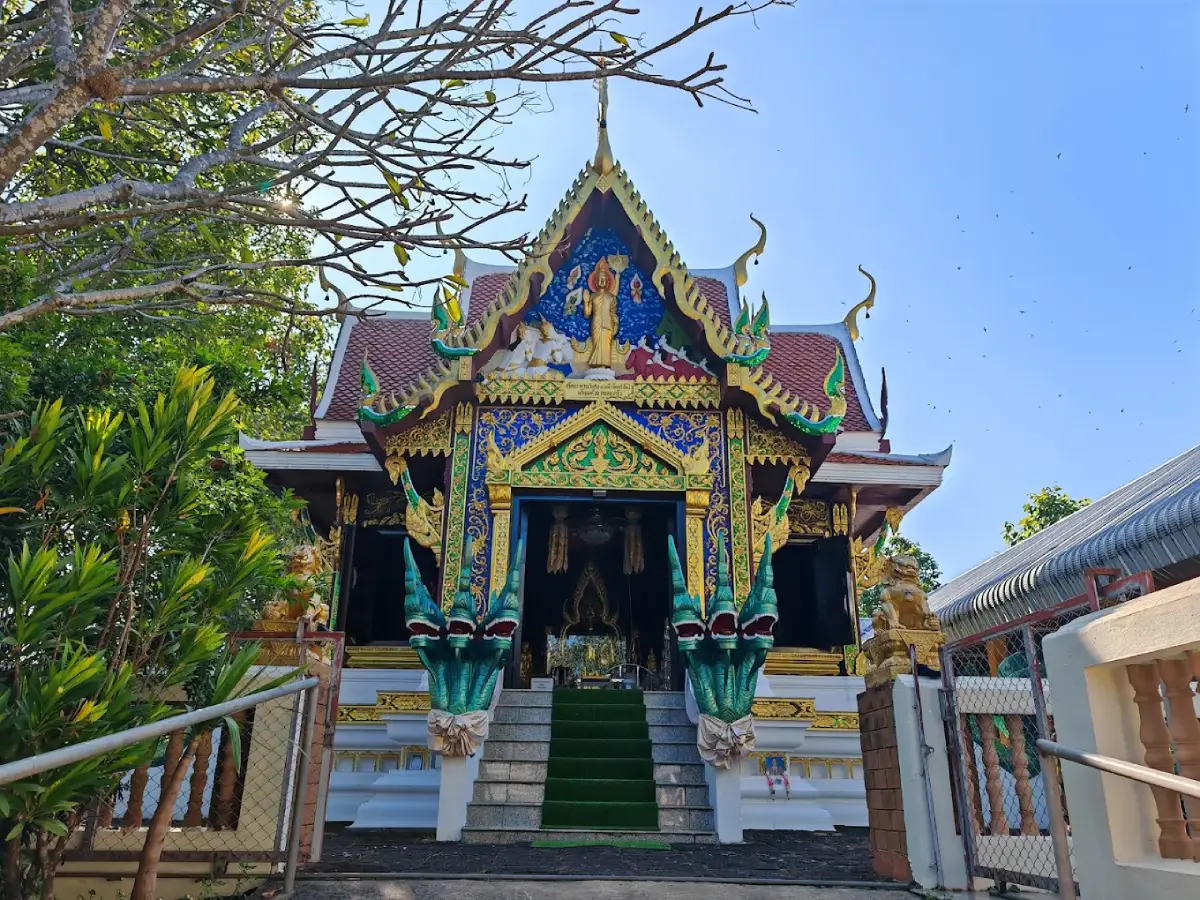
Wat Phra Phutthabat Khuang Pao
Open Days: Daily
Opening Hours: Open for worship at all times
Wat Phra Phutthabat Khuang Pao is located on a hill in Moo 9, Ban Huai Rai, Khi Lek Subdistrict, Mae Taeng District, Chiang Mai Province. It is a cultural Buddhist site known for its sacred Buddha footprint, laterite stone, vihara, cave beneath the vihara, forested hilltop setting, and strong connection with local community faith. The temple is respected by villagers in the area as well as Buddhist visitors who travel up the hill to pay homage to the Buddha footprint.
The temple’s main attraction is the combination of sacred belief, community memory, and natural scenery. Visitors who reach the temple can pay respect to the Buddha footprint, see the vihara built over the sacred site, experience the quiet hilltop atmosphere, and look down toward the forest, village houses, and surrounding landscape of Khi Lek Subdistrict. Wat Phra Phutthabat Khuang Pao is therefore suitable for travelers who want to make merit, pray, and experience a peaceful cultural site in Mae Taeng.
Ban Huai Rai, Moo 9 of Khi Lek Subdistrict, is a local community in Mae Taeng District connected with hills, forest, water resources, and rural livelihoods. Wat Phra Phutthabat Khuang Pao sits within this community context. It is not simply a sightseeing stop, but a place of faith where local people have helped preserve a sacred hilltop Buddhist site for generations.
The history of Wat Phra Phutthabat Khuang Pao is rooted in oral tradition about the discovery of the Buddha footprint on the hill. Local stories tell that the first person to see the footprint was a villager who went into the forest to hunt and gather forest products. After discovering the footprint, he returned to tell other villagers. The community then began to visit the hill to pay respect, and a shelter or religious structure was later built to cover the footprint.
According to local belief, the Buddha footprint at Khuang Pao has been respected for more than 300 years. This gives the site cultural depth because it was not created as a modern tourist attraction. It grew from local devotion and has continued to be a sacred place for villagers and Buddhist visitors. Paying respect to the footprint is therefore both an act of merit and a connection with the inherited faith of Ban Huai Rai.
Local tradition also says that Kruba Srivichai, the revered Lanna monk, built the vihara covering the Buddha footprint. This story connects the temple with the wider devotion surrounding Kruba Srivichai, who is widely respected for restoring and supporting many Buddhist sites in northern Thailand. Although detailed documentary evidence is limited, the oral tradition remains an important part of the temple’s identity and community faith.
The sacred area includes the Buddha footprint and a laterite stone that villagers respect. The stone was originally located in front of the vihara. Later, the orientation of the vihara was changed to face north for better suitability, leaving the stone behind the vihara as it remains today. This detail shows how the temple area has been adapted over time while preserving the sacred elements associated with local belief.
Another distinctive feature is the cave beneath the vihara. The presence of a cave below a sacred structure adds both natural and spiritual meaning to the site. In Lanna culture, caves and mountains are often associated with seclusion, meditation, and sacred power. This gives Wat Phra Phutthabat Khuang Pao a different atmosphere from temples on flat land because visitors must travel up the hill before reaching the place of worship.
The construction of the temple relied greatly on community effort. Uai Chan, also known as Mr. Jai Chaiyawong, led local villagers in carrying materials such as cement, sand, stone, and other building supplies up the hill. Because the temple was located high on the mountain and transportation was difficult in the past, the work required strong faith, physical effort, and cooperation from the community.
This difficult construction process explains the temple’s deeper value. The sacred structures did not arise from convenience. They were built through the labor and devotion of local people. The vihara and hilltop religious area therefore stand as reminders of the faith, unity, and perseverance of Ban Huai Rai villagers.
The temple stands on a hill with a long ridge-like landscape and forested surroundings. The area is connected with nearby hills and is covered with open woodland. The atmosphere is airy, calm, and suitable for quiet reflection. On clear days, visitors can see wide views across Mae Taeng, including forested land and village areas below.
The peaceful setting makes Wat Phra Phutthabat Khuang Pao suitable for visitors who want to step away from busy travel routes. Visitors can pay respect to the Buddha footprint, walk quietly around the temple grounds, sit peacefully, and enjoy the hilltop view. The temple is not a commercial tourist attraction. Its value lies in faith, silence, and the natural landscape surrounding the sacred site.
The vihara is the most important religious structure because it covers the Buddha footprint and serves as the main place of worship. Visitors should behave respectfully inside and around the vihara, dress politely, and maintain a quiet atmosphere. After paying respect, visitors can observe the laterite stone, the cave beneath the vihara, and the surrounding viewpoint areas.
Wat Phra Phutthabat Khuang Pao is also linked with local community and forest conservation activities. In 2024, activities at the temple in Khi Lek Subdistrict were associated with forest planting, awareness of forest conservation, and a robe-offering activity to raise funds for water systems used in forest fire prevention. This shows that the temple continues to serve as a place connecting Buddhism, community life, and environmental care.
Religious and community activities connected with the temple include worship of the Buddha footprint, Buddhist holy day merit-making, Kathin, robe-offering ceremonies, and volunteer activities related to temple and forest care. These activities help maintain the sacred site and preserve the relationship between temple, villagers, and the surrounding natural environment.
For cultural travelers, the key points to see are the Buddha footprint, the vihara, the laterite stone, the cave under the vihara, the open forest atmosphere, and the hilltop view over Ban Huai Rai. Visiting in the morning or during cooler hours is more comfortable, especially because the temple is located on a hill.
The access road to Wat Phra Phutthabat Khuang Pao includes some concrete sections, and normal cars can reach the temple. However, because the temple is on a hill, drivers should be careful, especially on slopes, curves, or after rain. A private car, rental car, or hired driver is the most convenient way to visit the temple and combine it with nearby attractions in Mae Taeng.
From Chiang Mai city, travelers can take the Chiang Mai-Mae Rim-Mae Taeng route or the Chiang Mai-Fang route toward Mae Taeng District, pass the Mae Malai area, then continue into Khi Lek Subdistrict and Ban Huai Rai. The temple area is about 45 km from Chiang Mai city, about 6 km from Mae Malai Market, and about 20 km from Phra Phutthabat Si Roi. This route can be arranged as a half-day trip or combined with other temples and attractions in Mae Taeng.
Travelers using public transportation should first reach Mae Malai or Mae Taeng District, then continue by local transport or hired vehicle to Ban Huai Rai and the temple access road. Planning ahead is recommended because the temple is on a hill and public transport is limited. Visitors who want to visit several places in one day will find a private vehicle more practical.
A suitable route can begin at Wat Phra Phutthabat Khuang Pao in the morning for worship and hilltop views. Visitors can then continue to Wat Sahakorn Sri Don Chai, Wat Huai Rai, Wat Pang Pao, or Phra Phutthabat Si Roi. For a nature-based extension, continue to Suan Son Mae Taeng, Mae Ngat Somboon Chon Dam, or Bua Tong Waterfall and Chet Si Spring, depending on available time and route planning.
Wat Phra Phutthabat Khuang Pao is suitable for travelers interested in hilltop temples, Buddha footprints, local Buddhist faith, community history, and peaceful cultural travel. Visitors should wear appropriate clothing, use comfortable shoes, keep quiet, avoid littering, and respect the vihara and Buddha footprint area. The temple’s value lies in its sacred atmosphere, natural surroundings, and long-standing connection with Ban Huai Rai.
Overall, Wat Phra Phutthabat Khuang Pao is one of Mae Taeng’s meaningful cultural and religious sites. It brings together a revered Buddha footprint, local stories connected with Kruba Srivichai, community-built sacred structures, a forested hilltop landscape, and ongoing activities linking Buddhism with forest conservation. It is more than a place to stop for worship. It is a site that expresses the relationship between Buddhist faith, hills, forest, and Lanna community life.
| Name | Wat Phra Phutthabat Khuang Pao |
| Location | Moo 9, Ban Huai Rai, Khi Lek Subdistrict, Mae Taeng District, Chiang Mai Province |
| Place Type | Hilltop Buddhist cultural site with a sacred Buddha footprint, laterite stone, vihara, and cave beneath the vihara |
| Highlights | Buddha footprint, vihara, laterite stone, cave under the vihara, open forest atmosphere, and hilltop views over Ban Huai Rai |
| History / Belief | Local tradition says the Buddha footprint has been revered for more than 300 years, and the vihara covering the footprint is associated with Kruba Srivichai |
| Important Community Figure | Uai Chan, or Mr. Jai Chaiyawong, led villagers in carrying building materials and constructing the sacred hilltop structures |
| Main Structures And Areas | Vihara covering the Buddha footprint, cave under the vihara, laterite stone, worship area, and hilltop viewpoint area |
| Community Role | A spiritual center for Ban Huai Rai, used for worship, merit-making, and activities connecting Buddhism, local community, and forest conservation |
| Open Days | Daily |
| Opening Hours | Open for worship at all times |
| Travel Information | From Chiang Mai city, travel toward Mae Taeng District, pass Mae Malai, then continue to Khi Lek Subdistrict and Ban Huai Rai. The hill road has some concrete sections and normal cars can access it, but careful driving is required |
| Reference Distances | About 6 km from Mae Malai Market, about 45 km from Chiang Mai city, and about 20 km from Phra Phutthabat Si Roi |
| Current Status | Open as a Buddhist cultural site in Ban Huai Rai, Khi Lek Subdistrict, Mae Taeng District, Chiang Mai Province |
| Important Traditions | Buddha footprint worship, Buddhist holy day merit-making, Kathin, robe-offering ceremonies, and volunteer activities related to temple and forest care |
| Visitor Etiquette | Dress respectfully, keep quiet, drive carefully uphill, avoid littering, and treat the vihara and Buddha footprint area with respect |
| Nearby Tourist Attractions | 1. Wat Sahakorn Sri Don Chai, about 2 km 2. Wat Huai Rai, about 3 km 3. Wat Pang Pao, about 4 km 4. Mae Malai Market, about 6 km 5. Phra Phutthabat Si Roi, about 20 km |
| Nearby Restaurants | 1. Baan Suan Chomchan Mae Taeng, about 3 km, Tel. 053-047-111, 089-433-5819 2. Moo Inter Mae Malai, about 6 km, Tel. 093-135-2929 3. Khun Nai Pimpa, Mae Malai Market, about 6 km 4. Sri Kaew Restaurant @ Mae Taeng, about 12 km, Tel. 082-574-7870 5. Doona Resort Restaurant, about 18 km, Tel. 093-275-3888 |
| Nearby Accommodations | 1. Pai 91.5 Resort, about 1 km 2. MonPanaNont Wellness Resort & Spa, about 1 km 3. Baan Suan Chomchan Mae Taeng, about 3 km, Tel. 053-047-111, 089-433-5819 4. Mae Malai Mansion, about 6 km, Tel. 053-842620, 095-6106489 5. Maetaeng Homestay & Resort, about 10 km, Tel. 086-399-9144 |
Frequently Asked Questions (FAQ)
Q: Where is Wat Phra Phutthabat Khuang Pao located?
A: Wat Phra Phutthabat Khuang Pao is located on a hill in Moo 9, Ban Huai Rai, Khi Lek Subdistrict, Mae Taeng District, Chiang Mai Province.
Q: What is the main highlight of Wat Phra Phutthabat Khuang Pao?
A: The main highlight is the sacred Buddha footprint, together with the vihara, laterite stone, cave under the vihara, open forest setting, and hilltop views over Mae Taeng.
Q: How is the temple connected with Kruba Srivichai?
A: Local tradition says that Kruba Srivichai built the vihara covering the Buddha footprint, giving the temple a strong connection with Lanna Buddhist devotion.
Q: What are the opening hours of Wat Phra Phutthabat Khuang Pao?
A: The temple is open for worship at all times, but visitors should travel during daylight hours because the temple is on a hill and careful driving is required.
Q: How can travelers get to Wat Phra Phutthabat Khuang Pao?
A: From Chiang Mai city, travel toward Mae Taeng District, pass Mae Malai, then continue to Khi Lek Subdistrict and Ban Huai Rai. The access road has some concrete sections and normal cars can reach the temple.
Q: What type of traveler is Wat Phra Phutthabat Khuang Pao suitable for?
A: It is suitable for travelers interested in Buddha footprints, hilltop temples, local Buddhist faith, peaceful cultural travel, and scenic viewpoints in Mae Taeng.
Q: What nearby places can be visited with Wat Phra Phutthabat Khuang Pao?
A: Nearby places include Wat Sahakorn Sri Don Chai, Wat Huai Rai, Wat Pang Pao, Mae Malai Market, Phra Phutthabat Si Roi, and other attractions in Mae Taeng District.
 Category: ●Places of Worship
 Group: ●Temple
Last Update : 4 DayAgo
 Last Update : 4 DayAgo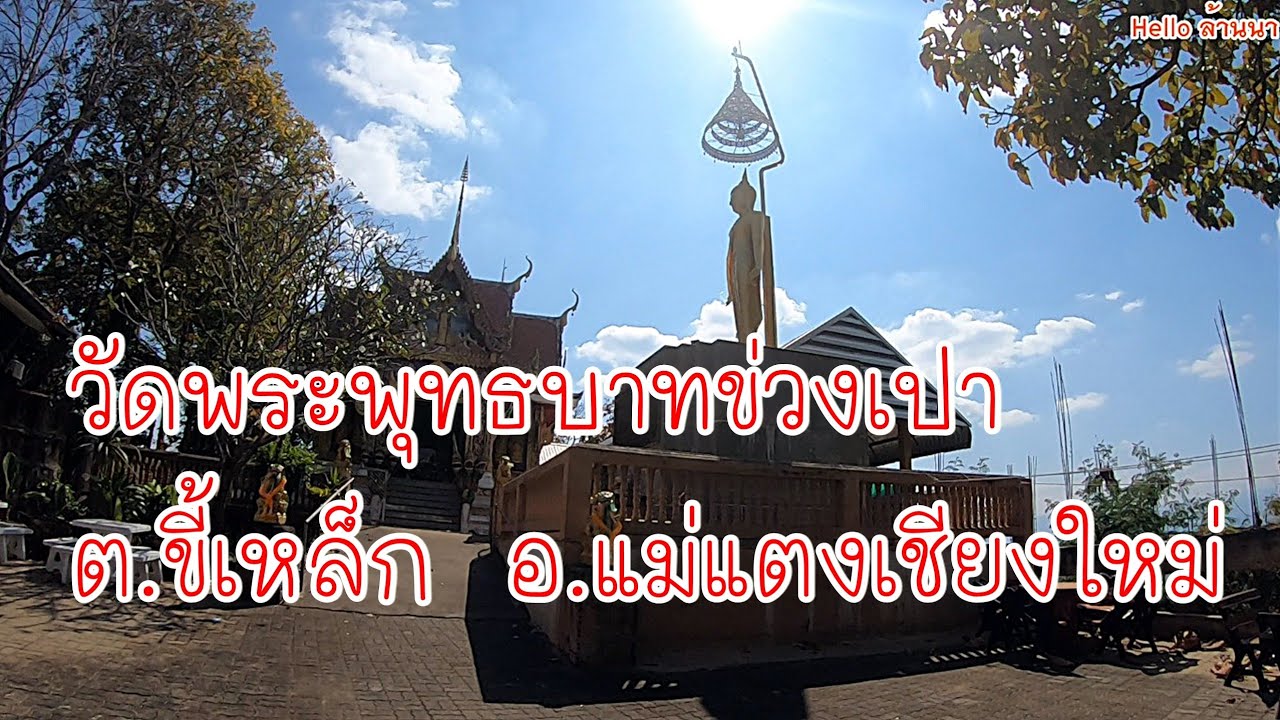
 Click to Access the Navigation Map GPS
Wat Phra Phutthabat Khuang Pao Map
Recommend

 Muang Chiang Mai(121)Chom Thong(47)Mae Chaem(25)Chiang Dao(33)Doi Saket(68)Mae Taeng(85)Mae Rim(69)Samoeng(29)Fang(71)Mae Ai(59)Phrao(70)San Pa Tong(105)San Kamphaeng(66)San Sai(73)Hang Dong(74)Hot(32)Doi Tao(22)Omkoi(11)Saraphi(74)Wiang Haeng(15)Chai Prakan(28)Mae Wang(32)Mae On(22)Doi Lo(34)Galyani Vadhana(1)


