
lovethailand home >North Travel Attractions >Chiang Mai Travel Attractions >Mae Taeng >Mae Taeng > Wat Mae Ka Luang
TL;DR: Wat Mae Ka Luang is located at Ban Mae Ka, Moo 3, Mae Taeng Subdistrict, Mae Taeng District, Chiang Mai Province, open Daily, hours 08.00 - 17.00.

Wat Mae Ka Luang
Open Days: Daily
Opening Hours: 08.00 - 17.00
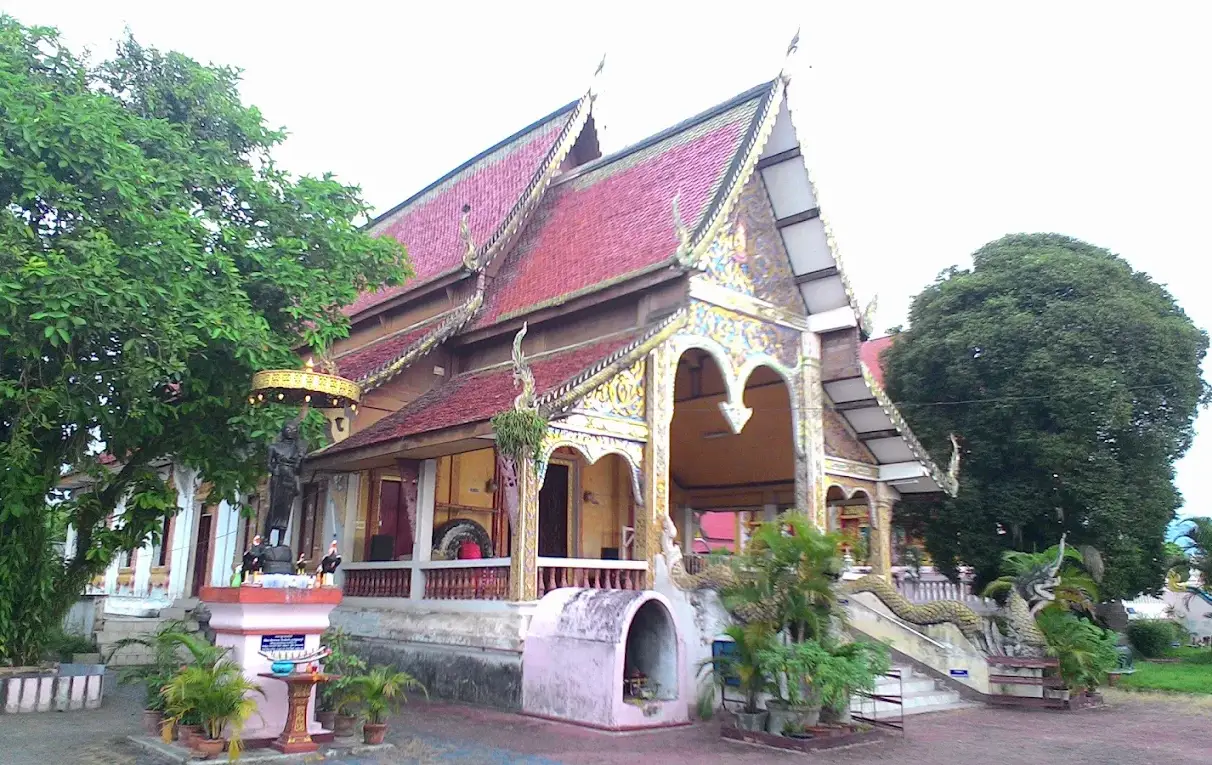
Wat Mae Ka Luang is located at No. 1, Moo 3, Ban Mae Ka, Mae Taeng Subdistrict, Mae Taeng District, Chiang Mai Province. It is an old community temple with a history dating back to the late Ayutthaya period. The temple was founded in 1750 and remains an important Buddhist site for the Mae Ka community. It serves as a place for merit-making, Dhamma listening, religious ceremonies, and cultural learning, while also reflecting the connection between temple, village, local stream, and Lanna community life.
The charm of Wat Mae Ka Luang is not based on grandeur or commercial tourism. Its value lies in its identity as a long-established village temple that has been closely connected with local people for more than 270 years. The temple stands in Ban Mae Ka, a community within Mae Taeng Subdistrict, not far from the main routes of Mae Taeng District. This makes it convenient to include in an itinerary focused on old temples, community culture, and nearby attractions in Mae Taeng.
The temple’s history is linked with the settlement of local devotees who came to establish a village in this area. As the community grew, the village was named after the stream that flowed through it, known as “Mae Ka.” This stream name became part of the village identity and is directly connected with the name Wat Mae Ka Luang. The temple therefore serves not only as a Buddhist place of worship, but also as a cultural marker that tells the story of how Ban Mae Ka developed.
The name “Mae Ka” carries a local geographical meaning. In northern Thailand, the word “Mae” is often used in the names of streams or waterways that are important to a community. Since the village grew around the Mae Ka stream, the name became part of local identity. Wat Mae Ka Luang is therefore more than a temple located in Ban Mae Ka. It is a spiritual center that grew together with the village name, local livelihood, and collective memory of the community.
Wat Mae Ka Luang is a public Buddhist temple under the Mahanikaya order. As a community temple, it has long played a direct role in the daily religious life of local people. Villagers use the temple for Buddhist holy day observances, merit-making, Dhamma listening, family ceremonies, funerals, ordination-related activities, and annual traditions. This close relationship between temple and people is a defining feature of Lanna village temples.
The important structures inside Wat Mae Ka Luang include the vihara, ubosot, monks’ residences, chedi, pavilion, Tripitaka hall, and other facilities for religious activities. These elements show that the temple developed as a complete community religious center. It is not only a place for worship, but also a place where monks reside, ceremonies are held, Buddhist teachings are preserved, and villagers gather for important occasions.
The vihara is one of the most important areas of the temple. It is used for paying respect to the principal Buddha image, chanting, listening to Dhamma, and joining Buddhist ceremonies. In a Lanna community temple, the vihara is often the heart of the temple compound because villagers gather there regularly for religious activities. At Wat Mae Ka Luang, the vihara represents the long-standing faith of the Mae Ka community.
The ubosot is used for important monastic acts such as ordination and formal Sangha ceremonies. Its presence shows that Wat Mae Ka Luang has the religious infrastructure necessary for monastic life. The monks’ residences support the daily life of the monks and novices who maintain the temple’s spiritual role. Together, these structures allow the temple to function continuously as a living Buddhist institution.
The chedi is another important point within Wat Mae Ka Luang. In Lanna temples, a chedi usually symbolizes Buddhist devotion and serves as a sacred focus for worship. Even though detailed public information about the artistic style of Wat Mae Ka Luang’s chedi is limited, the presence of a chedi confirms the temple’s role as a significant place of faith within the community.
The Tripitaka hall is culturally meaningful because it reflects the temple’s role in preserving Buddhist teachings. In Lanna society, temples were not only ritual spaces. They were also places of learning, transmission of Buddhist knowledge, and preservation of religious texts. The Tripitaka hall at Wat Mae Ka Luang therefore represents the importance of Dhamma alongside local devotion.
The temple pavilion also plays an important role in community life. It is used for merit-making, Dhamma talks, village gatherings, and annual Buddhist events. Wat Mae Ka Luang therefore has the character of a traditional Lanna village temple that remains integrated with local life. It is both a spiritual refuge and a cultural public space for the Mae Ka community.
The atmosphere of Wat Mae Ka Luang is best experienced slowly and respectfully. Visitors can begin by paying respect inside the vihara, then continue to observe the ubosot, chedi, pavilion, Tripitaka hall, and surrounding temple grounds. This is not a place for rushed sightseeing. Its value lies in its history, continuity of faith, and role in the life of Ban Mae Ka.
Wat Mae Ka Luang is especially interesting because it was founded in the late Ayutthaya period. This long history shows that communities in Mae Taeng had religious and cultural roots long before the area became known mainly as a gateway to natural attractions. The temple helps visitors see Mae Taeng not only as a travel destination, but also as an old settlement area with Buddhist heritage embedded in local life.
The relationship between the temple and Ban Mae Ka reflects the traditional pattern of Lanna Buddhist communities. A temple was built, supported, and maintained by local faith. Over time, its permanent structures became evidence of the community’s devotion. Wat Mae Ka Luang has therefore become a symbol of continuity between ancestors, present-day villagers, and future generations.
Religious activities at Wat Mae Ka Luang include Buddhist holy day observances, Kathin, robe-offering ceremonies, rains retreat activities, end-of-rains retreat merit-making, chanting, Dhamma listening, and community Buddhist rites. These activities keep the temple active and connected to local life. Wat Mae Ka Luang is not merely an old temple; it is a living religious place that continues to serve the people of Ban Mae Ka.
For cultural travelers, the most important things to observe at Wat Mae Ka Luang are the vihara, ubosot, chedi, pavilion, Tripitaka hall, and the atmosphere of an old village temple. Visitors should dress respectfully, keep their voices low, avoid disturbing monks and villagers who come to make merit, and use the temple space with care. This is an active Buddhist temple, not a commercial attraction.
Traveling to Wat Mae Ka Luang is most convenient by private car, rental car, or hired vehicle. From Chiang Mai city, take the Chiang Mai-Fang route toward Mae Taeng District, pass the Mae Malai area, then continue into Mae Taeng Subdistrict and Ban Mae Ka. Travel time from Chiang Mai city to Mae Taeng is usually about 1 hour depending on traffic. Since the temple is located within the village area, visitors should use a navigation map for the final approach.
Travelers using public transportation should first reach Mae Malai or Mae Taeng District, then continue by local transport or hired vehicle to Ban Mae Ka. Rural transport is less frequent than city transport, so planning ahead is recommended. For visitors who want to combine several places in one day, using a private car or rental car is the most practical option because Wat Mae Ka Luang can be connected with nearby temples, restaurants, accommodations, and attractions in Mae Taeng.
A suitable Mae Taeng cultural route can begin at Wat Mae Ka Luang in the morning for worship and a quiet temple visit. Visitors can then continue to Wat Thung Luang, Wat Thara Thip Chai Pradit, Wat Nong Bua Worawet Wisit, or Wat Den Sali Sri Muang Kaen. For a nature-based extension, continue to Suan Son Mae Taeng, Mae Ngat Somboon Chon Dam, or Bua Tong Waterfall and Chet Si Spring. This route combines old temples, community culture, religious history, and natural scenery in Mae Taeng.
Overall, Wat Mae Ka Luang deserves attention as an old Buddhist temple of Mae Taeng Subdistrict. Its key values are its founding history in 1750, its connection with the settlement of Ban Mae Ka, its important religious structures, and its continuing role as a spiritual center for the local community. The temple is suitable for travelers who want to understand Mae Taeng beyond major attractions and see the deeper connection between faith, village life, and Lanna Buddhist culture.
| Name | Wat Mae Ka Luang |
| Location | Ban Mae Ka, Moo 3, Mae Taeng Subdistrict, Mae Taeng District, Chiang Mai Province |
| Address | No. 1, Moo 3, Ban Mae Ka, Mae Taeng Subdistrict, Mae Taeng District, Chiang Mai 50150, Thailand |
| Temple Type | Public Buddhist Temple Under The Mahanikaya Order |
| History / Period | Founded in 1750 during the late Ayutthaya period and closely connected with the settlement of Ban Mae Ka |
| Name Origin | The temple’s name is connected with Ban Mae Ka, a village named after the Mae Ka stream flowing through the community |
| Highlights | An old community temple of Mae Taeng with a long history since the late Ayutthaya period and important structures typical of a Lanna village temple |
| Main Structures | Vihara, ubosot, monks’ residences, chedi, pavilion, Tripitaka hall, and religious activity areas |
| Main Areas / Zones | Vihara for worship and Dhamma listening, ubosot for monastic acts, chedi for worship, pavilion for community activities, and Tripitaka hall for preserving Buddhist teachings |
| Community Role | A spiritual center for Ban Mae Ka villagers, used for merit-making, Dhamma listening, Buddhist ceremonies, and local religious traditions |
| Open Days | Daily |
| Opening Hours | 08.00 - 17.00 |
| Travel Information | From Chiang Mai city, take the Chiang Mai-Fang route toward Mae Taeng District, pass Mae Malai, then continue into Mae Taeng Subdistrict and Ban Mae Ka. Private car, rental car, or hired driver is recommended |
| Current Status | Open as a community temple and cultural attraction in Mae Taeng District, Chiang Mai Province |
| Important Traditions | Buddhist holy day observances, Kathin, robe-offering ceremonies, rains retreat activities, Dhamma listening, and community Buddhist rites |
| Visitor Etiquette | Dress respectfully, keep quiet, avoid disturbing monks and villagers, and use the temple space with care |
| Nearby Tourist Attractions | 1. Wat Thung Luang, about 3 km 2. Wat Thara Thip Chai Pradit, about 4 km 3. Wat Nong Bua Worawet Wisit, about 4 km 4. Suan Son Mae Taeng, about 8 km 5. Wat Den Sali Sri Muang Kaen, about 14 km |
| Nearby Restaurants | 1. Moo Inter Mae Malai, about 6 km, Tel. 093-135-2929 2. Baan Suan Chomchan Mae Taeng, about 8 km, Tel. 053-047-111, 089-433-5819 3. Sri Kaew Restaurant @ Mae Taeng, about 12 km, Tel. 082-574-7870 4. Doona Resort Restaurant, about 16 km, Tel. 093-275-3888 5. Restaurants In Mae Malai Area, about 6 km |
| Nearby Accommodations | 1. Phutawan Pundao, about 2 km 2. Rublom Resort Mae Taeng, about 3 km 3. Mae Malai Mansion, about 6 km, Tel. 053-842-620, 095-610-6489 4. Maetaeng Homestay & Resort, about 8 km, Tel. 086-399-9144 5. Doona Resort, about 16 km, Tel. 093-275-3888 |
Frequently Asked Questions (FAQ)
Q: Where is Wat Mae Ka Luang located?
A: Wat Mae Ka Luang is located at No. 1, Moo 3, Ban Mae Ka, Mae Taeng Subdistrict, Mae Taeng District, Chiang Mai 50150, Thailand.
Q: What are the opening days and hours of Wat Mae Ka Luang?
A: Wat Mae Ka Luang is open daily from 08.00 to 17.00.
Q: When was Wat Mae Ka Luang founded?
A: Wat Mae Ka Luang was founded in 1750 during the late Ayutthaya period. It is an old temple connected with the settlement of Ban Mae Ka.
Q: What is the main highlight of Wat Mae Ka Luang?
A: The main highlight is its identity as an old community temple in Mae Taeng, with important structures such as the vihara, ubosot, monks’ residences, chedi, pavilion, and Tripitaka hall.
Q: What type of traveler is Wat Mae Ka Luang suitable for?
A: It is suitable for travelers interested in old temples, Lanna culture, community history, and quiet cultural travel in Mae Taeng District.
Q: How can travelers get to Wat Mae Ka Luang?
A: From Chiang Mai city, take the Chiang Mai-Fang route toward Mae Taeng District, pass Mae Malai, then continue into Mae Taeng Subdistrict and Ban Mae Ka. A private car or rental car is the most convenient option.
Q: What nearby places can be visited with Wat Mae Ka Luang?
A: Nearby places include Wat Thung Luang, Wat Thara Thip Chai Pradit, Wat Nong Bua Worawet Wisit, Suan Son Mae Taeng, Wat Den Sali Sri Muang Kaen, and other attractions in Mae Taeng District.
 Category: ●Places of Worship
 Group: ●Temple
Last Update : 2 DayAgo
 Last Update : 2 DayAgo
 Click to Access the Navigation Map GPS
 Muang Chiang Mai(121)Chom Thong(47)Mae Chaem(25)Chiang Dao(33)Doi Saket(68)Mae Taeng(85)Mae Rim(69)Samoeng(29)Fang(71)Mae Ai(62)Phrao(70)San Pa Tong(105)San Kamphaeng(66)San Sai(73)Hang Dong(74)Hot(32)Doi Tao(22)Omkoi(11)Saraphi(74)Wiang Haeng(15)Chai Prakan(28)Mae Wang(32)Mae On(22)Doi Lo(34)Galyani Vadhana(1)


