
lovethailand home >North Travel Attractions >Chiang Mai Travel Attractions >Phrao >Nam Phrae > Huai Luek Reservoir
TL;DR: Huai Luek Reservoir, Chiang Mai attractions : Nature and Wildlife, Dam, Reservoir, Lake.

Huai Luek Reservoir
Open Days: Generally open daily (this is a community water resource area; visitors are advised not to interfere with local usage and to check access conditions with local authorities before traveling)
Opening Hours: Recommended 06:00 – 18:00 (early morning and late afternoon offer the most comfortable weather and best light for relaxation and photography)
Huai Luek Reservoir is often remembered as a “community dam and lake” along the northern Chiang Mai travel route. It was not created purely for scenic appeal, but as a water management structure that genuinely supports agriculture and the livelihoods of local people throughout the year. The reservoir is located in Ban Huai Luek, Ping Khong Subdistrict, Chiang Dao District, Chiang Mai Province, within a Royal Project development area that emphasizes occupational stability and responsible use of natural resources.
To explain clearly why Huai Luek Reservoir is important, it helps to begin with the system-level objectives of the area. The Huai Luek Royal Project Development Center was designed to increase agricultural productivity and improve the efficiency of water utilization, while also enabling farmers to transport agricultural products out of the area conveniently, quickly, and in every season. This explains why “water” here is not only about storage for use, but also directly linked to “production costs” and “logistical efficiency”—key factors that determine the sustainability of agriculture in mountainous and remote regions.
In terms of water use, the reservoir functions like a “battery for the agricultural system.” It stores water during periods of abundance and releases it in a controlled manner during dry periods, ensuring that farmland is not disrupted during droughts and allowing communities to plan their cultivation with greater confidence. In areas like this, even a short interruption in water supply can cause crop losses. With a well-managed water source, farmers can better control risks, both in terms of crop quality and overall yield in each production cycle.
Another layer that is often overlooked is “product transportation.” Roads and accessibility are part of water-use efficiency as well. Even with sufficient water and good yields, if products cannot be transported out during the rainy season or are delayed, costs increase and losses follow. Therefore, the goal of enabling farmers to move their produce conveniently and efficiently throughout the year reflects a holistic development approach—from production in the fields to successful delivery to markets. It is not only about being able to grow crops, but also about being able to sell them.
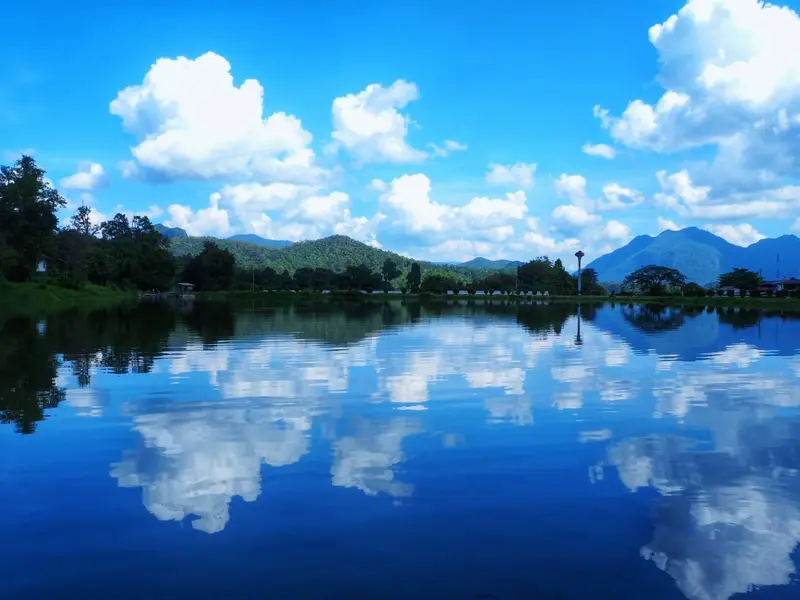
For visitors, Huai Luek Reservoir offers a secluded and tranquil atmosphere. The expanse of water framed by mountain ridges creates a sense of calm, and the quietness of the area comes from the same advantage: it is not a commercially staged tourist attraction. Visitors experience genuine nature and a simple landscape that is still actively used by the community. This also means respecting local guidelines—no swimming, no littering, no loud noise, no blocking community roads or farmland, and avoiding operational or hazardous areas marked by warning signs.
Getting There Huai Luek Reservoir is located in Ban Huai Luek, Ping Khong Subdistrict, Chiang Dao District, Chiang Mai Province. Private cars or rental vehicles are recommended. Set your navigation to “Huai Luek Reservoir,” “Ban Huai Luek,” or “Huai Luek Royal Project Development Center” for accurate directions. The final section of the route includes community roads; drive slowly, watch for curves, and allow extra time during the rainy season.
| Place Name | Huai Luek Reservoir |
| Location | Ban Huai Luek, Ping Khong Subdistrict, Chiang Dao District, Chiang Mai Province |
| Area Characteristics | Community reservoir and lake, water resource for agriculture and conservation, peaceful atmosphere ideal for relaxation and photography |
| Key Role for Community & Agriculture | Improves water-use efficiency, supports agricultural production, and enables convenient, fast, year-round transport of farm products |
| Access | Private car or rental vehicle recommended; navigate to “Huai Luek Reservoir” or “Huai Luek Royal Project Development Center” and proceed carefully on community roads |
| Contact Information (Verified) | Huai Luek Royal Project Development Center Tel. 081-961-3174 |
| Nearby Attractions (Distance & Phone) | Chiang Dao Cave (approx. 25 km) Tel. 053-112-877 Wat Tham Pha Plong (approx. 26 km) Tel. 053-475-100 Pong Ang Hot Spring (approx. 35 km) Tel. 053-046-370 Chiang Dao Wildlife Sanctuary (Doi Luang Chiang Dao) (approx. 30 km) Tel. 053-456-623 Doi Pha Hom Pok National Park (approx. 60 km) Tel. 052-080-801 |
| Popular Nearby Restaurants (Distance & Phone) | Chiang Dao Nest Restaurant (approx. 28 km) Tel. 053-456-612 Malee’s Restaurant Chiang Dao (approx. 28 km) Tel. 081-885-1563 Restaurant at Huai Luek Royal Project Center (approx. 5 km) Tel. 081-961-3174 Azalea Village Restaurant (approx. 30 km) Tel. 053-457-444 The River Flows Cafe & Restaurant (approx. 30 km) Tel. 053-457-339 |
| Recommended Nearby Accommodations (Distance & Phone) | Azalea Village Chiang Dao (approx. 30 km) Tel. 053-457-444 The River Flows Chiang Dao (approx. 30 km) Tel. 053-457-339 Chiang Dao Nest (Accommodation) (approx. 28 km) Tel. 053-456-612 Lanna Wild Chiang Dao (approx. 28 km) Tel. 063-246-1926 Huan Chiang Dao Resort (approx. 28 km) Tel. 053-456-221 |
Frequently Asked Questions (FAQ)
Q: What type of visit is Huai Luek Reservoir best suited for?
A: It is ideal for quiet, nature-focused visits such as walking, photography, and learning how community water systems support sustainable agriculture—especially for travelers who prefer non-commercialized natural settings.
Q: Why does this area emphasize “year-round product transportation”?
A: Because effective water development does not end with water availability alone. Agricultural products must also be transported continuously, particularly during the rainy season when access can be difficult. Delays increase costs and risk crop losses.
Q: What precautions should visitors take?
A: Do not swim, do not litter, keep noise levels low, avoid blocking community roads, and stay clear of operational or hazardous areas marked by warning signs. During the rainy season, drive slowly and watch for slippery roads.
Q: Where can visitors go next for a one-day trip?
A: Continue on to Chiang Dao Cave and Wat Tham Pha Plong for nature and cultural experiences, or stop at Pong Ang Hot Spring to relax before returning to Chiang Dao town.
 Category: ●Nature and Wildlife
 Group: ●Dam, Reservoir, Lake
Last Update : 9 MonthAgo
 Last Update : 9 MonthAgo
 Click to Access the Navigation Map GPS
Huai Luek Reservoir Map
Recommend

 Art, Culture and Heritage
 Historical Sites and Monuments(8)
 Landmarks and Memorials(5)
 Royal Palace(2)
 Art, Craft Centres, Tradition(43)
 Museums(24)
 Educational Places
 Museum for Study(2)
 Educational Gardens, Farm(5)
 Training Center(1)
 Places of Worship
 Temple(79)
 Mosque(2)
 Other Sacred Sites(17)
 Research and Development
 Royal Project(44)
 Suburban Living
 Village, Community(41)
 Local Market(14)
 National Parks and Marine Reserves(16)
 Mountain (Doi)(21)
Dam, Reservoir, Lake(26)
Mountain (Doi)(21)
Dam, Reservoir, Lake(26)
 Waterfalls(43)
 Hot Springs(12)
 Caves(11)
 River, Canal(6)
 Other natural attractions(14)
 Entertainment and Agricultural
 Zoos and Aquariums(2)
 Animal camps and shows(3)
 Stadium(1)
 Farms, Parks and Ecotourism(19)
 Waterpark(2)
 Theater(1)
 Outdoor and Adventure Activities(10)
 Shopping
 Shopping and Night Market(6)
 Restaurant
 Michelin Star(1)
 Michelin Guide(23)
 Call Customer Service in Tourism
 Call Customer Service in Tourism(1)
 Travel Articles, Recipes
 Travel Review, Food Review(15)
 Food Menu, North Recipes(30)
 Thai Desserts, North Recipes(17)


