

 Home
Home Chiang Mai(




Rating: 3.2/5 (6 votes)
 |
|  Map
Map 
 Have Map
  No Map
Phetchaburi attractions
Attractions in Thailand
Open Days: Open for visits by appointment and based on community activities (recommended to contact in advance)
Opening Hours: Generally around 09:00 – 16:00 (may vary depending on activities or study-visit groups)
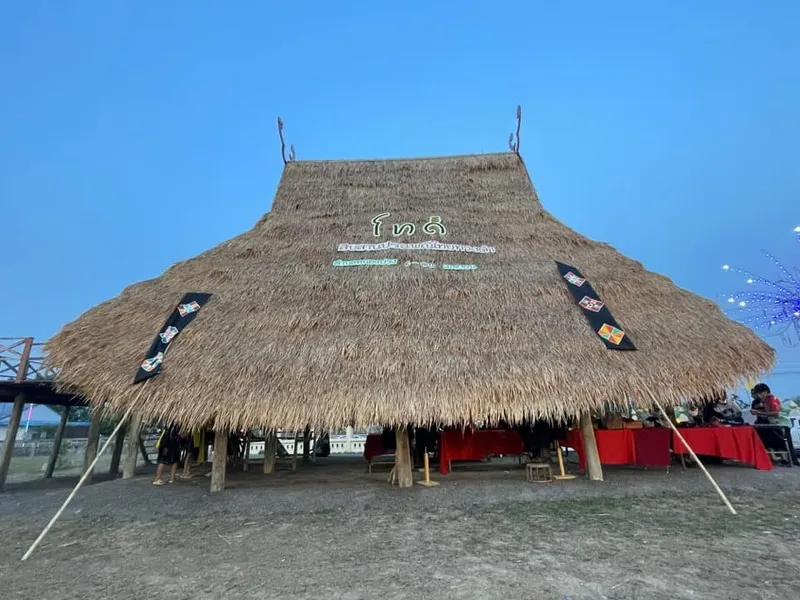
Pan Thanom Museum (Thai Song Dam Museum) is located at 8/1 Moo 1, Ban Nong Chik, Nong Prong Subdistrict, Khao Yoi District, Phetchaburi Province. This is a community-based folk museum that serves a purpose far beyond “displaying objects.” It is a cultural space that helps explain the identity of the Thai Song Dam people—also known as Thai Dam and Lao Song—an ethnic group in the Tai language family with a distinct and unmistakable identity. Their language, clothing, textiles, rituals, music, and nature-aligned way of life all form an integrated cultural system. In this sense, the museum functions as a living “memory archive” of the community, still actively connected to real people and everyday life in the area.
In the past, many Thai Song Dam people did not feel confident expressing their cultural identity openly due to differences from the broader population—including language, dress, and customary practices. Misunderstanding from outsiders led certain cultural dimensions to be overlooked or reduced to superficial impressions. Pan Thanom Museum emerged from the community’s awareness that if they did not actively collect, preserve, and explain their culture themselves, the identity and wisdom of their ancestors could fade away permanently.
The Thai Song Dam are a Tai-speaking ethnic group with a history of migration and settlement across several parts of Thailand. Phetchaburi is widely recognized as one of the major areas of settlement, especially Khao Yoi District and Nong Prong Subdistrict, which are regarded as a “mother city” of Thai Song Dam in Thailand. One of the most recognizable identities is their preference for black clothing. This does not signify sorrow; rather, it represents composure, stability, and harmony with nature. Thai Song Dam clothing therefore becomes a cultural language that clearly communicates the community’s worldview.
Pan Thanom Museum was founded in 1999 (B.E. 2542) by Mrs. Thanom Khongyimlamai, a resident of Ban Nong Chik. She played a key role in collecting household objects and ancestral belongings from founding lineages and local families and arranging them for display within her own home. The founding date also carries symbolic meaning, aligned with April 2—the birthday of Princess Maha Chakri Sirindhorn—reflecting a commitment to cultural preservation alongside respect and reverence.
In its early stage, the museum began as a small display space inside the founder’s home, focusing on organizing everyday items into clear categories—such as agricultural tools, kitchenware, clothing, and ritual-related objects. While the exhibition style was not elaborate, the cultural value was exceptionally strong because every item had a provenance, a story, and a direct relationship to real community life. Later, in 2004 (B.E. 2547), the museum underwent systematic improvements to its exhibition building and was officially opened on October 30, 2008 (B.E. 2551) after receiving support from multiple government agencies and private-sector partners.
The Thai Song Dam Language is a core pillar of ethnic identity. Language is not only a tool for communication; it is a repository of memory that contains worldview, beliefs, and the community’s relationship structures. Thai Song Dam has many specialized terms tied to nature, farming, and ritual life. Losing the language would mean losing ways of thinking and cultural knowledge embedded within it. Pan Thanom Museum therefore emphasizes presenting and explaining the language system so visitors can understand that safeguarding language is the foundation of preserving the entire identity.
Textiles and Clothing reflect refinement and social order within Thai Song Dam culture. Everyday clothing differs from attire used in ritual contexts. The choice of black, patterns, and embroidery are not accidental; they form a symbolic system that can indicate status, age, and roles within the community. Weaving is not merely handicraft production—it is a process of passing on patience, precision, and knowledge across generations. The museum helps visitors see that “clothing” itself functions as a cultural language.
Rituals and Beliefs form an essential structure that sustains Thai Song Dam society. Ritual life connects to the human life cycle—birth, coming of age, marriage, and death—as well as practices linked to the home and ancestors. These rituals bind families and the wider community together. Socially, rituals also serve as a learning space for roles, responsibilities, and shared obligations. Pan Thanom Museum presents rituals as a “system of thought,” not merely as displays of belief.
Music and Dance in Thai Song Dam culture operate as both art and social language. Traditional instruments and dance movements are used in rituals and key community occasions. Music connects people to the rhythm of life and shared memory. Learning music and dance is therefore not only skill training, but also training in community membership. The museum presents this knowledge so visitors can understand cultural dimensions that go far deeper than entertainment.
Getting There Pan Thanom Museum is located at 8/1 Moo 1, Ban Nong Chik, Nong Prong Subdistrict, Khao Yoi District, Phetchaburi Province. Visitors can travel by private car via Phetkasem Road (Highway 4) and then turn into Khao Yoi District. The route is straightforward, making it suitable for a cultural day trip or for planning a full-day learning itinerary.
| Place Name | Pan Thanom Museum (Thai Song Dam Museum) |
| Location | 8/1 Moo 1, Ban Nong Chik, Nong Prong Subdistrict, Khao Yoi District, Phetchaburi Province |
| Place Summary | A Thai Song Dam folk museum and learning space focused on language, textiles, rituals, and ethnic way of life |
| Key Highlights | A community-rooted museum that transmits in-depth cultural knowledge, not merely object displays |
| Founder | Mrs. Thanom Khongyimlamai |
| Nearby Tourist Attractions | 1) Tham Khao Yoi – approx. 6 km 2) Khao Yoi Arboretum – approx. 8 km 3) Phra Nakhon Khiri Historical Park (Khao Wang) – approx. 25 km 4) Wat Mahathat Worawihan – approx. 27 km 5) Tham Khao Luang – approx. 28 km |
| Nearby Restaurants | 1) Khrua Tanot – approx. 12 km – 082-252-4990 2) Lilyn Home Cafe – approx. 10 km – 086-610-2442 3) Play Yuan (Ban Lat) – approx. 15 km – 089-081-2559 4) Suan Aharn Lan Aroi – approx. 25 km – 088-594-9878 5) Ban Rai Phu Wan – approx. 18 km – 098-497-8849 |
| Nearby Accommodations | 1) Super Highway Hotel (Ban Lat) – approx. 18 km – 097-189-9159 2) Sun Hotel Phetchaburi – approx. 26 km – 032-400-0000 3) Phetkasem Hotel – approx. 27 km – 032-400-111 4) Sawang Resort & Golf – approx. 20 km – 081-192-4407 5) A+ Hometel Phetchaburi – approx. 28 km – 097-978-5524 |
Frequently Asked Questions (FAQ)
Q: Who is Pan Thanom Museum suitable for?
A: It is suitable for students, academics, and travelers who want an in-depth understanding of ethnic culture.
Q: How long does a visit usually take?
A: Around 1–2 hours, or longer if you spend time learning and talking with the community.
Q: Is there an admission fee?
A: Generally, there is no admission fee, but it is recommended to contact the museum in advance.
Q: Can I bring children to learn here?
A: Yes. It is highly suitable for hands-on learning outside the classroom.
Q: How should I prepare before visiting?
A: Dress modestly, coordinate in advance, and approach the visit with respect and an open mind.
 Phan Thanom Museum Map
 Category:
  Group:
  Last Update: 1 DayAgo
Comment
 Nearby Attractions
| Keyword (Advance) |
 Region
|
 Muang Phetchaburi(