

 Home
Home Chiang Mai(




Rating: 4/5 (5 votes)
 |
|  Map
Map 
 Have Map
  No Map
Phetchaburi attractions
Attractions in Thailand
Open Days: Open for learning visits and activities; advance coordination is recommended
Opening Hours: During official government office hours and according to the station’s activity schedule
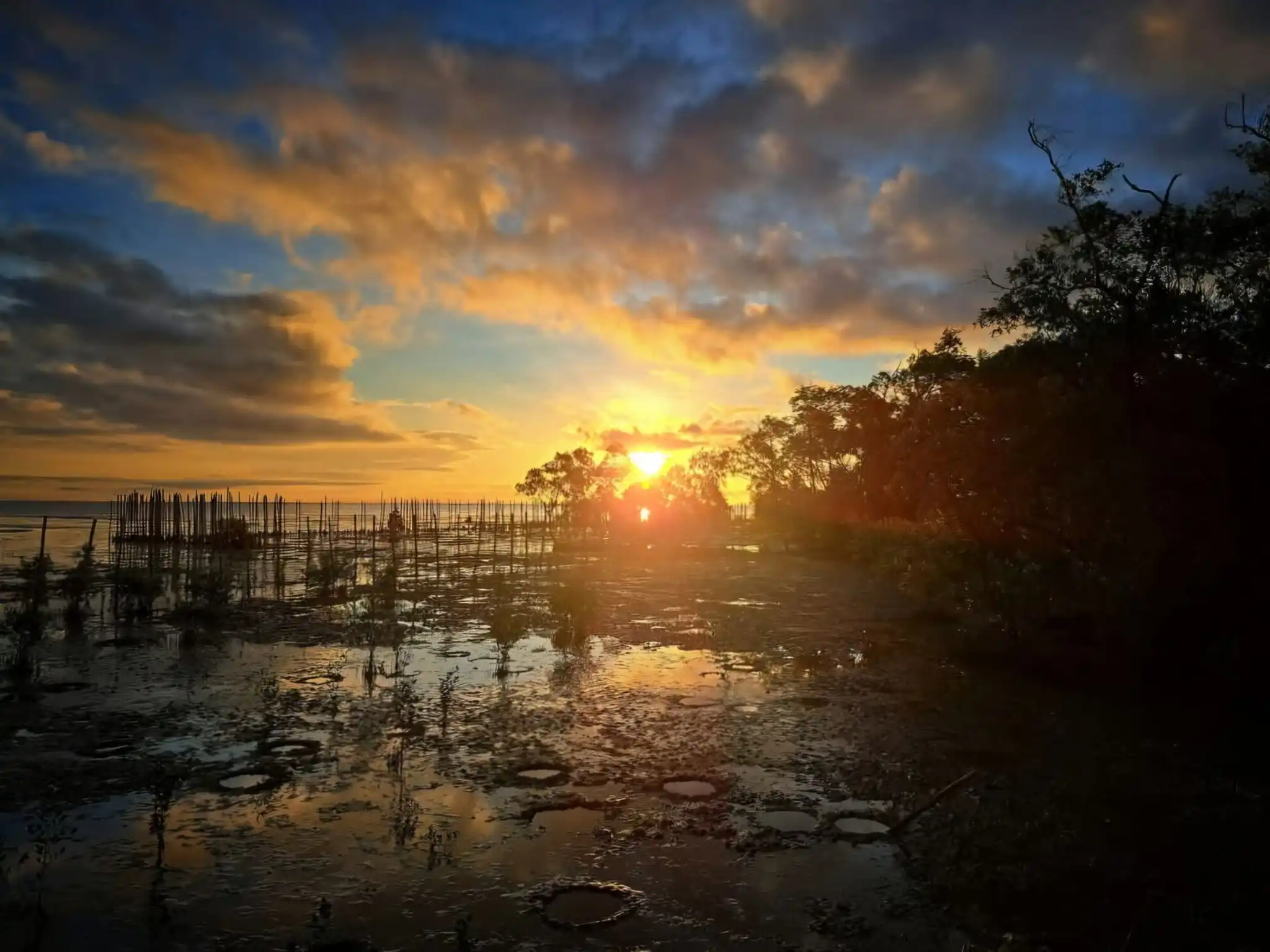
Mangrove Forest Resources Development Station No. 6 (Bang Khun Sai) is one of Phetchaburi’s most important eco-learning and ecotourism sites. Located in front of Wat Bang Khun Sai in Ban Laem District, Phetchaburi Province, it operates as a government unit under Thailand’s Ministry of Natural Resources and Environment. Its core mission is to manage, conserve, protect, and restore mangrove forests and coastal resources sustainably, while also welcoming the public—tourists, students, researchers, and organizations—to learn directly from a real mangrove ecosystem.
Phetchaburi’s mangrove forests are distributed along the coastline for approximately 44 kilometers. They are commonly found around the mouths of the Phetchaburi River, the Bang Tabun River, and various natural canals influenced by tidal movements. More than 80% of the province’s mangrove areas are concentrated in Ban Laem District, a zone that is vital both ecologically and economically. Mangroves function as nursery habitat for aquatic life, serve as a natural buffer that reduces wave energy and coastal erosion, and remain a key resource base that sustains traditional small-scale fisheries.
Looking at coastal land use overall, Phetchaburi still retains around 15,000 rai of relatively intact, biodiverse mangrove forest. However, parts of the coastline were converted in the past into fish ponds, shrimp farms, and salt fields. Such conversions can destabilize the coastal ecosystem over time—reducing nursery areas for marine life, weakening the mangrove’s ability to trap sediment and filter pollutants, and leaving shorelines more vulnerable to erosion and storm surges. For these reasons, specialized agencies are needed to work on both conservation and resource management alongside community cooperation, ensuring long-term, practical protection of mangrove habitats.
Mangrove Forest Resources Development Station No. 6 (Phetchaburi) therefore functions like an on-the-ground operational base for mangrove management in its jurisdiction. Its work ranges from conservation and protection to restoring degraded areas, promoting community participation, and preventing and suppressing illegal encroachment and destruction of mangrove resources across Phetchaburi Province. This makes the station more than a tourist spot—it is a place where the idea of conservation for shared benefit becomes real in the field, and where visitors can understand how mangroves support coastal livelihoods and food security in concrete, measurable ways.
Once visitors enter the mangrove area under the station’s care, the ecosystem’s vitality becomes clear through small but telling details along the way: mangrove species arranged by tidal levels, dense mudflat life, animal burrows that act like the “breathing system” of the mud, and distinctive natural sounds—such as the rhythmic snapping of pistol shrimp, the calls of coastal birds foraging nearby, mudskippers moving confidently across the mud, and colorful fiddler crabs with striking, easy-to-observe behavior. These signs collectively confirm that the mangrove ecosystem is actively functioning, not simply a landscape with a name.
To make learning tangible, the station has created a mangrove nature study trail with educational signs that explain plant species, salt adaptation, the role of mud and sediment, mudflat ecology, and the broader importance of mangroves to marine and coastal resources. The trail is designed for comfortable and safe walking, suitable for adults, children, and seniors. Visitors can learn step-by-step through direct observation, but there is also an element of “learning through people,” as local youth guides may help with navigation and highlight things many visitors overlook—such as areas with dense animal traces, the best moments to observe mudskippers, or how to watch fiddler crabs without disturbing their natural behavior.
The station’s most popular ecotourism experiences include guided nature walks and mangrove planting activities, which help participants learn through hands-on practice rather than information alone. Those who wish to join mangrove planting should contact the station in advance—whether visiting as a family, a student group, or a larger organization—so staff can prepare seedlings and plan an activity format appropriate to group size and site conditions that day. Mangrove planting is not only about putting seedlings into the mud; it also involves learning about tidal levels, choosing the right planting points for different species, preventing seedlings from being washed away or buried by sediment, and understanding that “planting in the right place” is just as important as “planting a lot.”
For mangrove planting activities, there is usually only a small fee: 10 baht per person for fresh water to rinse off. Any additional contributions for site support and local guides can be made voluntarily. Such support typically goes back into site maintenance and ongoing conservation efforts in the community. For visitors who want a deeper coastal experience, it may also be possible to coordinate an overnight stay via community homestays or nearby accommodations, though advance notice is recommended to ensure readiness of hosts and services.
Another key charm that sets Bang Khun Sai apart from many other mangrove destinations is its strong traditional fishing culture. The area is widely known for natural cockle resources, and visitors may have the chance to see cockle harvesting using the “toe-board pushing” method (thip kradan), a local technique for moving across mudflats that requires rhythm, strength, and skilled body control. Seeing this practice in real life makes it immediately clear that coastal resources do not appear by chance—they depend on healthy ecosystems and on livelihood methods that work in harmony with nature.
Beyond toe-board pushing, Bang Khun Sai also has the distinctive image of “mud-skimming longtail boats” (ruea thaek len), designed to travel quickly over wet, slippery mud where there is still enough moisture. These boats can move fast across mudflats, but they require high skill to control direction safely. Observing mud-skimming boats in actual use is another way to learn how coastal communities develop practical wisdom to live with tidal cycles and mudflat environments efficiently. This is why a visit to the station does not end with a mangrove walk—it naturally connects to people, local economy, and sustainability in ways visitors can truly understand.
Getting There: By private car, take the Phetchaburi–Ban Laem route. From Phetchaburi city, it is about 15 km, with clear signs directing you to Bang Khun Sai. The station is located next to the front area of Wat Bang Khun Sai. By public transport, you can take a local songthaew (shared pickup taxi) from Phetchaburi city to Wat Bang Khun Sai, then walk to the station easily.
| Place Summary | A government-managed mangrove conservation and restoration site in Phetchaburi, located in front of Wat Bang Khun Sai. Features a nature study trail, mangrove planting activities, and learning experiences connected to local fishing traditions in the Ban Laem coastal area. |
| Key Highlights | 1) A functioning mangrove ecosystem with real coastal wildlife observation opportunities 2) Directly managed by a government agency, suitable for field trips and study visits 3) Nature study trail with on-site educational signage 4) Hands-on mangrove planting activities (advance coordination recommended) 5) Close to Bang Khun Sai fishing community, with learning about cockle harvesting and mud-skimming boat wisdom |
| Address | Moo 10, Bang Khun Sai Subdistrict, Ban Laem District, Phetchaburi 76110, Thailand (in front of Wat Bang Khun Sai) |
| Place Contact Number | Mangrove Forest Resources Development Station No. 6 (Phetchaburi): 032-783-237 |
| Nearby Tourist Attractions | 1) Wat Bang Khun Sai ~0.1 km 2) Bang Khun Sai Fishing Community ~1 km 3) Bang Tabun Bay ~8 km 4) Bang Tabun Market/Community Area ~9 km 5) Chao Samran Beach ~23 km |
| Nearby Restaurants | 1) Khrua Pa Or ~0.2 km Tel. 087-974-1693 2) Manora Restaurant ~2 km Tel. 063-578-8143, 084-394-0998 3) Lab Lab Seafood ~3 km Tel. 088-683-4188 4) coco&coff ~4 km Tel. 086-688-9701 5) Kluay Wan Cafe ~4 km Tel. 084-569-1915 |
| Nearby Accommodations | 1) Ban Bang Home Resort (Chao Samran Area) ~22 km Tel. 081-865-4949 2) Keang Kluen Talay Resort (Chao Samran Area) ~23 km Tel. 032-890-223, 097-036-0108 3) Seaman Resort (Chao Samran Area) ~23 km Tel. 081-846-1327, 089-122-7968 4) Fisherman's Resort (Chao Samran Area) ~24 km Tel. 032-478-020, 086-300-4510 5) Sea Sky Beach Resort (Chao Samran Area) ~23 km Tel. 032-478-431 |
Frequently Asked Questions (FAQ)
Q: Who is Mangrove Forest Resources Development Station No. 6 (Bang Khun Sai) suitable for?
A: It is suitable for eco-tourists, students, families, and organizations that want to learn about mangrove conservation through real field experience.
Q: Do I need to make arrangements in advance?
A: Advance coordination is recommended, especially for mangrove planting activities or group visits.
Q: How much does the mangrove planting activity cost?
A: Typically, there is a 10 baht per person fee for fresh water to rinse off, and additional support donations can be made voluntarily.
Q: Can young children join the activities?
A: Yes. Children can participate, but should be closely supervised by guardians and follow staff safety guidance.
Q: What is the best time to visit the mangroves?
A: Morning or cooler periods are more comfortable for walking, and low tide often makes mudflat conditions and coastal wildlife easier to observe.
 Tel: 032400826
 Fax: 032400825
 Mangrove Resources Development Station 6 Bang Khun Sai Map
 Category:
  Group:
  Last Update: 1 DayAgo
Comment
 Nearby Attractions
| Keyword (Advance) |
 Facebook Fanpage
 Region
 Art, Culture and Heritage
 Historical Sites and Monuments(
 Landmarks and Memorials(
 Royal Palace(
 Art, Craft Centres, Tradition(
 Museums(
 University
 Places of Worship
 Temple(
 Other religious and spiritural sites(
 Research and Development
 Royal Project(
 Suburban Living
 Village, Community(
 Floating Market(
 Nature and Wildlife
 National Parks and Marine Reserves(
 Mountain (Doi)(
 Dam, Reservoir, Lake(
 Waterfalls(
 Hot Springs(
 Caves(
 River, Canal(
 Bays and Beaches(
 Islands(
 Other natural attractions(
 Entertainment and Agricultural
 Zoos and Aquariums(
 Farm, Parks, Gardens and Ecotourism(
 Waterpark(
 Theater(
 Outdoor and Adventure Activities(
 Travel Articles, Recipes
 Travel Review, Food Review(