

 Home
Home Chiang Mai(




Rating: 3.5/5 (8 votes)
 |
|  Map
Map 
 Have Map
  No Map
Phetchaburi attractions
Attractions in Thailand
Open Days: Open for tourism seasonally and subject to community readiness (it is recommended to contact or check the weather before traveling, especially in the early rainy season)
Opening Hours: Generally around 06:00 – 18:00 (may change depending on site management duties and trail conditions)
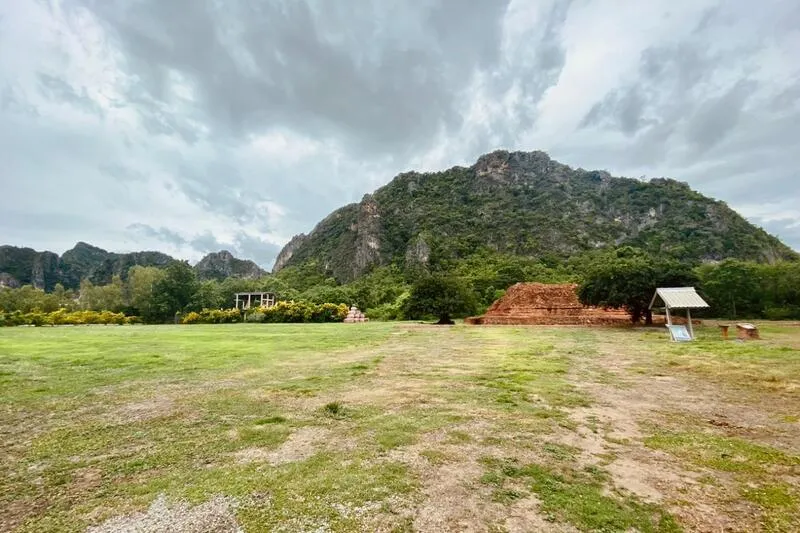
Thung Faek Valley Forest Eco-Tourism Project in Cha-am District, Phetchaburi Province, is one of those places that turns the idea of “exploring the forest without harming it” into a truly tangible experience. This area is not defined merely as a scenic viewpoint or a photo spot; it is a “valley” with its own ecosystem, a landscape with stories, a rhythm directed by the seasons, and a community that helps ensure visits remain within the boundaries of balance and respect. Thung Faek Valley lies along the Phra Rop mountain range and takes the form of a highland plateau surrounded by a complex ring of smaller mountains. The result is a wide open basin at the heart of the valley, with varied natural routes through forest edges, small streams, stone weirs, and viewpoints that allow your gaze to travel across layered ridgelines and sweeping panoramas.
The name “Thung Faek” was not invented to sound charming; it comes from what genuinely grows here. Vetiver grass is found throughout the meadow, and locals began calling the place “Thung Faek” until it became the valley’s established name. When eco-tourism was later adopted as the guiding framework for development, the name gained even deeper meaning because vetiver is known for stabilizing soil, reducing erosion, and serving as a natural solution for hillsides that must withstand heavy monsoon rains. Walking through Thung Faek Valley therefore feels like stepping into a living lesson on how to live with the land—understanding the terrain rather than forcing nature to become only what we want to see.
What has drawn more attention from nature travelers in recent years is the presence of “krathiao” flowers (a local wildflower) that thrive on the broad central clearing. They often bloom in unison during the early rainy season each year—commonly described as roughly June to August. When the first rains arrive, the soil becomes moist, and many herbaceous plants “wake up,” the valley’s krathiao blooms become more than pretty flowers. They are seasonal signals, a “natural calendar” indicating that the forest is entering a period of renewed vitality. For visitors who enjoy reading nature in layers, seeing krathiao in bloom is like witnessing how the early rains create the conditions for small lifeforms in the valley to begin moving and flourishing again.
That said, visiting during the krathiao bloom also comes with the other realities of the rainy season: slippery trails, mud, sudden stream surges, and rapidly changing weather. This is why the eco-tourism approach at Thung Faek Valley places planning and visitor preparedness on the same level as natural beauty. A forest is not a city park. Respecting the trail, following site guidelines, and honestly assessing your physical readiness for outdoor conditions all help “protect the forest” indirectly—by reducing emergencies, preventing soil damage, and minimizing disturbance to wildlife that must adjust constantly to seasonal shifts.
Thung Faek Valley is located to the west of Cha-am District, within Ban Phu Wai, Village No. 6, Huai Sai Nuea Subdistrict, Cha-am, Phetchaburi. The broader landscape connects to key surrounding zones: to the north lies the Hub Kapong area; to the south is Hub Sabu Waterfall (formerly known as Than Sema Waterfall); to the west it approaches Tha Yang District; and to the east it links again toward Hub Kapong. In traveler-friendly terms, Thung Faek Valley sits within a “day-trip nature circuit” that can be expanded to include reservoirs, viewpoints, waterfalls, and agricultural learning sites nearby. This means the journey does not have to end at flower viewing—it can become a fuller itinerary that reveals an inland Cha-am perspective far beyond the sea.
Approximate distance references often used for trip planning include: around 53 km from Phetchaburi city, about 17 km from Cha-am town to the valley area, and roughly 8 km from the bypass road to the valley. Overall access is fairly convenient and well-suited to private vehicles. However, because the area is mountainous and nature-based, drivers should be especially cautious during rain—particularly in humid stretches or where fallen leaves collect on the road surface. If you plan to visit during the krathiao season, allow extra travel time. Some mornings are humid or foggy, and visibility can shift quickly, making calm, careful driving the most sensible approach.
The key appeal of an “eco-tourism project” in the context of Thung Faek Valley is that walking and nature viewing are framed in a way that does not push the burden onto the ecosystem. Visitors are not invited only to “use the space”; they are encouraged to understand how fragile it can be—where to walk, what to avoid, what should be taken back out, and what must remain part of the forest. This philosophy often shows up in small, practical details: keeping the trail clean, not picking flowers, staying quiet in areas where wildlife may pass through, and walking in a compact group rather than spreading out widely. During the rainy season, repeated trampling across soft ground can trigger erosion far more easily than most people expect.
The landscape of Thung Faek Valley has the charm of a “readable forest.” If you observe carefully, you begin to see the relationships that hold the ecosystem together. Areas with dense vetiver often resist erosion and remain walkable. Zones with more tall trees provide shade and humidity, supporting certain herbaceous plants during the early rainy season. Paths that cross streams or stone weirs reveal that forest water is not only “a waterfall for photos,” but a life-support system for small animals, aquatic creatures, and plants that depend on consistent moisture. This is what makes the visit feel educational without needing many signs: the valley teaches through what is genuinely there.
The best time to visit depends on your trip goal. If krathiao blooms are your priority, early rainy season (roughly June to August) offers better odds—though it also brings humidity and slippery conditions. If your goal is clearer skies, drier ground, and a lower chance of rain, late rainy season into early winter is usually more comfortable. Even if you miss the krathiao highlight, you gain a different reward: a calmer mountain atmosphere and, on many days, longer sightlines across the valley. Morning and late afternoon light can layer the ridges beautifully, giving the landscape extra depth.
One reason visitors often feel especially impressed by eco-style nature trips like this is the way the forest naturally slows you down. You slow your pace because the ground is uneven, because you begin listening to wind and insects, because you pause to look at small plants along the trail, or because you wait for fog to lift and reveal the view in sections. This is a different kind of travel from places designed to be fast and effortless. Here, a moderate level of difficulty gives the experience weight—and makes the journey itself feel more meaningful than simply collecting check-ins.
In the Phra Rop mountain zone, plant life tends to be diverse: tall trees, shrubs, bamboo clusters, and various herbal plants across forest layers, along with groundcover that helps retain moisture and stabilize soil during heavy rains. This diversity makes Thung Faek Valley suitable for exploratory walks by travelers who want a “real forest” rather than a staged landscape. Even if you cannot name every species, simply noticing the forest layers, feeling how temperature and humidity change when you move from open meadow into shade, and seeing variations of green across the terrain is enough to sense that the forest is a living system—not a backdrop.
Another element that strengthens this nature circuit is the connection to water sources and nearby waterfalls, such as Hub Sabu Waterfall. Waterfalls in this region may not be towering like some famous sites, but they are approachable and charming in a Phetchaburi mountain way—especially when flow is steady and the air is pleasantly moist. Adding a stream or waterfall segment to your itinerary creates a more complete experience: flowers, forest walking, and the calming sound of water—an ideal balance between activity and restoration.
If you want to experience the valley like someone who truly “reads” the land, look for small signs along the way. Notice where soil shifts from dry to damp. Observe which plants cluster more densely under shade. Pay attention to stretches of deeper silence as cues to lower your voice, because those zones may be used by wildlife. This does not require academic knowledge—only the mindset of a respectful visitor. And that is the core message of eco-tourism at Thung Faek Valley.
For photography lovers, Thung Faek Valley offers “honest nature images” rather than staged scenes. When krathiao blooms appear together, their colors feel lively while the mountain-and-meadow background stays naturally rugged, keeping photos from looking overly sweet. After fresh rains, the humid air deepens greens across the forest. The essential point is to keep photography within responsible boundaries: do not step into flower fields or leave the trail in ways that damage soil. One beautiful photo should never come at the cost of months of ecological recovery.
If you are visiting as a family, one of the strengths of eco-style nature places is how naturally they create learning. Children often start asking questions on their own when they see insects, plants, water traces, or differences between meadow and forest. Adults, however, should prioritize safety: proper footwear for slippery ground, adequate water, a hat or light rain gear, and a walking distance appropriate to a child’s stamina. Forest walking uses more energy than flat paths, and keeping children happy often means not pushing the route beyond their comfort.
From a historical and development perspective, documented details such as the exact “year the project began” may vary across sources. The central truth is that this highland forest area was recognized for its value and developed under an “eco-conservation framework,” rather than being pushed into high-volume tourism that would erode its wild character. What visitors can feel is the intention to preserve nature—through the overall atmosphere, trails that remain naturally earthy and rocky rather than overly paved, and a level of activity that peaks only in certain seasons rather than forcing constant crowds year-round. Forests need time to rest, and genuine eco-tourism accepts the rhythm of nature as the primary condition.
Another important dimension is the connection between Thung Faek Valley and a wider network of inland Cha-am learning destinations, such as Hub Kapong—an agricultural and community learning area familiar to many travelers. Linking these places into one itinerary reveals a fuller picture of Cha-am: not only beaches, but also mountains, forests, reservoirs, agriculture, and communities shaped by the land for generations. This style of trip suits travelers who want to understand Phetchaburi more deeply by combining nature and local lifeways within the same journey.
On the day of travel, prepare both essentials and the right mindset. Essentials include: grippy shoes, light rain gear, a small trash bag to carry out your waste, drinking water, and personal medication. If you plan a longer walk, bring snacks that do not crumble or leave litter easily. The mindset is equally important: nature does not follow our schedule. Some days rain hides the view. Some days fog demands patience. Some days flowers are not yet at peak bloom, or the peak has passed. Respecting nature means not forcing reality to match our expectations every single time.
When you return from Thung Faek Valley, what often stays with you is not only photographs but a clear feeling that “the forest does not belong to us.” We are temporary visitors. A good visit is one that leaves the forest as unchanged as possible. That is the most accurate description of an eco-trip—and the reason a place like Thung Faek Valley deserves to be told as a modern learning landscape of Phetchaburi, not merely a seasonal attraction.
Getting There Thung Faek Valley is located in Ban Phu Wai, Village No. 6, Huai Sai Nuea Subdistrict, Cha-am District, Phetchaburi. In general, you can use main routes from Phet Kasem Road or the bypass zone, then head toward Huai Sai Nuea and pin your navigation to “Thung Faek Valley” or “Khao Thung Faek.” It is recommended to depart early to allow enough time for nature walking, and to add extra buffer time during the rainy season because road and visibility conditions can change quickly.
| Place Name | Thung Faek Valley Forest Eco-Tourism Project (Khao Thung Faek) |
| Address | Ban Phu Wai, Village No. 6, Huai Sai Nuea Subdistrict, Cha-am District, Phetchaburi |
| Summary | An eco-style nature destination in the Phra Rop mountain range, featuring vetiver meadows and a central valley clearing where krathiao flowers often bloom in the early rainy season. Suitable for forest walks and natural landscape photography. |
| Highlights | A valley enclosed by layered mountains, vetiver meadows, seasonal krathiao blooms (roughly June–August), and nature routes that can connect to nearby water features and waterfalls. |
| Open Days | Seasonal access and subject to community readiness (check before you go) |
| Opening Hours | Generally around 06:00 – 18:00 (may vary depending on site management and trail conditions) |
| Fees | Generally free (if there is a community activity or trail maintenance fee in some periods, follow on-site announcements) |
| Facilities | Natural rest/view points, forest walking trails (conditions vary by season), parking areas arranged by the community (confirm on-site) |
| Getting There | Huai Sai Nuea area, Cha-am. Approximate planning distances: ~53 km from Phetchaburi city, ~17 km from Cha-am town, ~8 km from the bypass zone (private vehicle recommended; allow extra time during the rainy season). |
| Current Status | A seasonal eco-nature destination, especially popular in the early rainy season (check weather and trail conditions before travel) |
| Nearby Attractions (With Distance) | 1) Hub Sabu Waterfall (formerly Than Sema Waterfall) – approx. 6 km 2) Huai Ta Paet Reservoir – approx. 10 km 3) Phu Wai Reservoir – approx. 12 km 4) Hub Kapong Royal Project Area – approx. 12 km 5) Cha-am Beach (viewpoint zone) – approx. 22 km |
| Popular Restaurants Nearby (With Distance + Phone) | 1) Baan Rai Nam Ing – approx. 12 km – 088-454-0330 2) Rai Hub Kapong Maleehuana Resort & Restaurant – approx. 12 km – 095-489-4679 3) Cha-am Fishing Park Restaurant – approx. 18 km – 098-916-9878 4) Khrua Je Nong Seafood – approx. 25 km – 081-986-0916 5) Rim Pha Chom View – approx. 20 km – 096-797-8397 |
| Popular Accommodations Nearby (With Distance + Phone) | 1) Rai Hub Kapong Maleehuana (Accommodation) – approx. 12 km – 095-340-0035 2) Cha-am Fishing Park Resort & Restaurant – approx. 18 km – 097-037-1172 3) Springfield@Sea Resort & Spa – approx. 24 km – 032-709-300 4) Veranda Resort & Villas Hua Hin Cha Am – approx. 26 km – 032-709-000 5) Dusit Thani Hua Hin – approx. 28 km – 032-520-009 |
Frequently Asked Questions (FAQ)
Q: Where is Thung Faek Valley located?
A: It is in Ban Phu Wai, Village No. 6, Huai Sai Nuea Subdistrict, Cha-am District, Phetchaburi, within the Phra Rop mountain area.
Q: When is the best time to see krathiao flowers?
A: Krathiao flowers typically bloom together in the early rainy season, roughly June to August, depending on rainfall and weather conditions each year.
Q: What should I prepare before visiting?
A: Bring grippy shoes, light rain gear, drinking water, a small trash bag to carry out waste, and allow extra time during the rainy season because trail and visibility conditions can change quickly.
Q: Is the valley suitable for children or older visitors?
A: It can be, if you choose a route and walking distance appropriate to stamina. Avoid days of heavy rain or very slippery ground, and prioritize footwear and hydration.
Q: What are the key eco-tourism rules to follow?
A: Do not litter, do not pick flowers, stay on trails to avoid soil damage, keep noise low in forest zones, and follow any on-site community or caretaker guidance.
Q: Can I combine this visit with nearby places?
A: Yes. You can connect your trip with Hub Sabu Waterfall, Huai Ta Paet Reservoir, Phu Wai Reservoir, or the Hub Kapong area for a fuller inland Cha-am nature itinerary.
 Thung Faek Valley Forest Eco-Tourism Project Map
 Category:
  Group:
  Last Update: 21 HourAgo
Comment
 Nearby Attractions
| Keyword (Advance) |
 Region
|
 Muang Phetchaburi(