

 Home
Home Chiang Mai(




Rating: 3.1/5 (8 votes)
 |
|  Map
Map 
 Have Map
  No Map
Phetchaburi attractions
Attractions in Thailand
Open Days: Held once a year on December 6
Opening Hours: Approximately 09:00 – 17:00 (depending on community activities)
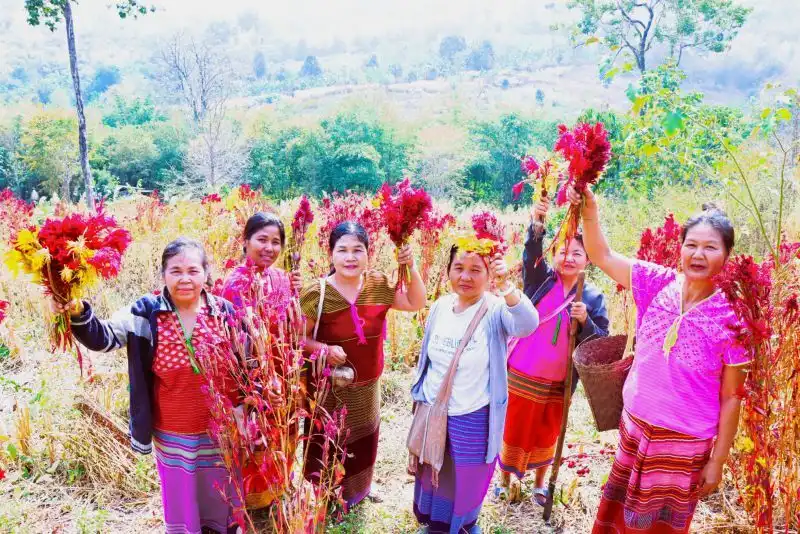
The Karen Hill Tribe Cultural Revival Festival in Ban Pa Deng Tai, Phetchaburi Province is an important annual event organized by the Karen hill tribe community of Moo 6, Pa Deng Subdistrict. The festival is held every year on December 6 with the purpose of preserving, revitalizing, and passing on cultural identity inherited from ancestors. This event is not merely a cultural showcase, but a living space of memory, belief, and the enduring relationship between people and nature within the community.
Ban Pa Deng Tai is an ethnic community located among mountains and forested landscapes in Phetchaburi Province. The surrounding natural environment directly shapes the Karen way of life, including rotational farming, reliance on forest resources, traditional housing, and seasonal rhythms of daily living. Nature is not simply a backdrop to life here, but an integral part of the community’s worldview and belief system.
The Karen hill tribe, also known in some areas as “Pgaz K’Nyau,” is an ethnic group with a long history of settlement in Thailand. Karen social structure places strong emphasis on family, kinship, and elders, who serve as custodians of knowledge, beliefs, and traditions passed down through generations. Language, traditional dress, and ritual practices function as essential mechanisms for preserving Karen identity.
The concept of “cultural revival” in Ban Pa Deng Tai does not arise from cultural loss, but from awareness of the rapid changes brought by the outside world. The festival therefore serves as a space where community members, especially younger generations, can reconnect with their roots through hands-on participation – from traditional clothing and performances to food preparation and ritual practices rich in symbolic meaning.
Traditional Karen Cuisine: Knowledge from the Forest and the Seasons. Karen traditional food clearly reflects the close relationship between humans and nature. Most ingredients are gathered from forests, farms, and nearby streams, including wild vegetables, bamboo shoots, mushrooms, herbs, and small aquatic animals. Food is not viewed merely as sustenance, but as the result of accumulated ecological knowledge and respect for natural resources.
Cooking methods among the Karen are generally simple, avoiding heavy seasoning and emphasizing the natural flavors of ingredients. Boiling, simmering, and grilling are commonly used techniques, helping to preserve nutritional value while reflecting a philosophy of moderation. Many dishes are prepared only during appropriate seasons, ensuring that ecological balance is not disrupted.
During the cultural revival festival, traditional dishes are prepared and shared within the community. Eating together reinforces social bonds and affirms collective identity, whether among villagers or visiting guests. Food thus becomes a medium for learning and cultural communication without the need for words.
Language and Communication: The Foundation of Karen Identity. The Karen language lies at the heart of ethnic identity. Beyond daily communication, it serves as a repository of accumulated experience, beliefs, and worldview. Many Karen words are directly connected to nature, agriculture, and the relationship between humans and their environment.
The use of the Karen language during the cultural revival festival holds strong symbolic significance. Songs, chants, and ritual speeches are delivered primarily in the local language, reinforcing cultural roots and fostering pride among younger generations who may otherwise grow up using Thai as their primary language within formal education.
Language transmission occurs through everyday life and community activities. Children and youth learn the language from elders through shared work, participation in rituals, and listening to oral histories. The festival therefore plays a crucial role in keeping the Karen language actively used and alive.
Rituals and Beliefs: The Relationship between People, Nature, and the Spiritual World. Karen belief systems are grounded in respectful coexistence with nature. Many rituals involve asking permission, offering gratitude, and seeking forgiveness from spiritual entities associated with forests, mountains, and water sources. These beliefs establish ethical frameworks for responsible resource use.
During the cultural revival festival, certain rituals may be performed to honor ancestors and seek blessings for abundance and well-being. These ceremonies are not staged for performance but are deeply spiritual processes treated with great reverence by the community. Visitors are therefore encouraged to observe respectfully, learn quietly, and behave appropriately.
Ritual practices also function as mechanisms for strengthening community unity. Gathering to perform ceremonies reinforces kinship ties and collective responsibility for caring for both the community and the surrounding natural environment. The festival thus represents both a cultural ritual and a process of communal spiritual cultivation.
The Karen Hill Tribe Cultural Revival Festival in Ban Pa Deng Tai is therefore far more than an annual event. It is a living space of learning, transmission, and negotiation of identity in the context of the modern world – a powerful example of cultural preservation that remains dynamic rather than frozen in a museum setting.
| Place Name | Ban Pa Deng Tai, Pa Deng Subdistrict, Phetchaburi Province |
| Key Highlights | A cultural revival festival reflecting Karen ethnic identity, traditional lifestyle, and belief systems |
| Getting There | Private car from Phetchaburi town toward Pa Deng Subdistrict |
| Current Status | The cultural revival festival continues to be held annually on December 6 |
Frequently Asked Questions (FAQ)
Q: When is the Karen Hill Tribe Cultural Revival Festival held?
A: The festival is held annually on December 6.
Q: Can outsiders attend the festival?
A: Yes, visitors are welcome, provided they respect community rules and cultural practices.
Q: What characterizes the traditional food served during the festival?
A: The food uses natural ingredients, is simply prepared, and reflects the community’s traditional way of life.
Q: What roles do language and rituals play in the festival?
A: Language and rituals transmit cultural identity, beliefs, and the relationship between people and nature.
Q: What is the best time to visit Ban Pa Deng Tai?
A: The cool season and the festival period in December are the most suitable times to visit.
 Category:
  Group:
  Last Update: 21 HourAgo
Comment
 Nearby Attractions
| Keyword (Advance) |
 Region
|
 Muang Phetchaburi(