

 Home
Home Chiang Mai(




Rating: 3.4/5 (7 votes)
 |
|  Map
Map 
 Have Map
  No Map
Phetchaburi attractions
Attractions in Thailand
Open Days: Daily
Opening Hours: 08:30 – 16:30
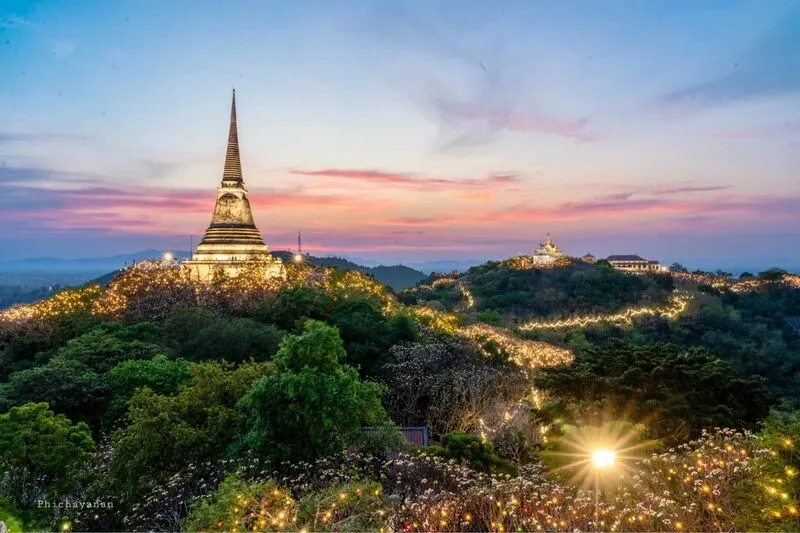
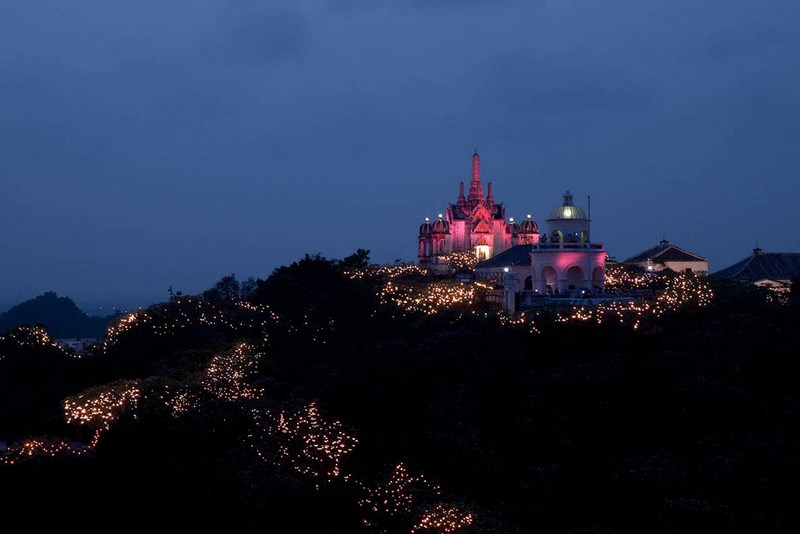
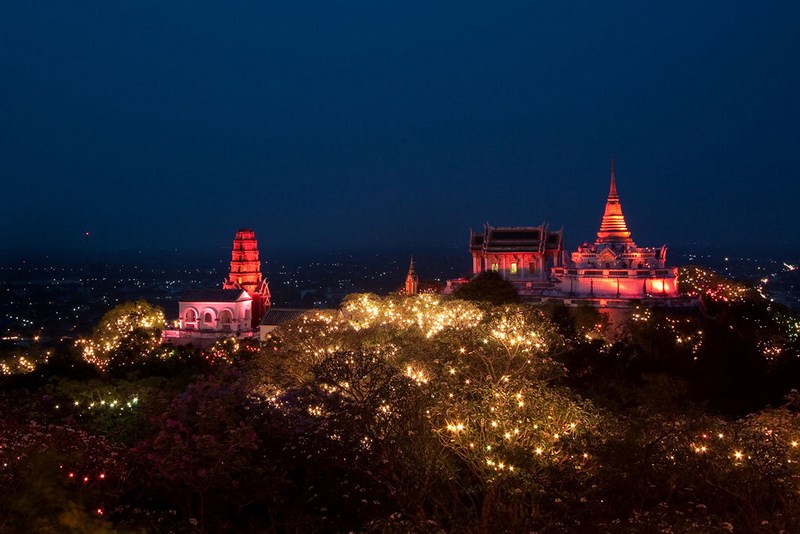
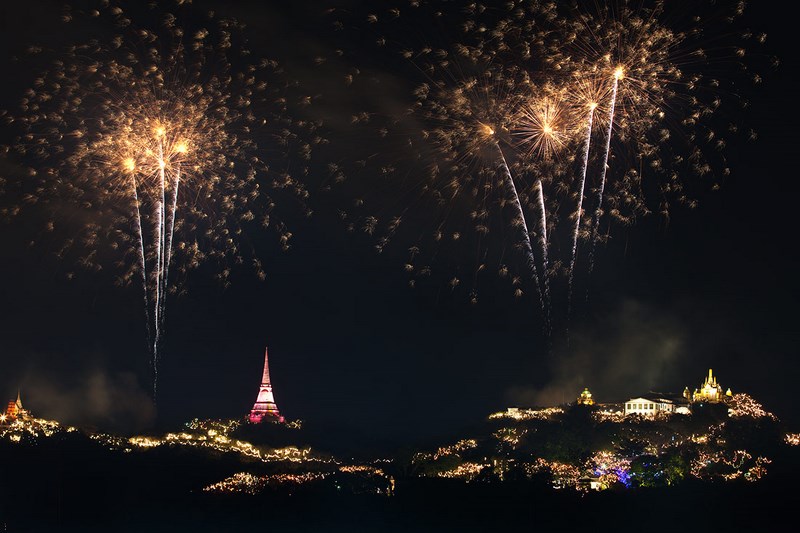
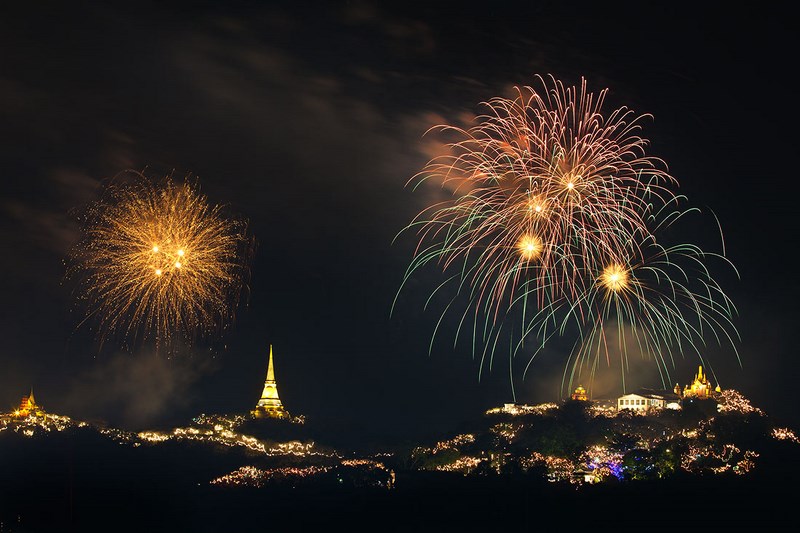
Phra Nakhon Khiri Historical Park (Khao Wang) in Phetchaburi is one of the country’s most recognizable historic landmarks whenever people talk about “Phetchaburi City.” It is not simply a viewpoint on a hill, but a royal palace complex created from the vision of King Mongkut (Rama IV), who saw the potential of a prominent three-peaked hill in the heart of town—once known locally as “Khao Saman / Khao Samana”—and transformed it into a royal retreat that combined palaces, royal residences, temples, and a wide range of supporting buildings within a single site. The highest peak rises to roughly 95 meters, and the atmosphere at the top feels very different from visiting a typical palace on flat ground: every step up the hill alternates naturally between tangible history and wide, open views of Phetchaburi below.
At its most practical level, Phra Nakhon Khiri answers several travel needs in one stop. Visitors who want historical context can trace Rama IV’s thinking through the site selection, the layout across three peaks, and the architectural choices. Photographers get dramatic silhouettes of ridge-top buildings against big skies, along with angles that mix Western lines and Chinese accents in a single frame. Travelers who prefer an easy pace can use the cable car rather than tackling the steeper paths on foot. Cultural travelers also gain an immediate connection to nearby religious and artistic heritage, because the eastern side links to Wat Mahasamanaram, whose ordination hall is famous for mural paintings by Khrua In Khong on all four walls—masterworks that reveal a transitional period in Thai art and storytelling.
In terms of today’s visitor experience, Phra Nakhon Khiri and the National Museum area are presented as an active, open attraction with clear organizational contact details, which makes trip planning relatively straightforward. Most travelers plan a half-day to a full day here; if you intend to walk across all three peaks and spend time inside the museum galleries, the visit naturally becomes longer and more rewarding. If your priority is primarily viewpoints and photography, you can shorten the route and still get the character of the place. These factors are exactly why Phra Nakhon Khiri remains one of the first names that comes up for “things to do in Phetchaburi,” and why it helps visitors understand Phetchaburi not only as a dessert town, but as a layered historical city with royal and cultural identity.
To understand how the palace on the hill began, it helps to return to the site’s origin. This hill stands out in the geography of Phetchaburi and was long known among locals as Khao Saman / Khao Samana. During the reign of King Mongkut (Rama IV), he decided to build a royal palace here as a seasonal residence outside Bangkok. Construction was entrusted to Chao Phraya Si Suriyawong (Chuang Bunnag), who at that time served as Samuha Kalahom, leading the project to completion in 1860. The King granted the official name “Phra Nakhon Khiri,” but people of Phetchaburi have long called it simply “Khao Wang” (Palace Hill), a nickname still widely used today and reflecting how closely the site is woven into local life and memory.
Because the complex was planned across three connected peaks, its uniqueness lies in how each peak serves a different role rather than repeating the same experience. One peak ties the palace to temples and significant artworks, one acts as a spiritual landmark and central viewpoint, and one functions most clearly as the residential-and-ceremonial palace zone. Visiting Phra Nakhon Khiri in a way that truly makes sense, therefore, often means reading it as three chapters—peak by peak—and then connecting those chapters back into a single picture of how a royal retreat in a provincial city was designed to express both power and devotion, and to sit in dialogue with the town below.
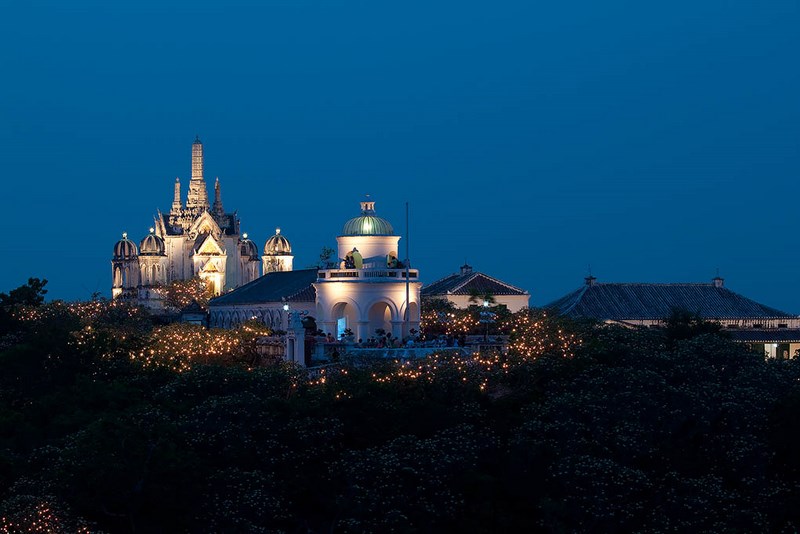
Architecturally, much of Phra Nakhon Khiri is known for Western Neoclassical influence blended with Chinese elements, creating an overall impression that feels “international” while still fitting the aesthetics and climate of Siam in that era. As you walk, you will notice symmetrical proportions and crisp, restrained forms typical of Western design, alongside details that suggest Chinese taste through rooflines and selective ornamentation. The way buildings are positioned to catch breezes and command views also makes sense only on a ridge. In this way, Phra Nakhon Khiri is not only beautiful; it is also concrete evidence of a period when Siam was learning to negotiate modernity and re-define itself through architecture, planning, and state presence in major provincial centers.
The eastern peak begins at the hillside area where Wat Mahasamanaram stands, an old temple dating back to the Ayutthaya period. What makes many visitors talk about this temple is the mural cycle inside the ordination hall, painted by Khrua In Khong across all four walls. These murals are frequently discussed as significant examples of Thai painting during a turning point, because they present storytelling and spatial treatment in ways that feel different from older conventions. Stopping here is therefore not only a matter of worship, but also a chance to see art that helps explain the cultural and aesthetic world surrounding the time when Phra Nakhon Khiri itself was created.
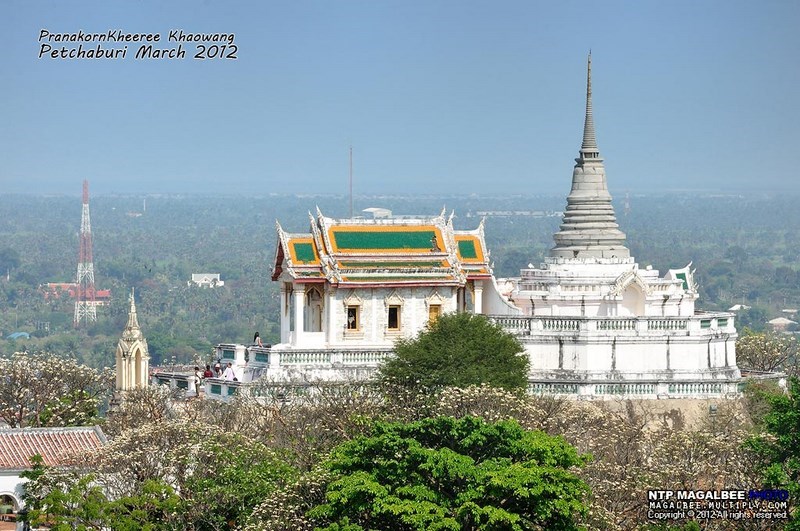
Higher on the eastern peak, you reach Wat Phra Kaeo, the temple attached to the Phra Nakhon Khiri palace complex in a role comparable to Wat Phra Si Rattana Satsadaram (Wat Phra Kaew) within the Grand Palace in Bangkok. The temple area includes a small marble-decorated chapel, with Phra Phuttha Sela Chedi behind it and a small, square, recessed-corner bell tower in front. The overall mood here tends to feel quieter and more ceremonial than other parts of the site, because the space was designed as the religious heart of the palace on the hill.
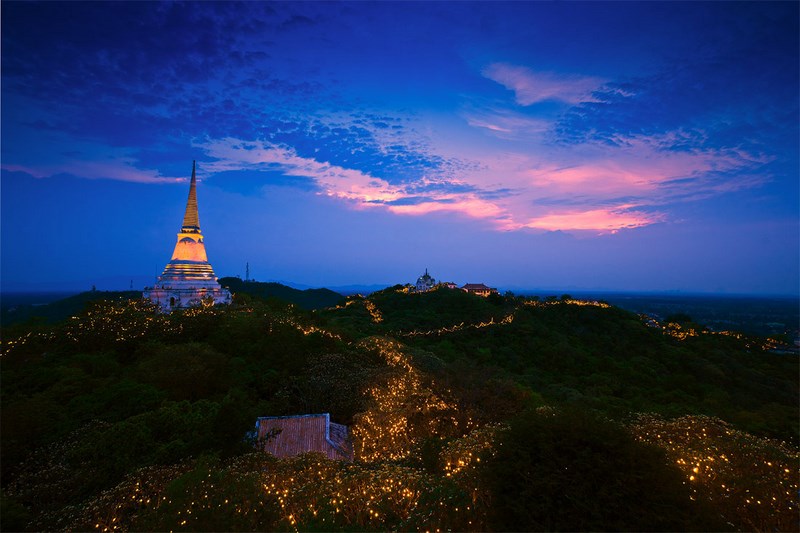
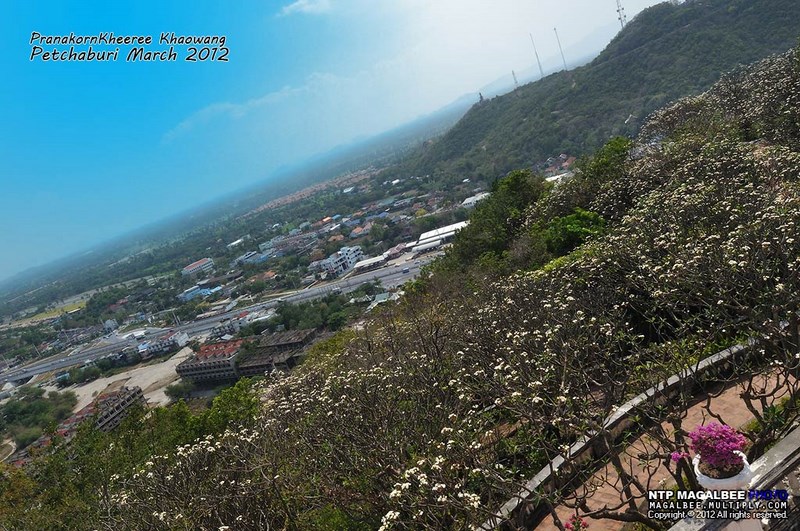
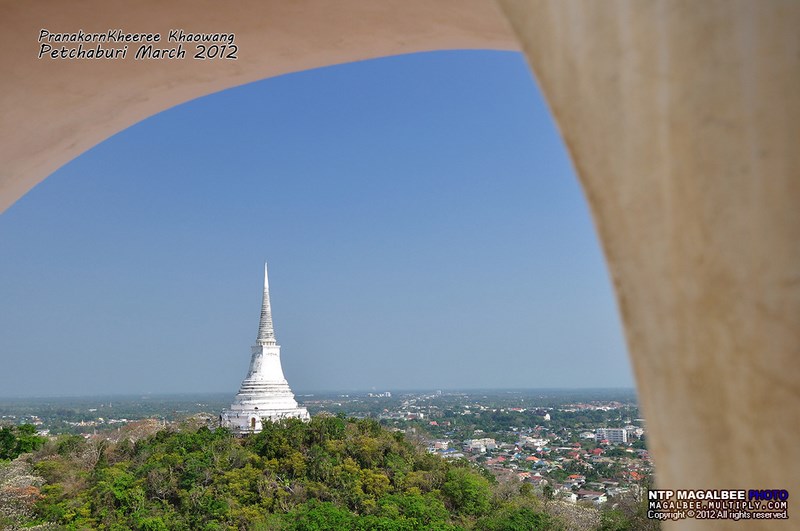
The middle peak is where Phra That Chom Phet stands, rising about 40 meters and enshrining relics within. For many travelers, this is the “viewpoint at the center of the story,” because from here you can see the palace buildings on the other two peaks while also taking in a panoramic view of Phetchaburi City. Standing at this point makes it easy to understand why a palace on a hill carried meaning beyond scenery: it was positioned so that it could look over the town, while the town could also look up and see the symbols of authority and faith placed above it.
The western peak is the zone that most clearly functions as the royal residence. It contains many of the main halls and structures, including Phetphum Phairoj Hall, Pramot Mahaisawan Hall, Wechayan Wichian Prasat Hall, Ratchatham Sapha Hall, Ho Chatchawan Wiangchai, Ho Phiman Phet Mahesuan, Santhakarn Sathan Hall, Ho Chatuwet Paritphat, and Sala Thatsana Nakkhatruet. Walking through these points one by one reveals that the palace is not just a collection of pretty buildings. It was an operating system of spaces aligned with court life and protocol, from reception and assembly areas to private living quarters and auxiliary facilities needed to keep a royal retreat functioning in practice.
Beyond the principal halls, the complex also includes features common to royal palaces such as carriage garages, stables, quarters for attendants and guards, kitchens, and administrative pavilions. These details help you imagine what it meant for a monarch to relocate here with an entourage: a palace on the hill had to support a large number of people and many kinds of activity, not merely serve as a scenic lookout. Surrounding the royal zone is also a system of four forts positioned by direction: Thotarat Fort to the east, Wirunhok Borirak Fort to the south, Wirupak Fort to the west, and Wessuwan Raksa Fort to the north. The presence of these fortifications adds another layer to the site’s historical character, reflecting both protection and the symbolic projection of stability.
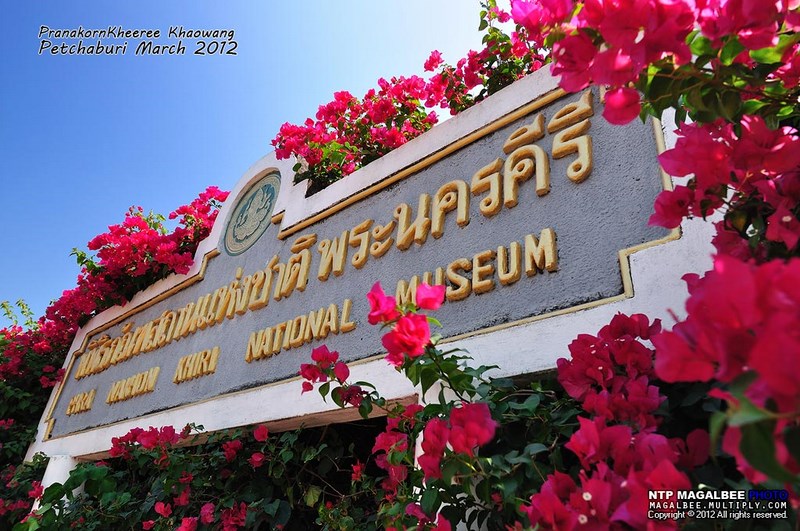
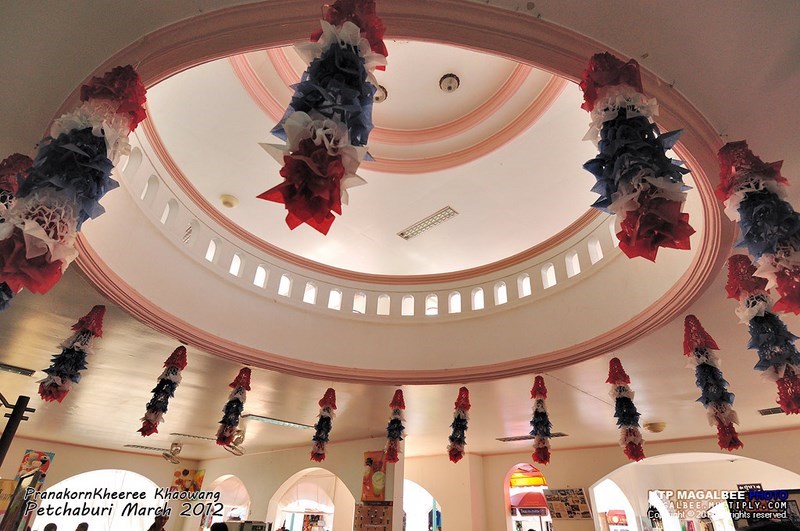
Today, one reason the western peak is especially meaningful is that part of the palace area has been adapted by the Fine Arts Department into the Phra Nakhon Khiri National Museum. The museum preserves and exhibits important objects, including royal regalia and items associated with King Mongkut (Rama IV) and King Chulalongkorn (Rama V), bronze and brass decorative casts used within palace rooms, and ceramics from China, Japan, and Europe. Visiting the museum effectively adds “everyday detail” to what you see outside, because it helps explain how these buildings were once used and what courtly taste looked like in real objects, materials, and decoration.
To make the most of a visit, planning your route matters because the site is a hill with steep stretches. Most travelers choose between walking up or taking the cable car, which is particularly helpful for seniors, children, or anyone who prefers to save energy for exploring the ridgelines and galleries. A common route for a story-driven visit is to start at the western peak to understand the palace zone and museum first, then walk toward the middle peak for Phra That Chom Phet and the broad city view, and finally end at the eastern peak with Wat Phra Kaeo and the connection down toward Wat Mahasamanaram. This sequence tends to feel natural: from royal space and governance, to faith and symbolism, and then to art and cultural heritage.
In practice, it also helps to prepare for Phetchaburi’s heat, especially from late morning through afternoon. Visiting early often feels more comfortable and also gives softer light for photography. Another widely mentioned point is the presence of monkeys in certain areas along paths and resting points. Most visitors have no issue if they avoid openly carrying food, keep belongings secure, and do not feed or provoke animals. With appropriate behavior, the experience stays smooth while still retaining the lively atmosphere that makes Khao Wang feel like an inhabited historic hill rather than a quiet monument.
Getting There From Bangkok, you can drive via Phetkasem Road (Highway 4) and enter Phetchaburi town using the older Phetkasem route toward the city. After turning into Phetchaburi, continue for about 1 kilometer until you see Krungthai Bank (Phra Nakhon Khiri Branch) on the right; make a U-turn and then turn left onto the irrigation canal-side road next to the bank. Continue for about 800 meters to reach the cable car station, which is the most convenient starting point for going up to Phra Nakhon Khiri. If you arrive in town by train or intercity bus, you can use a local taxi or ride-hailing service to the cable car station as well, since it is not far from the central city area and other in-town attractions.
Once you reach the top, many visitors feel that Phra Nakhon Khiri immediately adds dimension to the identity of Phetchaburi. From the peaks you see the old town’s texture, the city’s artistic heritage, and the way royal history is physically embedded in architecture. Walking past each building is like reading a history book that you can touch, and looking down to the town below feels like an effortless bridge between the past and the present. If you want a Phetchaburi trip that delivers scenery, knowledge, and atmosphere in one place, Phra Nakhon Khiri is a site that can genuinely meet all three goals at once.
| Place Name | Phra Nakhon Khiri Historical Park (Khao Wang) |
| Address | 97 Khiri Ratthaya Road, Khlong Krachaeng Subdistrict, Mueang Phetchaburi District, Phetchaburi 76000, Thailand |
| Place Overview | A hilltop royal palace complex of Rama IV spread across three peaks, combining royal halls, temples, a stupa viewpoint, and the Phra Nakhon Khiri National Museum within one site. |
| Highlights | 1) Three-peak layout: palace–temples–stupa in one visit 2) Neoclassical Western design blended with Chinese elements 3) Panoramic viewpoints over Phetchaburi 4) National Museum with significant Rama IV–V artifacts |
| Era / History | Built under King Mongkut (Rama IV) and completed in 1860, with Chao Phraya Si Suriyawong (Chuang Bunnag) serving as the chief of construction. |
| Open Days | Daily |
| Opening Hours | 08:30 – 16:30 |
| Admission Fee | Thai: 20 THB / Foreign Visitors: 40 THB |
| Cable Car (Round Trip) | Adult: 50 THB / Child (under 90 cm): 15 THB |
| Getting There (Summary) | Drive from Bangkok via Highway 4 into Phetchaburi; access the cable car station area near Krungthai Bank (Phra Nakhon Khiri Branch), then follow the canal-side road for about 800 meters to the station. |
| Facilities | Cable car station, walking routes up the hill, viewpoints, and museum exhibition zones (some details may vary by site management). |
| Nearby Attractions (Approx. Distance) | 1) Wat Mahasamanaram – 2 km 2) Wat Mahathat Worawihan (Phetchaburi) – 2 km 3) Phra Ram Ratchaniwet (Wang Ban Puen) – 5 km 4) Khao Luang Cave – 6 km 5) Wat Kamphaeng Laeng – 4 km |
| Popular Restaurants Nearby (Approx. Distance + Phone) | 1) Rabieng Rimnam – 2 km – 032-425-707 2) Pad Thai Tao Tan (Khao Wang) – 1 km – 096-651-5402 3) Ban Khanom Nanthawan – 2 km – 032-419-910 4) JM Cuisine (Cable Car Branch) – 2 km – 032-581-297 5) Tangtao Grill & Shabu – 1 km – 083-999-8577 |
| Popular Accommodations Nearby (Approx. Distance + Phone) | 1) Khao Wang Hotel – 0.1 km – 032-425-167 2) The Kiri Resitel – 0.2 km – 092-558-5058 3) Keeree Boutique Hotel – 1.1 km – 086-890-8722 4) Chedi View Hostel & Rooftop Bar – 0.9 km – 090-950-6529 5) Sun Hotel Phetchaburi – 5 km – 032-400-000 |
| Contact Phone | 032-425-600 |
Frequently Asked Questions (FAQ)
Q: How many hours should I plan for Phra Nakhon Khiri?
A: If you want to cover all three peaks and spend time in the museum, plan at least half a day to a full day. If you mainly want viewpoints and photos, you can shorten the route and still enjoy the highlights.
Q: Is the cable car worth it?
A: Yes, especially for seniors, children, or anyone who wants to conserve energy. The climb includes steep sections, and using the cable car helps you walk longer and more comfortably at the top.
Q: What should I not miss on each peak?
A: The western peak is best for the royal halls and museum. The middle peak features Phra That Chom Phet and panoramic city views. The eastern peak includes Wat Phra Kaeo and connects down toward Wat Mahasamanaram with the Khrua In Khong murals.
Q: Are there any precautions about monkeys?
A: You may see monkeys in some areas. Keep food and belongings secured, avoid feeding or provoking animals, and your visit is typically smooth.
Q: When is the best time for photography?
A: Morning is usually more comfortable, with softer light and less heat, which suits both architecture shots and viewpoints over Phetchaburi.
 Tel: 032425600
 Phra Nakhon Khiri Historical Park Map
 Category:
  Group:
  Last Update: 4 DayAgo
Comment

Photo Gellery(15) 
 Thank you photo(3) from: Rawis
|
|
|
| ● Photographer: Rawis ● Link: pixpros.net/forums/showthread.php?t=5715 ● Ref: pixpros.net |
Thank you photo(6) from: Apichart
|
|
|
|
|
|
 | ● Photographer: Apichart Sripeng ● Link: 500px.com/apichartsripeng ● Ref: pixpros.net |
Thank you photo(6) from: Magalbee
|
|
|
|
|
|
 | ● Photographer: Magalbee ● Link: flickr.com/photos/magalbee ● Ref: pixpros.net |
● Copyright Photography. (800*500)
● View full size images from the photographer.
● View full size images from the photographer.
 Nearby Attractions
| Keyword (Advance) |
 Region
|
 Muang Phetchaburi(