

 Home
Home Chiang Mai(




Rating: 3.2/5 (23 votes)
 |
|  Map
Map 
 Have Map
  No Map
Phetchaburi attractions
Attractions in Thailand
Open Days: Daily
Opening Hours: 06.00 – 16.00
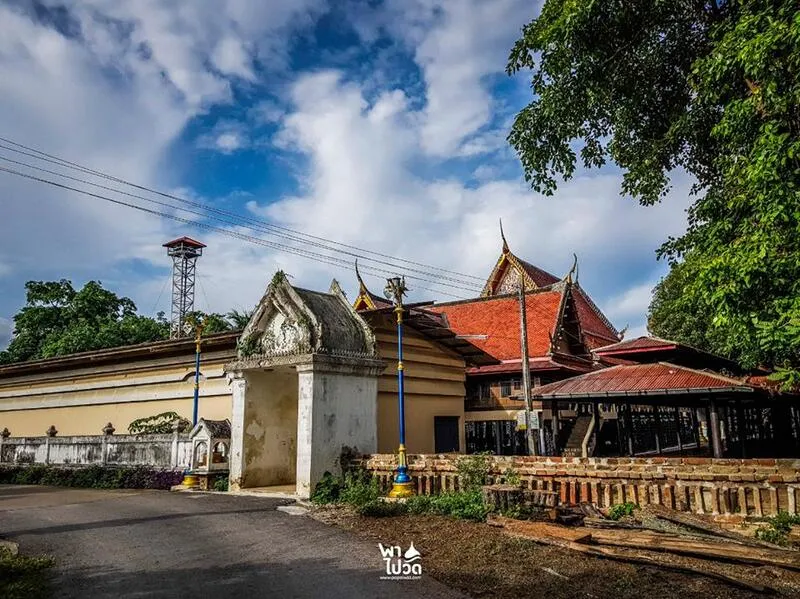
Wat Kongkaram Worawihan is located at No. 210, Ratchadamnoen Road, Khlong Kra Saeng Subdistrict, Mueang Phetchaburi District, Phetchaburi Province. This temple is a second-class royal monastery (worarawihan type) under the Mahanikaya order, and it is widely regarded as one of the most important temples in Phetchaburi—not only for its religious significance, but also for the depth of its history, arts and cultural heritage, and its long-standing connection with the old-town community. If you are looking for an ancient temple in Phetchaburi where you gain “more than just a place to pay respects,” Wat Kongkaram Worawihan offers a rich combination of historical narratives, the social role of a royal monastery, and distinctive highlights worth exploring at a thoughtful pace, especially the scripture hall built over the pond and tangible heritage objects that reflect traditional craftsmanship and conservation.
One of the reasons a visit to Wat Kongkaram Worawihan feels especially meaningful is the “context of place” that helps the temple’s significance stand out. The temple sits on Ratchadamnoen Road in the Khlong Kra Saeng area, which has long served as a central axis of Phetchaburi in both historical development and everyday movement. As you enter the old-town zone, you can sense the density of religious sites and the traces of Phetchaburi’s past prosperity as an important western city of Siam. It is also easy to design a narrative-style walking route because many key attractions are located nearby. For this reason, a visit to Wat Kongkaram suits both those who come for serious merit-making and those who want to understand the city through architecture and culture within a single area.
Historically, Wat Kongkaram was officially established in 1827 (B.E. 2370). However, the question of “exactly when it was first founded” often invites multiple accounts, because there is a line of speculation that this site may have existed earlier as a temple or monastic settlement before the reign of King Rama III, and later became more clearly defined through restoration and official elevation during that period. What can be confirmed is that an inscription at the front of the chanting hall states that King Nangklao (Rama III) sponsored restoration works during 1824–1851 (B.E. 2367–2394), a time when the kingdom placed strong emphasis on supporting Buddhism. This restoration was not merely structural repair; it strengthened the temple’s institutional role as a major religious center of the city. Wat Kongkaram Worawihan was later established as a royal monastery and is remembered, according to official written records, as the first royal monastery in Phetchaburi during the reign of Rama III.
The status of a “second-class royal monastery (worarawihan type)” carries deeper meaning than a title alone. A royal monastery is a temple recognized and supported by the state or the monarchy, typically serving as a key center for ceremonies, education, and the stewardship of Buddhism in its region. In Phetchaburi, Wat Kongkaram Worawihan’s status helps explain why the temple has continuously developed—both physically and institutionally—through organized land management, the capacity to host community activities, and sustained educational and cultural roles over time.
In spatial terms, Wat Kongkaram Worawihan occupies temple land measuring 15 rai 3 ngan 02 square wah, and it also holds 9 plots of monastic land totaling 118 rai 25 square wah. Its boundaries are summarized as follows: to the north, it borders Bandai It Road; to the south and west, it borders residential villages; and to the east, it borders Ratchadamnoen Road. This layout reflects the nature of an urban temple that “lives alongside the community” rather than standing apart from residential space. The temple therefore functions as both a sacred precinct and a shared public space. Visitors can observe real daily life—people coming to make merit, students attending school, community activities taking place, and individuals stopping by for a quiet moment in a city where the pace of life is increasingly fast.
The temple’s buildings include principal structures and supporting facilities that reflect phased development across different periods. The ordination hall measures about 9.60 meters wide and 26.70 meters long, built in 1977 (B.E. 2520) as a Thai-style reinforced concrete structure. The sermon hall measures about 9.90 meters wide and 26.80 meters long, built in 1987 (B.E. 2530) as a two-story Thai-style half-concrete, half-wood building. The chanting hall measures about 9.30 meters wide and 13.40 meters long, built in 1992 (B.E. 2535) as a Thai-style wooden building. There are 5 wooden monks’ residences, and a multipurpose pavilion measuring about 19.20 meters wide and 13.10 meters long, built in 1996 (B.E. 2539) as a two-story Thai-style half-concrete, half-wood structure. Taken together, these elements show that Wat Kongkaram Worawihan retains a distinctly “traditional Thai temple framework,” while adapting materials and functional systems for modern use to accommodate a larger number of visitors.
One feature that many people recognize immediately is the scripture hall (Ho Phra Tripitaka) built over the pond. Beyond its physical significance as an important temple building, it carries strong symbolic value as a “repository of knowledge” in Buddhism. Traditionally, Thai temples often placed scripture halls separate from other buildings and near water or over water to protect palm-leaf manuscripts and important documents from termites and damage caused by humidity. Seeing this pond-based scripture hall within the setting of Phetchaburi’s old town makes it easy to understand how the preservation of the Tripitaka in earlier times relied on both practical wisdom and careful attention. The presence of an ancient Tripitaka storage cabinet as an important heritage object further reinforces the tangible meaning of “preserving the teachings” through real, visible evidence.
Beyond the scripture hall, the associated heritage objects and craftsmanship are another reason the temple appeals to art and architecture enthusiasts. Notable elements include ancient boundary markers (bai sema), which serve as evidence of sacred ritual boundaries, as well as traditional roof ornaments such as chofa, bai raka, and hong hang (hanging finials) that reflect Thai artisan aesthetics across different periods. Observing these components makes a temple visit far more engaging, because it becomes more than simply passing by buildings—it becomes an exercise in “reading details” hidden in rooflines, gables, and decorative elements that many visitors overlook. With a learning-minded approach, you begin to see that these lines and forms are not purely decorative; they also communicate status, meaning, and devotion within a sacred space.
Another dimension often associated with Wat Kongkaram Worawihan is its connection to a revered Phetchaburi monk known as “Luang Pho Chui,” who is widely respected. Many visitors come specifically to pay homage and remember his contributions as a religious figure closely tied to local faith and community life. For that reason, a visit here often includes both paying respects to the principal Buddha image and making offerings or paying tribute to a spiritual anchor that connects people to the temple through shared memory. Even for those who do not follow monastic biographies in detail, visiting the actual place helps clarify why a temple is more than a ceremonial venue—it is a space where people place hope, gratitude, and faith.
Socially, Wat Kongkaram Worawihan does not serve only as a venue for religious rites; it also plays an educational and cultural role. The temple hosts a Buddhist Scripture School (Dhamma Division) opened in 1985 (B.E. 2528), as well as a primary school, and it is also home to the “Wat Kongkaram Worawihan Cultural Center,” which supports the collection of local knowledge and the organization of cultural activities. This image of the temple as an educational institution highlights how Thai monastic and community structures have long been interwoven with learning. The temple thus supports community development through both moral cultivation and knowledge transmission. Especially in a city undergoing change, the temple remains a stable center that can bring people back to calmness and shared meaning.
If you want to explore at a gentle, unrushed pace, this temple is well suited to spending at least 1–2 hours. A natural approach is to begin by paying respects in the main sacred area such as the ordination hall, then gradually walk to supporting buildings to observe the details of Thai craftsmanship, and finally pause at the scripture hall over the pond, which offers one of the most serene and visually striking atmospheres. Along the way, you will see how the temple relates to the surrounding community—through entrances and exits, spatial organization, and everyday local use. It is best to move with composure, as the temple remains an active religious space. Photography is generally possible, but visitors should avoid disturbing ceremonies, refrain from close-up photography of monks or practitioners without permission, and take care not to climb on or touch heritage objects. These are shared cultural assets that benefit from collective respect and protection.
In terms of preparation, Wat Kongkaram Worawihan is an urban temple, so access is convenient and it is easy to connect with other stops in a single itinerary. Dress modestly, avoid sleeveless tops and shorts or skirts above the knee, and consider bringing a light shawl in case you enter particularly sacred zones. Morning visits tend to be more comfortable and better for observing details and taking photos without rushing. In the afternoon, it is best to manage time carefully because the temple closes in the late day according to the stated hours. Weekdays are often quieter, making them ideal for those who want a more peaceful atmosphere, while weekends can be livelier due to higher numbers of worshippers and tourists.
Getting There If you are driving, search for “Wat Kongkaram Worawihan” on your map and enter the Phetchaburi city area, using Ratchadamnoen Road as the main axis. The temple is located in the Khlong Kra Saeng neighborhood, which connects to several key routes, making it convenient both from the Phetkasem Road side and from other old-town attractions. If you are using public transport, you can get off in central Phetchaburi and continue by local taxi or area transport services to the temple. Distances within the city are relatively short, making it practical to plan multiple visits in one day.
| Name | Wat Kongkaram Worawihan (วัดคงคารามวรวิหาร) |
| Address | 210 Ratchadamnoen Road, Khlong Kra Saeng Subdistrict, Mueang Phetchaburi District, Phetchaburi Province, Thailand |
| Place Summary | A second-class royal monastery (worarawihan type) in Phetchaburi, strongly associated with restoration during the reign of King Rama III, and known for its scripture hall built over a pond. |
| Key Highlights | Pond-based scripture hall, heritage objects related to the Tripitaka and ancient bai sema, Thai roof ornaments (chofa, bai raka, hong hang), and an old-town setting that connects easily with multiple nearby attractions in one trip. |
| Abbot / Temple Head (Latest) | Phra Wisutthi Warakit (พระวิสุทธิวรกิจ) |
| Phone | 032-426-134 |
| Nearby Tourist Attractions | 1) Khao Nakhon Khiri (Khao Wang) – 1.0 km 2) Wat Mahathat Worawihan – 0.8 km 3) Phra Ram Ratchaniwet (Ban Puen Palace) – 3.0 km 4) Wat Yai Suwannaram – 2.0 km 5) Phetchaburi Old Town / Old Market Area – 1.2 km |
| Nearby Restaurants | 1) Thong Chiang Khanom Jeen & Tod Mun (Jae Pui) – 0.9 km Tel. 086-032-3687 2) Nuch Tod Mun Khanom Jeen – 0.8 km Tel. 086-623-5748 3) Jae Ja Khao Tom Pla – 0.5 km Tel. 065-828-9379 4) Krua Boonthang (Ratchadamnoen) – 0.3 km Tel. 092-459-5263 5) Owtung Nai Kee – 0.7 km Tel. 081-852-3350 |
| Nearby Accommodations | 1) Royal Diamond Hotel – 1.3 km Tel. 032-411-061 2) Save Zone Hotel – 1.0 km Tel. 084-106-3397 3) Sweet Dreams Guest House – 3.0 km Tel. 085-121-9666 4) Alinda Resort – 4.0 km Tel. 086-318-4220 5) Chedi View Hostel & Rooftop Bar – 1.6 km Tel. 090-950-6529 |
Frequently Asked Questions (FAQ)
Q: When was Wat Kongkaram Worawihan established?
A: It was established in 1827 (B.E. 2370), and a key inscription at the front of the chanting hall records major restoration during the reign of King Rama III.
Q: What is the main highlight most visitors come to see?
A: The signature highlight is the scripture hall built over the pond, along with heritage objects related to the Tripitaka and Thai architectural ornaments such as chofa, bai raka, and hong hang.
Q: What level of royal monastery is Wat Kongkaram Worawihan?
A: It is a second-class royal monastery of the worarawihan type, reflecting its importance as a major temple of Phetchaburi.
Q: When can visitors enter the temple?
A: It is generally open daily from 06.00 – 16.00, and morning visits are recommended for a calmer atmosphere and more comfortable walking conditions.
Q: Are there any special etiquette guidelines for visiting?
A: Dress modestly, behave respectfully, avoid disturbing ceremonies when taking photos, and do not touch or climb on heritage objects so that the temple’s shared cultural assets can be preserved.
 Wat Kong Karam Map
 Category:
  Group:
  Last Update: 1 DayAgo
Comment
 Nearby Attractions
| Keyword (Advance) |
 Region
|
 Muang Phetchaburi(