

 Home
Home Chiang Mai(




Rating: 4/5 (7 votes)
 |
|  Map
Map 
 Have Map
  No Map
Phetchaburi attractions
Attractions in Thailand
Open Days: Daily
Opening Hours: 08:00 – 17:00
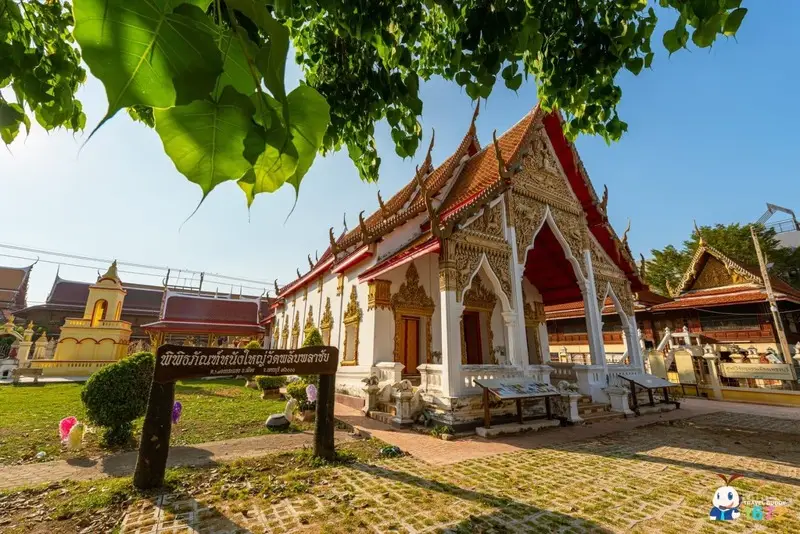
Wat Phlapphla Chai (Phetchaburi). If you are looking for an “old temple in the heart of Phetchaburi” that is easy to reach, convenient to visit, and backed by stories that go far beyond a quick stop for merit-making, Wat Phlapphla Chai is a landmark worth pinning near the top of your itinerary. This is not only a community temple where locals regularly come to pay respects; it is also a place where the city’s history converges with memories of military mustering grounds, long-standing Thai–Chinese trade networks, and traces of Thai literary heritage in a tangible, walkable setting. You can sense “Thai artistry” in the temple’s key structures, see “Chinese artistry” left behind through distinctive architectural elements, and read the “urban landscape” shaped by the Phetchaburi River and major roads that divide the temple compound into two meaningful zones. Visiting here feels like reading Phetchaburi one paragraph at a time, inside a living sacred space that remains actively used every day.
Much of Wat Phlapphla Chai’s appeal begins with its name, which carries both auspicious meaning and a faint echo of military history. The land is said to have once served as a “military assembly ground” and a training area for soldiers, making it royal land in earlier times. There is also an account that a “phlapphla” — a royal pavilion — once stood along the Phetchaburi River as a place for the monarch to stay. When the community pooled funds to establish a temple here during the late Ayutthaya period, the name “Wat Phlapphla Chai” was adopted to evoke both the royal pavilion and the notion of victory. In a single phrase, the name hints that this temple did not emerge in isolation; it rose from a landscape once tied to state functions and military activity, and later transformed into a shared spiritual center sustained by the people of the city.
In terms of location, Wat Phlapphla Chai sits “right in central Phetchaburi” and its relationship with the city is easy to grasp. The eastern side of the compound borders the Phetchaburi River, naturally connecting the temple to riverside life and the city’s historic flow of movement. The surrounding context reinforces the image of a true “old-town temple”: one side links to residential neighborhoods and inner-city pedestrian routes, while another side connects to everyday commerce and urban activity. As a result, the temple is not tucked away in a hidden corner; it becomes part of the city’s daily rhythm and allows visitors to drop in with flexibility, without the complexity often required for temples located farther outside the urban core.
What gives Wat Phlapphla Chai a distinct “character” compared with many other city temples is that an important road runs through the area, clearly separating the temple into two parts. The eastern side is the Buddhavasa zone, where the primary sacred structures are concentrated, such as the ordination hall (Ubosot), the vihara, and the sermon hall. The western side is the Sangkhavasa zone, where functional monastic and community facilities are located, including the Pali school, monastic residences, and cremation-related structures. This division naturally makes the temple’s use more systematic: ritual and devotional activities are anchored in one zone, while daily monastic life and community functions operate in another. For visitors who enjoy “walking and observing,” the layout becomes easier to read and more engaging, because you can ask how each area supports specific activities — and how the city’s infrastructure has shaped the temple’s lived geography.
When it comes to antiquity, Wat Phlapphla Chai is described as having been founded during the late Ayutthaya period, with a timeframe often cited around 1726–1767, an era marked by vibrant trade and political dynamics. When the decision was made to establish the temple, responsibility did not fall on one group alone; the narrative emphasizes pooled funding among officials, merchants, wealthy patrons, and ordinary residents. This detail matters, because it helps explain why many temples in Thailand’s old towns have survived and evolved for centuries: they grew as shared civic and spiritual institutions, shaped by broad-based patronage and continuous community investment over time.
The most concrete piece of evidence often used to support the temple’s long history is the “principal Buddha image in the Ubosot,” described as a stucco Buddha in a Sukhothai style that was widely favored in the late Ayutthaya period. If you like reading Thai temple art through fine details, standing before this principal image can feel like deciphering the language of historical craftsmanship. Sukhothai stylistic features reproduced within an Ayutthaya context often reflect both inheritance and reinterpretation by later artisan lineages. There is also a well-known account that Prince Damrong Rajanubhab once visited and affirmed that the work was indeed by craftsmen from the late Ayutthaya period. This elevates the principal image beyond devotional significance: it becomes a key “anchor” for dating and understanding the temple’s layered timeline.
As time moved into the early Rattanakosin era, Wat Phlapphla Chai experienced a notable transition that made its “Thai–Chinese flavor” more pronounced. Records state that by the reign of King Rama I, the temple already existed, and around 1797 a monk of Chinese descent became the abbot. He reportedly dismantled the old, deteriorated ordination hall and rebuilt a new one in masonry within the existing consecrated boundary, while still relocating the original principal Buddha image into the new structure. This is an important turning point: it reflects a mindset of “preserving what is sacred” while “rebuilding what is necessary.” In other words, architectural change did not mean severing spiritual continuity; it was a practical strategy to keep the temple functional and sustainable for its era.
What made this Chinese-descended abbot especially memorable — even though his personal name is not clearly preserved — was the Chinese artistic imprint he left across multiple permanent structures, leading locals to refer to him simply as “Luang Pho Chin.” The clearest emblem of this imprint is the “Chinese pavilion” built in front of the Ubosot, intended as a place for musical performance during ordination ceremonies. This pavilion is not merely an attractive structure; it is a social artifact showing that the temple was a communal gathering ground — a venue for ritual, celebration, music, and strong participation from the wider community.
There is also an evocative story about Thai–Chinese relations during the late Ayutthaya period continuing into early Rattanakosin, told through a pair of stone lions that once stood near the front of the Ubosot (though they are said to be missing today). The account suggests these lions were donated by Chinese merchants and carved in China. When linked to historic maritime commerce, the story becomes even more vivid: in the era of Chinese junks, carved stones and figurines were sometimes used as ballast, and after arriving ashore they could become offerings or gifts within local networks. Whether visitors treat this as firm history or local memory, it still contributes meaningfully to the temple’s identity as a point where commerce and culture once intersected in living ways.
Another feature that supports the sense of hybrid artistry is the sermon hall built by Luang Pho Chin to the north of the vihara. It is described as Thai in late Ayutthaya style, yet it incorporates two side staircases on the southern flank, separating ascent and descent routes, in a form that has been compared to aristocratic residences in Beijing. A single architectural decision like this can be fascinating for those who love buildings: it shows that the abbot did not “turn the temple into China,” but rather inserted Chinese elements at selected points where they suited local practice and social memory. The result is a temple that remains unmistakably Thai in its core structures, while carrying subtle “Chinese inflections” that have become part of its long-standing character.
Wat Phlapphla Chai also appears in broader historical narratives as a strategic point in certain accounts. One story states that during the War of the Nine Armies, the naval forces of the Front Palace (Wang Na) landed near the front of Wat Phlapphla Chai before marching onward toward Cha-am and Sam Roi Yot to launch a nighttime campaign toward Thalang. Even if military history is not your primary interest, knowing that the riverfront near this temple was once associated with troop movement can sharpen your sense of Phetchaburi’s past: the city was not only a hub of commerce and culture, but also part of strategic coastal networks and logistical routes.
On the literary side, the temple is linked to “documentary evidence through literature.” Wat Phlapphla Chai is mentioned in Sunthorn Phu’s Nirat Mueang Phet, written in the context of his river journey while on official duty. A reference in a travel poem helps confirm that the temple was not only known locally, but also served as a recognizable landmark for travelers moving by water. Standing here today and imagining older river routes can deepen your understanding of the Phetchaburi River’s importance and why riverside temples often became spiritual and social centers for their communities.
If you visit Wat Phlapphla Chai today, a rewarding approach is to walk as if you are “reading layers of time,” allowing the site to tell its story naturally. Start in the Buddhavasa zone to pay respects and understand the temple’s devotional core. Then observe the Ubosot as a marker of rebuilding and continuity in the early Rattanakosin period, and move on to trace Chinese artistic influences at the Chinese pavilion in front of the ordination hall. Walking this way reveals how the community has remained continuous, how art never stands still, and how patronage in each era leaves visible “imprints” — in structure, materials, and ritual practice.
Another contemporary dimension of Wat Phlapphla Chai is its connection to “performing-arts heritage” through the temple’s Nang Yai museum. This helps complete the picture: in Phetchaburi, temples are often not only religious spaces, but also sites of cultural preservation and community knowledge. If you are interested in heritage arts, contacting the site or visiting during an appropriate time can add depth to your trip, as Nang Yai requires skilled craftsmanship and community networks to sustain — making it one of the cultural signatures of Phetchaburi.
Overall, the visiting atmosphere tends to feel calm without being deserted. As a city temple, it remains part of daily life: people stop by before errands, make brief merit visits, and move on, while others pass through along inner-city routes. As with any sacred place, visitors should dress modestly, keep voices low, and walk respectfully — especially if ceremonies or temple activities are underway — so that tourism and local faith can coexist smoothly.
Getting There Wat Phlapphla Chai is located in Mueang Phetchaburi District and is accessible by private car, train, and local transport. If you drive from Bangkok, take Phet Kasem Road (Highway 4) into Phetchaburi city, then head toward the Damnoen Kasem Road area and the old-town zone; navigation apps can guide you directly to the temple. If you travel by train, get off at Phetchaburi Railway Station and take a local taxi or city transport into the Damnoen Kasem area, which is not far. For travelers who want an easy “walk-the-city” plan, Wat Phlapphla Chai is an excellent starting point because you can continue on to Wat Phra Phuttha Saiyat (Wat Phra Non), Wat Yai Suwannaram, Wat Mahathat Worawihan, and the riverside market lanes within a short distance, keeping the itinerary smooth without crossing far zones.
If you want to make the most of your time here, begin by taking in the overall setting, then choose a viewing “theme.” Art-focused visitors can concentrate on the principal image and craftsmanship details, then move to the Chinese pavilion and other Chinese-influenced elements. History-focused visitors can interpret the site through narratives of military use and wartime movement, and imagine river travel in Sunthorn Phu’s era. Photography-focused visitors can slow down and look for frames that capture the feel of a “city temple” alongside the riverside atmosphere or architectural lines carrying subtle Chinese accents. Visiting with questions in mind makes the temple far more expressive than many people expect, and can feel like “reading Phetchaburi” through real space.
In the end, Wat Phlapphla Chai is ideal for travelers who want to experience Phetchaburi at a deeper level than beaches or cafes. This is a temple that leads you back to late Ayutthaya traces, shows how city institutions were shaped by collective patronage, reveals Chinese influence arriving in tandem with junk-era trade, and preserves historical legitimacy through both artistic evidence and literary reference. When you leave, you carry away the calm of a Thai temple, the context of an old town, and a strong incentive to continue exploring nearby landmarks in a highly worthwhile one-day route.
| Place Name | Wat Phlapphla Chai (Phetchaburi) |
| Address | Damnoen Kasem Road, Khlong Krachaeng Subdistrict, Mueang Phetchaburi District, Phetchaburi 76000, Thailand |
| Place Summary | A historic city-center temple in Phetchaburi with narratives reaching back to late Ayutthaya. The site is associated with a former military area and a royal pavilion by the Phetchaburi River, later developing into a community-funded temple. Highlights include a principal stucco Buddha in a Sukhothai style favored in the late Ayutthaya period and distinctive Chinese artistic traces attributed to “Luang Pho Chin,” such as the Chinese pavilion in front of the Ubosot. Ideal for cultural history and old-town walking routes. |
| Key Highlights | Temple name tied to a royal pavilion and “victory,” a compound divided into Buddhavasa and Sangkhavasa zones by a main road, principal stucco Buddha image linked to late Ayutthaya craftsmanship, Chinese pavilion and Chinese-influenced architectural elements, connections to wartime narratives and Thai literary travel writing, and a Nang Yai (shadow-puppet) museum within the temple area |
| Abbot (Latest) | Phra Khru Winai Thon Pariyat Thammapalo |
| Contact Number (If Verified) | 080-654-3795 |
| Travel | By car: Enter Phetchaburi city via Highway 4 and head to Damnoen Kasem Road / By train: Get off at Phetchaburi Railway Station and take a short local ride to the old-town area |
| Nearby Attractions (Approx. Distance) | 1) Riverside Market Lane (Phetchaburi Old Town) – approx. 0.2 km 2) Wat Phra Phuttha Saiyat (Wat Phra Non) – approx. 0.6 km 3) Wat Yai Suwannaram Worawihan – approx. 0.7 km 4) Phetchaburi Railway Station – approx. 1.2 km 5) Wat Khao Bandai It – approx. 2.2 km |
| Popular Restaurants Nearby (Approx. Distance + Phone) | 1) Je Nok Beef Noodles – approx. 0.2 km – Tel. 032-410-162 2) Khao Chae Mae On – approx. 0.2 km – Tel. 089-410-1969 3) Rabieng Rimnam Phetchaburi – approx. 0.2 km – Tel. 098-051-5636 4) Khanom Nok Noi – approx. 0.2 km – Tel. 081-434-9627 5) M Story Coffee and Tea Room – approx. 0.2 km – Tel. 098-826-9051 |
| Popular Accommodations Nearby (Approx. Distance + Phone) | 1) Sida Hostel – approx. 0.6 km – Tel. 089-135-6432 2) The Cozy Hotel Phetchaburi – approx. 0.8 km – Tel. 097-465-2288 3) A+ Hometel Phetchaburi – approx. 1.1 km – Tel. 097-978-5524 4) Royal Diamond Hotel Phetchaburi – approx. 1.6 km – Tel. 032-411-061 5) Sweet Dreams Guest House – approx. 2.8 km – Tel. 085-121-9666 |
Frequently Asked Questions (FAQ)
Q: Where is Wat Phlapphla Chai in Phetchaburi?
A: The temple is on Damnoen Kasem Road in Khlong Krachaeng Subdistrict, Mueang Phetchaburi District. It is centrally located near the old-town area, making it convenient by both car and train connections.
Q: How old is Wat Phlapphla Chai?
A: It is commonly described as dating back to the late Ayutthaya period. A key reference point is the principal stucco Buddha image in the Ubosot, associated with Sukhothai-style features favored in late Ayutthaya craftsmanship.
Q: Why is the temple called “Wat Phlapphla Chai”?
A: Local accounts say the land once served military purposes and that a royal pavilion (phlapphla) stood by the Phetchaburi River. The name reflects the pavilion and the idea of victory, emphasizing auspicious meaning tied to the site’s earlier role.
Q: What makes Wat Phlapphla Chai distinctive?
A: Beyond the principal Buddha image, the temple is known for Chinese artistic traces attributed to a Chinese-descended abbot remembered as “Luang Pho Chin,” especially the Chinese pavilion built in front of the Ubosot for music during ordination ceremonies.
Q: How much time should I plan for a visit?
A: Many visitors spend about 1–2 hours. If you want to explore details, read the historical narratives, and continue an old-town walking route nearby, plan around 2–3 hours.
Q: What should I visit next after Wat Phlapphla Chai?
A: Popular nearby stops include the riverside market lanes in Phetchaburi Old Town, Wat Phra Phuttha Saiyat (Wat Phra Non), Wat Yai Suwannaram, and Phetchaburi Railway Station, all within a short distance for a smooth one-day city itinerary.
Q: How can I contact Wat Phlapphla Chai?
A: You can contact the temple at 080-654-3795 (as published for inquiries related to temple-linked activities and visits).
 Wat Phlapphla Chai Map
 Category:
  Group:
  Last Update: 20 HourAgo
Comment
 Nearby Attractions
| Keyword (Advance) |
 Region
|
 Muang Phetchaburi(