

 Home
Home Chiang Mai(




Rating: 3.2/5 (28 votes)
 |
|  Map
Map 
 Have Map
  No Map
Phetchaburi attractions
Attractions in Thailand
Open Days: Daily
Opening Hours: 08:00 – 17:00
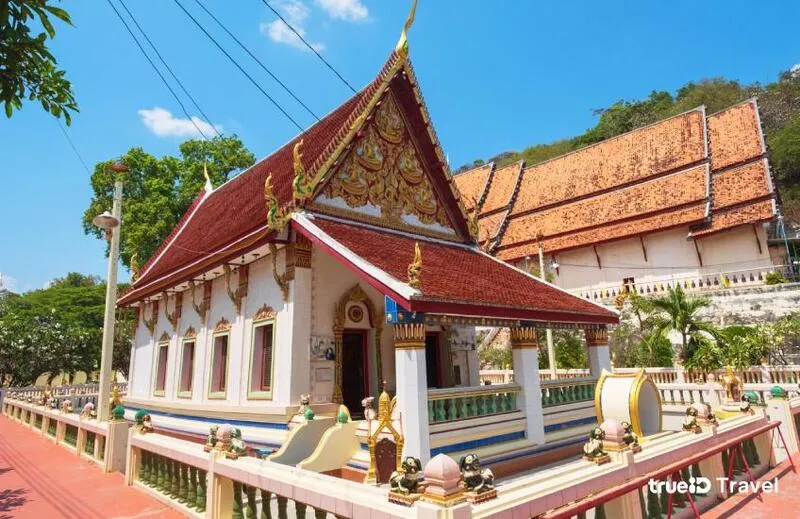
Wat Phra Phuttha Saiyas (Wat Phra Non), Phetchaburi If you’re planning a temple-hopping and old-town stroll in Phetchaburi that delivers both spiritual calm and the sheer grandeur of Thai artistry, Wat Phra Phuttha Saiyas—better known to most visitors as “Wat Phra Non” (the Reclining Buddha Temple)—should be near the very top of your itinerary. This is not only an old temple at the foot of Khao Wang; it is also home to a remarkable reclining Buddha measuring about 43 meters in length, built in brick and stucco, lacquered and gilded, and admired for its exceptionally graceful features. A visit here is therefore more than a quick stop to make merit; it is an encounter with a living historical space that remains actively used today, closely tied to local life in Phetchaburi, and perfectly positioned for a one-day route that can also include Phra Nakhon Khiri (Khao Wang), Wat Mahathat Worawihan, and the old town district.
The charm of Wat Phra Phuttha Saiyas begins with its “location.” The temple sits on Khiri Ratthaya Road in Khlong Krachaeng Subdistrict, Mueang Phetchaburi District, Phetchaburi Province, in the area at the foot of Khao Mahaisawan—commonly known as Khao Wang. This setting gives the temple a distinct atmosphere compared with temples on flat ground. You can feel the character of a hillside temple: changes in elevation, views along the slope, and a sense of moving closer to the “heart” of Phetchaburi. If you’re searching for an in-town attraction that is easy to reach, does not require a long drive off the main route, and works equally well for worship, photography, and reading history as you walk, Wat Phra Non is a place that satisfies all of those goals in one stop.
In terms of history, Wat Phra Phuttha Saiyas is regarded as an old temple in Phetchaburi, yet there is no definitive evidence identifying its exact founding date. It is often assumed to have existed since the Ayutthaya period, which aligns with local accounts describing the great reclining Buddha as a work associated with Ayutthaya-era artisan tradition. From a conservation standpoint, the temple was also declared a registered historical monument in the period before World War II, which means the site is not only a place for religious practice but also a cultural heritage asset managed within a historic-preservation framework. This is why visitors should walk carefully, show respect, and approach the visit responsibly: every component within the temple grounds is evidence shaped by multiple eras.
The core of Wat Phra Non is the “Phra Phuttha Saiyas”—the large reclining Buddha image with a length of about 43 meters. Built in brick and stucco, lacquered and gilded, it is visually striking in person. Its length gives the entire hall a sense of weight and dignity that photographs rarely capture fully. Many visitors say that even if they have seen reclining Buddhas elsewhere, standing near this one in Phetchaburi feels different: the “greatness” is not only about size but also about the refinement of the facial features, the softness of the forms, and the natural calm that settles in when you are in a living space of devotion where people continue to come to pay respect.
A detail people often notice and remember is the “pillow support” beneath the head of the reclining Buddha. The information commonly shared is that the pillow is now rounded, while it was originally square in form. Details like this make the visit more engaging, because you are not only looking at a reclining Buddha in the standard iconographic posture; you are also seeing craftsmanship elements that hint at aesthetic choices and changes over time. The lacquer-and-gilding finish further enhances the gentle appearance of the Buddha image, especially when light falls softly across the gold surface. In the early morning or late afternoon—when the light is less harsh—the textures and curves read more clearly, and the resulting photos tend to look more dimensional and alive.
Another key point that helps visitors understand the temple more deeply is the transition from the image being enshrined outdoors to being protected by a structure. It is recorded that the reclining Buddha was originally placed in the open air. Later, King Mongkut (Rama IV) ordered a roof to be built over the image to protect it from the weather and help preserve the artwork. In the reign of King Chulalongkorn (Rama V), the roof was repaired, and enclosing walls were constructed to form the “Viharn Phra Phuttha Saiyas” as it appears today. This context changes how you see the building: the hall is not merely an accessory structure, but a concrete answer to preservation needs across different periods, blending faith with long-term care of a national artistic heritage.
The Viharn Phra Phuttha Saiyas also has architectural details worth observing. The hall is positioned along a hillside about 15 meters above the ground, aligned with the slope. This creates a different experience from entering a typical ground-level hall: you feel as if you are gradually ascending toward the Buddha image. Inside, there are 10 large supporting columns—octagonal in shape—each with lotus-form capitals. The structure reflects intentional craftsmanship designed to support the hall’s span and the roof load across the length of the reclining image. When you take time to study each column, you can see that they are not only an engineering solution; their repeating rhythm shapes your sightlines, allowing you to view the Buddha image from multiple angles and distances, while the pattern of columns and light naturally encourages a quieter, steadier pace.
The walls of the hall also show how the building was adapted to its terrain. The information commonly cited explains that the north wall uses part of the mountain as a structural wall. On the east side, there is one doorway, and on the south side there are two windows. These details emphasize the hillside character of the hall: rather than separating architecture from nature, the structure incorporates the mountain itself. This can create a still, cool feeling in certain hours, while openings help regulate light and airflow so the interior remains comfortable and retains a calm atmosphere suited to worship and contemplation.
Beyond the reclining Buddha hall, the temple includes other buildings and features that help visitors experience the site more fully. There is information about a mondop (a small pavilion-like structure) on the hillside to the northeast of the reclining Buddha hall. It is built in brick and stucco, plastered throughout the building including the roof. The east wall has one doorway, while the other three sides are solid; the exterior is articulated with pointed-arch niches. Inside, the walls are smoothly plastered and painted, including a mural on the north wall featuring the Buddha standing with a hand gesture associated with granting protection or reassurance. These elements make the site especially appealing to visitors who enjoy reading temple art in detail: after paying respects at the reclining Buddha, you can continue to explore craftsmanship and wall paintings that invite reflection on belief and symbolism within the same temple complex.
It is also stated that this mondop was built by Phra Khru Suchat Methachari (Kun) and was likely constructed before 1913, based on related evidence such as a replica stupa containing his ashes kept inside the mondop and an inscription around the base mentioning “Phra Palat Thep.” Details like named individuals and inscribed traces are often overlooked in shorter write-ups, but for readers who want a complete understanding, they help reveal the human networks of patronage and construction that gradually formed over time—a pattern common to many important temples in historic Thai towns.
Another point that adds variety to the visit is the presence of a royal-attired Buddha image enshrined in a small viharn near the reclining Buddha hall to the northeast. The description commonly given notes a tall headdress and ear ornaments. This offers another artistic language within the same temple. Royal-attired Buddha images often reflect different stylistic traditions and symbolic contexts from standard Buddha images, so when you visit the reclining Buddha, the mondop, and the small viharn together, you gain a more complete picture of Wat Phra Phuttha Saiyas as a temple with layered artistic expressions—not simply “a temple with a large reclining Buddha.”
In terms of visiting atmosphere, Wat Phra Non often feels calm but not deserted. Local residents still come regularly to worship and make merit, and during religious holidays or festivals you may see activities that highlight the temple’s living devotional role. If you visit early in the morning or later in the afternoon, the flow is usually more comfortable, with fewer crowds and more time to read architectural details. Photography inside the hall should be done respectfully and without flash that might disturb others. If people are praying or practicing meditation, avoid walking across their line of sight or speaking loudly, so the space can remain quiet and aligned with its purpose.
For travelers who enjoy exploring Phetchaburi as a connected route, Wat Phra Non is exceptionally easy to integrate into a full itinerary. It is in the same zone as Khao Wang (Phra Nakhon Khiri), one of the province’s main landmarks, and not far from Wat Mahathat Worawihan or the old town district where you can walk among historic architecture and find local food and sweets. With a good plan, you can comfortably create a half-day or one-day trip without exhausting travel. Start with Wat Phra Non for blessings and a peaceful beginning, continue to Khao Wang for scenic views and architecture, then end in the old town for Phetchaburi’s distinctive local flavors—a complete in-town journey of art, history, faith, and taste.
Getting There Wat Phra Phuttha Saiyas is located on Khiri Ratthaya Road, Khlong Krachaeng Subdistrict, Mueang Phetchaburi District, Phetchaburi Province. If driving from Bangkok, most travelers take Phetkasem Road (Highway 4) into Phetchaburi town, then head toward the Phra Nakhon Khiri (Khao Wang) area and turn onto Khiri Ratthaya Road to reach the temple. If traveling by train, you can get off at Phetchaburi Station and continue by local taxi or city transport toward the Khao Wang zone and Khiri Ratthaya Road. For a one-day plan, it is convenient to pair Wat Phra Non with Khao Wang, Wat Mahathat Worawihan, and the old town area, since they are close to one another and the route flows smoothly without cross-district travel.
Once you arrive, it helps to pause and take in the overall setting before entering the reclining Buddha hall. Then, step into the viharn to pay respect and view the Buddha image calmly. Try stepping back far enough to see the true scale and length of the image, and then move closer to notice craftsmanship details such as gilded surfaces, the rhythm of the interior columns, and the placement of openings that relate to the mountain. After that, continue to the mondop and the nearby small viharn for a fuller visit. If you enjoy photography, choose an angle that captures both the length of the reclining image and the column rhythm inside the hall—it naturally tells the story of both “grandeur” and “serenity” without requiring staged composition.
In the end, Wat Phra Phuttha Saiyas is an excellent example of a cultural attraction in Phetchaburi town that is easy to reach and genuinely rewarding. It is a functioning temple, a registered historical monument, and home to a nationally significant reclining Buddha. The visit answers the practical question of “what to do in Phetchaburi town” while also serving those who want a simple, sincere temple experience that still includes meaningful history and architectural depth. If you are planning a serious Phetchaburi trip, Wat Phra Non is a strong starting point that connects seamlessly to other key sites while preserving the feeling of experiencing a historic Thai town in a tangible, real-world way.
| Name | Wat Phra Phuttha Saiyas (Wat Phra Non) |
| Address | 61 Khiri Ratthaya Road, Khlong Krachaeng Subdistrict, Mueang Phetchaburi District, Phetchaburi 76000 |
| Quick Summary | A historic temple near Khao Wang (Phra Nakhon Khiri) that enshrines a major reclining Buddha about 43 meters long, built in brick-and-stucco with lacquer and gold leaf. Registered as a historical monument, easy to visit within Phetchaburi town, ideal for worship, history-focused travel, and a one-day itinerary. |
| Highlights | Reclining Buddha (~43 m) with graceful features, viharn aligned along a hillside about 15 m high, 10 octagonal interior columns with lotus capitals, notable pillow detail and craftsmanship reflecting architectural transitions, convenient location near Khao Wang for an in-town route. |
| Current Abbot / Caretaker | Dr. Phra Maha Somsak Punnachoto |
| Contact Number (If Verified) | 032-410-573 |
| Travel (Overview) | Car: enter Phetchaburi town and head toward Khao Wang – Khiri Ratthaya Road / Train: get off at Phetchaburi Station and continue by local transport to the temple |
| Nearby Tourist Attractions (Approx. Distance) | 1) Phra Nakhon Khiri (Khao Wang) – approx. 1 km 2) Wat Mahathat Worawihan, Phetchaburi – approx. 3 km 3) Wat Kamphaeng Laeng (Wat Thep Prasat Sila Laeng) – approx. 4 km 4) Wat Yai Suwannaram – approx. 3 km 5) Tham Khao Luang – approx. 6 km 6) Phetchaburi Old Town / Phanit Charoen Road area – approx. 3 km |
| Popular Restaurants Nearby (Approx. Distance + Phone) | 1) Jekmeng Beef Noodles (near Khao Wang) – approx. 2 km – Tel. 089-910-0099, 032-426-305 2) Rabieng Rimnam Phetchaburi – approx. 4 km – Tel. 032-425-707 3) Krua Mueang Phet (krua mueang phet) – approx. 5 km – Tel. 098-904-9030 4) Mae Larp Khao Chae – approx. 6 km – Tel. 087-170-8384 5) Wat Tho Noodles – approx. 6 km – Tel. 086-057-2702 6) Lung Noi Beef Noodles – approx. 8 km – Tel. 099-392-6541 |
| Popular Accommodations Nearby (Approx. Distance + Phone) | 1) Royal Diamond Hotel Phetchaburi – approx. 4 km – Tel. 032-411-061 2) Sun Hotel Phetchaburi – approx. 4 km – Tel. 032-400-000 3) Wiin Phetchaburi Hotel – approx. 6 km – Tel. 082-926-9919 4) Khao Wang Hotel – approx. 3 km – Tel. 032-425-167 5) Sweet Dreams Guest House – approx. 7 km – Tel. 085-121-9666 |
Frequently Asked Questions (FAQ)
Q: Where is Wat Phra Phuttha Saiyas (Wat Phra Non) in Phetchaburi?
A: The temple is located at 61 Khiri Ratthaya Road, Khlong Krachaeng Subdistrict, Mueang Phetchaburi District, Phetchaburi Province, in the Khao Wang (Phra Nakhon Khiri) area, making it easy to visit within Phetchaburi town.
Q: What is the main highlight of Wat Phra Non in Phetchaburi?
A: The main highlight is the major reclining Buddha image about 43 meters long, built in brick-and-stucco with lacquer and gold leaf, enshrined in a hillside-aligned hall that creates a calm and distinctive worship atmosphere.
Q: When was the reclining Buddha at Wat Phra Non built?
A: The exact construction date is not definitively documented, but it is often assumed to relate to the Ayutthaya period. The image was later protected with a roof in the reign of King Mongkut (Rama IV) and the structure was further developed into the present viharn in the reign of King Chulalongkorn (Rama V).
Q: How much time should I plan for a visit?
A: Most visits take about 1–2 hours. If you want to explore the architectural details of the viharn, the nearby mondop, and the small viharn more slowly, plan about 2–3 hours.
Q: What can I visit nearby after Wat Phra Non?
A: Popular nearby stops include Phra Nakhon Khiri (Khao Wang), Wat Mahathat Worawihan, Wat Yai Suwannaram, Phetchaburi Old Town, and Tham Khao Luang. They are in the same general area and can be combined into a one-day route.
Q: Are there any special etiquette guidelines for visiting?
A: Dress modestly, keep your voice low, respect worship and meditation areas, avoid disturbing other visitors, and do not use flash photography if it may bother people in the hall.
Q: How can I contact the temple?
A: For general inquiries, you can call 032-410-573 (as listed in public business/place directories).
 Wat Phra Phuttha Saiyas (Wat Phra Non) Map
 Category:
  Group:
  Last Update: 20 HourAgo
Comment
 Nearby Attractions
| Keyword (Advance) |
 Facebook Fanpage
 Region
 Art, Culture and Heritage
 Historical Sites and Monuments(
 Landmarks and Memorials(
 Royal Palace(
 Art, Craft Centres, Tradition(
 Museums(
 Educational Places
 Educational Gardens, Farm(
 University
 Other religious and spiritural sites(
 Research and Development
 Royal Project(
 Suburban Living
 Village, Community(
 Floating Market(
 Nature and Wildlife
 National Parks and Marine Reserves(
 Mountain (Doi)(
 Dam, Reservoir, Lake(
 Waterfalls(
 Hot Springs(
 Caves(
 River, Canal(
 Bays and Beaches(
 Islands(
 Other natural attractions(
 Entertainment and Agricultural
 Zoos and Aquariums(
 Farm, Parks, Gardens and Ecotourism(
 Waterpark(
 Theater(
 Outdoor and Adventure Activities(
 Travel Articles, Recipes
 Travel Review, Food Review(