

 Home
Home Chiang Mai(




Rating: 3.8/5 (4 votes)
 |
|  Map
Map 
 Have Map
  No Map
Chachoengsao attractions
Attractions in Thailand
Open Days: Please schedule in advance
Opening Hours: Please schedule in advance
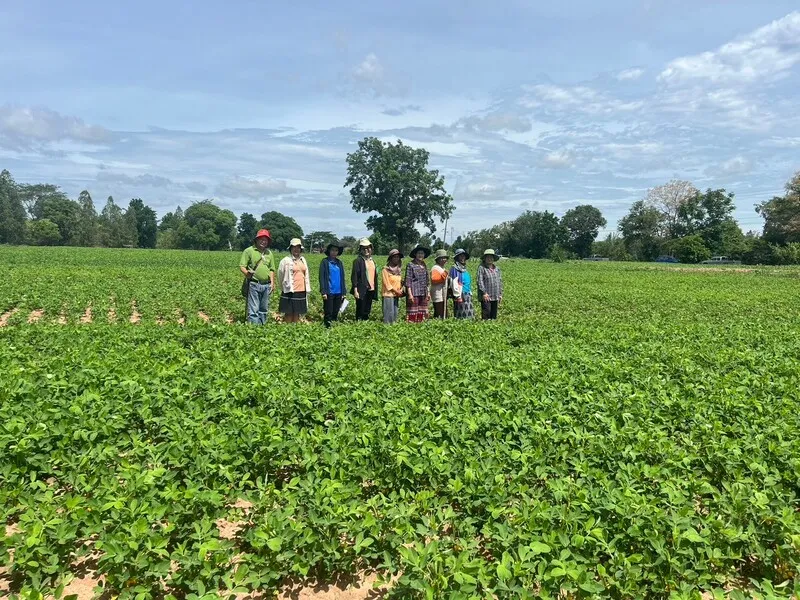
Agricultural Technology Transfer and Service Center, Bang Toe (Bang Toei Subdistrict) is a learning-oriented destination in Chachoengsao for visitors who want to “travel and bring knowledge home,” as well as for groups who come specifically for agricultural study visits. The center has been developed as a community-based district-level learning hub run through a working-group model, grounded in the Sufficiency Economy philosophy. It helps make agriculture—often seen as distant or complicated—feel practical and achievable in everyday life. Learning themes include mushroom cultivation, composting and bio-fermented fertilizers, using wood vinegar to help deter insects, pesticide-free home vegetable gardening, and campaigns to discourage burning rice stubble and straw—an issue with real significance in the Eastern Thailand agricultural landscape where reducing smoke, dust, and soil degradation is essential for long-term sustainability.
The strength of a learning center like this is not simply “showing exhibits,” but enabling visitors to see real processes in a hands-on, concrete way. Many activities are designed so local residents can actually do them with resources available in their own area. This helps people understand that cutting agricultural costs does not have to begin with large investments. It can start with turning household organic waste into compost, growing vegetables for home consumption to reduce daily expenses, or choosing certain biological inputs to reduce reliance on chemicals during periods of heavy pest pressure. In the bigger picture, the center functions as a bridge between “knowledge” and “real life” for people in Chachoengsao.
The Sufficiency Economy principle the center uses as its core is not treated as a slogan. It is translated into a working approach that emphasizes balance and continuity. For example, households are encouraged to start with pesticide-free kitchen gardens to build food security, reduce expenses, and then gradually expand into integrated farming or small-scale processing according to each family’s strengths. This makes the center suitable both for people with limited space and for those already working in agriculture, because everyone can take “a portion” of the knowledge and test it in their own context without forcing their budget or time.
One of the most popular learning topics is mushroom cultivation. Mushrooms are a practical entry point for household-level production because they require relatively little space and can be managed in a simple shed or shaded area. Successful mushroom growing depends heavily on controlling humidity, temperature, and cleanliness so the substrate blocks produce consistently. Study-visit groups often want to see details such as how blocks are arranged, how watering is timed, and how harvesting is done without shortening the usable life of the blocks. These small but critical points are what separate “trying for fun” from “doing it in a way that becomes worthwhile over time.”
Another topic with direct relevance to Chachoengsao is the campaign against burning rice stubble and straw. Burning reduces organic matter in the soil, contributes to smoke and dust pollution, and accelerates long-term soil degradation. Incorporating stubble and straw back into the soil through plowing is a practical pathway to return organic matter to the land, reduce fertilizer dependency in certain periods, and gradually restore the field’s ecological balance. When visitors see real examples at the center, it becomes easier to understand that “not burning” is not only an environmental issue—it is also about farm costs and the health of the entire community.
Wood vinegar for deterring insects is another frequently asked-about theme because it can be applied by small-scale growers who want to reduce chemical use. In many areas, wood vinegar is used to help repel insects or disrupt certain pest cycles, but it must be applied with discipline and in ways appropriate to the crop type, timing, and dilution level. The key learning value of the center is helping visitors understand that “biological inputs” are not magic—they are tools within an integrated pest management approach that must be combined with other methods such as field sanitation, proper spacing, careful observation of infestation patterns, and selecting the most suitable method for each situation.
Learning about microorganisms for improving water conditions and bio-fermented fertilizers helps visitors see a resource many people overlook: water. In agriculture, water is not simply something you have or do not have—it is something you must manage in ways suitable for crops and aquatic systems in the area. In some contexts, using suitable microorganisms can help reduce odor, manage organic waste in water systems, and stabilize certain farming or pond-management routines. At the same time, bio-fermented fertilizer is a clear example of turning leftover materials into something with real added value, aligning closely with the center’s Sufficiency Economy approach.
For urban visitors or families who want the simplest starting point, pesticide-free home vegetable gardens are often ideal. Growing vegetables for household use delivers fast results and builds motivation quickly. The center typically demonstrates that you do not need a large plot—small beds or container gardening can work. The essentials are choosing vegetables that match the season, preparing loose and healthy soil, watering consistently, and preventing pests with methods that are not overly harsh. Once people can grow successfully at the household level, confidence often leads them to expand into more variety or move toward integrated farming, depending on their home conditions.
Composting and bio-fermented fertilizers are another core pillar because they help people “close the loop” within their home and community. Leaves, grass clippings, vegetable scraps, and many agricultural residues can become compost if managed correctly. Good compost is not judged only by speed, but by maturity, crumb structure, lack of foul odor, and safety for use in planting beds. Seeing real examples helps visitors understand that once a system is in place, composting is not heavy work—it becomes a steady cost-saving practice that continuously improves soil quality.
Because the learning center exists within a living community context, visiting it feels more like experiencing an agricultural way of life than simply watching demonstrations. This is also why it can be developed as agro-tourism. People who come for study visits often want to see how different activities connect as a complete cycle: mushrooms → leftover materials → compost → vegetables → safer food → reduced household expenses → and only then, if there is surplus, expanding into income generation. This step-by-step logic helps visitors—especially young people—see self-reliance as a process, rather than chasing shortcuts that often lead to burnout and discouragement.
If you come as a study group, what makes the visit most worthwhile is arriving with clear questions. For example: Do you want mushroom cultivation mainly for household use or for selling? Are you focused on soil improvement and composting to rehabilitate an existing plot? Or are you focused on reducing smoke by incorporating straw because you grow rice? When your questions are clear, you will capture key points from the demonstrations faster and you will be able to take the knowledge home and test it immediately. The real value of a learning center like this is “being able to do it for real afterward,” not just taking photos and leaving.
In terms of atmosphere, the center is usually simple, open, and family-friendly. If you bring children, an important benefit is helping them understand that daily food does not come only from supermarkets—it comes from production systems that require knowledge and patience. Children can see an easy-to-understand cycle: planting, caring, harvesting, and turning leftovers back into useful resources. These are life lessons that can be hard to find in large cities.
Getting There to the Agricultural Technology Transfer and Service Center in Bang Toei generally starts from Chachoengsao city center and continues into Bang Toei Subdistrict, which is not far from the urban area. A practical plan is to combine “agricultural learning + classic Chachoengsao sightseeing” in a single day—visit the learning center in the morning or late morning, then go into town to pay respects at Wat Sothon Wararam Worawihan, followed by Ban Mai 100-Year Market or cultural landmarks such as the Eight Immortals Shrine. This route balances learning and leisure without feeling rushed.
If you prefer a slower agro-tourism experience, staying one night in Chachoengsao city is easy because there are many accommodations and restaurants. An overnight trip gives you time to absorb both the “learning” side and the “travel” side without hurrying back, and it also suits visitors who want to take photos or walk through local markets at a relaxed pace the next day.
In summary, the Agricultural Technology Transfer and Service Center in Bang Toei is a Chachoengsao destination that fits modern travelers who want more than a simple check-in. You will see real examples of Sufficiency Economy practices in action, gain inspiration from practical resource management, and discover that agriculture is not far from everyday life when you begin with small steps—kitchen gardens, composting, and reducing waste at home. With its location that connects easily to the major landmarks of “Mueang Paet Riu,” this learning center works well for study visits, family outings, and cultural travelers who want to add genuine substance to their trip.
| Place Name | Agricultural Technology Transfer and Service Center, Bang Toei (Ban Phraek Wihan Kaew) |
| Address | Ban Phraek Wihan Kaew, Moo 11, Bang Toei Subdistrict, Mueang Chachoengsao District, Chachoengsao |
| Coordinates (Latitude, Longitude) | 13.71055203675, 101.0031576441 |
| Overview | A community agricultural learning center in Bang Toei focused on the Sufficiency Economy philosophy and practical technology transfer, covering mushroom cultivation, compost and bio-fermented fertilizers, wood vinegar for insect deterrence, water-condition microorganisms, pesticide-free home gardening, and no-burn rice-straw management. Suitable for agro-tourism and study visits. |
| Key Highlights | Hands-on learning, Sufficiency Economy practice, real examples of cost reduction and smoke-free farming, suitable for families, students, study groups, and agro-tourism travelers. |
| Getting There (Summary) | Drive from Chachoengsao city center to Bang Toei Subdistrict, then enter Ban Phraek Wihan Kaew, Moo 11 (study visits are best arranged by scheduling in advance). |
| Current Status | Community learning center that welcomes study visits by coordination. |
| Contact | 089-694-8598, 081-865-1963 |
| Nearby Attractions | 1) Wat Sothon Wararam Worawihan – approx. 12 km – Tel. 038-511-048 2) Ban Mai 100-Year Market – approx. 14 km – Tel. 097-259-6438 3) Eight Immortals Shrine (Sawang Sathathammasathan) – approx. 16 km – Tel. 038-535-049 4) Wat Saman Rattanaram – approx. 18 km – Tel. 081-983-0400 5) Ganesha Park (Standing Ganesha), Khlong Khuean – approx. 22 km – Tel. 092-254-9228 |
| Popular Restaurants Nearby | 1) Banmai Riminam (Chachoengsao) – approx. 14 km – Tel. 038-512-064 2) The River Barn – approx. 15 km – Tel. 038-515-892 3) Boss Thai & Seafood Restaurant – approx. 15 km – Tel. 038-088-236 4) Krua Imsuk by Ban Yu Pen Suk – approx. 17 km – Tel. 095-964-0083 5) Rommaisaitarn – approx. 24 km – Tel. 086-155-7111 |
| Popular Accommodations Nearby | 1) JK Living Hotel & Service Apartment – approx. 14 km – Tel. 092-742-9929 2) The Wish Hotel & Condo – approx. 15 km – Tel. 088-521-5234 3) Suntara Wellness Resort & Hotel – approx. 16 km – Tel. 038-823-317 4) Yenjit Resort – approx. 16 km – Tel. 086-803-2070 5) T2 Residence Hotel – approx. 15 km – Tel. 038-515-512 |
Frequently Asked Questions (FAQ)
Q: Where is the Agricultural Technology Transfer and Service Center in Bang Toei located?
A: It is in Ban Phraek Wihan Kaew, Moo 11, Bang Toei Subdistrict, Mueang Chachoengsao District, Chachoengsao. The coordinates are 13.71055203675, 101.0031576441.
Q: What can I learn at the center?
A: The key topics focus on the Sufficiency Economy approach and practical cost reduction, including mushroom cultivation, pesticide-free home vegetable gardening, compost and bio-fermented fertilizers, wood vinegar for insect deterrence, microorganisms for water-condition improvement, and no-burn rice-straw management.
Q: Is it suitable for beginners or visitors who are not farmers?
A: Yes. Many topics are designed for household-level practice, such as kitchen gardens, composting, and bio-fermented fertilizers, which help reduce expenses and produce practical results step by step.
Q: If we want to visit as a study group, what should we do?
A: It is best to contact the center and schedule in advance so demonstrations and learning activities can be organized properly. You can call 089-694-8598 or 081-865-1963.
Q: What places can we visit after the learning center for a one-day trip?
A: You can continue to Wat Sothon Wararam Worawihan, Ban Mai 100-Year Market, the Eight Immortals Shrine, Wat Saman Rattanaram, or Ganesha Park (Khlong Khuean) to combine agricultural learning with classic Chachoengsao sightseeing.
Q: How much time should I plan for the visit?
A: For a general overview, 60–120 minutes is usually enough. For deeper, multi-station study visits, plan for about half a day so you can learn without rushing.
 Tel: 038565000
 Mobile: 0817596820
 Agricultural Technology Transfer and Service Center Map
 Category:
  Group:
  Last Update: 4 DayAgo
Comment
 Nearby Attractions
| Keyword (Advance) |
 Region
|
 Muang Chachoengsao(