

 Home
Home Chiang Mai(




Rating: 2/5 (15 votes)
 |
|  Map
Map 
 Have Map
  No Map
Chachoengsao attractions
Attractions in Thailand
Open Days: Daily
Opening Hours: 08:00 – 17:00
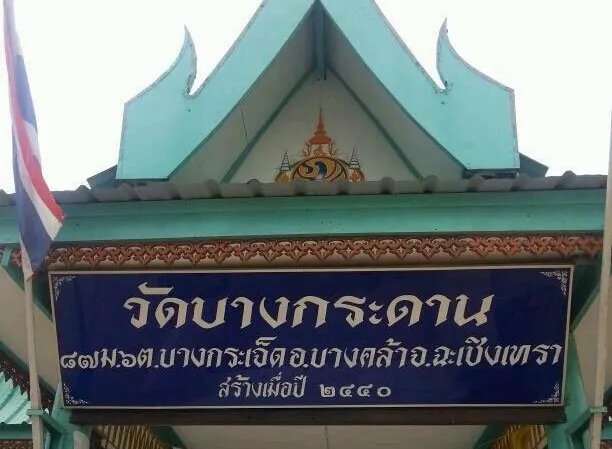
Wat Bang Kradan, Chachoengsao is a long-established community temple in Bang Khla District, deeply connected to local life for generations. Its main object of faith is “Luang Pho Chin Si” (หลวงพ่อชินสีห์), a bronze Buddha image in the Mara-vijaya posture, with a lap width of 39 inches and an age of around 150 years. Locals revere it as the spiritual anchor of the community. If you are looking for a calm, simple temple where you can pay respects without feeling rushed, and you want to experience the atmosphere of a local temple by the Bang Pakong River basin, this place fits well. Spending about 1–2 hours here is often enough to feel refreshed, and if you continue to nearby spots around Bang Khla and Chachoengsao town, a one-day trip becomes even more worthwhile and meaningful.
When people think of Chachoengsao, many imagine famous temples in the town center or popular riverside attractions. In reality, much of the province’s true charm is found in “community temples” that have stood alongside local residents for centuries. Wat Bang Kradan is one of those temples. It was not built to be a grand landmark; rather, it grew from the collective faith of villagers who wanted a spiritual center, a place for religious ceremonies, and a shared space where people of all ages could come together on important days in life—from house-blessing merit-making and ordinations to weddings and funerals. The significance of a temple like this is not only in architectural grandeur, but in the close bond between faith and everyday life that continues to this day.
The temple is located in Bang Kachet Subdistrict, Bang Khla District, Chachoengsao Province, within the fertile and historically settled Bang Pakong River basin. River-basin communities often develop a strong culture of cooperation because farming, travel, and livelihoods depend on networks of mutual support. In that context, the temple functions as a social and spiritual hub: a place for religious rites, a school of the heart, and a space that brings different generations together under shared values such as gratitude, faith, and unity. Visiting Wat Bang Kradan is therefore not merely about paying respects; it is also a way to experience a living community culture.
At the heart of Wat Bang Kradan is “Luang Pho Chin Si” (หลวงพ่อชินสีห์), a bronze Buddha image in the Mara-vijaya posture with a particularly serene and steady presence. With a lap width of 39 inches and an estimated age of around 150 years, it is revered both for its beauty and its spiritual meaning. The Mara-vijaya posture symbolizes the pivotal moment before enlightenment, when the Buddha overcame obstacles and inner defilements through unwavering resolve in the Dhamma. Many visitors pay respects to this posture as a reminder that difficult things can be overcome with steadiness, and that goodness must continue even when disturbed. If you are facing decisions about work, family, health, or morale, spending a quiet moment before the image often helps organize your thoughts in a surprisingly grounding way.
Local oral tradition says that a monk from Wat Khung Krang brought Luang Pho Chin Si to be enshrined as the principal Buddha image in the ubosot of Wat Bang Kradan. In the past, moving a significant Buddha image from one temple to another could happen in many regions, often with the intention of placing the image where it could serve as a genuine center of faith for the community. Enshrining the principal image inside the ubosot further strengthens its ritual standing, because the ubosot is the core space for monastic ceremonies and functions as the spiritual axis of the temple. For locals, Luang Pho Chin Si is therefore not only an object of Buddhist art, but also a tangible refuge of the heart in daily life.
What keeps people returning to Wat Bang Kradan is not tourism-style promotion, but faith shaped by lived experience. Those who feel their wishes have been fulfilled often come back to pay respects again, make merit, fulfill vows, or contribute offerings to support temple activities. This reflects a Thai pattern of faith that blends personal belief with a sense of reciprocity toward the community: after receiving something good, people want to help the wider community through merit-making and support. In this way, the temple becomes part of a self-sustaining cycle of giving that continues without needing constant external momentum.
Regarding the site’s history, available information indicates that the ubosot was constructed in 1904 (B.E. 2447), suggesting the temple’s continuity for more than a century. The ubosot serves as the key space for monastic rites and as the place where Luang Pho Chin Si is enshrined. Having an ubosot from that period also implies the community was stable enough to collaborate on building a formal sacred space. The temple was not created as something temporary; it was built with the intention of becoming a lasting spiritual anchor for generations. When you stand on the temple grounds today, you are standing on the traces of collective effort passed down through many lifetimes.
The overall atmosphere within Wat Bang Kradan is calm, simple, and distinctly that of a true community temple rather than a large-scale tourist temple. This simplicity makes the space feel approachable and unpressured, requiring little preparation beyond dressing respectfully and arriving with sincere intent. As you approach the ubosot, you can sense order and reverence for the sacred area. If you plan to pay respects to Luang Pho Chin Si, it helps to walk slowly and mindfully, take a few deep breaths before sitting down, and allow your mind to catch up with your body. When you do that, the act of paying respects becomes a genuine rest for the heart rather than a ritual done quickly to finish.
Many visitors choose the morning because the weather tends to be comfortable and the light is soft, which suits a respectful walk around the temple and gentle photography. Late afternoon can also be a good time because there are often fewer people, creating an even quieter atmosphere. Visiting when it is not crowded makes it easier to focus on your intention and is also more convenient for elderly visitors or families with young children, since there is less pressure to rush or navigate busy spaces.
Merit-making at a community temple like Wat Bang Kradan is typically simple but heartfelt. You can make offerings according to your faith, present alms and necessities, contribute to temple upkeep, or join merit activities during major Buddhist holy days such as Magha Puja, Visakha Puja, Asalha Puja, and the beginning of the rains retreat (Khao Phansa). These occasions often bring many locals back together, making the temple a place of “returning home in the heart.” Seeing multiple generations participate side by side also allows visitors to feel the warmth of a community that has not been severed by the pace of modern life.
If you want your visit to feel more meaningful, try making a concrete intention rather than a vague wish—for example, asking for mindfulness at work, a step-by-step plan to manage debts, the strength to care for family, or patience with what you cannot control—and then commit to acting on it. In enduring Thai faith, the core is often “wish and act,” not “wish and wait.” Setting a clear intention gives direction to your visit, and when you return to daily life, you will know where to begin.
In terms of travel experience, Wat Bang Kradan suits a half-day visit or a one-day trip combined with other stops in Bang Khla District or along routes toward Chachoengsao town. Spending about 1–2 hours is comfortable for paying respects to Luang Pho Chin Si, walking the grounds, resting, and taking respectful photos. After that, you can continue to a café, a riverside restaurant, or another temple in the Bang Khla–Khlong Khuean–Chachoengsao area, where driving is generally straightforward and there are many places to stop. Planning your day this way keeps the temple visit from feeling separate from the rest of the trip; instead, it becomes the calm center of the day before you move on to food, scenery, and local life.
Getting There Wat Bang Kradan is located in Bang Kachet Subdistrict, Bang Khla District, Chachoengsao Province. Driving is the most convenient option. Set your map destination to “Wat Bang Kradan, Bang Khla, Chachoengsao” and follow local roads into the community area. The Bangkok–Chachoengsao route generally takes about 1.5–2 hours depending on your starting point and traffic conditions. Once you reach Bang Khla, watch for community entrance signage and drive carefully because the roads are local. The temple has on-site parking suitable for visitors depending on available space. If you are traveling with family, visiting in the morning or before late afternoon is recommended for easier parking and a calmer atmosphere.
Before entering the temple, dress respectfully and avoid clothing that is overly tight or too short. If you bring children, it helps to explain quiet voices and mindful walking inside the ubosot area, because teaching temple etiquette early is one way to carry forward Thai cultural beauty. Elderly visitors may want to bring drinking water and wear comfortable shoes. Even though the visit does not require much time, moving slowly and without rushing is what makes it genuinely restorative.
Another point many people value is emotional calm when entering a temple. If you are carrying something heavy, consider setting a short structure for yourself—for example, 10 minutes of sitting still, 5 minutes of chanting or spreading loving-kindness, and then paying respects. This kind of simple time frame supports focus and reduces mental wandering. If long chanting does not feel natural to you, simply breathing slowly and recalling your own good actions can be enough. A community temple is not a place that judges; it is a place where people can return and begin again.
If you want to extend your day into a more complete Chachoengsao trip, after paying respects you can drive to other well-known temples, old markets, or scenic points along the Bang Pakong River. Options exist in Chachoengsao town, Khlong Khuean, and Bang Khla itself. This kind of route suits Thai travelers who enjoy temple visits followed by good local food, and it can also suit international visitors who want to see local life in a way that feels unmanufactured.
| Place Name | Wat Bang Kradan, Chachoengsao |
| Address | Wat Bang Kradan, Moo 6, Bang Kachet Subdistrict, Bang Khla District, Chachoengsao 24110 |
| Summary | A long-established community temple in Bang Khla District, enshrining “Luang Pho Chin Si” (หลวงพ่อชินสีห์), a bronze Buddha image in the Mara-vijaya posture with a 39-inch lap width and an estimated age of around 150 years. The temple is a local center of faith and a calm place for worship and reflection. |
| Highlights | 1) Luang Pho Chin Si (หลวงพ่อชินสีห์), the principal Mara-vijaya posture Buddha image in bronze 2) A simple, authentic community-temple atmosphere suited for unhurried prayer and reflection 3) Continued local religious activities on Buddhist holy days and community merit events |
| History / Period | Information indicates the ubosot was constructed in 1904 (B.E. 2447), and local faith in Luang Pho Chin Si has continued for generations. |
| Abbot (Latest) | Phra Khru Samu Phisan Wisaro |
| Fees | No admission fee (donations welcome) |
| Facilities | On-site parking (subject to space), seating/rest areas within the grounds, restrooms (typical for a community temple) |
| Nearby Tourist Attractions (Approx. Distance) | 1) Wat Sothon Wararam Worawihan (Luang Pho Sothon) – approx. 25 km 2) Ban Mai 100-Year Market – approx. 25 km 3) Wat Saman Rattanaram – approx. 35 km 4) Wat Pak Nam Cholo – approx. 30 km 5) Wat Hong Thong – approx. 45 km |
| Popular Restaurants Nearby (Approx. Distance + Phone) | 1) Ban Mai Rim Nam, Chachoengsao – approx. 25 km – Tel. 081-757-9663 2) Krua Im Suk by Ban Yu Pen Suk – approx. 25 km – Tel. 092-691-8994 3) Krua Mae Som Kliang (Bang Pakong Riverside) – approx. 25 km – Tel. 038-511-659 4) Aek Khanek Restaurant – approx. 25 km – Tel. 038-511-033 5) Pu Ka A Riverside – approx. 28 km – Tel. 063-313-3999 6) ChaiClub – approx. 25 km – Tel. 087-143-2444 |
| Popular Accommodations Nearby (Approx. Distance + Phone) | 1) T Vintage Hotel – approx. 6 km – Tel. 092-689-4442 2) Suntara Wellness Resort and Hotel – approx. 25 km – Tel. 033-590-250 3) JK Living Hotel – approx. 25 km – Tel. 092-742-9929 4) Sappaya Hotel by Lotus Valley Golf Resort – approx. 30 km – Tel. 038-835-555 5) Heaven Hotel Chachoengsao – approx. 25 km – Tel. 038-511-150 |
Frequently Asked Questions (FAQ)
Q: How old is Luang Pho Chin Si (หลวงพ่อชินสีห์) approximately?
A: Approximately 150 years.
Q: Which Buddha posture is Luang Pho Chin Si?
A: The Mara-vijaya posture (Victory over Mara).
Q: In which year was the ubosot recorded as being built?
A: 1904 (B.E. 2447).
Q: Is there an admission fee to visit Wat Bang Kradan?
A: No. There is no admission fee; donations are welcome.
Q: How long should I plan to spend at the temple?
A: Typically about 1–2 hours for worship, reflection, and a gentle walk around the grounds.
Q: What time is best to visit for a quieter atmosphere?
A: Morning tends to be comfortable and calm; late afternoon is often quieter with fewer visitors.
Q: What are the key etiquette points when entering the ubosot?
A: Dress respectfully, speak softly, remove shoes where indicated, and avoid actions that disturb others who may be praying or meditating.
 Wat Bang Kradan Map
 Category:
  Group:
  Last Update: 1 WeekAgo
Comment
 Nearby Attractions
| Keyword (Advance) |
 Facebook Fanpage
 Region
 Art, Culture and Heritage
 Historical Sites and Monuments(
 Landmarks and Memorials(
 Royal Palace(
 Art, Craft Centres, Tradition(
 Museums(
 Historical Houses and The Ancient City(
 Educational Places
 Museum for Study(
 Library(
 Educational Gardens, Farm(
 University
 Mosque(
 Other religious and spiritural sites(
 Research and Development
 Royal Project(
 Suburban Living
 Village, Community(
 Local Market(
 Floating Market(
 Nature and Wildlife
 National Parks and Marine Reserves(
 Mountain (Doi)(
 Dam, Reservoir, Lake(
 Waterfalls(
 Caves(
 River, Canal(
 Bays and Beaches(
 Islands(
 Other natural attractions(
 Entertainment and Agricultural
 Zoos and Aquariums(
 Animal camps and shows(
 Farm, Parks, Gardens and Ecotourism(
 Spas and Wellness
 Spas and Wellness(
 Travel Articles, Recipes
 Travel Review, Food Review(