

 Home
Home Chiang Mai(




Rating: 4.2/5 (6 votes)
 |
|  Map
Map 
 Have Map
  No Map
Chachoengsao attractions
Attractions in Thailand
Open Days: Open daily
Opening Hours: 08.00–16.30
Khao Ang Rue Nai Wildlife Sanctuary is one of Eastern Thailand’s largest forest landscapes, spanning the border zone of several provinces and remaining highly intact. It matters not only as a biodiversity stronghold, but also as a vital headwater system feeding the Bang Pakong River basin. If you are looking for a nature-focused Chachoengsao trip that feels like a true lowland rainforest close to Bangkok—where you can learn about conservation in a tangible way—this is a compelling choice. The key to a successful visit, however, is understanding access requirements and traveling in a way that does not disturb wildlife, so that tourism and conservation can genuinely coexist.
Khao Ang Rue Nai Wildlife Sanctuary lies within the vast Eastern Forest Complex, a large contiguous forest region that many people describe as a multi-province border forest. The sanctuary connects with landscapes associated with Chachoengsao, Chonburi, Rayong, Chanthaburi, and Sa Kaeo. Here, a “big forest” is not just a green patch on a map—it is an active ecosystem that still functions as a true wildlife home and as a natural water source supporting many communities across the eastern region. Another defining feature is that this area is widely regarded as a rare, non-deciduous lowland forest not far from Bangkok, close enough for a well-planned day trip or a comfortable 1–2 day itinerary. If you want to experience a forest that still feels genuinely wild and dense, this landscape delivers that intensity in a way few places near the capital can.
To understand why Khao Ang Rue Nai is so important, start with its role in “water.” A structurally healthy forest acts as the foundation for multiple headwaters that sustain people’s lives and local economies. This landscape supports the Bang Pakong River system, Khlong Tanod, and other connected waterways across Eastern Thailand. Ecologically, an intact forest works like a massive sponge: it stores moisture, releases water gradually into streams, reduces the severity of flash flooding, and stabilizes water availability that surrounding agricultural areas depend on. That is why a wildlife sanctuary is more than a travel destination—it is a form of natural infrastructure with value far beyond recreation.
In terms of terrain, Khao Ang Rue Nai covers a range of elevations, from relatively gentle lowland areas to more pronounced ridgelines that shape the forest’s character. This variety creates multiple microhabitats within the same protected landscape, enabling rich plant diversity and supporting many wildlife niches. The forest here is often described as predominantly dry evergreen forest, with smaller portions of moist evergreen forest, mixed deciduous forest, dipterocarp forest, and grassland patches. Having these different habitat types together is precisely what allows wildlife to thrive—from large herbivores that need open feeding areas and reliable water, to canopy-dwelling species that depend on dense forest structure for shelter and foraging.
If you have ever wondered why a lowland forest close to a major city is so valuable, the answer is that landscapes like this are among the easiest to convert as infrastructure and development expand. Preserving a large, continuous forest not far from Bangkok is therefore increasingly rare—and rarer still when that forest supports large mammals and threatened species. Khao Ang Rue Nai functions like a living classroom that shows, in a direct and unromantic way, what balance between use and protection looks like. A forest is not “empty land”; it is a living system with essential work to do.
Biodiversity is at the heart of why visitors often feel they have truly arrived in “real forest.” The sanctuary supports many wildlife species, especially large herbivores that are strong indicators of ecological integrity, such as wild elephants, gaur, banteng, deer, and muntjac. It is also associated with canopy species like the crowned gibbon, a symbol of healthy evergreen forest structure. Birdlife adds another layer of fascination to any nature walk or observation trip, because birds reflect seasonal shifts and habitat quality through their calls, colors, and feeding behavior. When the forest is functioning well, these signs become more visible and more rewarding to notice.
At the same time, one reality must be emphasized: a wildlife sanctuary is not a zoo, and it never guarantees wildlife sightings. The beauty of this place is that wildlife is the rightful resident and we are temporary guests. The best way to observe wildlife is not to get close, but to keep distance, avoid loud noise, never feed animals, never leave food behind, and follow all route rules and staff instructions. Small human actions can reshape animal behavior, and once wildlife behavior changes, safety risks increase for both people and animals.
Another reason Khao Ang Rue Nai matters beyond tourism is its role in education and research. The landscape is associated with long-term conservation work supported by responsible agencies and research activities that monitor wildlife, study behavior, and strengthen protected-area management. This research dimension makes conservation evidence-based rather than emotional, and helps guide decisions that keep both people and wildlife safer over time.
If you visit with a genuine interest in nature, the most suitable activities are those that are “light” in impact yet deep in experience: quiet observation, learning about ecosystems through key points around the area, and nature walks on approved routes. What makes this different from typical sightseeing is the feeling that you are “reading the forest” through small signs—tracks, feeding marks, disturbed soil, bird calls, and changing light through the canopy. In a healthy forest, these signals are clearer, and they naturally encourage you to slow down.
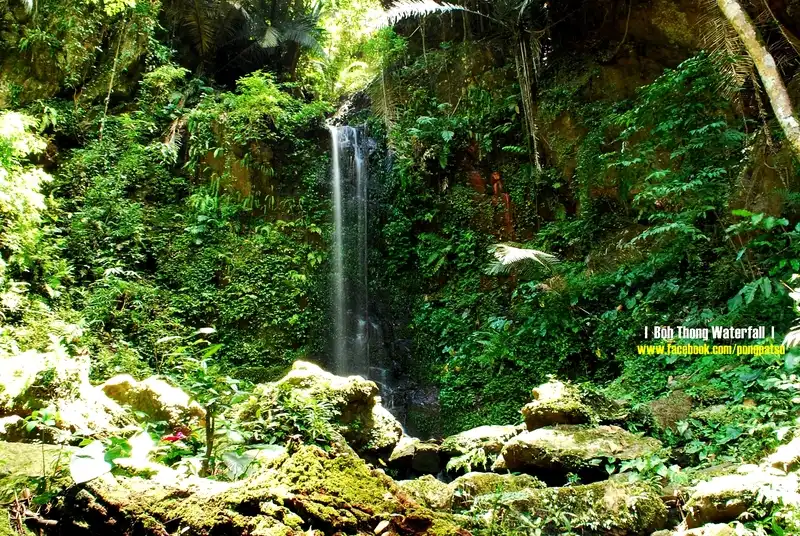
Among the destinations often mentioned, waterfalls help complete a trip because they reveal how the headwater system and terrain truly work. Nature travelers commonly talk about the Bo Thong Waterfall area, sometimes referred to as Ang Rue Nai Waterfall, which is fed by local streams and can run year-round in many seasonal conditions. Access conditions can vary, and some sections may require vehicles suitable for forest roads. Staff guidance matters here, because real forest terrain carries risks from weather changes, road conditions, and unexpected wildlife encounters.
Another area that appeals to visitors seeking a more authentic trekking atmosphere is the Khao Takrup Waterfall zone. It offers a very different experience from community markets or casual sightseeing, requiring stronger physical readiness and more careful preparation. This is part of the sanctuary’s appeal: the value of the trip is not measured by how many check-in points you collect, but by how responsibly you spend time in nature—and how much understanding you bring back about the ecosystem that supports an entire region.
Many people fall in love with Khao Ang Rue Nai during the early-to-mid rainy season, especially around June to July, when butterflies become more abundant and diverse. Seeing many species gathering around damp ground and mineral licks can turn a forest walk into a delicate, memorable experience—not excitement driven by noise, but quiet beauty that appears when nature is fully functioning. If you want good butterfly photos, the most important rule is to avoid chasing or touching them and never step onto damp ground or mineral-lick areas, because these sites are ecologically important for multiple species, not only butterflies.
Before planning seriously, you should know that access rules for a wildlife sanctuary can differ from those of some national parks. The key principle is that entry to certain zones may require prior permission, and visitors must follow staff conditions for safety and to minimize disturbance to wildlife. The best practice is to plan ahead, contact the responsible office to confirm entry requirements for your intended date and purpose, and prepare the necessary information. A sanctuary’s primary mission is wildlife protection, not high-volume tourism.
If your goal is to learn from nature in a correct and respectful way, the best mindset is to treat the trip as a conservation journey rather than a casual leisure outing. That means choosing footwear suited to wet ground, preparing insect repellent, carrying enough drinking water, wearing protective clothing, selecting neutral colors, avoiding strong perfume, not bringing food that easily leaves scraps, and carrying all trash back out. These details reduce disturbance, lower safety risks, and protect the ecosystem in a direct way.
Getting There to Khao Ang Rue Nai Wildlife Sanctuary is most convenient by private vehicle, especially if you are traveling from Bangkok or Chachoengsao town. A common approach is to head toward the Tha Takiap area and nearby zones that serve as key gateways into the forest landscape, then follow local signs and navigation to the sanctuary office or designated contact points. Starting early is recommended so you have time for administrative steps and can experience the forest when nature is most active. Public transport is possible, but it usually requires reaching a provincial or district hub first and then hiring local transport into the area, because forest zones are not typically covered by frequent fixed-route services. Planning ahead makes the day far smoother.
To make the trip feel most complete, you can think in two formats. The first is a one-day plan that starts early and returns before dark, focusing on learning points closer to the office area and then linking to nearby riverside or community attractions along the same route later in the day. The second is an overnight plan using accommodations in nearby areas, leaving the following morning for nature points that require more travel and more time, such as waterfall zones or observation areas. This approach gives you a deeper experience without rushing and reduces the risk of driving late on secondary roads around forest edges.
In the end, the most distinctive charm of Khao Ang Rue Nai Wildlife Sanctuary is standing inside a forest that is still fully “working”—as a water source, as a wildlife home, and as a foundation for practical conservation knowledge. If you want a Chachoengsao destination that offers more than simple enjoyment and leaves you with real meaning and responsibility, this is a place worth visiting. Plan correctly, confirm access requirements clearly, and travel with respect for nature, and you will leave with a richer, more memorable experience than most fast-paced trips can offer.
| Summary | A major protected forest landscape in Eastern Thailand, known for high biodiversity, vital headwaters, and conservation-focused visitation (confirm access requirements and follow staff rules to avoid disturbing wildlife). |
| Address | Khlong Takrao Subdistrict, Tha Takiap District, Chachoengsao Province (within the eastern multi-province forest landscape) |
| Highlights | Rare lowland evergreen forest close to Bangkok, threatened wildlife (wild elephants/gaur/banteng/crowned gibbon), key headwater functions, approved nature-learning routes, and a notable butterfly season (around June–July). |
| Period / Context | A formally managed protected area with a primary mission of wildlife and ecosystem protection (conservation-first, tourism second). |
| Key Evidence / Significance | A large Eastern Thailand forest system supporting multiple headwaters and long-term conservation monitoring and management. |
| Name Origin | “Khao Ang Rue Nai” has long been used for the local terrain/forest zone and is used as the sanctuary’s official name. |
| Travel | By car: travel toward Tha Takiap and Khlong Takrao, then follow signs/navigation to the office/contact points (start early). By public transport: reach a district/provincial hub first, then hire local transport into the area. |
| Current Status | Open 08.00–16.30 (recommended to confirm zone-specific access requirements before travel). |
| Facilities | Office/contact point, visitor information support, and nature-learning points depending on approved areas and daily conditions. |
| Fees | Thai nationals: adults 20 THB, children 10 THB (other costs depend on activities and access conditions). |
| Contact (Verified) | Khao Ang Rue Nai Wildlife Sanctuary: 038-502-001 |
| Nearby Tourist Attractions (Approx. Distance) | 1) Khlong Siyad Reservoir – 25 km 2) Khao Takrup Waterfall – 30 km 3) Bo Thong Waterfall / Ang Rue Nai Waterfall – 40 km 4) Chachoengsao Wildlife Research Station (access as permitted) – 10 km 5) Wat Pho Bang Khla (bat viewing area) – 75 km |
| Popular Restaurants Nearby (Approx. Distance + Phone) | 1) Krua Je Daeng (Khlong Siyad Dam Area) – 25 km – 087-605-1310 2) Pin Pochana (Tha Takiap) – 18 km – 065-969-9095 3) Mi Tang Restaurant (Khlong Takrao / Tha Takiap) – 12 km – 098-904-0434 4) FarmVille Chachoengsao (Cafe & Food) – 85 km – 081-829-8188 5) Asita Cafe – 80 km – 063-694-6546 |
| Popular Accommodations Nearby (Approx. Distance + Phone) | 1) Suntara Wellness Resort & Hotel (Chachoengsao City) – 90 km – 033-590-250 2) Heaven Hotel Chachoengsao (Chachoengsao City) – 92 km – 038-511-150 3) JK Living Hotel & Service Apartment (Chachoengsao City) – 92 km – 092-742-9929 4) The Chill Classic House (Chachoengsao City) – 92 km – 038-513-717 5) Baan Purita Resort (near Bang Nam Priao area) – 70 km – 090-101-4265 |
Frequently Asked Questions (FAQ)
Q: Which days is Khao Ang Rue Nai Wildlife Sanctuary open?
A: It is open daily.
Q: What are the opening hours?
A: 08.00–16.30.
Q: Can I enter freely, or do I need permission in advance?
A: Some zones may require prior permission, so it is best to confirm access requirements with the responsible office before you travel.
Q: When is the best time to visit for scenery and nature observation?
A: Early to mid rainy season is lush and rewarding for nature observation, and around June–July is often noted for butterfly activity.
Q: Is it possible to see wild elephants, and what should I do if I encounter them?
A: Encounters are possible in a large forest landscape. Keep a safe distance, stay quiet, never approach, and follow staff guidance strictly for safety.
Q: Can I visit without a private car?
A: Yes, but it requires more planning. Reach a nearby district or provincial hub first, then use local hired transport to access the area.
 Khao Ang Rue Nai Wildlife Sanctuary Map
 Category:
  Group:
  Last Update: 4 DayAgo
Comment
 Nearby Attractions
| Keyword (Advance) |
 Facebook Fanpage
 Region
 Art, Culture and Heritage
 Historical Sites and Monuments(
 Landmarks and Memorials(
 Royal Palace(
 Art, Craft Centres, Tradition(
 Museums(
 Historical Houses and The Ancient City(
 Educational Places
 Museum for Study(
 Library(
 Educational Gardens, Farm(
 University
 Places of Worship
 Temple(
 Mosque(
 Other religious and spiritural sites(
 Research and Development
 Royal Project(
 Suburban Living
 Village, Community(
 Local Market(
 Floating Market(
 Mountain (Doi)(
 Dam, Reservoir, Lake(
 Waterfalls(
 Caves(
 River, Canal(
 Bays and Beaches(
 Islands(
 Other natural attractions(
 Entertainment and Agricultural
 Zoos and Aquariums(
 Animal camps and shows(
 Farm, Parks, Gardens and Ecotourism(
 Spas and Wellness
 Spas and Wellness(
 Travel Articles, Recipes
 Travel Review, Food Review(