

 Home
Home Chiang Mai(




Rating: 3.1/5 (8 votes)
 |
|  Map
Map 
 Have Map
  No Map
Chachoengsao attractions
Attractions in Thailand
Open Days: Monday–Friday (recommended to confirm in advance before traveling, especially for group visits)
Opening Hours: 08.00–16.00
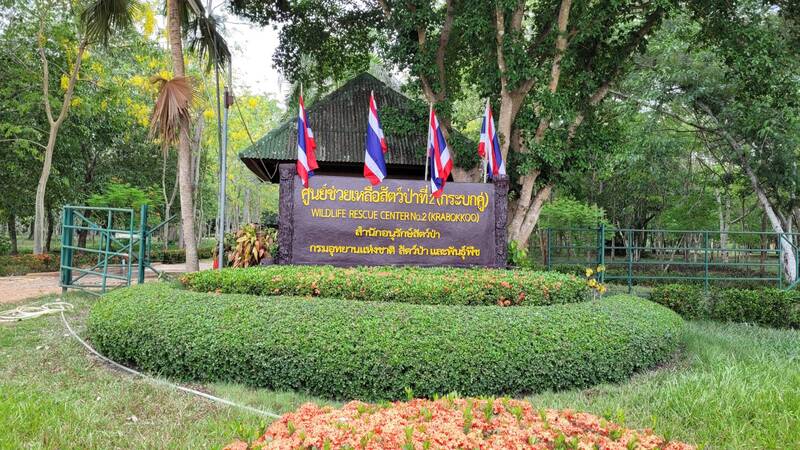
Krabok Khu Wildlife Breeding Station is a government-run wildlife conservation facility in Thailand’s eastern forest zone. It suits visitors who want to learn about proper wildlife care more than those seeking entertainment. The strength of a visit here is the chance to see “behind-the-scenes conservation work”—from animal welfare and habitat management to the broader idea of wildlife rehabilitation that supports the country’s long-term conservation mission. The essential condition for visitors is to respect the rules, keep noise and disturbance to a minimum, and follow staff instructions strictly.
Krabok Khu Wildlife Breeding Station is one of the destinations that gives the phrase “things to do in Chachoengsao” a deeper meaning than simply taking photos or checking in. This place operates under a structured wildlife conservation mission. What visitors see is not an animal display for amusement, but a working site with clear objectives: breeding, caring for, rehabilitating, and supporting the reproduction of selected wildlife species in line with the responsible agency’s framework. It also functions as a learning venue for educational institutions and for people who want to understand wildlife correctly and engage with nature respectfully.
The key difference between Krabok Khu Wildlife Breeding Station and general nature attractions is its status as a facility that prioritizes animal welfare above all. Visitor management is therefore designed to align with the station’s primary mission rather than entertainment. That means the atmosphere is intended for observation, learning, and thoughtful questions—not for provoking animals to perform for close-up photos. In reality, many wild animals are sensitive to human stimuli, including loud sounds, crowds, excessive proximity, and camera flash. These can increase stress and affect both health and behavior, especially for animals undergoing rehabilitation or long-term care.
The station is located along Highway 3259 on the Phanom Sarakham–Tha Takiap route, a corridor that connects into the forest and rural landscape of upper Chachoengsao. Driving this road shows a very different side of the province compared with the familiar urban area of Paet Riu, especially in the morning and late morning when the air is still comfortable. The scenery and the quiet of the route give the visit the tone of a “nature learning trip” rather than a quick stop. It is suitable for visitors who want time to observe, read educational signage, and understand the ecosystem connected to conservation work.
In terms of the station’s “history and role,” the simplest way to understand it is that the station has been developed and operated under a government framework for systematic wildlife protection. Its responsibilities include caring for animals under official management; designing husbandry areas to match the biology and behavior of each species; managing food and nutrition to remain as close to natural needs as possible; controlling disease and maintaining hygiene; assessing behavioral and health readiness in cases where rehabilitation is part of the plan; and serving as a learning site for students and interested visitors. Often, meaningful learning here is not about seeing the most animals, but about understanding how much knowledge, continuity, and standards are required to give a single wild animal an appropriate quality of life.
What makes wildlife breeding and reproduction particularly delicate is how sensitive wild animals are to their environment: temperature, humidity, sound, the frequency of disturbance, and changes in routine. Even things humans consider minor—such as loud conversations, surrounding enclosures, tapping fences, or trying to get an animal to turn and look—can become accumulated pressure. When stress builds up, it can affect immunity, appetite, rest, natural behavior, and ultimately make long-term management more difficult. That is why visiting Krabok Khu Wildlife Breeding Station should be seen as a trip that requires good manners and shared responsibility between visitors and the staff’s mission.
The wildlife you may encounter at Krabok Khu Wildlife Breeding Station varies depending on the agency’s responsibilities and may include mammals, birds, and other groups. The important point is that each animal may have a different “background and reason for being here.” Some may have been rescued, some may be in a long-term health care process, and some may be managed under breeding or conservation-support programs. When you walk through with this perspective, the visit becomes more than a quick look at animals—it becomes a way to recognize the real conservation work that is often not explained at typical tourist sites.
For visitors, the station is suitable for nature lovers, families who want children to learn about wildlife within clear boundaries, students who want to study conservation work, and people interested in the environment and ecosystems. If you come as a group, coordinating in advance helps keep the visit organized and improves the quality of learning without disrupting the staff’s primary responsibilities. In places like this, animals and their care must always come first.
The core visitor rules are straightforward: keep calm, reduce noise, do not tap cages or fences, do not make provocative gestures, avoid pointing at close range, avoid using flash, and never feed the animals. Human food can harm animal health and can encourage unnatural habituation to people, which makes long-term care more difficult. Consistently following these rules is one of the most direct ways visitors can support conservation work.
The recommended time to visit is generally in the morning, when the weather is more comfortable and the atmosphere is quieter, making observation respectful and natural. If you want to take photos, it is best to focus on documentary-style images that respect the space—overall surroundings, educational signs, permitted walkways, and details that tell the story of conservation work—rather than pressing close for tight animal shots. The latter carries a higher risk of disturbing animals unnecessarily and does not fit the intent of a conservation facility.
Another reason Krabok Khu Wildlife Breeding Station is valuable is that it helps visitors see that “conservation” is not only about releasing animals back into the wild. It is a system that includes reducing pressure on habitats, preventing poaching and illegal wildlife trade, working with local communities, maintaining connectivity of forest areas, and using veterinary and behavioral standards to guide management decisions. When you ask, “How did this animal come to be here?” the answer often reflects human behavior—and that is where a learning-oriented visit can become deeper and more meaningful.
Getting There Getting to Krabok Khu Wildlife Breeding Station is best by private car, as it is located along Highway 3259 on the Phanom Sarakham–Tha Takiap route. A typical approach is to start from Chachoengsao town or from the Phanom Sarakham area, then follow road signs toward Tha Takiap District. As you get closer to Tha Takiap, watch for directional signs and the station’s entrance, then turn into the facility at the designated access point. If traveling from Bangkok, leaving early is recommended to avoid heavy outbound traffic and to arrive while the weather is still comfortable. For group visits, coordinating in advance helps align entry arrangements with staff operations and reduces disturbance to wildlife.
If you want a fuller itinerary, you can plan a “nature and conservation” themed trip by connecting to nearby natural sites in the Tha Takiap–Khlong Takrao zone and along the eastern forest corridor. The key is to allow sufficient travel time and return before dark, as some rural stretches have limited lighting and can be quiet. Good time planning makes the trip safer and more comfortable while allowing you to learn without rushing.
| Place Summary | A government wildlife breeding and rehabilitation station in the eastern forest zone, ideal for responsible, learning-based visits that prioritize visitor etiquette and animal welfare. |
| Address | Moo 4, Ban Tha Klong, Highway 3259, Tha Takiap Subdistrict, Tha Takiap District, Chachoengsao 24160 |
| Key Highlights | A structured wildlife conservation worksite, a learning venue focused on welfare and rehabilitation, a rare look at behind-the-scenes conservation operations beyond simple animal viewing, suitable for families and education groups seeking responsible learning. |
| Current Status | Open for visits during operating days and hours (recommended to confirm before traveling, especially for group visits). |
| Contact Number | 08-9589-9167 |
| Nearby Tourist Attractions | 1) Khlong Siyad Reservoir – approx. 20 km 2) Local viewpoints/community nature routes in Tha Takiap – approx. 12 km 3) Forest-edge learning/nature areas near Tha Takiap – approx. 25 km 4) Bo Thong nature zone (scenic stops and hill-view cafes) – approx. 35 km 5) Phanom Sarakham zone (market/cafes and community stops) – approx. 45 km |
| Nearby Restaurants (Approx. Distance + Phone) | 1) Khrua Jae Daeng (Rim Khuean) – approx. 22 km – 081-723-6564 2) Khrua Jae Yong (Rim Khuean Siyad) – approx. 22 km – 086-141-9142 3) Baan Oom Cafe – approx. 10 km – 084-589-5364 4) Khun Sombat Restaurant (Khlong Takrao) – approx. 14 km – 065-606-5585 5) Kopi Khichamot (Chachoengsao Branch) – approx. 18 km – 097-247-7209 6) Newstick Cafe – approx. 16 km – 096-018-7839 |
| Nearby Accommodations (Approx. Distance + Phone) | 1) Sornlai Homestay – approx. 24 km – 089-813-3107 2) Somjitt Farmstay – approx. 28 km – 096-979-2265 3) Luubplern Resort – approx. 55 km – 082-558-9000 4) Red Bike Resort – approx. 52 km – 0-2756-3009 5) The Bed Resort Sanam Chai Khet – approx. 60 km – 091-009-7598 |
Frequently Asked Questions (FAQ)
Q: What days is Krabok Khu Wildlife Breeding Station open?
A: It is generally open Monday–Friday. It is recommended to confirm before traveling, especially for group visits.
Q: What are the opening hours?
A: 08.00–16.00
Q: Is it suitable for families with children?
A: Yes. It is suitable for learning-focused family visits, as long as parents help children follow rules about staying quiet, not disturbing animals, and never feeding wildlife.
Q: Can I take photos, and what should I be careful about?
A: Generally yes, as long as you do not disturb animals. Avoid flash, avoid getting too close, and follow on-site staff guidance.
Q: What is the most important rule for visitors?
A: Stay calm and quiet, do not tap cages or fences, do not provoke animals, and never feed wildlife, to protect animal welfare and prevent unnecessary stress.
Q: What should school or university groups do before visiting?
A: Contact the station in advance to coordinate the visit so it remains orderly and aligned with staff responsibilities.
 Tel: 0895899167
 Krabok Khu Wildlife Breeding Station Map
 Category:
  Group:
  Last Update: 4 DayAgo
Comment
 Nearby Attractions
| Keyword (Advance) |
 Region
|
 Muang Chachoengsao(