

 Home
Home Chiang Mai(




Rating: 3.4/5 (8 votes)
 |
|  Map
Map 
 Have Map
  No Map
Chachoengsao attractions
Attractions in Thailand
Open Days: Daily
Opening Hours: 08:00 – 17:00
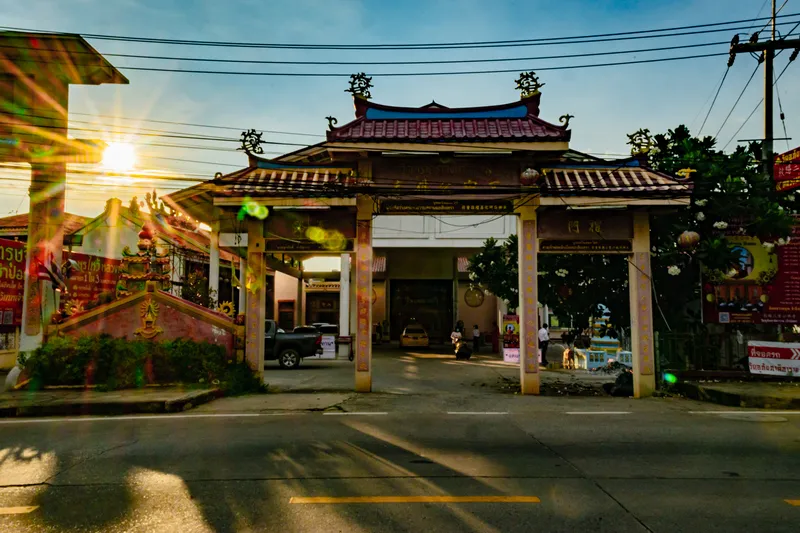
Wat Uphai Phatikaram (Wat Sam Po Kong) is a Vietnamese Mahayana temple in Chachoengsao, located near Ban Mai Market on Suphakij Road. The temple is best known for its shrine-like vihara that enshrines Luang Pho To (Phra Trai Rat Naiyok), revered by many Chinese devotees as “Chao Pho Sam Po Kong”. It is a key worship site for merit-makers and overseas visitors alike, with a notably steady flow of devotees on weekends.
Wat Uphai Phatikaram (Wat Sam Po Kong) in Chachoengsao is a familiar landmark to locals in Paet Riu, not only because of its central location on Suphakij Road, but also because it sits within the city’s living heritage zone—close to Ban Mai Market and the old riverside communities that still carry the rhythm of traditional trading life. For travelers who want a Chachoengsao itinerary that feels meaningful beyond a quick temple stop, Wat Sam Po Kong fits easily into a half-day plan. Most visitors spend around 45–90 minutes here to pay respects, take in the distinctive Mahayana atmosphere, and then continue on to the market area or the Bang Pakong River promenade without having to travel far.
What makes this temple culturally intriguing is its transformation over time. It is often described as having once been a Chinese temple, yet today it is recognized as a Vietnamese temple within the Mahayana tradition. That shift matters because it shapes how the sacred space is organized and how the architecture communicates devotion. Unlike the layout most Thai Theravada visitors are used to, the interior worship area here feels closer to a Chinese shrine in proportion and mood, from the sense of enclosure to the flow of devotees moving in an orderly rhythm. On busier days, you may notice multiple generations arriving together—elders, working adults, and families—each entering with a calm, purposeful pace that reflects a living, community-based faith rather than a purely tourist-driven visit.
At the heart of the experience is the veneration of Luang Pho To (Phra Trai Rat Naiyok), also called “Chao Pho Sam Po Kong” among Chinese worshippers. In the devotional worldview of many visitors, this reverence is often associated with protection, stability, prosperity in trade, and safety in travel. That association makes intuitive sense within the historical context of river towns and market communities, where commerce and movement were central to daily survival. Visiting Wat Sam Po Kong, then, is more than a ritual stop; it is also a window into how belief systems and local economic life have long reinforced one another in the cultural landscape of Chachoengsao.
Another frequently cited reason Wat Sam Po Kong draws attention is the widely repeated tradition that Thailand has only three prominent enshrined images of Luang Pho To (Phra Trai Rat Naiyok), associated with Wat Kanlayanamit in Bangkok (Thonburi side), Wat Phanan Choeng in Ayutthaya, and Wat Uphai Phatikaram in Chachoengsao. For travelers, this creates a clear, theme-based pilgrimage route rather than a scattered list of unrelated attractions. Knowing that Chachoengsao is one of the three places often elevates the visit from a casual stop to a destination worth planning around, especially for those who enjoy travel narratives built on cultural continuity and devotion across regions.
Many visitors remember the temple by its shrine-like vihara, which visually signals a Mahayana devotional setting. The worship space tends to be structured in a way that supports orderly movement even during crowded periods, with clear zones for paying respects and standing quietly to set intentions. The most practical etiquette here is simple: move slowly, speak softly, and avoid blocking entrances or the main flow inside the worship area. Weekends can be notably busy, and many people come with genuine spiritual focus, so a respectful pace helps maintain the calm atmosphere that defines the place.
On Saturdays and Sundays, the temple is often described as especially lively because of regular overseas visitors, frequently mentioned as coming from Hong Kong, Singapore, and Taiwan. This international pattern gives Wat Sam Po Kong a naturally cross-border dimension: it functions not only as a local religious center, but also as a point of connection within wider Chinese diasporic devotional networks in Asia. For travel content, that adds depth beyond “a beautiful temple”—it allows you to explain why this site continues to matter socially and spiritually, and how it sustains its relevance through real, ongoing practice.
From a practical itinerary perspective, Wat Uphai Phatikaram works well because it is close to Ban Mai Market, one of the city’s most charming heritage zones. A simple, satisfying day plan is to visit the temple in the morning, then head to the market area for lunch or coffee, and continue to Wat Sothon in the afternoon. This route balances Mahayana and Theravada devotional culture, old-town ambience, local food, and riverside scenery, all without long drives outside the city. For travelers who like the classic Thai loop of “temple visit, market walk, good meal,” this part of Chachoengsao delivers that experience with minimal friction.
Part of the reason people return is the sense that devotion here is still “alive” rather than staged. Wat Sam Po Kong is not merely a photogenic stop; it is a place where worship is practiced consistently. Observing how visitors move—quietly, deliberately, and with shared respect for the space—often reveals the softer texture of Paet Riu’s old-town character, where belief remains woven into everyday life rather than separated from it.
If you are unfamiliar with Vietnamese Mahayana temples, the best approach is to keep things straightforward: pause, compose yourself, follow posted guidance, and mirror the respectful rhythm of other worshippers. Photography is usually possible, but it is wise to avoid close-up filming near active worship zones when the space is crowded. The goal is to keep the pathway clear and the atmosphere calm, especially on weekends when many visitors come with serious devotional intention.
Getting There Wat Uphai Phatikaram (Wat Sam Po Kong) is on Suphakij Road near Ban Mai Market in Mueang Chachoengsao. If you are driving from Bangkok, travel into Chachoengsao city and follow directions toward the Suphakij Road area, then use the temple name as your map pin for the most direct approach to the entrance and parking. Arriving by train is also feasible: get off at Chachoengsao Junction/Chachoengsao Station and continue by local transport toward Ban Mai Market, which suits travelers who prefer an old-town day trip without driving the entire route. Because the temple is within the city zone, it also connects easily with other landmarks on the same day.
If you want a compact but complete one-day plan, start at Wat Sam Po Kong in the morning, continue to Ban Mai Market around late morning or lunchtime, and then visit Wat Sothon in the afternoon. This sequence keeps the travel time short while giving you a coherent story of faith, heritage, and riverside city life in Chachoengsao.
Basic etiquette is to dress modestly, keep voices low, refrain from smoking within temple grounds, and avoid cutting directly in front of worshippers at close range. If visiting with children, supervise them closely to maintain safety and preserve the calm environment. These small courtesies make the experience smoother for everyone and help the temple retain the quiet, respectful atmosphere that many visitors value most.
In the end, Wat Sam Po Kong offers a kind of stillness that carries meaning. Paying respects to Luang Pho To is not only about asking for blessings; it is also a way to return to steadiness, mindfulness, and respect for what anchors life. When you step back out and continue on to Ban Mai Market, Chachoengsao no longer feels like a pass-through city—it feels like a place with living stories of faith and heritage embedded in its streets and communities.
| Place Name | Wat Uphai Phatikaram (Wat Sam Po Kong) |
| Address | 475/7 Suphakij Road, Ban Mai, Mueang Chachoengsao, Chachoengsao 24000, Thailand |
| Place Summary | A Vietnamese Mahayana temple near Ban Mai Market, known for its shrine-style vihara and Luang Pho To (Phra Trai Rat Naiyok), revered as Chao Pho Sam Po Kong. A key devotional stop in Chachoengsao with strong local and overseas worship communities. |
| Highlights | Shrine-style vihara, Luang Pho To (Phra Trai Rat Naiyok) / Chao Pho Sam Po Kong, Mahayana devotional atmosphere, convenient access to Ban Mai Market and old-town riverside zones |
| Abbot / Temple Head (Latest) | Ang Palat Thamma Panya Thiwat (Thirayut Thian-khai) |
| Open Days | Daily |
| Opening Hours | 08:00 – 17:00 |
| Contact Number | 038-816-904, 082-849-5999 |
| Current Status | Open for worship and visits during operating hours |
| Fees | No admission fee (donations welcome) |
| Facilities | Parking area, restrooms, indoor worship zones, walkable access to Ban Mai Market district |
| Nearby Attractions With Distance | 1) Ban Mai 100-Year Market – 0.5 km 2) Wat Chin Prachasamoson (Wat Leng Hok Yi) – 0.8 km 3) Chachoengsao City Pillar Shrine – 2.5 km 4) Bang Pakong Riverside Clock Tower Area – 2.0 km 5) Wat Sothon Wararam Worawihan (Luang Pho Sothon) – 4.5 km |
| Popular Restaurants Nearby With Distance And Phone | 1) Kung Nang Restaurant – 1.2 km – 038-513-414 2) The River Barn – 1.5 km – 038-515-892 3) Kin Lom Chom Pla – 2.0 km – 085-328-6666 4) Soei Tha Yai – 1.0 km – 081-586-1919 5) Sun Up Cafe – 1.3 km – 083-782-6656 |
| Popular Accommodations Nearby With Distance And Phone | 1) JK Living Hotel – 3.8 km – 092-742-9929 2) Tree House Chachoengsao – 4.2 km – 098-253-7460 3) Yenjit Resort – 4.8 km – 038-511-200 4) Suntara Wellness Resort & Hotel – 12 km – 038-823-317 5) December to Remember House – 18 km – 094-491-7791 |
Frequently Asked Questions (FAQ)
Q: Is Wat Uphai Phatikaram (Wat Sam Po Kong) open every day?
A: Yes. The temple is open daily for worship and visits during operating hours.
Q: What are the opening hours of Wat Sam Po Kong?
A: The general visiting hours are 08:00 – 17:00.
Q: Why do people come to worship Luang Pho To (Phra Trai Rat Naiyok) here?
A: Many devotees come to pay respects and seek blessings associated with protection, stability, and auspiciousness, with the temple regarded as an important worship site in Chachoengsao.
Q: Is Wat Uphai Phatikaram a Chinese temple or a Vietnamese temple?
A: It is currently recognized as a Vietnamese Mahayana temple, and the vihara has a shrine-like architectural character.
Q: Why is the temple especially busy on weekends?
A: Weekends often draw larger crowds, including overseas visitors commonly mentioned as coming from Hong Kong, Singapore, and Taiwan, who visit regularly for worship.
Q: What nearby places can I visit after Wat Sam Po Kong?
A: Ban Mai 100-Year Market and Wat Chin Prachasamoson are both close by, and you can also continue to the Bang Pakong riverside area or Wat Sothon within the same day.
Q: How can I contact Wat Uphai Phatikaram?
A: You can call 038-816-904 or 082-849-5999.
 Wat Uphai Phatikaram Map
 Category:
  Group:
  Last Update: 1 WeekAgo
Comment
 Nearby Attractions
| Keyword (Advance) |
 Facebook Fanpage
 Region
 Art, Culture and Heritage
 Historical Sites and Monuments(
 Landmarks and Memorials(
 Royal Palace(
 Art, Craft Centres, Tradition(
 Museums(
 Historical Houses and The Ancient City(
 Educational Places
 Museum for Study(
 Library(
 Educational Gardens, Farm(
 University
 Mosque(
 Other religious and spiritural sites(
 Research and Development
 Royal Project(
 Suburban Living
 Village, Community(
 Local Market(
 Floating Market(
 Nature and Wildlife
 National Parks and Marine Reserves(
 Mountain (Doi)(
 Dam, Reservoir, Lake(
 Waterfalls(
 Caves(
 River, Canal(
 Bays and Beaches(
 Islands(
 Other natural attractions(
 Entertainment and Agricultural
 Zoos and Aquariums(
 Animal camps and shows(
 Farm, Parks, Gardens and Ecotourism(
 Spas and Wellness
 Spas and Wellness(
 Travel Articles, Recipes
 Travel Review, Food Review(