

 Home
Home Chiang Mai(




Rating: 4/5 (4 votes)
 |
|  Map
Map 
 Have Map
  No Map
Chachoengsao attractions
Attractions in Thailand
Open Days: Daily
Opening Hours: 08:00 – 17:00
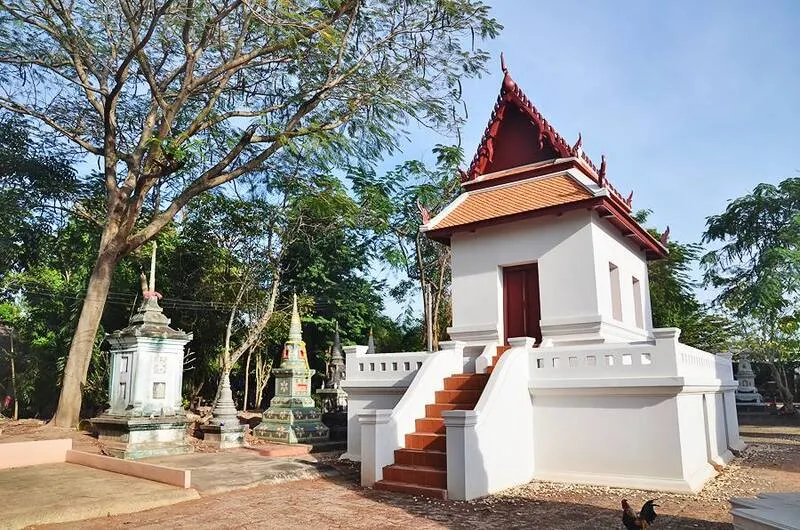
Wat Phayakkha Intharam (Wat Chedi) in Ban Mai Subdistrict, Chachoengsao Province is a historic temple from the reign of King Chulalongkorn (Rama V), best known for its “large stupa” and key structures such as the ordination hall, bell tower, and the Buddha’s Footprint Viharn. It suits a calm merit-making visit in Paet Riew’s city area, takes about 1 hour to explore, and connects easily to other attractions around Chachoengsao.
Wat Phayakkha Intharam (Wat Chedi) is one of Chachoengsao’s older temples that tells the story of the city through “intentional, purpose-built architecture” rather than being just a quick stop for worship. The moment you enter the grounds, your eyes are drawn to the large stupa—the temple’s unmistakable symbol and the reason locals commonly call it “Wat Chedi.” The first impression is not only the familiar tranquility of a Thai temple, but also a quiet curiosity: when was this stupa built, who initiated it, and why is this temple frequently discussed as an important heritage site in Chachoengsao?
The temple is located in Ban Mai Subdistrict, Mueang Chachoengsao District, an area that is convenient for travelers starting from the city center. The advantage of visiting Wat Phayakkha Intharam is that, in a relatively short time, you can enjoy both “easy, peaceful merit-making” and a walk through architectural elements that reveal more detail than you might expect—from the stupa’s form and the way sacred spaces are laid out, to an overall atmosphere that naturally encourages you to slow down. It is ideal for anyone who wants to explore Chachoengsao without rushing and wants to weave a touch of history into the trip in a seamless, natural way.
What gives Wat Phayakkha Intharam real historical weight is the clearly mentioned evidence of a “silver inscription plate” reportedly found at a crack near the stupa’s bell-shaped neck section. This discovery supports the understanding that the temple is connected to the reign of King Chulalongkorn (Rama V) and helps paint a picture of an era when Chachoengsao was growing in administration, economy, and regional transport. The story does not end with “an old temple”; it points to a community determination to build a stable religious landmark that would endure as a shared anchor of faith.
Regarding its construction, the initiator is said to be Nai Suea, also known as Phra Kriangkrai Krabuan Yut, a deputy city official of Chachoengsao, together with his wife named In. The commonly recounted timeline says the stupa was built first in 2416 BE and completed in 2418 BE, while the temple itself was completed later, around 2424 BE. This sequence makes the site especially interesting because the “stupa” was not merely decorative—it came first as the heart of the project, and it explains in concrete terms why the community has long tied the temple’s identity to the name “Wat Chedi.”
Another layer of significance is that the temple is described as being registered as an ancient monument by Thailand’s Fine Arts Department, reinforcing that this place is not only old by local memory but is also regarded as cultural heritage that should be protected. When you explore with that perspective, small details become clearer—how buildings are positioned, how the area around the stupa is maintained for worship, and how the overall environment remains quiet enough for people who come to make merit and practice devotion sincerely.
The temple’s key features are often listed plainly: “two smaller stupas,” “one large stupa,” “the ordination hall,” “the bell tower,” and “the Buddha’s Footprint Viharn.” From a traveler’s viewpoint, this composition makes the site easy to walk through in a natural order without confusion, and you can cover the highlights efficiently. A good approach is to begin by spending time at the large stupa first, because it reflects both faith and craftsmanship and is the element that distinguishes this temple from others nearby in Paet Riew.
The large stupa functions as both the visual and spiritual center of the grounds. Many visitors begin by walking respectfully around it or standing quietly to pay homage before moving on to other structures. Part of the charm of Wat Chedi is the feeling that you are standing before a structure that has endured for generations. Worship here suits a simple, grounded intention—wishing for steadiness in life, clearer mindfulness, and sustained perseverance—because, symbolically, a stupa represents stability and devotion to goodness, which are the foundations of everyday peace.
The two smaller stupas add balance to the overall layout and give your walk a gentle rhythm, offering natural pauses for the eyes. For photography, a frame that includes multiple stupas tends to communicate the temple’s distinctive character more strongly. Morning or late-afternoon light is recommended, because softer shadows and surface detail create a calmer, more contemplative mood—well aligned with the etiquette of temple visits, where courtesy, unhurried movement, and respect for others matter most.
As you continue toward the ordination hall, the tone shifts. The ordination hall is the formal space for monastic rites, so visitors should dress modestly, speak softly, and move with composure—especially when monks or local devotees are making merit. A meaningful temple visit is not about rushing to tick off locations; it is about being fully present in each place with proper respect. If you enter the ordination hall with a quiet mind, time seems to slow down, and travel naturally turns into a gentle form of self-care.
The bell tower is another spot many people enjoy, as bells have long symbolized a “reminder to return to mindfulness” in Thai temple culture. Merit-making here typically remains simple and sincere—paying respects and giving donations as one wishes—while still keeping to basic courtesy: avoid loud noise and be careful around uneven levels or steps. If you travel with small children, close supervision is important, since temple grounds can include stairs and corners where kids might run without realizing. Teaching them to walk slowly is not just about rules; it is a gentle way to pass on respectful behavior in sacred spaces.
Another spiritually meaningful feature is the Buddha’s Footprint Viharn. In Buddhist tradition, the Buddha’s footprint evokes remembrance of the Buddha’s path and mindfulness in every step of life. Many visitors like this area because it feels especially calm and is suited to intentions about living rightly—not being swept away by impatience or external pressures. If possible, pause for a moment, stand quietly, and take a deep breath before making a wish. Even a few minutes can leave you with more inner stillness than you expect.
Overall, Wat Phayakkha Intharam is well suited to travelers who want both merit-making and the feeling that they have truly touched Chachoengsao’s past. If you enjoy destinations with a story, this temple adds weight to a Paet Riew trip, because its stupa-building narrative and the temple’s emergence in the late 19th century reflect wider social change—the role of local officials, the shared faith of the community, and the creation of a religious landmark intended to outlast the era of its founders.
If you are planning a day trip, Wat Chedi can be a strong starting point. Its quiet atmosphere helps settle the mind early in the day. From there, you can continue to other city landmarks such as old-market districts, riverside areas, or major temples that are widely known. This trip structure helps your single day feel “complete” without exhaustion, because it balances tranquility with the livelier side of the city.
Getting There To visit Wat Phayakkha Intharam (Wat Chedi), the simplest method is to pin the temple name on your map and travel to Ban Mai Subdistrict in Mueang Chachoengsao District. Driving is the most convenient option because it gives you flexible timing and makes it easy to connect multiple stops in one day. If using public transport, you can first enter Chachoengsao city (by train or minivan from Bangkok) and then take local transport onward as convenient. Allow extra time on weekends or during merit-making events, as traffic in the city zone can become heavier than usual.
For a smooth visit, dress modestly, avoid overly tight or very short clothing, move calmly, and keep voices low—especially near the ordination hall and any worship areas. If you plan to take photos, do so without disturbing others and follow the temple’s rules. Sacred places look “even more beautiful” when everyone helps maintain a quiet, orderly atmosphere.
In the end, the charm of Wat Phayakkha Intharam lies in being “quiet, yet rich with story.” You may not find the showy grandeur of some tourism-focused temples, but you will find space for the mind to rest, a chance to walk among stupas and structures that have stood for generations, and the sense that your Chachoengsao trip delivered not only beautiful photos, but also a meaningful memory.
| Place Name | Wat Phayakkha Intharam (Wat Chedi) |
| Address | Ban Mai Subdistrict, Mueang Chachoengsao District, Chachoengsao 24000, Thailand |
| Place Summary | A historic Rama V-era temple in Paet Riew, known for its large stupa and key sacred buildings, ideal for travelers seeking a temple visit with a strong historical narrative. |
| Highlights | Large stupa, 2 smaller stupas, ordination hall, bell tower, Buddha’s Footprint Viharn |
| Period | Rama V era (based on the silver inscription evidence and the stated construction timeline) |
| Key Evidence | A silver inscription plate reportedly found at a crack near the bell-shaped neck section of the large stupa |
| Abbot / Temple Head (Latest) | Phra Khru Inthapanyakhun |
| Open Days | Daily |
| Opening Hours | 08:00 – 17:00 |
| Current Status | Open for visits and worship during opening hours |
| Fees | No admission fee (donations welcome) |
| Facilities | Parking area, restrooms, walkable temple grounds |
| Nearby Tourist Attractions With Distance | 1) Ban Mai 100-Year Market – 2 km 2) Wat Chin Prachasamoson (Wat Leng Hok Yi) – 2 km 3) Chachoengsao City Pillar Shrine – 3 km 4) Wat Sothon Wararam Worawihan (Luang Por Sothon) – 5 km 5) Princess Srinagarindra Park, Chachoengsao – 6 km |
| Popular Restaurants Nearby With Distance And Phone Number | 1) Sun Up Cafe – 2 km – 083-782-6656 2) Kung Nang Restaurant – 2 km – 038-513-414 3) The River Barn – 2 km – 038-515-892 4) Kin Lom Chom Pla – 5 km – 085-328-6666 5) Sae Thayai – 2 km – 081-586-1919 |
| Popular Accommodations Nearby With Distance And Phone Number | 1) JK Living Hotel – 4 km – 092-742-9929 2) Tree House Chachoengsao – 3 km – 098-253-7460 3) Yenjit Resort – 5 km – 038-511-200 4) Suntara Wellness Resort & Hotel – 10 km – 038-823-317 5) December to Remember House – 16 km – 094-491-7791 |
Frequently Asked Questions (FAQ)
Q: Is Wat Phayakkha Intharam (Wat Chedi) open every day?
A: Yes. The temple is generally open daily for worship and visits during its opening hours.
Q: What time does Wat Phayakkha Intharam open?
A: The commonly listed opening hours are 08:00 – 17:00. Visiting in the morning is recommended for cooler weather and a more relaxed walk.
Q: What is the main highlight of Wat Chedi?
A: The large stupa is the temple’s signature landmark and the spiritual centerpiece, along with the ordination hall, bell tower, and the Buddha’s Footprint Viharn in the same complex.
Q: How old is Wat Phayakkha Intharam?
A: It is associated with the Rama V period. The stupa is said to have been built in 2416–2418 BE, and the temple completed later around 2424 BE.
Q: How long should I plan to spend at Wat Phayakkha Intharam?
A: Plan about 45–90 minutes, depending on how much time you spend worshipping, reading details, and taking photos.
Q: What is the most convenient way to get to Wat Phayakkha Intharam (Wat Chedi)?
A: Driving is the most convenient option. Pin the temple on your map to reach Ban Mai Subdistrict, and then you can easily continue to other city attractions in the same day.
 Wat Phayakkha Intharam (Wat Chedi) Map
 Category:
  Group:
  Last Update: 1 WeekAgo
Comment
 Nearby Attractions
| Keyword (Advance) |
 Facebook Fanpage
 Region
 Art, Culture and Heritage
 Historical Sites and Monuments(
 Landmarks and Memorials(
 Royal Palace(
 Art, Craft Centres, Tradition(
 Museums(
 Historical Houses and The Ancient City(
 Educational Places
 Museum for Study(
 Library(
 Educational Gardens, Farm(
 University
 Mosque(
 Other religious and spiritural sites(
 Research and Development
 Royal Project(
 Suburban Living
 Village, Community(
 Local Market(
 Floating Market(
 Nature and Wildlife
 National Parks and Marine Reserves(
 Mountain (Doi)(
 Dam, Reservoir, Lake(
 Waterfalls(
 Caves(
 River, Canal(
 Bays and Beaches(
 Islands(
 Other natural attractions(
 Entertainment and Agricultural
 Zoos and Aquariums(
 Animal camps and shows(
 Farm, Parks, Gardens and Ecotourism(
 Spas and Wellness
 Spas and Wellness(
 Travel Articles, Recipes
 Travel Review, Food Review(