

 Home
Home Chiang Mai(




Rating: 4.1/5 (7 votes)
 |
|  Map
Map 
 Have Map
  No Map
Chachoengsao attractions
Attractions in Thailand
Open Days: Daily
Opening Hours: 08:00 – 17:00
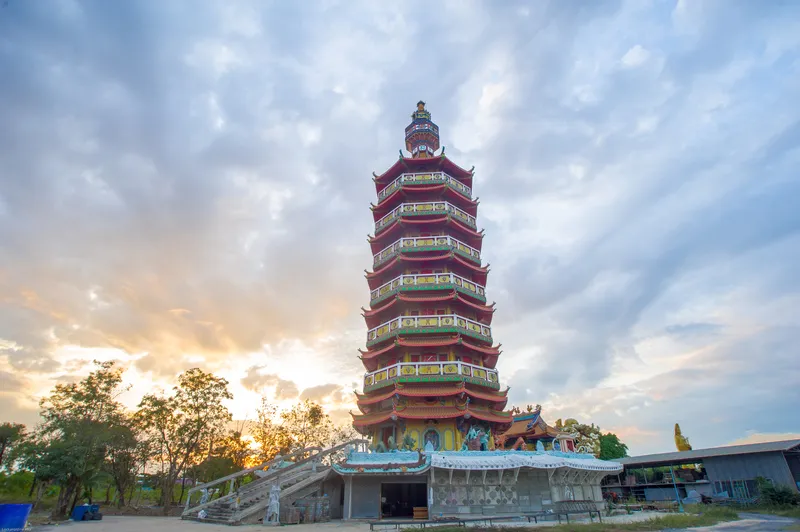
Wat Chin Prachasamoson (Wat Leng Hok Yi), a must-visit temple in Chachoengsao — commonly known as “Wat Leng Hok Yi” — is one of the most important Chinese Mahayana Buddhist temples in Paet Riew (Chachoengsao). Located on Suphakij Road in the Ban Mai Market area, close to riverside walkways and historic neighborhoods, it suits both merit-makers who come to pay respects and seek blessings, and travelers who want to admire elegant Chinese architecture in a peaceful atmosphere. A relaxed visit typically takes about 1–2 hours, and with a well-planned itinerary, it can become a full Chachoengsao day trip combining temple visits, market strolling, and good local food within just a few kilometers.
If you are searching for a Chachoengsao attraction that feels both uplifting and visually impressive, Wat Chin Prachasamoson is one of the clearest answers. The temple is not only a place of worship; it also reveals the long-standing relationship between the Chinese community and Paet Riew through architecture, rituals, and a location deeply tied to the city’s commercial district and riverside way of life. Many visitors come specifically to perform rituals related to “fixing bad luck years” (Pi Chong), to pray for career and financial progress, or to seek stability and peace of mind. Others come to experience Chinese Buddhist art that is rarely found in provincial temples, especially the distinctive interior features: large Four Heavenly Kings guardians, three principal Buddha images, the God of Wealth, and multiple sacred halls laid out in a sequence that allows visitors to complete their worship “in full” without guessing where to begin, as clear signage and on-site staff help guide the proper flow.
The name “Wat Chin Prachasamoson” is a royal bestowal and reflects the temple’s role as a cultural and spiritual gathering point for the local Chinese community. Meanwhile, the commonly used name “Leng Hok Yi” adds another layer of meaning closely associated with prosperity. “Leng” is often interpreted as “dragon,” while “Hok” refers to “fortune, luck, and well-being.” Together, they create an auspicious image that has led many people to call this temple the “Dragon of Fortune” or the “Dragon of Luck.” With Chachoengsao’s fertile landscape shaped by the Bang Pakong River and surrounding agricultural areas, the symbolism of “abundance and prosperity” feels especially fitting and has remained strongly present in popular belief up to the present day.
The history of Wat Chin Prachasamoson is closely linked to a period when travel and transportation were expanding across Thailand’s eastern region, and Chachoengsao was growing as a riverside trading city and a key node for settlement and commerce. In widely shared accounts, this temple is described as a Chinese Mahayana institution connected to the lineage of Wat Leng Nei Yi in Bangkok. There are also references to a royal visit during the reign of King Rama V, associated with infrastructure development and the opening of rail routes in the region—linking the temple’s name and the city’s historical memory in a tangible way. From a modern traveler’s perspective, what stands out is that the temple was not built in isolation; it sits within a living urban context where people can truly “worship and live”: continuing on to the Ban Mai Market, strolling by the river, stopping for meals, or staying overnight in town. This naturally makes the temple feel like a gateway between spiritual devotion and a charming small-city travel experience.
One of the narrative anchors that has kept Wat Leng Hok Yi widely known is the feng shui concept of the “Three Dragon Temples.” According to this belief, a single dragon runs through Thailand’s zones of prosperity: the head at Wat Leng Nei Yi in Yaowarat (a historic commercial district), the belly at Wat Leng Hok Yi in Chachoengsao (a land of abundance), and the tail at Wat Leng Hua Yi in Chanthaburi (a gem city). While this may sound like legend, in travel terms it functions as a “map of meaning” that helps visitors connect the place with their personal intentions. People often come not to make vague wishes, but to pray in ways aligned with what they truly seek—life stability, smoother finances, business growth, a new start, or harmony within the family. The experience becomes more meaningful when done mindfully: focusing the intention clearly and avoiding rushed, copy-the-crowd behavior. The core of temple worship, whether in Mahayana settings or Chinese shrine traditions, is grounded in sincerity, respect, and proper conduct.
As you enter the temple grounds, the first impression is the graceful Chinese architectural lines that feel majestic without overpowering visitors. Gateways, roof elements, dragon motifs, and the worship atmosphere can make many people feel as if they have stepped from Paet Riew into a distinct Chinese cultural space without traveling far. The temple offers many worship points that are conveniently connected. A highlight frequently mentioned is the presence of the Four Heavenly Kings guardians, standing prominently as symbols of protection over the four directions—giving visitors a sense of security and steadiness before they proceed into the main hall, the core area for venerating the principal Buddhas and key sacred figures.
At the heart of the main hall are three principal Buddha images, reflecting Mahayana concepts in a way that many visitors experience simply as a sense of “complete protection.” Some describe the act of paying respects to all three as bringing calmness, compassion, and protection from misfortune. In the same area, the eighteen Arhats represent spiritual discipline and the path beyond attachments. Even for travelers who do not study Buddhist doctrine deeply, they can be seen as a reminder to stay grounded, do what is right, and endure challenges with mindfulness—because in the long run, lasting “luck” tends to accompany people who live with discipline and consistent goodness.
Another major focal point is the statue of the God of Wealth, “Cai Shen Ye,” widely regarded as a key place to pray for money, business success, and new opportunities. Many visitors hold their wallets or account books while making their wishes for finances to “flow smoothly.” Yet what often makes the prayer feel more meaningful is making a clear commitment to oneself: wishing for honest work and income, disciplined money management, fair business practices, and the mindfulness to avoid decisions driven by greed. In this way, the ritual becomes more than hope—it becomes a declaration of intention to move life in a better direction, which is a central spirit of worship in any sacred place.
For those who appreciate ritual symbolism, Wat Leng Hok Yi also features a large “sacred bell” often discussed among visitors. There is a belief that striking the bell is comparable to chanting and generating wholesome merit. The most respectful way to participate is to do so calmly, avoid loud behavior, and stand in a safe position. If you visit with children, hold their hands firmly, as crowds can become dense on weekends and festivals. Moving slowly and observing good manners helps everyone worship comfortably and peacefully.
Beyond the main hall, the temple includes several sacred halls, each respected for different reasons: the Guanyin Hall symbolizes compassion and emotional healing; the Patriarchs’ Hall encourages remembrance of teachers and lineages; the Dizang (Ksitigarbha) Hall is where many pray for family well-being and resilience. There is also the Heavenly River Pond area, which adds a calm dimension—so the visit is not merely “checking off” worship points, but walking slowly and allowing the mind to settle. If you come at the right time, especially in the early morning when sunlight is gentle, you may notice how the orderly quietness naturally reduces mental restlessness.
Wat Leng Hok Yi is heavily searched at the start of the year and during Chinese New Year because of practices related to “Pi Chong” (astrological clash years), misfortune-clearing, and luck-enhancement—beliefs that have long been part of Thai-Chinese culture. If you come for Pi Chong rituals, it helps to avoid letting ceremonies turn into excessive anxiety. A healthy approach is to use the visit as a moment for self-reflection: making merit with good intentions, speaking kindly, doing good deeds, and being cautious about major financial decisions when emotions feel unstable. Many people combine their worship with commitments to better health, proper rest, and more careful financial planning—practical steps that genuinely reduce life risks in everyday terms.
Another popular practice is praying at the “Dragon” feature, often associated with a “dragon-stroking” ritual mentioned in travel media. The key is simple: do it respectfully and gently—no pushing, no cutting lines, and no distracting others. Most importantly, read any on-site instructions and follow staff guidance, as customs may vary by point. Respecting the temple’s rules is a way of honoring its culture and helps keep the worship experience graceful for both yourself and everyone around you.
This temple also works well as a family destination because the grounds are relatively orderly, worship points are diverse, and the setting allows children to learn about Chinese culture without long lectures. You can invite kids to observe dragon carvings, roof patterns, red lanterns, and the stories of different deities in age-appropriate ways—while teaching basic etiquette such as speaking softly, walking calmly, not climbing, and paying respects politely. If visiting with elderly family members, consider coming in the morning or early afternoon when the temperature is more comfortable, and bring drinking water to make the walk easier.
Getting There Visiting Wat Leng Hok Yi is easy both by car and as a day trip from Bangkok. If you drive, set your map to “Wat Chin Prachasamoson” and head into central Chachoengsao. The Suphakij Road and Ban Mai Market areas are well known to locals. The temple provides parking, but arriving early on weekends or festivals helps reduce the time spent searching for a space. If you travel by train, a popular plan is to get off at Chachoengsao Railway Station and then continue by local transport into the Ban Mai Market area. This adds a classic travel feel and ties nicely to the city’s historical narratives. Within the city, you can use local taxis or ride-hailing where available, and you should allow extra time during Chinese New Year, when crowds can be significantly heavier.
To make the trip most worthwhile, many visitors choose a simple sequence: “worship at Wat Leng Hok Yi, then walk on to the Ban Mai 100-Year Market,” since they are in the same area but offer very different atmospheres. Morning is ideal for temple worship because it is cooler and less crowded. Afterward, you can explore the market for local foods, souvenirs, and riverside photography along the Bang Pakong River. With more time, you can extend your route to other nearby cultural sites, such as Wat Uphai Phatikaram (Wat Sam Po Kong) or the Chachoengsao City Pillar Shrine—another branch of local devotion connected to Thai-Chinese communities. This makes a single day in Paet Riew feel “complete” in both merit-making and travel enjoyment without long-distance driving.
A few small etiquette points can make your visit smoother: dress modestly, keep your voice low, do not smoke inside temple areas, avoid blocking walkways or entrances—especially for the elderly—and be careful when holding multiple incense sticks. If you bring children, explain safety rules before entering the halls: no running, no playing near incense burners, and do not touch sacred objects unnecessarily. If you want to take photos, do so without disturbing others, avoid flash in worship zones, and respect any areas where photography is not recommended.
Ultimately, what allows Wat Leng Hok Yi to remain a lasting Chachoengsao highlight is its ability to help people feel they have “reset” their lives. Even a one-hour visit can be meaningful if you walk slowly, worship mindfully, make clear intentions, and then continue doing good in daily life. In that sense, the temple is not merely a photo location or a trend-based Pi Chong destination—it becomes a starting point for genuinely caring for your mind, and that is what makes a short journey in Paet Riew memorable in a deeper way.
| Name | Wat Chin Prachasamoson (Wat Leng Hok Yi) |
| Address | Suphakij Road, Ban Mai Market Area, Mueang Chachoengsao District, Chachoengsao, Thailand |
| Place Summary | A major Chinese Mahayana temple in Paet Riew, known for elegant Chinese architecture, a complete worship route, and the feng shui belief of the “Dragon’s Belly,” popular with both merit-makers and travelers. |
| Highlights | Four Heavenly Kings guardians, three principal Buddha images, eighteen Arhats, Cai Shen Ye (God of Wealth), dragon-related worship points, a large sacred bell, Guanyin Hall, and several other sacred halls. |
| Abbot / Temple Caretaker (Latest) | Luang Chin Plad Wittachai (Yen Jung) / Phra Athikan Yen Jung |
| Open Days | Daily |
| Opening Hours | 08:00 – 17:00 |
| Contact Number | 038-511-069 |
| Current Status | Open for worship during operating hours |
| Fees | No official entrance fee information (generally free to enter) |
| Facilities | Parking area, restrooms, and worship offering sets (availability depends on the temple’s arrangements and periods) |
| Nearby Tourist Attractions (With Distance) | 1) Sawang Sattha Dhammasathan Foundation – 0.2 km 2) Wat Uphai Phatikaram (Wat Sam Po Kong) – 0.5 km 3) Wat Laem Tai – 1.4 km 4) Bang Pakong Riverside Clock Tower – 1.8 km 5) Chachoengsao City Pillar Shrine – 2.6 km |
| Popular Restaurants Nearby (With Distance & Phone) | 1) Saey Tha Yai – 0.2 km – 081-586-1919 2) Sun up Cafe – 0.4 km – 083-782-6656 3) Kung Nang – 0.4 km – 038-513-414 4) The River Barn – 0.5 km – 038-515-892 5) Kin Lom Chom Pla – 0.5 km – 085-328-6666 |
| Popular Accommodations Nearby (With Distance & Phone) | 1) Tree House Chachoengsao – 2.26 km – 098-253-7460 2) Yenjit Resort – 3.4 km – 038-514-545 3) December to Remember – 4.1 km – 094-491-7791 4) JK Living Hotel – 4.3 km – 092-742-9929 5) Suntara Wellness Resort & Hotel – 6.2 km – 038-823-317 |
Frequently Asked Questions (FAQ)
Q: Is Wat Chin Prachasamoson (Wat Leng Hok Yi) open every day?
A: In general, it is open daily during its operating hours, making it convenient to visit on both weekdays and weekends.
Q: What are the opening hours of Wat Leng Hok Yi?
A: Commonly listed hours are 08:00 – 17:00. Arriving before closing time is recommended so you can worship at key points without rushing.
Q: Where do people pray for wealth and financial luck at Wat Leng Hok Yi?
A: Many visitors pray at the Cai Shen Ye (God of Wealth) area and make clear intentions related to finances, business, and new opportunities, alongside commitments to honest work and disciplined money habits.
Q: What should I prepare if I want to do Pi Chong (bad luck year) rituals at Wat Leng Hok Yi?
A: Dress modestly, allow enough time to worship calmly, and follow on-site signage and staff guidance. The most important point is to worship respectfully and keep noise to a minimum.
Q: Is the temple suitable for children or elderly visitors?
A: Yes. The grounds are relatively orderly and walkable. Morning or early afternoon visits are more comfortable, and extra care is advised near incense burners.
Q: Where can I go nearby after visiting the temple?
A: You can continue to the Ban Mai Market area and nearby cultural sites such as Wat Uphai Phatikaram (Wat Sam Po Kong) or the Chachoengsao City Pillar Shrine, all within a few kilometers.
Q: Are there any special etiquette tips for visiting a Chinese temple?
A: Be careful around hot incense, walk calmly, avoid pushing or cutting lines, and do not touch sacred objects unnecessarily. Flash photography should be avoided in worship areas.
Q: What is the contact number for Wat Chin Prachasamoson?
A: The commonly listed contact number is 038-511-069.
 Wat Chin Prachasamoson Map
 Category:
  Group:
  Last Update: 1 WeekAgo
Comment
 Nearby Attractions
| Keyword (Advance) |
 Facebook Fanpage
 Region
 Art, Culture and Heritage
 Historical Sites and Monuments(
 Landmarks and Memorials(
 Royal Palace(
 Art, Craft Centres, Tradition(
 Museums(
 Historical Houses and The Ancient City(
 Educational Places
 Museum for Study(
 Library(
 Educational Gardens, Farm(
 University
 Mosque(
 Other religious and spiritural sites(
 Research and Development
 Royal Project(
 Suburban Living
 Village, Community(
 Local Market(
 Floating Market(
 Nature and Wildlife
 National Parks and Marine Reserves(
 Mountain (Doi)(
 Dam, Reservoir, Lake(
 Waterfalls(
 Caves(
 River, Canal(
 Bays and Beaches(
 Islands(
 Other natural attractions(
 Entertainment and Agricultural
 Zoos and Aquariums(
 Animal camps and shows(
 Farm, Parks, Gardens and Ecotourism(
 Spas and Wellness
 Spas and Wellness(
 Travel Articles, Recipes
 Travel Review, Food Review(