

 Home
Home Chiang Mai(




Rating: 4.4/5 (5 votes)
 |
|  Map
Map 
 Have Map
  No Map
Chachoengsao attractions
Attractions in Thailand
Open Days: Open Daily
Opening Hours: 08.00–17.00
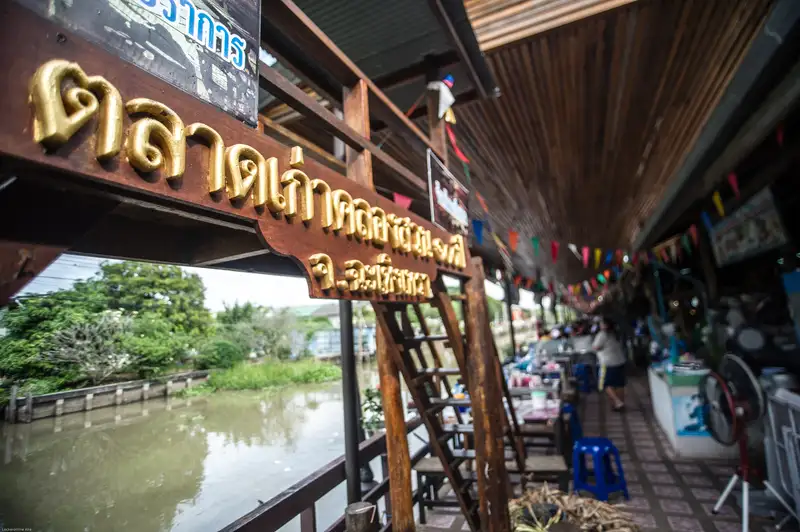
Khlong Suan 100-Year Market is one of the canal-side wooden markets that offers the kind of experience modern markets cannot replicate—slow walking that somehow leaves you with a handful of stories. Set along Khlong Prawet Burirom, it sits on the border of two provinces, between Ban Pho District in Chachoengsao and Bang Bo District in Samut Prakan. The charm here is not only about coming for food or photos, but about seeing how a canal community once lived in the era when waterways were roads, trade was everyday routine, and people of different ethnicities and faiths could live together in genuine harmony. If you are looking for a Chachoengsao trip close to Bangkok that is easy to walk, deliciously satisfying, and rich with real historical atmosphere, Khlong Suan 100-Year Market is a highly worthwhile half-day or full-day destination.
In short, this market is ideal for anyone who wants an old canal-market vibe with long rows of wooden buildings, local savory and sweet foods, classic old-style coffee, and community-made souvenirs. One special detail is that crossing a small bridge can feel like you have “visited two provinces” in a single trip. The liveliness is most noticeable on weekends, yet the overall atmosphere remains comfortable and unhurried, with enough details to explore that you may find yourself staying longer than planned.
To understand why Khlong Suan has remained charming for so long, it helps to look back at the role of “Khlong Prawet Burirom” as the community’s main lifeline. In the past, canal-side areas formed economic corridors where people traveled, exchanged goods, and built relationships through trade. Every morning, the market served as a meeting point for boats from orchard farmers, fresh produce from fields, and everyday necessities. When the canal was the road, shopfronts and piers became the heart of making a living. The market’s wooden layout running along the water reflects how people thought in that era: commerce could happen continuously along the waterway, shops could open to the breeze and to passersby, and the relationship between home and shop could merge into a single shared space.
Khlong Suan is often described as an old market that grew during the height of canal-based community prosperity, and it is remembered as having roots in the reign of King Rama V—a period when water transport and settlement growth along canals were especially significant. From today’s perspective, “100 years” is not just a number, but a visible record of multiple transitions: from the era when boats were the main vehicle, to the era when roads began to dominate, and into the present era when people seek meaningful cultural travel and choose old markets to experience real community life rather than the novelty of modern malls.
What makes Khlong Suan particularly distinctive is the picture of “real coexistence in diversity” within one neighborhood. You can find different kinds of places of worship situated close to one another, including a temple, a Chinese shrine, and a mosque. This is a social marker of how Thai-Chinese communities, Thai Buddhists, and Thai Muslims supported one another through trade and everyday life. The closeness of these religious sites is not merely symbolic—it is the result of relationships built over time, with shared rules and mutual respect. This creates a canal-market environment that feels calm, gentle, and welcoming, especially for visitors who want to learn culture without needing to study it formally, because simply walking through the area makes the community’s multicultural past visible.
Walking through Khlong Suan feels like reading stories from old timber and the shadows cast by canal breezes. The pathways guide you along rows of wooden buildings, and many shops still preserve a classic atmosphere through simple signs, display shelves, window structures, and open fronts that let the wind in. In some sections you may see old collectibles, turning the walk into more than shopping—it becomes a way of “walking through time” that still lingers on the surface of the wood and in quiet corners. One reason the market feels so charming is that it never forces people to hurry. That is why the coffee shops inside the market naturally become meeting places for both locals and travelers, where you can see older residents who know the area well and younger visitors seeking the retro atmosphere share the same frame without any sense of contradiction.
If you are a food lover, Khlong Suan tends to slow your pace automatically, because the aromas of savory and sweet dishes keep pulling you to pause and look. The standout foods in a market like this are not meant to be flashy, but to be comfortingly familiar—home-style recipes, easy-to-enjoy flavors, and consistent taste that comes from years of making the same dishes for real customers. Savory options like noodles, curry rice, or fried snacks are perfect for keeping you energized while walking. Desserts and classic old-style coffee create the ideal resting rhythm for an old market, because even holding a cup and strolling along the canal can feel like stepping back in time without trying too hard.
Market souvenirs are another reason many people come with intention. Community markets like this often have dried snacks, traditional sweets, and small local goods that reflect a genuine local identity. Many visitors enjoy buying things to take home because it feels like bringing back something real from a real community, not something mass-produced for tourism alone. On busy days—especially Saturdays and Sundays—you will notice more shops open, more choices appear, and the market atmosphere becomes lively while still staying comfortably walkable. It is not so crowded that you cannot move, but active enough to feel genuinely fun.
Another activity frequently mentioned at Khlong Suan is taking a boat ride along Khlong Prawet Burirom. This offers a different view of canal life than walking on land. From the boat, you can see lines of homes, everyday routines, and the canal’s rhythm as the area’s true backbone. Even though tourism changes with time, a canal cruise makes it immediately clear why the market was built here and why people chose to place their homes and shops parallel to the water. This style of travel suits visitors who want both visual experience and story-driven understanding in the same moment, and it can be especially rewarding for families or travelers bringing older relatives, because it adds a complete layer to the day.
If you come for photography, Khlong Suan offers images that tell stories without staged props. The most photogenic scenes are usually the long wooden building lines along the canal, the bridge that connects both sides, and shopfront angles lit by natural daylight. Morning light tends to be soft and the crowd is lighter. Late morning captures the market coming alive with more open shops and people adding narrative to the frame. Afternoon light can be stronger, but it can also create beautiful shadows and contrast on wooden floors and walls, which some photographers love because it gives the images a tangible sense of time.
A good way to enjoy Khlong Suan fully is to begin by walking for atmosphere first, then choose what to eat based on what catches your eye. Great old markets often hide great flavors in simple-looking stalls. You might start with something savory, move to dessert, and finish with coffee or a cold drink to rest your legs, then return to select souvenirs. Once you have walked both sides and sat by the water for a while, you may realize the market’s true charm is not about buying as much as possible, but about giving yourself time to experience the place attentively, then heading home with the feeling that you genuinely slowed down from city speed.
If you want to turn the visit into a one-day trip, Khlong Suan works well as a morning starting point, then you can continue to important Chachoengsao landmarks in the afternoon, such as visiting a major temple or another old market in Mueang Chachoengsao. This creates a well-balanced day combining canal-community heritage and well-known attractions. If you prefer a half-day outing, spending about 2 to 4 hours at the market is typically enough for strolling, photos, food, and souvenir shopping without rushing.
In terms of travel etiquette, Khlong Suan is a living community area with religious sites nearby, so modest dress and respect for shared space matter. If you pass a temple, shrine, or mosque, avoid behavior that could disturb religious activities. If you want to photograph people, do so politely and avoid getting too close. Traveling with respect is one reason communities continue to welcome visitors sustainably, and it helps ensure that an old market does not become only a photo set, but remains a truly “living place” over time.
Getting There is convenient for visitors from Bangkok and nearby areas. By private car, you can use major routes such as Bang Na–Trat Road, then connect into local roads on the Ban Pho or Bang Bo side to reach the market. It is recommended to allow extra time for parking on weekends, when more visitors arrive. For a more comfortable walk, morning or late morning is ideal, when the temperature is milder and more shops are open. If traveling by public transport, a practical approach is to reach a nearby transfer area first (such as Lat Krabang), then continue by local bus or hired transport into the market area. Once there, walking is the main way to explore, because the market’s appeal comes from slowly noticing its details and canal-side atmosphere.
Ultimately, Khlong Suan 100-Year Market is an excellent answer for anyone who wants a trip close to Bangkok without a rushed atmosphere. You will find wooden heritage architecture, community stories shaped by different cultures, delicious old-market flavors, and the calm pleasure of walking beside a real canal. If you are looking for a Chachoengsao destination that is easy to reach and offers both satisfying food and meaningful cultural experience, Khlong Suan is a place many visitors want to return to—because its charm is not about what you must do, but about how it feels to simply “be here” with intention.
| Place Summary | A classic 100-year canal-side wooden market along Khlong Prawet Burirom. A standout feature is its location on the Chachoengsao–Samut Prakan border, making it feel like you can visit two provinces in one trip. Ideal for a half-day to full-day outing for strolling, eating, photography, and experiencing canal community life. |
| Address | Along Khlong Prawet Burirom, on the border area between Ban Pho District, Chachoengsao Province and Bang Bo District, Samut Prakan Province |
| Highlights | Retro canal-side wooden market atmosphere, long rows of wooden buildings along the canal, photogenic bridge and shopfront scenes, community recipes for savory and sweet foods plus classic old-style coffee, and a multicultural Thai–Chinese–Buddhist–Muslim neighborhood character. |
| Period | A canal community market that flourished in the water-transport era and is remembered as continuously historic since the reign of King Rama V to the present. |
| Key Context | Located along Khlong Prawet Burirom as the canal community backbone, the market became a center for exchanging goods and community relationships, reflecting peaceful coexistence among people of different ethnicities and faiths in one neighborhood. |
| Name Origin | “Khlong Suan” is the long-used local place name of the canal community area, and it has been used to refer to the market in the same district over time. |
| Travel | Private car: Use Bang Na–Trat Road, then connect into local roads on the Ban Pho/Bang Bo side (allow extra time for parking on weekends) / Public transport: Reach a nearby transfer area first (e.g., Lat Krabang), then take a local bus or hired transport to the market; explore mainly on foot. |
| Current Status | Open daily, 08.00–17.00 (weekends are typically more lively). |
| Facilities | Market walkways, food and drink shops, souvenir shops, seating at various stalls, and nearby parking areas (availability varies by time and visitor volume). |
| Fees | Generally free entry; expenses depend on purchases (boat rides may have separate fees depending on the operator). |
| Contact (Verified) | 0-3851-4009, 0-2739-3253, 0-2739-3329 |
| Nearby Attractions (Approx. Distance) | 1) Hua Takhe Old Market (Lat Krabang) – 18 km 2) Luang Phaeng Market (Lat Krabang) – 22 km 3) Bang Phli Floating Market (Samut Prakan) – 28 km 4) Wat Sothon Wararam Worawihan – 38 km 5) Ban Mai 100-Year Market (Mueang Chachoengsao) – 45 km |
| Popular Restaurants Nearby (Approx. Distance + Phone) | 1) Pae Lee Coffee (Khlong Suan 100-Year Market) – 0.2 km – 0-2739-2154 2) Mae Phim Pak Mor Noodles (Khlong Suan 100-Year Market) – 0.3 km – 092-927-2244 3) Sam Samai (Vintage Soda/Drinks) – 0.3 km – 086-995-7829 4) Kuay Jeng (Restaurant) – 0.4 km – 083-084-9075 5) Krua Pa Muay – 0.6 km – 084-432-5668 |
| Popular Accommodations Nearby (Approx. Distance + Phone) | 1) Baan Purita Resort – 28 km – 090-101-4265 2) JK Living Hotel & Service Apartment – 45 km – 092-742-9929 3) The Chill Classic House – 45 km – 0-3851-3717 4) Heaven Hotel Chachoengsao – 50 km – 0-3851-1150 5) DHIVA Resort and Spa Chachoengsao – 52 km – 062-653-3694 6) Suntara Wellness Resort & Hotel – 55 km – 033-590-250 |
Frequently Asked Questions (FAQ)
Q: What days is Khlong Suan 100-Year Market open?
A: It is open daily.
Q: What are the opening hours of Khlong Suan 100-Year Market?
A: 08.00–17.00.
Q: Which days are the most lively to visit?
A: Saturdays and Sundays are typically more lively, with more shops open and more variety for food tasting.
Q: Can I visit Khlong Suan 100-Year Market without a private car?
A: Yes. Travel to a nearby transfer area first, then take a local bus or hired transport to the market. Once you arrive, exploring on foot is the main experience.
Q: What is the most distinctive highlight of Khlong Suan 100-Year Market?
A: Its strongest appeal is the classic canal-side wooden market atmosphere, long rows of wooden buildings along the canal, local savory and sweet foods with old-style coffee, and the unique feeling of “visiting two provinces in one trip” due to its border location.
Q: How many hours should I spend here to make it worthwhile?
A: Around 2 to 4 hours is ideal for strolling, photos, food, and souvenir shopping. If you want a full-day itinerary, you can continue to temples or major landmarks in Chachoengsao afterward.
Q: Is there a canal boat ride, and how much does it cost?
A: Some periods offer canal boat rides. A commonly mentioned price is around 50 baht per person, but route details and departure times should be confirmed on-site on your visit day.
 Tel: 027393329, 027393253
  Klongsuan Market Map
 Category:
  Group:
  Last Update: 4 DayAgo
Comment
 Nearby Attractions
| Keyword (Advance) |
 Facebook Fanpage
 Region
 Art, Culture and Heritage
 Historical Sites and Monuments(
 Landmarks and Memorials(
 Royal Palace(
 Art, Craft Centres, Tradition(
 Museums(
 Historical Houses and The Ancient City(
 Educational Places
 Museum for Study(
 Library(
 Educational Gardens, Farm(
 University
 Places of Worship
 Temple(
 Mosque(
 Other religious and spiritural sites(
 Research and Development
 Royal Project(
 Village, Community(
 Floating Market(
 Nature and Wildlife
 National Parks and Marine Reserves(
 Mountain (Doi)(
 Dam, Reservoir, Lake(
 Waterfalls(
 Caves(
 River, Canal(
 Bays and Beaches(
 Islands(
 Other natural attractions(
 Entertainment and Agricultural
 Zoos and Aquariums(
 Animal camps and shows(
 Farm, Parks, Gardens and Ecotourism(
 Spas and Wellness
 Spas and Wellness(
 Travel Articles, Recipes
 Travel Review, Food Review(