

 Home
Home Chiang Mai(




Rating: 4.6/5 (5 votes)
 |
|  Map
Map 
 Have Map
  No Map
Chachoengsao attractions
Attractions in Thailand
Open Days: Held once a year on the 14th–15th waxing moon of the 3rd lunar month (Thai lunar calendar)
Opening Hours: Ceremonies and activities run throughout the day (key period: morning – late morning)
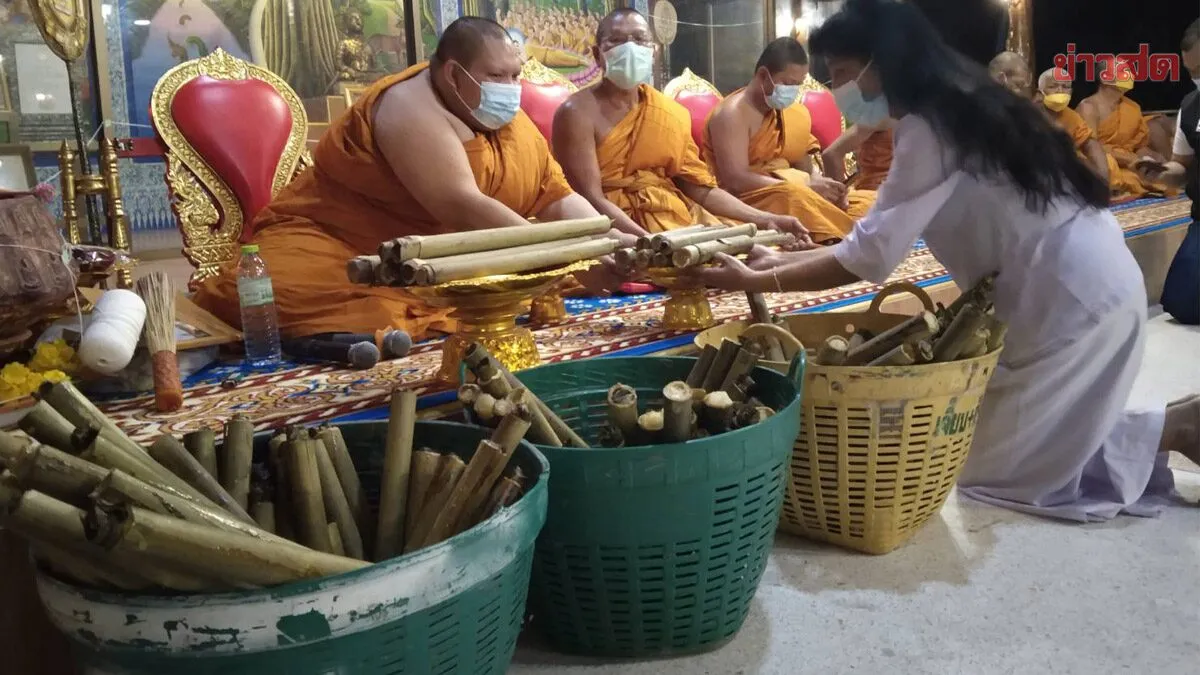
Bun Khao Lam Tradition in Chachoengsao (Phanomsarakham’s “Climbing the Mountain & Burning Khao Lam” Tradition) The Bun Khao Lam tradition of the Lao Wiang and Lao Phuan communities in Phanomsarakham District, Chachoengsao Province, clearly reflects both Buddhist faith and the strong ethnic ties of Lao-Thai communities in Thailand’s central region. At the heart of the tradition is the making of “khao lam” (glutinous rice roasted in bamboo) in the traditional way to offer to monks on the 15th waxing moon of the 3rd lunar month, as well as the community gathering to travel to Khao Dong Yang to pay respect to the replica Buddha’s footprint— a sacred place deeply connected to the community’s shared memory over many generations.
The rituals begin on the 14th waxing moon of the 3rd lunar month, when many households roast khao lam—almost every home takes part. In the context of this tradition, khao lam is not merely food; it is a merit-making offering, a sacred gift, and a travel provision tied to the next day’s pilgrimage. Choosing bamboo tubes, preparing glutinous rice with coconut milk, and controlling the fire until the aroma is just right all form a picture of “collective labor” that keeps the tradition alive, rather than turning it into a ceremony performed only because the calendar says so.
On the morning of the 15th waxing moon of the 3rd lunar month, villagers first bring khao lam to the local temple to offer to monks. Later in the late morning, they gather and head toward Khao Dong Yang. Following the traditional way, the journey is about 5–6 kilometers and becomes a key moment when the community meets in full—whether relatives who have gone elsewhere for work or younger generations returning to join their families. Using a “major religious day” as a meeting point brings both merit and a warm sense of ethnic belonging at the same time.
Upon reaching Khao Dong Yang, the main purpose is to apply gold leaf and pay respect to the replica Buddha’s footprint on the higher ground. This is a symbol of faith that makes “climbing the mountain” not only a physical journey but also a spiritual one. Participating together also reflects the affirmation of community identity and the continuity of a tradition inherited from the roots of ancestors who once lived in Laos, later adapted to the landscape and way of life in Phanomsarakham.
From the perspective of cultural tourism, Bun Khao Lam is an event visitors can join if they respect the ritual spaces, dress modestly, and prioritize the community’s rhythm over rushing to take photos or “complete” activities according to a personal plan. The true heart of the tradition is the sincere intention to make merit and the calm, respectful atmosphere on a day that the community genuinely regards as sacred.
Getting There Traveling to Phanomsarakham District is convenient from Chachoengsao town or Bangkok. The common route is Highway 304 (Chachoengsao – Kabin Buri) toward Phanomsarakham. Then follow signs to Nong Nae Subdistrict and Wat Suwannakhiri (Wat Khao Dong Yang), the central venue for the tradition and the starting point for the mountain-related activities. On the event day, it is recommended to allow extra travel time and parking time, especially during the morning–late morning period when many people arrive at the temple and prepare for the climb.
| Place Summary | The Bun Khao Lam / “Climbing the Mountain & Burning Khao Lam” tradition of the Lao Wiang–Lao Phuan community in Phanomsarakham District is held once a year on the 14th–15th waxing moon of the 3rd lunar month. Key activities include roasting khao lam to offer to monks and traveling to Khao Dong Yang to worship the replica Buddha’s footprint. |
| Key Highlights | A living food-based ritual practiced by the whole community, a family-reunion atmosphere rooted in migrant-community ties, a traditional mountain journey, and worship of the replica Buddha’s footprint at Khao Dong Yang. |
| Main Venue | Wat Suwannakhiri (Wat Khao Dong Yang), Nong Nae Subdistrict, Phanomsarakham District, Chachoengsao Province |
| Temple Abbot / Current Supervisor | Phra Khru Sitthi Khiri Khet (Phra Ajarn Yoon), Abbot of Wat Suwannakhiri |
| Period | 14th–15th waxing moon of the 3rd lunar month (once a year) |
| Nearby Attractions | 1) Khao Hin Son Royal Development Study Center – 18 km 2) Wat Sothon Wararam Worawihan – 38 km 3) Ban Mai 100-Year Market – 40 km 4) Bang Khla Floating Market – 52 km 5) Wat Pak Nam Jolo – 58 km |
| Nearby Restaurants | 1) Chaladros (Phanomsarakham) – 10 km. Tel. 0822123141 2) Baan Melon Dessert – 22 km. Tel. 0836855857 3) Jae Saeng Sun-Dried Pork – 12 km. Tel. 0910528068 4) Krua Lek Lek – 12 km. Tel. 0628420511 5) Lifehouse Cafe & Kitchen – 11 km. Tel. 0832453646 |
| Nearby Accommodations | 1) Relax Resort (Phanomsarakham) – 13 km. Tel. 0656539696 2) Luub Plern Resort – 12 km. Tel. 0825589000 3) Grand Phanom Hotel – 11 km. Tel. 0816572000 4) Phanom City Hotel – 11 km. Tel. 038552775 5) Phanom Hotel – 10 km. Tel. 038551145 |
Frequently Asked Questions (FAQ)
Q: When is the Bun Khao Lam tradition in Phanomsarakham held?
A: It is held once a year on the 14th–15th waxing moon of the 3rd lunar month under the Thai lunar calendar, typically falling in the early months of the Gregorian year.
Q: What is the main activity on the 14th waxing moon of the 3rd lunar month?
A: Families roast khao lam in bamboo tubes, preparing offerings for monks on the next day and provisions for the community’s pilgrimage activities.
Q: What is the most important ritual on the 15th waxing moon of the 3rd lunar month?
A: People offer khao lam to monks in the morning, then head to Khao Dong Yang in the late morning to worship and apply gold leaf to the replica Buddha’s footprint.
Q: How far is the traditional journey to Khao Dong Yang?
A: Traditionally, it is about 5–6 kilometers, though the exact route may vary depending on starting points and event logistics in each year.
Q: Can visitors from outside the community join the event?
A: Yes. Visitors are welcome, but should dress modestly, respect ritual spaces, keep noise low at sacred points, and follow the temple and community’s guidance.
 Bun Khao Lam Tradition Map
 Category:
  Group:
  Last Update: 1 WeekAgo
Comment
 Nearby Attractions
| Keyword (Advance) |
 Region
|
 Muang Chachoengsao(