

 Home
Home Chiang Mai(




Rating: 4/5 (7 votes)
 |
|  Map
Map 
 Have Map
  No Map
Chachoengsao attractions
Attractions in Thailand
Open Days: Daily
Opening Hours: 08:00 – 16:00
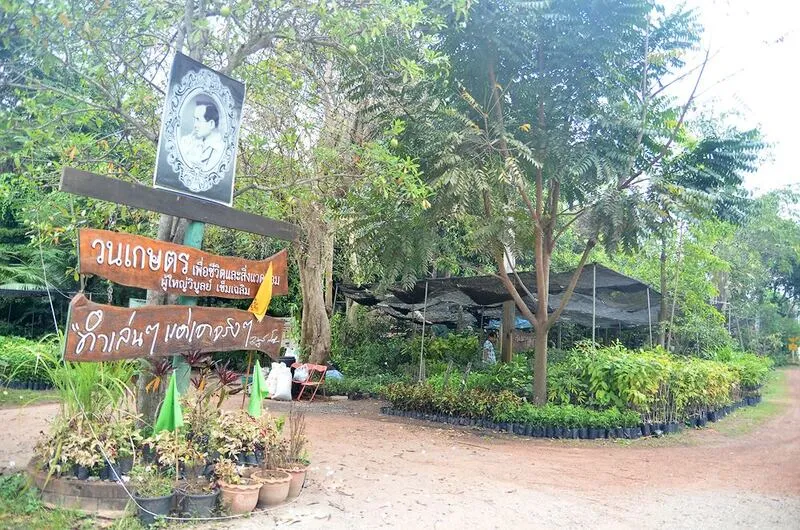
Suan Samunprai Wanakaset (Ban Santitham) in Ban Huai Hin, Lat Krathing Subdistrict, Sanam Chai Khet District, is a self-reliance learning site that brings together an “herbal garden with diverse species – a traditional Thai wooden house raised on stilts for talks and lectures – a small folk-museum of rural tools and household items – a model rice barn with rice-threshing and rice-milling equipment – and youth activity areas” within nearly 10 rai. It suits family trips, health-minded visitors, students, and anyone interested in nature-based living who wants both practical knowledge and a calm, rural atmosphere. A relaxed visit typically takes about 1–3 hours, or up to half a day if you want a deeper learning experience.
Suan Samunprai Wanakaset (Ban Santitham) offers a different kind of Chachoengsao travel experience from typical cafés and photo landmarks, because the core of the place is a “walkable learning space.” As you explore, you can see, touch, ask questions, and understand what self-reliance through nature looks like in real life. The site is located in Ban Huai Hin, Moo 1, Lat Krathing Subdistrict, Sanam Chai Khet District, in a countryside setting that remains simple, open, and welcoming for anyone who wants a break from the city. It’s especially appealing if you’re looking for a family-friendly or educational day trip near Bangkok — a place where you “take a story and knowledge home,” not just photos.
The first charm of Suan Samunprai Wanakaset is the sense that the space is designed for longer stays and step-by-step learning, not just a quick walk-through. Across nearly 10 rai, there are roughly 700–800 plant species, with a strong focus on medicinal herbs and plants connected to traditional wellness. As you wander, you’ll notice that the diversity of plants is not arranged as a simple “display garden.” Instead, it functions like a living knowledge archive, helping visitors see that the world of herbs includes edible plants, household remedies, and plants that support an ecosystem balance over time.
Another signature image here is the “traditional Thai wooden house,” roofed with kite-shaped tiles and raised high on stilts. The shaded space beneath the house is used for meetings or lectures, allowing the site to host group learning activities in an organized way, whether for school groups, community visitors, or anyone who wants to study practical self-reliance. Upstairs, the house becomes an exhibition area for folk tools, older artifacts, and vintage household items. This turns the visit into more than a garden walk — it becomes a connection to rural Thai “ways of life” through real objects that were once used in everyday work.
The folk-museum zone upstairs has strong storytelling value, because many items reflect how past livelihoods were inseparable from nature. Cooking, food storage, rice farming, and processing harvests were all closely tied to the surrounding environment. If you bring children, this area helps them visualize rural life in a tangible way. For adults, it often sparks ongoing conversation: what each tool looks like, what it was used for, and why older generations designed tools to match the realities of daily work.
As you continue behind the house, you’ll find a “model rice barn” and equipment related to threshing and milling rice. This is another key learning piece, because rice is central to Thai life. Seeing the steps and tools up close helps visitors who have never been near the rice process understand how much knowledge, labor, and precision it takes to become a single meal. This area is best enjoyed slowly — reading signs, noticing details, and listening to explanations when staff or caretakers are available.
Another section of Suan Samunprai Wanakaset is arranged for youth camping and educational activities, with a recreation yard and activity grounds. This reinforces the site’s clear educational role: it isn’t just a garden for leisure walking, but an outdoor classroom designed so that “learning happens through doing.” With the herbal garden, the Thai house, the folk museum, and the activity spaces connected as one system, you can see why the site works well for people who want to study nature-based self-reliance in a truly practical way — one full walk can reveal food, medicine, living space, tools, and a life-management philosophy all together.
In terms of “history and background,” Suan Samunprai Wanakaset is often referred to as a Village Social Development Learning Center (Agroforestry) or Ban Santitham, linked to agroforestry ideas and the Sufficiency Economy philosophy. The core principle emphasizes designing land to foster biodiversity, support self-sustaining food and herbal resources, and rely on ecological systems rather than external inputs. To a casual traveler, it may feel like a lush herbal garden. But to a learner, the diverse planting approach is a deliberate blueprint for building gradual, long-term “life stability.”
The name “Phuyaiban Wiboon Khemchalerm” is frequently mentioned alongside agroforestry learning areas in Lat Krathing, because his approach has helped many people understand a shift from high-risk, market-dependent farming toward a more balanced and sustainable way of managing land and life. For visitors, knowing this context adds meaning to the walk, because each plant grouping is not there by accident. It reflects an idea of making a single place truly connected to daily life — from food and health, to creating a learning environment for the next generation.
There are several ways to enjoy Suan Samunprai Wanakaset. If you come for a “relaxed visit,” you can spend 1–3 hours walking through the herbal garden, entering the Thai house, viewing the folk collection, checking the model rice barn and milling tools, and then resting in a shaded spot to let the garden atmosphere reset your energy. If you come for “serious learning,” especially as a group, you can stay longer because each zone offers details that naturally expand into discussions and hands-on learning activities.
One practical tip that makes the trip feel more worthwhile is to focus on “observing relationships” between elements in the site. For example: why Thai houses are built on stilts, why household items are stored upstairs, why a rice barn is placed behind the home, and why an herbal garden benefits from diversity rather than monoculture rows. Observing these relationships turns the visit from a simple walk into an understanding of the thinking behind self-reliance and living in balance with nature.
For families with young children, a good approach is to introduce herbs “without pressure.” Let children look at leaves, smell the scents, and feel different textures, then explain how Thai people traditionally used certain plants for everyday care. Many kids enjoy discovering that familiar-looking plants can have stories and uses beyond what they expected. At the same time, adults often gain a fresh perspective: herbal knowledge doesn’t have to begin with textbooks — it can begin with seeing and experiencing real plants in a real landscape.
Photography-minded travelers may not find flashy café-style “check-in” corners, but they can capture a different kind of uniqueness: the Thai house on stilts, the patina and texture of old tools, the model rice barn, and the herbal garden in many shades of green. If you like natural-toned images, morning light is especially gentle and brings out leaf detail in a pleasing way. In the afternoon, if the sun is strong, walk at an easy pace and rest in shaded spots — particularly important if you’re visiting with older family members.
Preparing for a visit here should be simple, but a few small choices will make it more comfortable: wear walk-friendly shoes, bring your own drinking water, and if you want a deeper learning experience, come with a few questions. This is the kind of place where “the more you ask, the more you learn.” Popular questions often relate to common Thai herbs, how to keep land green year-round, and how to apply self-reliance principles to food and health in everyday life.
Another reason the site works well as a “meaningful destination” is that it offers a clear picture of using resources thoughtfully at the household level — from preserving folk tools and daily items, to cooking with ingredients from the land, to creating youth activity spaces where learning happens through practice. By the time you complete the walk, you may start to see that self-reliance is not about disconnecting from the outside world, but about building a stable foundation from what’s around you, and using knowledge to manage resources in a balanced way.
Getting There Use Highway 3245 (Phanom Sarakham – Sanam Chai Khet), then turn onto Highway 3259 (Sanam Chai Khet – Tha Takiap) and continue for about 3 kilometers. The easiest approach for drivers is to set navigation to “Village Social Development Learning Center (Agroforestry) / Ban Santitham / Suan Samunprai Wanakaset” so you receive the most current route based on real road conditions on the day of travel.
If you want to plan a one-day trip, it’s easy to pair Suan Samunprai Wanakaset with nearby places in Sanam Chai Khet District and surrounding areas of Chachoengsao, since this region includes important temples, reservoirs, nature viewpoints, and other learning-based attractions. The trip becomes even smoother if you manage time well — for example, visit the herbal garden in the morning, stop for local food around midday, and spend the afternoon at a nearby temple or natural site before heading back.
| Place Summary | A self-reliance learning site in Lat Krathing with nearly 10 rai of land and about 700–800 plant species (focused on medicinal herbs). Features a traditional Thai stilt house used for talks/lectures, an upstairs folk collection of tools and older household items, plus a model rice barn and rice-threshing/milling equipment. Best for a relaxed 1–3 hour visit, or up to half a day for deeper learning. |
| Name | Suan Samunprai Wanakaset (Ban Santitham) / Village Social Development Learning Center (Agroforestry) |
| Address | 224 Moo 1, Ban Huai Hin, Lat Krathing Subdistrict, Sanam Chai Khet District, Chachoengsao, Thailand |
| Phone Number | 038-597441 |
| Highlights | 1) Herbal garden and diverse plants (approx. 700–800 species) across nearly 10 rai 2) Traditional Thai house with kite-tile roofing and a stilted ground level used for meetings/lectures 3) Upstairs exhibits of folk tools, older artifacts, and vintage household items for hands-on cultural learning 4) A model rice barn plus rice-threshing and rice-milling equipment that illustrates traditional food systems 5) Activity grounds and recreation space suitable for youth camps and group learning programs |
| Nearby Attractions | 1) Wat Phra That Wayo (Wat Huai Nam Sap) – 12 km 2) Lat Krathing Reservoir – 10 km 3) Khlong Siyad Reservoir – 45 km 4) Khao Hin Son Royal Development Study Center – 35 km 5) Krabok Koo Wildlife Breeding Station – 40 km |
| Nearby Restaurants | 1) Temkham Cafe – 13 km – 096-246-1426 2) Krua Takhrai by Chef Kul – 16 km – 090-163-6248 3) Krua Suan Pa Sak – 8 km – 087-678-5735 4) Krua Suan Lung Yot (Red Flesh Guava Farm) – 11 km – 095-473-3746 5) Je Pen Paak Mor Noodle – 20 km – 080-093-9031 |
| Nearby Accommodations | 1) Rim Mueng Resort (Sanam Chai Khet) – 19 km – 098-545-4688 2) The Bed Resort (Sanam Chai Khet Market Area) – 20 km – 091-009-7598 3) Two Resort (Sanam Chai Khet) – 21 km – 094-363-8256 4) Baan Yai Homestay Nayao – 24 km – 081-003-1329 5) Ban Suan Kaset Resort – 45 km – 081-889-2167 |
Frequently Asked Questions (FAQ)
Q: Where is Suan Samunprai Wanakaset (Ban Santitham) located?
A: It is located at 224 Moo 1, Ban Huai Hin, Lat Krathing Subdistrict, Sanam Chai Khet District, Chachoengsao Province.
Q: What days is it open and what are the opening hours?
A: It is open daily from 08:00 – 16:00.
Q: Who is this place best for?
A: It’s best for families, students, herb and wellness enthusiasts, and anyone interested in rural culture and nature-based self-reliance learning.
Q: How long should I plan to spend there?
A: Typically 1–3 hours. If you want more in-depth learning or you visit as a group, you can plan for up to half a day.
Q: Can groups visit for learning activities?
A: Yes. The traditional Thai stilt house provides space for meetings/lectures, and the site includes activity areas suitable for youth programs and group visits.
Q: How can I contact the site for more information?
A: You can call 038-597441.
 Suan Samunprai Wanakaset (Ban Santitham) Map
 Category:
  Group:
  Last Update: 3 DayAgo
Comment
 Nearby Attractions
| Keyword (Advance) |
 Facebook Fanpage
 Region
 Art, Culture and Heritage
 Historical Sites and Monuments(
 Landmarks and Memorials(
 Royal Palace(
 Art, Craft Centres, Tradition(
 Museums(
 Historical Houses and The Ancient City(
 Educational Places
 Museum for Study(
 Library(
 Educational Gardens, Farm(
 University
 Places of Worship
 Temple(
 Mosque(
 Other religious and spiritural sites(
 Research and Development
 Royal Project(
 Suburban Living
 Village, Community(
 Local Market(
 Floating Market(
 Nature and Wildlife
 National Parks and Marine Reserves(
 Mountain (Doi)(
 Dam, Reservoir, Lake(
 Waterfalls(
 Caves(
 River, Canal(
 Bays and Beaches(
 Islands(
 Other natural attractions(
 Zoos and Aquariums(
 Animal camps and shows(
 Spas and Wellness
 Spas and Wellness(
 Travel Articles, Recipes
 Travel Review, Food Review(