

 Home
Home Chiang Mai(




Rating: 2.9/5 (9 votes)
 |
|  Map
Map 
 Have Map
  No Map
Chachoengsao attractions
Attractions in Thailand
Open Days: Daily
Opening Hours: 18:00 – 20:00
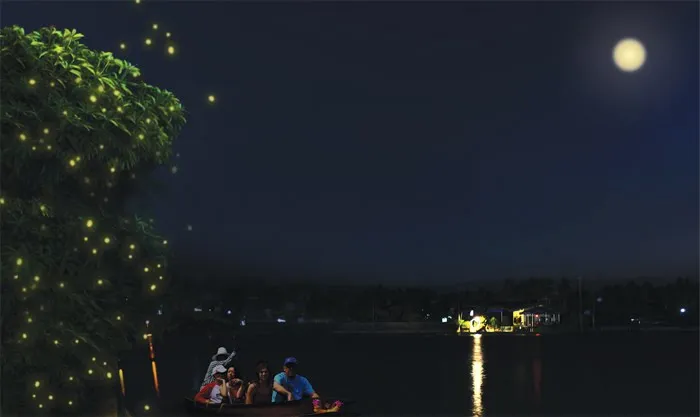
Firefly Rafting at Khlong Ton Man Village (Moo 3, Khlong Ban Pho Subdistrict, Ban Pho District, Chachoengsao) is a nature-based evening activity on the Bang Pakong River that invites visitors to experience “true darkness” along the river basin at night, then lets the synchronized flicker of fireflies on lamphu trees tell the story of the mangrove ecosystem. The local community carefully manages the pace of tourism to align with nature—from lowering lights and keeping voices down to asking everyone not to use flash—so the fireflies’ life cycle and the area’s ecological balance can remain healthy over time.
What makes this experience special begins the moment you step onto the raft at the community’s riverside raft restaurants on the Bang Pakong. The atmosphere before departure is simple and local, not staged or flashy, because “what people come here for” is not bright lights or music, but quiet time where you can hear water brushing the raft, wind slipping through treetops, and see tiny, shimmering lights that appear naturally. As the raft gradually moves away from the village and into the mangrove-lined riverbanks, darkness slowly absorbs the lights from the shore. Your eyes adjust—and that is when the first fireflies appear as small points of light, like low-hanging stars floating along the treeline.
Firefly rafting in Ban Pho District is often described as one of the harder-to-find experiences in Eastern Thailand because a habitat that supports fireflies requires multiple layers of balance: water quality, continuous mangrove vegetation, suitable humidity, and minimal light disturbance. Fireflies “use light as language.” Their glow is not only beautiful—it is a signal for communication, mate attraction, and the survival of their population. If a strong flashlight beam or camera flash hits the area, that communication is disrupted immediately. That is why the beauty you witness is the result of cooperation between nature and a community that understands how to live with the river’s rhythms.
When people talk about “Khlong Ton Man,” the image to hold is not only a boarding point, but a riverside community whose way of life has long been tied to the Bang Pakong. This river basin sustains small-scale fishing, riverbank farming, and careful use of mangrove resources. Locals are familiar with tides, seasonal changes in currents, and the fact that lamphu trees and certain mangrove plants are the “home” of fragile life such as fireflies. To the community, natural darkness is not something to fear—it is a condition that allows the ecosystem to function as a whole, and a key reason why firefly rafting is not merely a tourism gimmick, but an extension of local ecological knowledge that visitors can learn from without a classroom.
One reason firefly rafting “matters” is that, along the route, you begin to notice subtle changes—reflections of trees on the water, small ripples as the raft passes, and mangrove vegetation forming a living backdrop for the blinking lights. If you watch closely, you will see that firefly light is not steady like a bulb; it flashes in rhythm, and sometimes it looks like a wave of light moving along the treeline. This beauty comes from the synchronized timing of many living creatures in the same place, and it often makes people fall quiet automatically, not wanting their own noise to interrupt the calm that nature is putting on display.
The best time to see fireflies along the Bang Pakong riverside is usually from early to mid rainy season, when humidity rises and the habitat becomes more abundant, increasing the chance that many fireflies will flash together. Still, nature does not deliver identical results every night. Heavy rain, strong wind, or unstable weather can reduce the number of visible fireflies. That is why a firefly-rafting visit is best approached with “respect for nature” rather than the expectation that nature must perform on demand. Even on nights with fewer fireflies, the experience can remain meaningful as a real encounter with a living ecosystem and authentic darkness—reminding you that some kinds of beauty are not meant to be commanded.
During the raft trip, providers typically give clear guidance to keep lights low and avoid flash. Flash photography or strong flashlight beams can disturb firefly behavior and distort their light-based communication. The more consistently a destination is visited, the more important it becomes to maintain these standards, because fireflies rely on relatively stable environmental conditions. Repeated disturbance can contribute to long-term population decline. That is why “small rules” like turning off flash, dimming phone screens, and speaking softly are the foundation of responsible tourism that helps keep this experience sustainable.
From a nature-learning perspective, firefly rafting helps visitors understand the mangrove ecosystem more easily, because what you see is not only fireflies but also lamphu trees and mangrove plants that serve as perches, shelter, and communication space for fireflies. Some communities place strong emphasis on protecting lamphu trees because they know that if the treeline is damaged or fragmented, the continuity of the “firefly corridor” is broken—and when the treeline breaks, the light show breaks with it. So the beauty you see is also evidence of long-term care that many people rarely think about.
Another compelling aspect is the community’s role in managing the rhythm of tourism. Khlong Ton Man is not merely scenery; it actively shapes the experience to match nature—choosing an appropriate route and timing, slowing the raft near firefly zones, emphasizing safety for children and older visitors, and offering guidance on clothing and mosquito protection without disturbing the environment. When tourism is designed so visitors must “lower themselves”—their noise, their light, their rush—so nature can reveal itself, the experience becomes deeper than a simple photo stop. Visitors adjust their behavior to fit the place, and that becomes part of the meaning.
Seen in the broader Bang Pakong watershed, firefly rafting also reflects the importance of protecting water quality and the river environment in Chachoengsao. Fireflies serve as an indirect indicator of habitat health. Their continued presence relates to community cooperation, care for riverside vegetation, and efforts to reduce disturbances. As tourism generates community income, it can become a practical incentive to protect mangroves and keep the river clean. A healthy environment is not only “beautiful”—it is a form of capital that sustains long-term livelihoods.
For visitors who want the best possible experience, preparation matters more than it might seem. Choosing a night with clearer skies, lighter wind, and less intense rain increases the chance of seeing more fireflies. Dress for comfort and movement, because you will be boarding and sitting outdoors. Footwear with good grip helps reduce slipping in naturally humid conditions. If you plan to take photos, use low-light settings and avoid anything that disturbs the scene—no flash, dim your screen, and avoid holding phones high in ways that block others. This activity rewards “watching with your eyes” more than “collecting images.”
Safety is another key part of night rafting. Even though the route is familiar to locals, the nighttime environment differs greatly from daytime. Children should be supervised closely and everyone should follow the provider’s safety guidance. Walking on the raft should be minimized and done carefully because surfaces may be damp. If you travel with older adults or anyone with balance concerns, choose a stable seat and avoid frequent movement. These safety rules are not meant to make the trip strict—they allow everyone to relax and focus fully on the experience.
In terms of the “history and origins” of firefly rafting at Khlong Ton Man, its development can be understood from the community’s long-standing relationship with the river. Small-scale fishing, the everyday use of rafts, and raft restaurants that welcome travelers existed long before this became a tourism activity. As more people began to notice the beauty of fireflies and the calm of the river at night, the community gradually shaped rafting into a structured experience with guidelines designed to keep it natural. The key strength is that the activity rests on local ecological knowledge rather than on building artificial scenes—and once it generated income, it also strengthened the community’s incentive to protect lamphu trees and manage nighttime lighting more carefully.
If you want to plan a cost-effective trip, Khlong Ton Man can be easily linked with major attractions in Chachoengsao because it sits within a zone that can connect to well-known sites in a single day. Many visitors choose an “afternoon-to-evening” plan: spend the afternoon at a riverside restaurant or café in Ban Pho or Bang Khla, then go firefly rafting early in the evening. Others stay overnight in Chachoengsao town or Bang Khla so they do not need to drive late. This approach keeps the day unhurried and gives you time to absorb the Bang Pakong River’s rhythm in a more authentic way.
Beyond the beauty you see, another common takeaway is a sense of “awareness” that nature still holds many delicate details—especially in places that can still preserve real darkness. In an era when city lights spread in every direction, being in darkness not drowned by neon allows other senses to sharpen: the sound of water, insects, wind, and the subtle timing of firefly flashes. When you return to shore, many people feel time has slowed down, even if the rafting period was not long. That is the effect of being with nature without unnecessary noise.
Firefly rafting is also an example of tourism that distributes income to the community in tangible ways. The benefit is not limited to rafting fees; it extends to local food businesses, community products, and services that visitors use along the way. This circulation strengthens the community’s capacity to continue caring for its environment—especially water quality and mangrove vegetation—because when nature thrives, the experience holds value; when the experience holds value, conservation gains practical motivation. This is how tourism and conservation can move forward together when everyone respects basic shared rules.
Getting There from Bangkok: Take the Bang Na–Trat Expressway toward Chachoengsao, then drive onward to Ban Pho District. Continue into Khlong Ban Pho Subdistrict and head to Khlong Ton Man Village, Moo 3. The activity starts near the community’s raft services along the Bang Pakong River. Contact local providers in advance to confirm rafting rounds and weather-related conditions.
Arriving slightly before departure helps you manage parking, prepare properly, and listen to safety instructions—especially if you are traveling with children or as a family group. Allowing extra time prevents rushing and helps maintain the community’s calm atmosphere. If you want to eat before rafting, consider dining at nearby restaurants in the Ban Pho or Bang Khla area and then join the early-evening raft round for a smooth, uninterrupted experience.
The most important thing to remember here is that “fireflies are not a show,” but living creatures going through their real life cycle. Visiting with gentleness—lowering noise, lowering light, and leaving no litter—helps ensure this place remains a destination where people can return to see starlike sparkles along the lamphu treeline in years to come, and it makes your experience meaningful beyond a beautiful photo, because you become part of protecting nature through small actions that truly matter.
| Place Name | Firefly Rafting, Khlong Ton Man Village |
| Address | Moo 3, Khlong Ton Man Village, Khlong Ban Pho Subdistrict, Ban Pho District, Chachoengsao, Thailand |
| Place Summary | An evening raft activity on the Bang Pakong River to watch naturally flashing fireflies along lamphu trees and mangrove vegetation, guided by community-based rules that protect the ecosystem. |
| Highlights | Experience authentic river darkness, see synchronized firefly flashes along lamphu treelines, enjoy a quiet atmosphere, learn about mangrove ecology, and support community-based eco-tourism. |
| Open Days | Daily |
| Opening Hours | 18:00 – 20:00 |
| Best Time to Visit | Early to mid rainy season, ideally on calm nights with minimal wind. |
| Travel | Drive from Bangkok via Bang Na–Trat Expressway to Chachoengsao, continue to Ban Pho District, then to Khlong Ban Pho Subdistrict, Moo 3 (Khlong Ton Man Village). The boarding point is near community raft services along the Bang Pakong River. |
| Facilities | Raft restaurants in the area, riverside seating, restrooms at service points (availability depends on the provider). |
| Fees | Please contact local providers for current pricing and available raft rounds. |
| Nearby Attractions (Approx. Driving Distance) | 1) Wat Saman Rattanaram — 15 km 2) Wat Sothon Wararam Worawihan — 18 km 3) Baan Mai 100-Year Market — 20 km 4) Bang Pakong River (City Zone) — 17 km 5) Koh Lad, Bang Khla — 25 km |
| Nearby Restaurants (Approx. Driving Distance) | 1) Pae Man U Fishing — 18 km — Tel. 089-988-2049 2) Mathuros Ruen Pae (Chachoengsao) — 18 km — Tel. 038-511-958, 081-864-2929 3) Baan Mai Rim Nam (Paed Riew) — 19 km — Tel. 038-512-064 4) Wilit Mahra (Bang Khla) — 20 km — Tel. 095-118-1688 5) Greenville Farm Café — 22 km — Tel. 061-828-8880 |
| Nearby Accommodations (Approx. Driving Distance) | 1) Heaven Hotel Chachoengsao — 18 km — Tel. 094-343-0444, 038-511-150 2) JK Living Hotel & Service Apartment — 19 km — Tel. 092-742-9929, 038-511-255 3) Suklutai Hotel and Service Apartment — 20 km — Tel. 086-330-7368 4) Tamarind@Bangkhla — 22 km — Tel. 065-563-2392 5) Bang Khla Resort — 25 km — Tel. 038-542-138 |
| Current Status | Operates by provider rounds and weather conditions. |
Frequently Asked Questions (FAQ)
Q: Do I need to book firefly rafting in advance?
A: It is recommended to contact local providers in advance to confirm available rounds, safety conditions, and weekend queues.
Q: When is the best season to see the most fireflies?
A: Early to mid rainy season is typically best, especially on calm nights with little wind.
Q: Can I take photos or videos during the trip?
A: Yes, but avoid flash and strong lights, and dim your screen to prevent disturbing firefly communication.
Q: Is firefly rafting suitable for small children?
A: Yes, but close supervision is important, and you should follow the provider’s safety instructions during boarding and throughout the ride.
Q: Can I still go rafting if it rains?
A: It depends on safety conditions. If rain is heavy or winds are strong, providers may cancel rounds for passenger safety.
Q: Why is flash photography discouraged when watching fireflies?
A: Fireflies use light for communication and mate attraction. Flash and strong lights can disrupt their signaling and behavior.
Q: How should I prepare for the best experience?
A: Wear comfortable clothes, use non-slip footwear, keep lights and noise low, turn off flash, and focus on observing gently throughout the trip.
 Tel: 038588246
 Firefly Rafting Map
 Category:
  Group:
  Last Update: 3 DayAgo
Comment
 Nearby Attractions
| Keyword (Advance) |
 Region
|
 Muang Chachoengsao(