

 Home
Home Chiang Mai(




Rating: 3.7/5 (7 votes)
 |
|  Map
Map 
 Have Map
  No Map
Chachoengsao attractions
Attractions in Thailand
Open Days: Monday–Friday (On public holidays and national holidays, visits may be allowed under the center’s conditions.)
Opening Hours: 08.30 – 16.30 (On public holidays and national holidays: 09.00 – 15.30.)
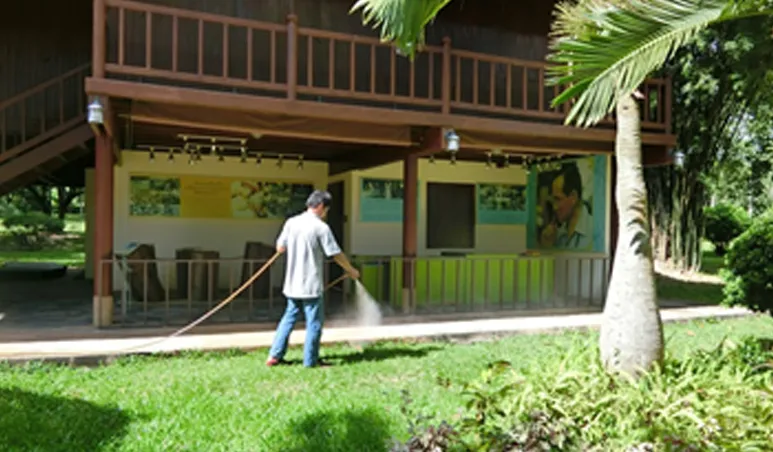
Khao Hin Son Royal Development Project (Chachoengsao) is an agricultural and environmental learning area that turns the idea of “sustainable development” into something you can truly see and experience. Located in Khao Hin Son Subdistrict, Phanom Sarakham District, Chachoengsao, it is far more than a tourist spot. The site reflects a clear, practical approach to restoring natural resources, managing water, improving soil, and practicing nature-respecting agriculture so the land can support people over the long term. The strength of a visit here is not spectacle, but the clarity of the “system” that has transformed once-degraded land into greener ground, a productive landscape, and an open-air classroom for all ages—within a single day.
When people think of tourism in Chachoengsao, they often picture famous riverside temples along the Bang Pakong River, cafés, or old markets. But Khao Hin Son reveals a deeper side of the province: real agricultural communities and hands-on environmental restoration. The Khao Hin Son Royal Development Project is closely connected to the Khao Hin Son Development Study Center under the Royal Initiative, because the project area was established adjacent to the center and follows development approaches designed to solve difficult local challenges—especially soil and water—so the community can gain tangible benefits in income, quality of life, and the ability to rely on itself.
The history of this place helps explain why a “royal development project” is not simply a beautiful phrase, but a step-by-step process of real work on the ground. The Khao Hin Son Development Study Center under the Royal Initiative was established on 8 August 1979, marking an important starting point for a regional learning hub on development in Thailand’s eastern area. Later, His Majesty King Bhumibol Adulyadej the Great acquired land adjacent to the center to create a personal royal project known as the “Khao Hin Son Royal Development Project,” recorded as covering approximately 642 rai. The early condition of the site was clearly described: rolling terrain with a stream running through it, but with sandy soil and a generally dry climate. Combined with farming practices that favored cassava cultivation—which contributed to declining soil quality—the land became degraded and required serious restoration.
The most powerful foundation of the early development phase was therefore straightforward: “bringing soil and water back to life.” The stated approach included building water sources and irrigation systems for agriculture, increasing environmental moisture, and improving soil fertility. Once this resource base began to recover, the work expanded into planting crops and fruit trees, along with reforestation to create an ecosystem better suited to local soil conditions and to help reduce soil erosion. The results are reflected in examples that note how the area can now support a variety of crops and fruits such as sweet leaf bush (pak wan ban), pomelo, passion fruit, and leafy vegetables—clear evidence that systematic restoration can transform a “difficult” landscape into a true “learning landscape.”
In terms of objectives, the Khao Hin Son Royal Development Project can be understood through three major pillars that visitors can immediately recognize. The first is developing agriculture and the environment together, rather than choosing one over the other, because sustainable farming must begin with soil, water, and biodiversity. The second is improving community quality of life by building skills, expanding livelihood options, and reducing the risks of reliance on a single crop. The third is serving as a place to transfer knowledge and practical innovation that fits real local conditions, so farmers and interested visitors can study, learn, and adapt the ideas without having to start from zero. What makes these three pillars credible is that they are not merely written goals—they are expressed through learning activities and demonstration plots that people can walk through and experience in the same area.
A visit here therefore feels different from typical check-in tourism. You do not come only to “look,” but to understand the reasoning behind each management decision—from arranging water sources for dry seasons, restoring soil so crops can grow again, expanding green areas to balance local climate and reduce erosion, to demonstrating integrated farming as a way to strengthen household food security. The idea of planting diverse crops in the same area lowers risks from market volatility and natural disasters, while also increasing the diversity of produce throughout the year. When combined with household- or community-level processing, self-reliance becomes something concrete and practical rather than abstract.
The most rewarding one-day visit begins with understanding the “big picture” first, then moving into the details of the development work. Early in the visit, it helps to spend enough time grasping the site’s background—how sandy soil and dry conditions created constraints, and how the project built its solutions around water and soil management. Once that framework is clear, walking through the learning plots becomes much more meaningful, because you are no longer seeing plants alone—you are seeing why certain crops were chosen, how ecosystems connect, and why agriculture that works with the environment is a highly worthwhile long-term investment. Whether you are a nature-loving traveler, a city resident who wants to understand organic farming, or someone looking for practical ideas to manage a small plot at home, this walk will likely send you back with “principles” more than “photos.”
Getting There If you drive from Bangkok, you can route into Chachoengsao Province and continue toward Phanom Sarakham District, Khao Hin Son Subdistrict. Use the “Khao Hin Son Development Study Center under the Royal Initiative” as your primary navigation landmark. The address that works well for search and contact is 7 Moo 2, Khao Hin Son Subdistrict, Phanom Sarakham District, Chachoengsao 24120. The center’s contact numbers are 038-554-982 and 038-554-983, which are useful for confirming visit details before departure, especially if you plan to visit on public holidays or national holidays to align with the learning-site’s visiting conditions.
For planning your time, arriving in the morning or late morning is ideal, because places like this require the right “pace” to appreciate. The slower you walk, the more detail you notice—from the shade of mature trees to the layout that reflects soil and water conservation thinking. If your goal is real learning, setting aside at least half a day will give you a fuller experience. If you prefer a relaxed overview, you can still spend about 2–3 hours to understand the essentials, take photos, and choose local products from the center’s on-site shop as souvenirs.
What makes the Khao Hin Son Royal Development Project appealing as a destination is its “quiet meaning.” You see development that is not rushed, but carefully structured so nature can recover and communities can grow stronger at the same time. The greenery here is not decoration—it is the outcome of continuous work with natural resources. As soil improves and water becomes more reliable, diverse crops become possible, and once production becomes real, income opportunities can also become real. This is why such a learning landscape suits travelers who want to see the “complete cycle” of development—from upstream resources to downstream quality of life.
For families with children, this can be an excellent outdoor classroom. Children can understand that fruits and vegetables do not begin on store shelves, but with soil, water, seeds, and consistent care. They can also see biodiversity in action, structured land management, and learn that “eco-friendly living” is not only about reducing waste, but also about using resources wisely and protecting the natural foundation that communities depend on. For those interested in organic or integrated farming, the site also clarifies an important point: reducing chemicals is only part of the story—building an ecosystem that can function well over time is the deeper goal of sustainability.
Another dimension worth noticing is community economy. A strong learning site does not end at demonstration; it connects to real livelihoods. Projects like this often deliver knowledge to local people through training and practical trials, creating more choices in cropping, water management, processing, and cooperative work to add value. As communities become stronger, labor migration can decrease, local income circulation increases, and resources are used with greater awareness. This is sustainability not as a slogan, but as a balanced system that aligns nature and the local economy.
If you want to make the most of the trip, it is practical to combine the visit with nearby restaurants or cafés around Khao Hin Son and Phanom Sarakham. This adds a comfortable rhythm to a one-day itinerary without long detours, and it also supports local businesses. You can also extend the trip to other attractions in Chachoengsao within the same day depending on your interests—temples, markets, nature spots, or family-friendly places—so a “Khao Hin Son day” can become a central anchor for a fuller Chachoengsao itinerary.
In the end, if the question is why the Khao Hin Son Royal Development Project deserves to be counted among Chachoengsao attractions, the answer is that it shows development that does not remove nature from the equation. Instead, nature becomes the base of development, and the community becomes the owner of change. When these two move forward together, sustainability becomes real. For travelers, it offers inspiration. For working adults, it shows how structured management can turn difficult conditions into practical outcomes. And for local communities, it proves that self-reliance is not a dream, but a skill that can be built through the right approach.
| Place Name | Khao Hin Son Royal Development Project (learning area alongside the Khao Hin Son Development Study Center under the Royal Initiative) |
| Address | 7 Moo 2, Khao Hin Son Subdistrict, Phanom Sarakham District, Chachoengsao 24120, Thailand |
| Place Summary | A royal-initiative learning destination focused on sustainable agriculture and environmental restoration, highlighting soil and water rehabilitation and practical resource management. |
| Key Highlights | Soil restoration supported by irrigation and land improvement, clear examples of system-based development, and a one-day learning trip suited to families and sustainability-minded visitors. |
| Period / Establishment | The Khao Hin Son Development Study Center was established on 8 August 1979, and the adjacent royal development project was later created alongside the center. |
| Key Evidence | Official site information notes a project area of approximately 642 rai and outlines soil-and-water restoration approaches that enabled diversified planting and ecosystem recovery. |
| Name Origin | Named after “Khao Hin Son,” the subdistrict and geographic area where the project is located in Phanom Sarakham. |
| Travel | Drive to Khao Hin Son, Phanom Sarakham; use the Khao Hin Son Development Study Center as the main navigation point. |
| Current Status | Open as a learning site for study visits and general visits under the center’s visitation regulations. |
| Contact Number | 038-554-982, 038-554-983 |
| Fees | No general entrance fee stated (some services, such as study-tour transport, may have fees under the center’s rules). |
| Facilities | Learning/demonstration areas, product shop (within the center), and parking areas (subject to on-site conditions). |
| Nearby Attractions (Approx. Distance) | 1) Wat Khao Hin Son – approx. 2 km 2) Phanom Sarakham town / market area – approx. 20 km 3) Bang Khla Floating Market – approx. 55 km 4) Wat Saman Rattanaram – approx. 70 km 5) Ban Mai 100-Year Market (Chachoengsao town) – approx. 75 km |
| Popular Restaurants Nearby (Approx. Distance + Phone) | 1) Lifehouse Cafe & Kitchen – approx. 18 km – 083-245-3646 2) Rabiang Nam Khao Hin Son Restaurant – approx. 6 km – 091-728-3639 3) GRANDMA CAFE – approx. 4 km – 097-175-4457 4) Somtam Zaab Saded – approx. 5 km – 084-237-7933 5) Kaowong Cafe – approx. 8 km – 063-646-4202 |
| Popular Accommodations Nearby (Approx. Distance + Phone) | 1) Sanguanthong Resort – approx. 3 km – 081-910-1487 2) Luub Plern Resort (Phanom Sarakham) – approx. 20 km – 082-558-9000 3) Relax Resort Phanom Sarakham – approx. 20 km – 065-653-9696 4) Phanom City Hotel – approx. 18 km – 038-552-775 5) Chuan Chom Tawan Resort (Khao Hin Son) – approx. 7 km – 081-715-1253 |
Frequently Asked Questions (FAQ)
Q: What is the Khao Hin Son Royal Development Project?
A: It is a royal development learning area in Khao Hin Son that operates alongside the Khao Hin Son Development Study Center, focusing on soil-and-water restoration, resource management, and sustainable agriculture.
Q: Who is this place suitable for?
A: It suits families, students, working adults, and anyone interested in sustainable agriculture who wants to learn from real landscapes and return with practical inspiration.
Q: Do I need to book in advance?
A: If you want a structured study visit with guidance or group arrangements, it is best to contact the center in advance. For general visits, you can plan around the opening days and hours.
Q: Can I visit on public holidays?
A: Visits may be possible on public and national holidays under the center’s conditions, and opening hours differ from regular weekdays. It is recommended to call before you travel.
Q: How long should I plan to spend here?
A: For a relaxed overview, 2–3 hours is enough. For deeper learning and a more complete walk-through, plan at least half a day.
Q: Is there an entrance fee?
A: No general entrance fee is stated, but some services (such as transport for organized study tours) may have fees under the center’s rules.
 Royal Development Project Map
 Category:
  Group:
  Last Update: 4 DayAgo
Comment
 Nearby Attractions
| Keyword (Advance) |
 Facebook Fanpage
 Region
 Art, Culture and Heritage
 Historical Sites and Monuments(
 Landmarks and Memorials(
 Royal Palace(
 Art, Craft Centres, Tradition(
 Museums(
 Historical Houses and The Ancient City(
 Educational Places
 Museum for Study(
 Library(
 Educational Gardens, Farm(
 University
 Places of Worship
 Temple(
 Mosque(
 Other religious and spiritural sites(
 Suburban Living
 Village, Community(
 Local Market(
 Floating Market(
 Nature and Wildlife
 National Parks and Marine Reserves(
 Mountain (Doi)(
 Dam, Reservoir, Lake(
 Waterfalls(
 Caves(
 River, Canal(
 Bays and Beaches(
 Islands(
 Other natural attractions(
 Entertainment and Agricultural
 Zoos and Aquariums(
 Animal camps and shows(
 Farm, Parks, Gardens and Ecotourism(
 Spas and Wellness
 Spas and Wellness(
 Travel Articles, Recipes
 Travel Review, Food Review(