

 Home
Home Chiang Mai(




Rating: 3.6/5 (5 votes)
 |
|  Map
Map 
 Have Map
  No Map
Chachoengsao attractions
Attractions in Thailand
Open Days: Open Daily
Opening Hours: 08.00 – 18.00
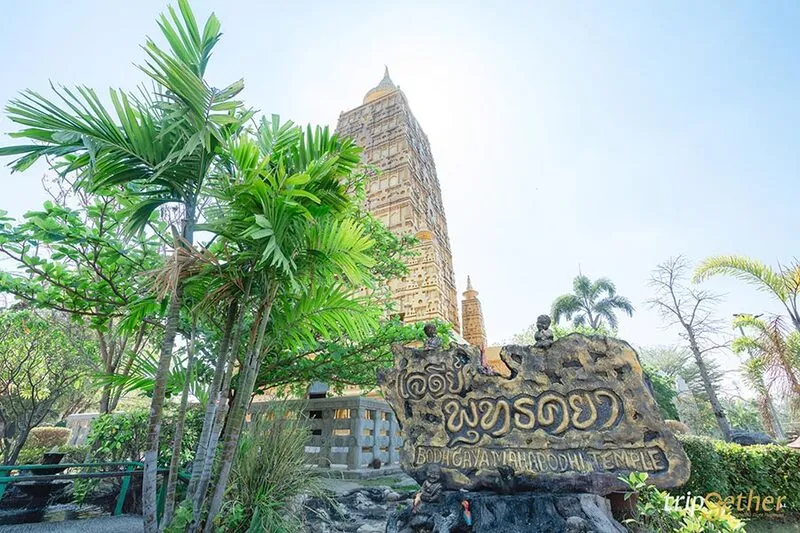
Buddhagaya Hermitage (Wat Chompotayaram) is one of Chachoengsao’s most distinctive faith-based destinations. Here, the idea of “paying respect as if you are walking through the Buddha’s life story” becomes a tangible experience within easy reach of Bangkok. The key highlight is the creation of “replicas of the Four Sacred Sites,” which represent the major milestones in the Buddha’s life: Birth, Enlightenment, the First Sermon, and Parinirvana. This makes the site ideal for both devoted visitors who come to worship and travelers who want to understand Buddhist history in a visual, easy-to-follow way, without having to journey all the way to India or Nepal.
Many visitors remember the place for its “Mahabodhi Stupa replica” and Buddhist art that evokes the atmosphere of real pilgrimage sites in India. As you approach, the sense of grandeur does not come from flashy spectacle, but from the “intent” behind the space — a deliberate effort to help Buddhists connect with the essence of the Buddha’s story through architecture and worship points arranged in a meaningful sequence. When you walk through the grounds at an unhurried pace, you gain more than beautiful photos: you gain a clearer understanding of what each sacred moment signifies and why these locations are called the “Sacred Sites” — places meant to awaken mindfulness and encourage a life lived without complacency.
Historically, this temple has a fairly clear, verifiable narrative. The area was originally known as “Buddhagaya Anusorn Hermitage” (a hermitage established in remembrance of Buddhagaya). Over time, major structures were developed until it became a fully established temple. The temple states that construction began in 1980, followed by the building of monks’ quarters, a sermon hall, an ordination hall, and eventually replicas of all Four Sacred Sites, completed around 2001, before the site was officially elevated and recognized as “Wat Chompotayaram.” This is why the name “Buddhagaya Hermitage” remains widely used among locals and travelers — it captures the heart of the place most directly: honoring “Buddhagaya” and the Buddha’s life story as the spiritual core of the grounds.
The reason having the “complete set of Four Sacred Site replicas” matters so much for cultural travel is that it transforms a temple visit from simply making wishes into “understanding a story” in chronological order. As you begin your walk, you encounter elements representing Lumbini (the birthplace), followed by Buddhagaya (the place of Enlightenment), then the site of the First Sermon, and finally the place of Parinirvana, the concluding chapter of the Buddha’s life. Walking through this sequence feels like moving through a “map of Buddhist history” translated into real space, making it easy even for visitors who have never studied the Buddha’s biography in depth to grasp the narrative immediately.
The highlight many people come specifically to see is the “Buddhagaya Stupa” — the Mahabodhi Stupa replica that is closely associated with the city of Buddhagaya in India. This area often becomes the place where visitors linger the longest, drawn by both architectural beauty and the symbolic feeling of “arriving at the point of Enlightenment.” Many choose to spend time here chanting, doing a short meditation, or simply reflecting quietly before continuing to other parts of the grounds. What makes it special is that even if you visit as a traveler, the space is designed to preserve a calm atmosphere — especially when visitors help maintain it by lowering their voices and avoiding rushing through.
Another feature that matches your intent perfectly is the presence of “Buddha images and Buddhist art inspired by India,” which gives the overall experience continuity. Rather than having only a stupa replica as a standalone landmark, the site includes art that guides mood and understanding in the same direction. Indian-influenced Buddhist aesthetics often feel serene and contemplative, with proportions and details that invite you to “pause” and look longer. Combined with the replicated architecture, this helps visitors feel that they are touching the spirit of the Buddhist holy land in a concrete way — especially for those who have not yet had the chance to travel to India themselves.
From a travel experience standpoint, if you want both tranquility and strong photos, it is best to visit right after opening or in the late afternoon when the sun softens. The light adds depth to the stupa and architectural details. Weekends and Buddhist holy days are typically busier and more lively, which suits visitors who want to feel the site’s active devotional atmosphere. However, if you prefer a quieter pace for learning and reflection, weekdays are usually more comfortable and allow you to take your time without navigating dense crowds.
As with any religious site, etiquette matters. The beauty of a sacred place is best preserved when visitors respect the shared atmosphere. Basic guidelines include dressing modestly, avoiding overly short or tight clothing, keeping voices low around worship areas, not blocking pathways, and not photographing other people’s faces without permission. If you wish to take photos near areas where people are chanting or meditating, step back far enough to avoid disturbing their concentration. These practices do not make travel “harder” — they make the visit feel more meaningful and comfortable for everyone.
Getting There Wat Chompotayaram is located on Bang Pakong – Chachoengsao Road (Highway 314) in Sothon Subdistrict, Mueang Chachoengsao District. This is a major route that is easy to drive. From Bangkok, you can enter Chachoengsao and connect to Highway 314, then follow navigation guidance to the temple entrance. Driving is the most flexible option, especially if you plan to continue your day trip to Wat Sothon Wararam Worawihan, Ban Mai 100-Year Market, or riverside cafes along the Bang Pakong River.
Once you plan your itinerary well, you will see that a stop at “Buddhagaya Hermitage (Wat Chompotayaram)” is not just about taking pretty pictures. It adds an important layer to Chachoengsao’s story: learning the Buddha’s life through architecture, and experiencing a sacred space as a “living museum” — a place where people truly come to worship, walk, learn, and leave with inspiration for real life. If you are looking for a Chachoengsao route that goes beyond food and old markets, this destination brings depth, meaning, and calm into your day from start to finish.
| Place Name | Buddhagaya Hermitage (Wat Chompotayaram) |
| Address | Bang Pakong – Chachoengsao Road (Highway 314), Sothon Subdistrict, Mueang Chachoengsao District, Chachoengsao 24000 |
| Overview | A temple formerly known as Buddhagaya Anusorn Hermitage, best known for complete replicas of the Four Sacred Sites and a Mahabodhi (Bodhgaya) Stupa replica, allowing visitors to worship and learn Buddhist history through a visual walk-through. |
| Highlights | Full set of Four Sacred Site replicas (Birth – Enlightenment – First Sermon – Parinirvana), Mahabodhi Stupa replica, and India-inspired Buddhist art, suitable for merit-making trips and cultural learning. |
| Brief History | The temple states it began construction in 1980, formerly as Buddhagaya Anusorn Hermitage. Major facilities were developed over time, and replicas of the Four Sacred Sites were completed around 2001 before the site was officially recognized as Wat Chompotayaram. |
| Travel | Drive via Bang Pakong – Chachoengsao Road (Highway 314) to Sothon Subdistrict, then enter the temple following navigation guidance. |
| Current Status | Open for visits and worship during operating hours. |
| Contact Number | 086-826-7505 |
| Nearby Attractions | 1) Wat Sothon Wararam Worawihan – Approx. 10 km 2) Chachoengsao City Pillar Shrine – Approx. 12 km 3) Ban Mai 100-Year Market – Approx. 13 km 4) Somdet Phra Srinagarindra Park (Chachoengsao) – Approx. 14 km 5) Bang Pakong Riverside Walkway / Viewpoints (City Area) – Approx. 12 km |
| Nearby Restaurants | 1) Ban Mai Rim Nam (Badriew) – Approx. 12 km, Tel. 038-512-064 2) Ruen Romsai – Approx. 12 km, Tel. 090-407-4007 3) Mathuros Ruenpae – Approx. 13 km, Tel. 038-511-958 4) Ruen Namthip Restaurant – Approx. 25 km, Tel. 088-209-7330 5) Chai Krub Restaurant – Approx. 13 km, Tel. 087-143-2444 |
| Nearby Accommodations | 1) JK Living Hotel & Service Apartment – Approx. 12 km, Tel. 092-742-9929 2) The Brown House Chachoengsao – Approx. 13 km, Tel. 083-011-4212 3) V-Verve Service Apartment – Approx. 12 km, Tel. 081-762-9151 4) Suntara Wellness Resort & Hotel – Approx. 20 km, Tel. 033-590-250 5) Malone Maranatha – Approx. 15 km, Tel. 084-008-0004 |
Frequently Asked Questions (FAQ)
Q: Where is Buddhagaya Hermitage (Wat Chompotayaram) located?
A: It is located on Bang Pakong – Chachoengsao Road (Highway 314) in Sothon Subdistrict, Mueang Chachoengsao District, Chachoengsao Province.
Q: What is the main highlight of this place?
A: The key highlight is the complete set of replicas of the Four Sacred Sites, along with the Mahabodhi (Bodhgaya) Stupa replica, which makes Buddhist history easy to understand through a walkable, visual layout.
Q: What are the opening hours?
A: It is open daily from 08.00 to 18.00.
Q: How long should I plan to spend here?
A: Most visitors spend about 1 – 2 hours if they walk through all sacred-site areas and take time to worship at key points.
Q: Is it easy to travel here from Chachoengsao city center?
A: Yes. You can use the main route via Bang Pakong – Chachoengsao Road (Highway 314) and follow navigation guidance to enter the temple at the most convenient turn.
Q: What contact number can I use to reach the temple?
A: You can contact the temple at 086-826-7505.
 Buddhagaya Hermitage (Wat Chompotayaram) Map
 Category:
  Group:
  Last Update: 4 DayAgo
Comment
 Nearby Attractions
| Keyword (Advance) |
 Facebook Fanpage
 Region
 Art, Culture and Heritage
 Historical Sites and Monuments(
 Landmarks and Memorials(
 Royal Palace(
 Art, Craft Centres, Tradition(
 Museums(
 Historical Houses and The Ancient City(
 Educational Places
 Museum for Study(
 Library(
 Educational Gardens, Farm(
 University
 Temple(
 Mosque(
 Research and Development
 Royal Project(
 Suburban Living
 Village, Community(
 Local Market(
 Floating Market(
 Nature and Wildlife
 National Parks and Marine Reserves(
 Mountain (Doi)(
 Dam, Reservoir, Lake(
 Waterfalls(
 Caves(
 River, Canal(
 Bays and Beaches(
 Islands(
 Other natural attractions(
 Entertainment and Agricultural
 Zoos and Aquariums(
 Animal camps and shows(
 Farm, Parks, Gardens and Ecotourism(
 Spas and Wellness
 Spas and Wellness(
 Travel Articles, Recipes
 Travel Review, Food Review(