

 Home
Home Chiang Mai(




Rating: 3.8/5 (5 votes)
 |
|  Map
Map 
 Have Map
  No Map
Chachoengsao attractions
Attractions in Thailand
Open Days: Daily
Opening Hours: 06:00 – 19:00
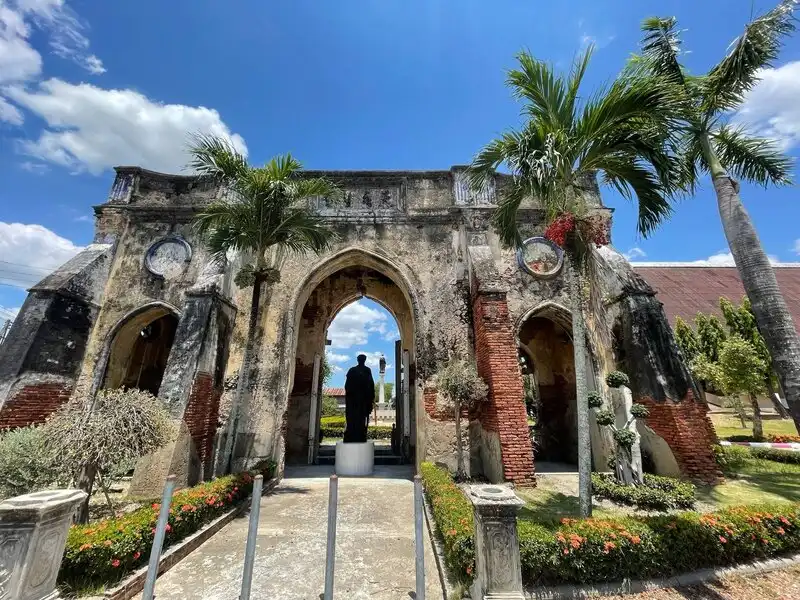
St. Paul Church (Wat Saint Paul / Wat Saint Pond), Chachoengsao is a historic Christian church by the Bang Pakong River with a distinctive charm shaped by the feeling of “crossing to the other side” and the calm, riverside community atmosphere that still reads clearly as a sacred place. The church was established in 1872 (2415 BE) by Father Antoin Schmitt and grew through the devotion of local Christians who pooled donations to purchase land and build a spiritual center for people living along one of the Eastern region’s most important river routes. If you are looking for a Chachoengsao cultural stop that offers community history and architecture that feels markedly different from the city’s Buddhist temples, St. Paul Church delivers a visit that genuinely “feels like time,” usually taking about 1 – 2 hours when you walk slowly and respectfully.
The first thing many visitors notice is the old church gate-arch, often described as a blend of Gothic and Roman influences. It feels dignified without being overly grand, creating a restrained, European-toned mood that sits surprisingly well against the Bang Pakong River backdrop. Another detail that sharpens the church’s identity is the Chinese inscription on the church front: “เทียงจู้เซี้ยตึ่ง,” conveying the meaning of “the holy house of God.” Small elements like this make St. Paul more than an old church; they serve as evidence of multicultural riverside life – Thai, Chinese, and Christian communities who travelled, traded, and settled along the Bang Pakong route for generations.
Seen in a wider lens, many Christian churches in Thailand have never been only places for religious rites. They also functioned as “community infrastructure” that supported education, mutual care, and communication in an era when river travel was everyday reality. St. Paul Church reflects this clearly through the later expansion of supporting buildings such as the priest’s residence, a small chapel, a convent/sisters’ quarters, a bell tower, school or granary facilities, and a cemetery. The church also had a specific role as a riverside stopover, because the priest’s house in the past was not only for the resident priest but also served as lodging for clergy from other churches travelling by boat through this area. This context shows how faith spaces and river networks once strengthened each other in a very practical way.
What makes St. Paul Church special to visit is that it offers a “quiet with a story.” It is not the kind of place that invites checklist tourism; it invites you to observe rhythm and craftsmanship. If you enjoy reading architecture, this is a site that naturally prompts questions about how each element was designed to communicate with believers of its time. The arch, façade details, openings, light and shadow, and sightlines all feel arranged to encourage composure. When that stillness meets the river breeze, the visit becomes a form of mental rest that does not rely on spectacle.
For visitors who want both photographs and respect, a good approach is to pause at the old gate-arch without immediately lifting the camera. Take in the overall proportions first, then step closer to read details in layers. After that, walk into areas open to visitors while keeping your voice low and your pace gentle. A church is often a place for private prayer, so reducing noise, avoiding rushed movement, and not blocking walkways or worship zones will let you feel the dignity of the place without forcing it.
St. Paul Church is also “worth telling” because it acts as a doorway into the tangible history of Christian riverside communities in Chachoengsao. The city grew with waterways and trade; people from many backgrounds arrived to live and work. The church therefore stands not only as a worship space but also as a symbol of settlement and community roots along the Bang Pakong River. When you see the church within its river context, you can understand why the local phrase about “cutting across the river” (crossing to the other side) carries meaning beyond transport – it suggests crossing into another community world with its own culture and pace of life, softer and more intimate than the urban side.
For timing, if you want an easy walk and better light for photos, morning (soft light) or late afternoon (before dark) works well. Light helps the arch’s dimension and architectural details stand out without looking harsh. At the same time, be mindful of service times. If a rite is in progress or people are praying, the best way to appreciate the site is to observe quietly from an appropriate distance. If you take photos, do so respectfully: avoid flash where it may be inappropriate, and avoid photographing people in worship without permission.
Getting There St. Paul Church is located on the riverside community side of the Bang Pakong River in Mueang Chachoengsao District. The most practical option is driving and pinning “St. Paul Church Chachoengsao” or “วัดเซนต์ปอล ฉะเชิงเทรา” on your map, then following the route to a convenient crossing/connection point. A private car offers the most flexibility, especially if you plan to continue to the old-town area and other riverside attractions in the same day. If you do not drive, you can travel into central Chachoengsao and take local transport onward. On weekends and holidays, allow extra time as traffic can be heavier in the city zone.
If you want to make a day trip efficient, St. Paul Church can be a “cultural start point” that naturally slows your pace, before you continue to the old-town riverside neighborhoods or the city’s major temples. A popular pattern is to visit old-town riverside spots and a historic market area, then head to Wat Sothon Wararam Worawihan (Luang Pho Sothon) in the afternoon. This creates a well-balanced day that combines calm architectural heritage, lively old-town energy, and a major spiritual landmark – without needing to drive across multiple districts.
| Place Name | St. Paul Church Chachoengsao |
| Address | Bang Tin Ped Subdistrict, Mueang Chachoengsao District, Chachoengsao |
| Place Summary | A historic riverside Christian church on the Bang Pakong River, founded in 1872 (2415 BE). It serves as a spiritual center and a living record of a riverside Christian community, best known for the old church gate-arch and a calm atmosphere suited to cultural travel. |
| Highlights | Old church gate-arch (Gothic – Roman blend), Chinese inscription “เทียงจู้เซี้ยตึ่ง” on the church front, Bang Pakong riverside community history, and supporting church buildings that reflect the church’s role in riverside life. |
| Period | 1872 (2415 BE) – Present |
| Priest In Charge (Latest) | Father Kriangyot Hiranchart |
| Open Days | Daily |
| Opening Hours | 06:00 – 19:00 |
| Current Status | Open for religious services and welcomes visitors for respectful worship and observation. |
| Fees | No admission fee (donations welcome) |
| Facilities | Worship areas, surrounding open space for visitors, and a quiet riverside atmosphere suitable for respectful walking. |
| Contact Number | 038-518-617, 084-174-2905 |
| Nearby Tourist Attractions With Distance | 1) Bang Pakong Riverside Walkway (Clock Tower Area) – 5 km 2) Chao Pho Lak Mueang Shrine (Chachoengsao) – 6 km 3) Ban Mai 100-Year Market – 7 km 4) Wat Mueang (Wat Pitulathirangsarit) – 6 km 5) Wat Sothon Wararam Worawihan (Luang Pho Sothon) – 9 km |
| Popular Restaurants Nearby With Distance And Phone | 1) Kung Nang – 7 km – 038-513-414 2) The River Barn – 7 km – 038-515-892 3) Kin Lom Chom Pla – 9 km – 085-328-6666 4) Sun Up Cafe – 7 km – 083-782-6656 5) Saey Tha Yai – 7 km – 081-586-1919 |
| Popular Accommodations Nearby With Distance And Phone | 1) Heaven Hotel Chachoengsao – 7 km – 038-511-150 2) The Wish Hotel & Condo Chachoengsao – 7 km – 088-521-5234 3) JK Living Hotel – 7 km – 092-742-9929 4) Tree House Chachoengsao – 7 km – 098-253-7460 5) Yenjit Resort – 9 km – 038-511-200 |
Frequently Asked Questions (FAQ)
Q: Is St. Paul Church Chachoengsao open every day?
A: Yes. The church is open daily and holds religious services according to its schedule. Visitors are welcome to come for respectful worship and quiet observation.
Q: What are the opening hours of St. Paul Church?
A: The general visiting window is 06:00 – 19:00, covering typical service periods and times when people commonly come to pray.
Q: When was St. Paul Church founded, and who founded it?
A: It was founded in 1872 (2415 BE) by Father Antoin Schmitt.
Q: What should I make sure to see during my visit?
A: Do not miss the old church gate-arch, the distinctive architectural details, and the riverside community atmosphere that reflects the history of local Christian life along the Bang Pakong River.
Q: What type of trip is St. Paul Church best for?
A: It is ideal for cultural and community-history travel, architecture lovers, and anyone who wants a quiet, reflective riverside stop.
Q: How can I contact St. Paul Church?
A: You can contact the church at 038-518-617 or 084-174-2905.
 Wat Saint Paul Map
 Category:
  Group:
  Last Update: 1 WeekAgo
Comment
 Nearby Attractions
| Keyword (Advance) |
 Region
|
 Muang Chachoengsao(