

 Home
Home Chiang Mai(




Rating: 4.3/5 (6 votes)
 |
|  Map
Map 
 Have Map
  No Map
Chachoengsao attractions
Attractions in Thailand
Open Days: Daily
Opening Hours: 08:00 – 17:00
Wat Phanitaram, located in Bang Krut Subdistrict, Ban Pho District, Chachoengsao Province, is a riverside temple on the Bang Pakong River with a calm, reflective atmosphere shaped by a gentle river bend. It is well suited for prayer, merit-making, and quiet time. The temple is especially remembered for its historic teak-wood sermon hall and wooden structures that visibly carry the passage of time. Established in 1904, it was later granted a royal boundary for ordination rites (Wisungkhamsima) on April 26, 1980. Today, it also plays an ongoing role in mental and spiritual development, including meditation training and related activities, making it an ideal destination for a day trip from Bangkok or a peaceful stop during a Paet Riu (Chachoengsao) itinerary.
Wat Phanitaram stands beside the Bang Pakong River in Bang Krut Subdistrict, Ban Pho District, Chachoengsao. The temple site sits on the right bank of the river at a bend, a position that often brings cooler breezes and a naturally relaxing feel. From the moment visitors arrive, many sense a quietness that feels distinct from city travel. This is a community temple that has grown alongside riverside life for generations and continues to serve as a clear center for local religious activities.
What gives Wat Phanitaram its charm is not only its riverside setting, but also the way living history blends with an active present. The temple was founded in 1904 and is a local (royal-free) temple under the Mahanikaya order. Its land area is 5 rai and 99 square wah. It later received Wisungkhamsima on April 26, 1980, a milestone reflecting the orderly establishment of its sacred boundary for monastic rites and its stability as a community religious institution. Looking back, the story of Wat Phanitaram is therefore more than a date of construction. It is the story of a temple rooted at a Bang Pakong river bend and gradually becoming a place people rely on, both spiritually and socially.
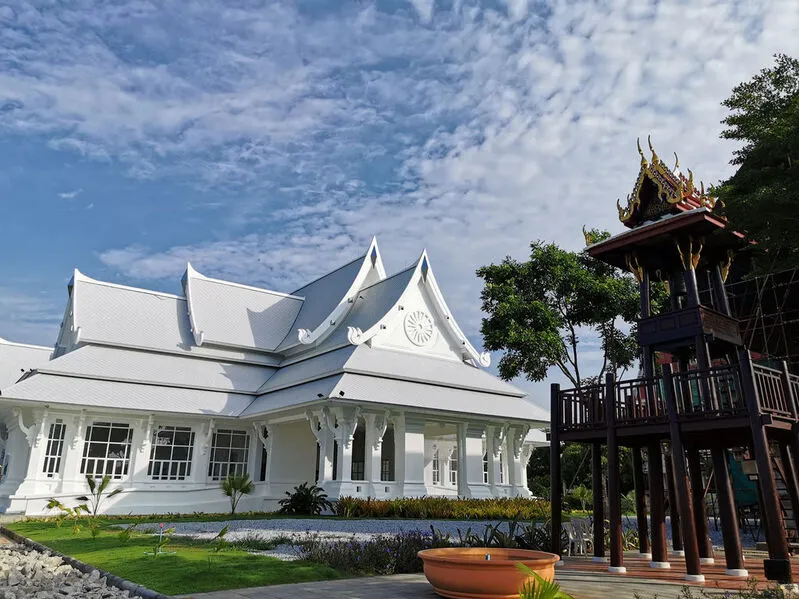
Architecturally, the temple’s most tangible and recognizable highlight is its historic teak-wood sermon hall, over 100 years old. The craftsmanship and proportions feel dignified and steady in the way older Thai temple buildings were designed for durability. Up close, the woodwork, pillars, and structural details reveal the care of earlier generations and the commitment of current caretakers to preserve the building in usable condition. In addition to the sermon hall, there is a wooden bell tower that strengthens the classic Thai-temple atmosphere. The sound of a bell is more than a time signal; it can slow the mind and make it easier to return to the present, especially on weekdays when the temple is not crowded.
The calm atmosphere of Wat Phanitaram extends naturally to its riverside zone, which feels like the temple’s main backdrop. The river bend softens the view and avoids the rigid straightness of some waterways, making it especially suitable for sitting quietly, grounding attention, or taking a slow walk to organize one’s thoughts. This riverside mood is part of why the temple is often spoken of in terms of “mind development” and why it is used as a venue for training, retreats, and meditation programs, whether for general participants or youth. This role makes the temple more than a place to pray; it becomes a place to learn how to care for the mind in a fast-moving world.
In terms of activities, Wat Phanitaram holds an annual temple fair and regularly shares announcements that reflect the ongoing rhythm of temple life, including invitations to yearly events and merit-making activities aligned with the Buddhist calendar. During the annual fair, the atmosphere becomes more lively, with local residents and devotees from other areas coming together for merit-making. It clearly shows that the temple remains a genuine “center of the community,” where people return to meet one another on important occasions. At the same time, if you want the quietest experience, weekday mornings are often ideal for walking through the wooden sermon hall area and sitting by the river without rushing.
Another dimension that distinguishes Wat Phanitaram from many general sightseeing temples is its clear role in mental and spiritual development through meditation practice. The temple is recognized as a provincial meditation center (listed as the 5th in Chachoengsao) and periodically publicizes meditation schedules or registration details through public channels. This reflects that the temple’s importance is not only devotional, but also practical as a place for structured mental training. Visitors who come with this intention often feel that the environment supports quiet staying and helps thoughts gradually become more organized without forcing the process.
If you visit Wat Phanitaram as a faith-and-culture trip, a natural flow is to begin by praying in the main worship area, then slowly walk through the teak-wood sermon hall zone as the architectural heart of the temple. After that, many visitors choose a quiet riverside spot to rest for a short while before leaving. People often make merit according to their means, such as offering a sangkathan set or contributing to temple maintenance, especially because the temple continues to support activities, training sessions, and community uses. Walking at a slower pace helps the visit become more than a quick “check-in.” It ends with a clearer sense of lightness and calm.
Getting There If you are traveling from Bangkok, you can use the main eastern approach routes such as Bang Na–Trat Road, then connect into Chachoengsao and continue toward Ban Pho District. Overall, driving a private car is the most practical option because it gives flexibility in timing and allows you to combine the visit with other Bang Pakong riverside stops or restaurants in the Ban Pho area. Once you enter Bang Krut Subdistrict, follow the signage for Wat Phanitaram and continue through the local community roads until reaching the temple by the river. For a smoother trip, leaving in the morning helps avoid heavier traffic and gives you the most peaceful atmosphere for walking through the wooden structures and the riverside zone.
The best way to experience Wat Phanitaram is to allow at least 1–2 hours on site, so you can pray, walk through the historic wooden buildings, and rest by the river without rushing. If your visit matches the annual fair period or other temple activities, you will see the community gathering for shared merit-making, a genuine charm of Thai temple life. If you prefer calm for focused appreciation of nature and architecture, weekdays are typically better. Whether you come as a short trip or a stop along the way, Wat Phanitaram often feels like a “resting point for the mind” along the Bang Pakong river bend, sending visitors back with a clearer sense of calm.
| Place Name | Wat Phanitaram |
| Address | 68 Moo 2, Bang Krut Subdistrict, Ban Pho District, Chachoengsao 24140, Thailand |
| Place Summary | A calm riverside temple on a Bang Pakong River bend in Ban Pho, known for historic wooden architecture and its continuing role in mind development and meditation practice in the province. |
| Highlights | (1) A teak-wood sermon hall over 100 years old (2) A wooden bell tower (3) Riverside setting on a gentle river bend with a peaceful atmosphere (4) Ongoing role as a mind development/meditation training venue (5) Annual temple fair held every year |
| Phone Number | 038-515-012 |
| Abbot / Current Administrator | Phra Khru Thamma Prayut |
| Open Days | Daily |
| Opening Hours | 08:00 – 17:00 |
| Facilities | A temple venue that supports training/meditation activities and serves as a faith-based destination along the Bang Pakong riverside |
| Nearby Tourist Attractions (Approx. Distance) | 1) Khlong Suan 100-Year Market – 20 km 2) Mini Murrah Farm – 22 km 3) Wat Sothon Wararam Worawihan (Luang Pho Sothon) – 32 km 4) Wat Saman Rattanaram – 40 km 5) Wat Hong Thong – 45 km |
| Popular Restaurants Nearby (Approx. Distance + Phone) | 1) Ban Pho Riverside – 8 km – 062-782-2854 2) Pae Phayong Riverside – 28 km – 097-969-5932 3) Ek Khanek, Chachoengsao – 33 km – 081-949-1394 4) Ruen Romsai – 34 km – 090-407-4007 5) Mee Nam Mee Pla Cafe & Restaurant – 35 km – 096-664-5965 |
| Popular Accommodations Nearby (Approx. Distance + Phone) | 1) A10 Resort 24Hr Ban Pho – 10 km – 097-001-1010 2) Na Ban Pho Hotel – 12 km – 094-438-3833 3) Suntara Wellness Resort & Hotel – 25 km – 033-590-250 4) Bangpakong Boat Club – 27 km – 063-535-2521 5) JK Living Hotel & Service Apartment – 35 km – 092-742-9929 |
| Current Status | Open for merit-making and continues to hold temple activities |
Frequently Asked Questions (FAQ)
Q: What is Wat Phanitaram known for, and who is it best suited for?
A: It is known for its peaceful riverside atmosphere on a Bang Pakong river bend, its historic wooden architecture, and its continuing role in mind development and meditation practice. It suits visitors who want an unhurried merit-making visit and those looking for a calm retreat close to Bangkok.
Q: When was Wat Phanitaram founded, and what are its key historical milestones?
A: The temple was established in 1904 and received Wisungkhamsima on April 26, 1980, which is a key milestone as a formal community religious institution with an established sacred boundary for ordination rites.
Q: What should I focus on when visiting to make the most of my time?
A: Start with prayer in the main worship zone, then walk through the historic teak-wood sermon hall and the wooden bell tower, and finish by resting along the Bang Pakong riverside to absorb the calm atmosphere of the river bend.
Q: If I want to inquire about meditation practice, what is the best contact option?
A: You can contact the temple by phone at 038-515-012 or follow the temple’s public channels where meditation schedules and announcements are shared.
Q: What is the best time to visit for the most enjoyable atmosphere?
A: Weekday mornings are often the most peaceful for walking through the wooden buildings and enjoying the riverside. The annual fair period and event days are livelier and are ideal if you want to experience community merit-making traditions.
 Wat Phanitaram Map
 Category:
  Group:
  Last Update: 1 WeekAgo
Comment
 Nearby Attractions
| Keyword (Advance) |
 Region
|
 Muang Chachoengsao(