

 Home
Home Chiang Mai(




Rating: 2.6/5 (36 votes)
 |
|  Map
Map 
 Have Map
  No Map
Chachoengsao attractions
Attractions in Thailand
Open Days: Open daily
Opening Hours: 06.00–18.00
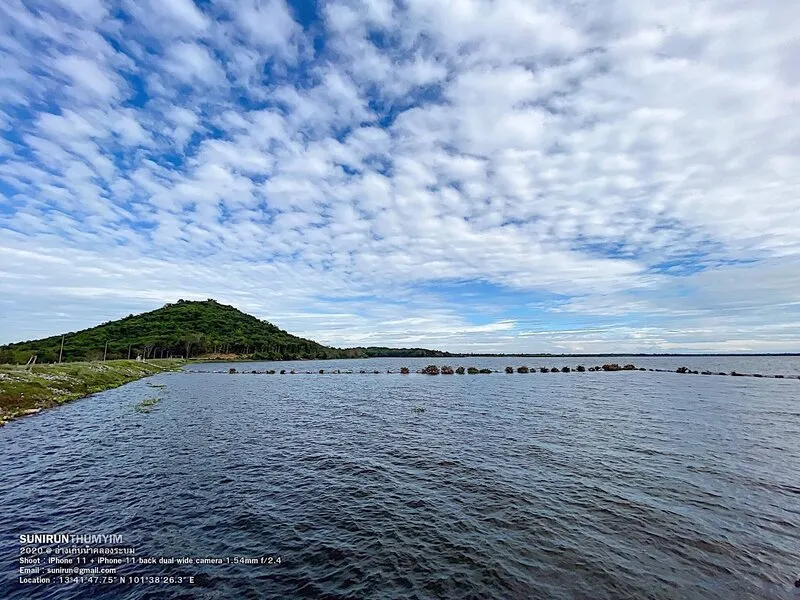
Khlong Rabom Reservoir is one of those places that gives the phrase “things to do in Chachoengsao” a deeper meaning than simply hunting for a photogenic spot. This is a large water resource that is closely tied to real everyday life in the area—from agriculture and community water use to supporting ecological balance across the surrounding watershed. For visitors, the reservoir offers a wide, open, and peaceful atmosphere. You can take in a long horizon of water and sky, drive out from town for a change of air, walk along the breeze, and let the quiet of nature naturally slow your thoughts without having to force it.
The charm of Khlong Rabom Reservoir lies in how “real” it feels. This is not a recreational attraction built mainly for entertainment, but a working water infrastructure that plays a role in local resource management. When you stand by the water and slowly trace your gaze along the embankment or the reservoir’s key structural areas, it feels different from visiting a typical lakeside getaway. The scene reminds you that water does not simply appear ready for use at no cost. It requires planning, ongoing care, and continuous management to remain sufficient and balanced against human demand and the seasonal fragility of nature.
Khlong Rabom Reservoir is located in Sanam Chai Khet District, Chachoengsao Province—an area where nature is still more prominent than the city zone. The surroundings carry a palette of green, quiet, and open sky. On a clear day, you can see how light changes across the water from morning to evening, especially in the early hours when the wind is gentle and the air is comfortable, or later in the day when the sun softens and the sky shifts through subtle gradients. That is what makes a reservoir landscape special: it is not only beautiful from a single viewpoint, but through the overall atmosphere that gradually unfolds the longer you allow yourself to stay with it.
If you enjoy travel that has a knowledge-driven backbone, Khlong Rabom Reservoir is a place that naturally invites layered questions—from simple ones like “how does a reservoir support the community?” to systems-level questions such as “how does water management change between the dry and rainy seasons?” and “how is the surrounding environment affected?” You do not need a guide or a special program to experience this kind of learning. It begins with observing what is around you: farmland that depends on water, hints of local fishing activity, seasonal changes in water color, or the presence of birds and aquatic life. These are all signs of an ongoing relationship between people and water that is still actively lived.
In the bigger picture, a reservoir functions as stored water that supports area-wide use—especially for agriculture. This is a key reason many provinces develop reservoirs of different sizes to address drought and water uncertainty throughout the year. With a reservoir in place, communities can plan cultivation more reliably, reduce the risk of water shortages during dry periods, and manage allocation more systematically across the landscape. Reservoirs also carry an environmental role: open water and nearby wetlands can support biodiversity, providing habitat and food for certain aquatic species and birds. For that reason, many reservoir areas can be suitable for quiet nature observation as a form of eco-minded travel.
When speaking about the reservoir’s system-level profile, one point that clearly reflects its scale and role is its storage capacity, which has been described as being in the range of tens of millions of cubic meters. This makes it immediately clear that the reservoir is not merely a small scenic pond. It is infrastructure designed to support water allocation across a wider area. Knowing this basic fact adds weight to a visit, because it frames the water in front of you as a functioning system with a purpose—not only a beautiful view.
From a visitor’s perspective, what makes the trip worthwhile is allowing yourself to truly “stay with the place” instead of rushing for a quick photo and leaving. Start by walking around the reservoir area, choose a viewpoint that opens onto a broad expanse of water, and then pay attention to how wind and light shift across the surface. Photography here becomes enjoyable when you work with the “planes” of water and sky—wide horizon compositions, or moments when the surface slightly mirrors the sky to soften the mood. On breezier days, small ripples add texture that makes the water’s dimension feel more tangible. If you prefer documentary-style images, you can also capture the surrounding community atmosphere without disrupting local life—such as the embankment road or green fields that relate directly to the water source. These elements help tell the story of “life supported by water” without requiring long explanations.
The best times to visit Khlong Rabom Reservoir are generally early morning and late afternoon. It is not only about cooler temperatures, but also about light quality. Morning light is softer and shadows are less harsh, creating a calm and comfortable visual tone. Late afternoon brings warmer sky colors and a gentle sense of the day winding down. If your main goal is to rest your mind, evening is especially suitable, because the pace tends to feel slower and the breeze along the water often becomes naturally relaxing.
With that calm atmosphere comes basic safety rules that are worth taking seriously, especially around water edges and walking areas that may be slippery or uneven. If you are traveling with children or older family members, keep close supervision, avoid running near the waterline, and stay away from spots without barriers or where warning signs are posted. Water landscapes are beautiful, but they are safest and most enjoyable when visited carefully. It also matters to keep the area clean: do not leave litter and avoid loud noise. The peaceful natural setting is exactly what draws people to places like this, and it is something visitors help protect through simple, respectful behavior.
For those who are more seriously interested in nature, reservoir areas can be good for bird observation during certain times of year, especially in the morning when wildlife activity is typically more visible. If you want the trip to feel more educational, bring binoculars or a longer lens to observe from a respectful distance, and walk slowly to give yourself a better chance of noticing small details. Travel like this feels less like “claiming a place” and more like being an observer—a mindset that suits natural areas and supports long-term balance.
Khlong Rabom Reservoir is also ideal for a short half-day or one-day trip, especially if you want to escape the busier city zone of Chachoengsao and spend time in open, quiet scenery. A simple plan is to arrive in the morning, enjoy the fresh air and take photographs at an unhurried pace, then continue to a nearby meal stop or another attraction along the same route, and return before evening for comfort and safety. A good nature trip works best when you leave space to breathe between stops. The essence is “not rushing” and letting the place do its work on you, rather than collecting check-ins as quickly as possible.
Getting There Khlong Rabom Reservoir is best reached by private car, as it is located in Sanam Chai Khet District outside the main city area. The general approach is to depart from central Chachoengsao and drive toward Sanam Chai Khet via the area’s main routes, then use local roads to enter the reservoir zone by following signs or navigation points. As you get closer, you will notice the landscape shifting from community areas into greener, more natural scenery. It is recommended to travel in the morning or late afternoon to avoid intense midday heat and to enjoy the reservoir atmosphere without feeling rushed.
In the end, Khlong Rabom Reservoir is a Chachoengsao destination that suits travelers who want genuine calm in an open landscape, natural scenery that feels simple but true, and a chance to reflect on the importance of water through a real working place. If you prefer trips that are peaceful, not crowded, and grounded in meaningful context, this reservoir fits naturally into a restorative day out.
| Summary | Khlong Rabom Reservoir is a major water resource in Chachoengsao’s Sanam Chai Khet District. It supports water storage and allocation for agriculture and nearby communities, while offering a wide, quiet natural atmosphere suitable for relaxing walks and nature-focused photography. |
| Address | Sanam Chai Khet District, Chachoengsao Province, Thailand |
| Highlights | Wide reservoir views with a peaceful atmosphere, best for sunrise/sunset light, a nature-based setting for mental reset, meaningful context as local water infrastructure, ideal for an unhurried half-day or full-day trip. |
| Reservoir Information (Verified) | Storage capacity reported in the range of tens of millions of cubic meters (Royal Irrigation Department reservoir database). |
| How to Get There | By private car: Drive from central Chachoengsao toward Sanam Chai Khet District, then take local roads into the reservoir area by following signs/navigation, park in suitable areas, and walk to viewpoint zones. |
| Current Status | Open for visits. |
| Contact (Verified) | Relevant irrigation office in Chachoengsao: 038-587-093, 038-587-094 |
| Nearby Attractions (Approx. Distance) | 1) Khao Ang Rue Nai Wildlife Sanctuary – 35 km 2) Khlong Siyad Reservoir – 45 km 3) Khao Hin Son (Arboretum/Temple Zone) – 55 km 4) Ban Mai 100-Year Market – 70 km 5) Wat Sothon Wararam Worawihan – 75 km |
| Nearby Restaurants (Approx. Distance + Phone) | 1) Krua Dab Chat – 55 km – 038-599-079 2) Baan Melon Desert – 55 km – 083-685-5857 3) Krua Pa Tan – 50 km – 089-772-7422 4) Krua Sanamchai – 20 km – 094-714-1228 5) Shabu Indy Sanamchai – 22 km – 063-396-2256 |
| Nearby Accommodations (Approx. Distance) | 1) Sanam Chai Khet Area Stays – 20 km 2) Khao Hin Son Area Stays – 55 km 3) Phanom Sarakham Area Stays – 60 km 4) Chachoengsao City Area Stays – 75 km 5) Bang Khla Area Stays – 80 km |
Frequently Asked Questions (FAQ)
Q: Is Khlong Rabom Reservoir open every day?
A: Yes. It is open daily.
Q: What are the opening hours?
A: 06.00–18.00.
Q: When is the best time to visit?
A: Early morning and late afternoon are best for cooler weather and nicer light for viewing and photography.
Q: What safety precautions should visitors take?
A: Watch for slippery or uneven surfaces and stay away from risky water-edge areas. Supervise children and older visitors closely and follow posted warnings.
Q: What activities are suitable at the reservoir?
A: Relaxing walks, scenic viewing, nature photography, and quiet observation of the surrounding environment.
Q: Is it easy to get there?
A: It is convenient by private car. Drive toward Sanam Chai Khet District and follow local signs/navigation into the reservoir area.
 Khlong Rabom Reservoir Map
 Category:
  Group:
  Last Update: 4 DayAgo
Comment
 Nearby Attractions
| Keyword (Advance) |
 Facebook Fanpage
 Region
 Art, Culture and Heritage
 Historical Sites and Monuments(
 Landmarks and Memorials(
 Royal Palace(
 Art, Craft Centres, Tradition(
 Museums(
 Historical Houses and The Ancient City(
 Educational Places
 Museum for Study(
 Library(
 Educational Gardens, Farm(
 University
 Places of Worship
 Temple(
 Mosque(
 Other religious and spiritural sites(
 Research and Development
 Royal Project(
 Suburban Living
 Village, Community(
 Local Market(
 Floating Market(
 National Parks and Marine Reserves(
 Mountain (Doi)(
 Waterfalls(
 Caves(
 River, Canal(
 Bays and Beaches(
 Islands(
 Other natural attractions(
 Entertainment and Agricultural
 Zoos and Aquariums(
 Animal camps and shows(
 Farm, Parks, Gardens and Ecotourism(
 Spas and Wellness
 Spas and Wellness(
 Travel Articles, Recipes
 Travel Review, Food Review(