

 Home
Home Chiang Mai(




Rating: 2.6/5 (10 votes)
 |
|  Map
Map 
 Have Map
  No Map
Chachoengsao attractions
Attractions in Thailand
Open Days: Wednesday – Sunday
Opening Hours: 09:00 – 16:00
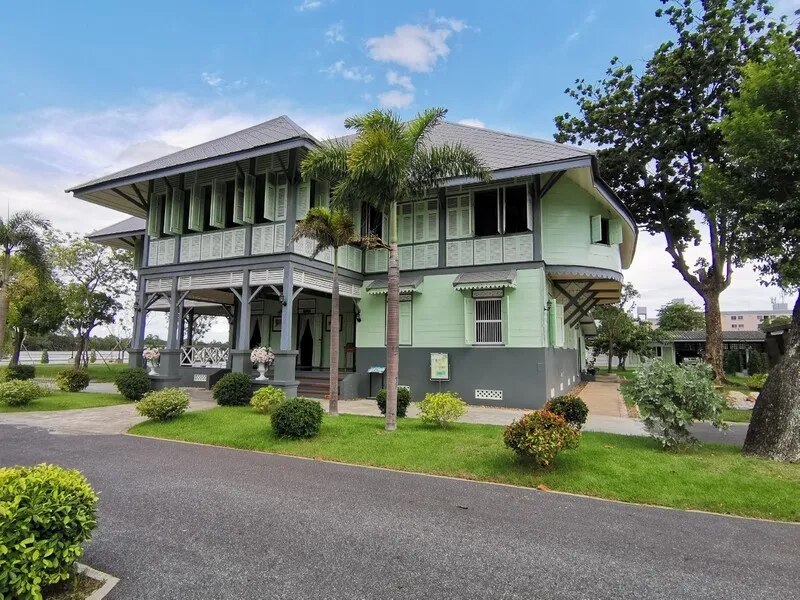
Marupong Siriphat Palace (Chachoengsao City Museum) is one of the most historically meaningful heritage buildings in Chachoengsao’s old town, not because it is simply “old,” but because the place embodies how the modern Thai state became visible in provincial life during the reign of King Chulalongkorn (Rama V). Built in the late-19th-century reform era, this residence was originally associated with the administrative structure of Monthon Prasin and the high-ranking official who oversaw it, Prince Marupong Siriphat. Today it functions as a city museum, welcoming visitors who want to read the story of Chachoengsao through an authentic, lived-in site rather than through abstract timelines. The museum’s setting on Marupong Road places it within walking range of the Bang Pakong riverside atmosphere and other old-town landmarks, which makes it ideal for a compact heritage itinerary that still feels substantial.
TL;DR: Marupong Siriphat Palace, now the Chachoengsao City Museum, is a Rama V–era official residence in Chachoengsao old town that connects Monthon-era provincial administration, royal travel history, and the city’s riverside identity. It is one of the best places in the province to understand “Bang Pakong–side government town” heritage through a real building, while also being an easy anchor point for a walkable one-day old-town route.
To appreciate why this site matters, it helps to place Chachoengsao in the geography of power and movement. The province is shaped by the Bang Pakong River, which historically enabled trade, travel, and the circulation of people and ideas across the eastern region. In the reform period of Rama V, Siam reorganized provincial administration into a more systematized structure, and the Monthon (circles of administration) framework became a crucial mechanism for consolidating governance. Monthon Prasin, which included Chachoengsao in its orbit, required visible infrastructure: residences, offices, and ceremonial spaces suited to a modernized bureaucracy. A governor’s residence was never merely “a house”; it was a stage where order, hierarchy, protocol, and hospitality could be enacted in the presence of officials and, at times, the monarch.
The palace’s identity is therefore layered. It is widely recognized as a historic governor’s residence (often referenced as the “former governor’s mansion”), while its deeper significance points to its earlier association with Prince Marupong Siriphat, the Samuha Thesaphiban of Monthon Prasin—an office that carried wide administrative authority. In practical terms, the residence was tied to high-level provincial administration: receiving delegations, coordinating policy implementation, and hosting events that marked the legitimacy of state power in the province. When you stand in front of the building, you are not only viewing architecture; you are looking at the physical “interface” through which the central state met local society.
One of the most compelling reasons this place remains a cultural landmark is its connection to royal travel memory. Accounts associated with the site describe that King Chulalongkorn (Rama V) stayed here during an early visit to Chachoengsao, and that a royal photograph with inscription was granted in commemoration of that stay. Whether visitors come primarily for architecture, history, or photography, the royal-travel association elevates the residence from provincial importance to national historical resonance, because it illustrates how the monarchy—especially in the reform era—strengthened ties with provincial centers through presence, movement, and ceremonial exchange.
Equally important is the building’s long continuity of “official use.” In many Thai provinces, historic residences risk becoming frozen as empty monuments. This site’s transition into a city museum keeps the building “alive” as a learning space and helps preserve social meaning alongside physical structure. The museum role is not simply a new label; it is a form of sustainable heritage practice in which a building’s public value grows through interpretation, visitation, and civic pride. That is why it works so well for cultural tourism: it offers both a real place and a readable narrative.
From a travel-writing perspective, Marupong Siriphat Palace is also a rare kind of attraction: a single stop that can carry a full storyline without requiring heavy exhibition technology. You can frame the visit around “the making of a modern provincial city” and use the building as your anchor to explain how Chachoengsao became both a riverside community and an administrative node. The surrounding neighborhood supports that narrative naturally. Marupong Road is historically associated with government presence and old-town life, and the broader area links well to riverside walking, older commercial streets, and major religious landmarks. For visitors, this means the museum can be the start of a route that moves from government heritage to community heritage to riverside identity—without long drives.
The best way to experience the site is to slow down and “read the building.” First, step back far enough to see the building’s overall proportions and symmetry. Then move closer to observe how windows, eaves, and ventilation choices respond to tropical humidity and heat. Next, consider circulation: where visitors would have arrived, where officials would have gathered, and how ceremonial order would have been performed through spatial organization. Doing this transforms your visit from a checklist into an interpretive experience. Even if you are not an architecture specialist, you can still notice a key logic: official residences from this era were designed to be both dignified and workable in real climate conditions, which is why shade, airflow, and transitional semi-outdoor spaces typically matter.
Because the building is now a museum, it is also one of the strongest places in Chachoengsao for education-focused travel. Local history becomes easier to grasp when you can connect it to a concrete setting that once hosted real governance activity. Students and history enthusiasts often find that a city museum in a genuine former official residence does something textbooks cannot: it makes “state reform” feel tangible. For international travelers, the site is also valuable because it gives context to Thailand’s broader modernization story in a provincial city—how reforms were not only Bangkok-centered ideas but also reshaped daily administration in places like Chachoengsao.
Timing matters if you want the best experience and the best photos. Morning light tends to flatter façades and architectural lines, giving cleaner shadows and more readable details. Late afternoon, on the other hand, often produces warmer tones that suit heritage photography, especially if you plan to continue toward riverside viewpoints afterward. If you are visiting in the hot season, aim for early hours to keep your walk comfortable; if it is the rainy season, the atmosphere can be especially photogenic, but walkways may be slippery and humidity higher. A simple plan works well: museum first, old-town walk next, riverside last, and then end with a riverside meal.
In a one-day itinerary, this museum pairs naturally with the old-town network around it. After the visit, you can continue toward historic civic buildings and older commercial streets, then drift toward the Bang Pakong River to see how the city’s identity remains anchored in water. Finally, you can close the day at an established local restaurant—Chachoengsao is strong in riverside dining culture and regional comfort food—and return to the museum area for a calm evening walk. This is the practical advantage of choosing a centrally located heritage anchor: it reduces travel friction, increases time on foot, and makes the city feel coherent rather than fragmented.
Getting There from Bangkok, you can drive via the Bangkok–Chonburi Motorway (Motorway 7) and connect into Chachoengsao city, then follow city routes toward Marupong Road in the Na Mueang area. If you arrive by train, get off at Chachoengsao Junction Station (Chachoengsao Chum Thang) and use a local taxi or hired vehicle into the old-town zone on Marupong Road; the ride is short compared with interprovincial travel time. Minivans and buses also connect Bangkok and Chachoengsao; from the city drop-off point, a local taxi or motorbike taxi can bring you to the museum quickly. Once you arrive in the area, it becomes easy to combine multiple attractions in a walkable loop.
As with any living heritage site, respectful behavior is part of the travel experience. Dress appropriately for a museum setting, keep your voice at a considerate level, and avoid any actions that could damage historic fabric. If you are photographing staff or other visitors, request permission when needed. These small choices help ensure the site remains welcoming and well-kept for future visitors while maintaining a dignified atmosphere appropriate to its official and historical identity.
| Name | Marupong Siriphat Palace (Chachoengsao City Museum) |
| Location / Address | 297 Marupong Road, Na Mueang Subdistrict, Mueang Chachoengsao District, Chachoengsao 24000, Thailand |
| Summary | A Rama V–era official residence associated with Monthon-era provincial administration, now operated as the Chachoengsao City Museum and used as a key old-town heritage learning site. |
| Highlights | Historic governor’s residence narrative; Monthon Prasin administration context; royal-travel memory associated with Rama V; strong “old town” location on Marupong Road; best used as an anchor for a walkable Bang Pakong–side heritage route. |
| Period / Background | Built in the reign of King Chulalongkorn (Rama V); associated with Monthon-era administration and later used as the former governor’s residence; now operated as a city museum. |
| Key Evidence | Published museum information includes the site identity, address, and official visiting schedule (Wed–Sun, 09:00–16:00) as Chachoengsao City Museum. |
| Name Origin | The “Marupong” name is linked to Prince Marupong Siriphat and the Monthon-era governance story; “former governor’s mansion” reflects later provincial administrative use. |
| Travel | Drive from Bangkok via Motorway 7 and enter Chachoengsao city, then head to Marupong Road (old town). By train, arrive at Chachoengsao Junction Station and take a local taxi to the museum area. |
| Current Status | Open to visitors as Chachoengsao City Museum (Wed–Sun, 09:00–16:00). |
| Contact Number | 038-512-520 |
| Fees | No verified admission fee information published (prepare small cash just in case of special exhibitions). |
| Facilities | Museum-style visit environment in the old-town zone; plan for heat (water/hat) if continuing on foot to riverside attractions. |
| Nearby Tourist Attractions (Approx. Distance) | 1) Old Courthouse / Provincial heritage buildings zone (Marupong Road area) – 0.5 km 2) Pakong Riverside walk viewpoints (Bang Pakong River zone) – 1.2 km 3) Talat Tha Khai (Tha Khai Market) – 2.0 km 4) Talat Ban Mai 100-Year Market – 3.0 km 5) Wat Chin Prachasamosorn (Leng Hok Yi Temple) – 3.5 km 6) Wat Sothon Wararam Worawihan – 4.0 km |
| Popular Restaurants Nearby (Approx. Distance + Phone) | 1) Pradit Pochana (Pradit Phochana) – 2.0 km – (no reliably verified phone found) 2) Kung Nang Restaurant – 3.0 km – 038-513-414 3) Pae Kiang Nam Restaurant – 20.0 km – 038-574-444 / 083-056-7525 4) Krua Mae Somkliang (Bang Pakong Riverside) – 12.0 km – (no reliably verified phone found) 5) Ban Benj – 4.5 km – (no reliably verified phone found) |
| Popular Accommodations Nearby (Approx. Distance + Phone) | 1) Heaven Hotel Chachoengsao – 4.5 km – 038-511-150 2) JK Living Hotel & Service Apartment – 5.0 km – 092-742-9929 3) Morocc Hotel Chachoengsao – 6.5 km – 084-008-0004 4) The Wish Hotel & Condo – 7.5 km – 088-521-5234 5) Suntara Wellness Resort & Hotel – 14.0 km – 033-590-250 |
Frequently Asked Questions (FAQ)
Q: Where is Marupong Siriphat Palace (Chachoengsao City Museum) located?
A: It is located at 297 Marupong Road in the Na Mueang area of Mueang Chachoengsao District, close to the old-town zone and within easy reach of the Bang Pakong riverside.
Q: What are the museum’s opening days and hours?
A: The museum is open Wednesday through Sunday from 09:00 to 16:00 (and is typically closed Monday and Tuesday).
Q: Why is this place historically significant?
A: It represents the Rama V reform-era visibility of provincial administration and is tied to the Monthon Prasin governance story, later functioning as a former governor’s residence and now serving as the city museum.
Q: How much time should I plan for the visit?
A: Plan about 45–90 minutes for a focused visit, or longer if you combine it with an old-town walk and Bang Pakong riverside viewpoints on the same day.
Q: What is the best time of day for photos?
A: Morning and late afternoon are best because the light is softer and the building’s lines and details read more clearly in shadow.
Q: Can I combine the museum with other attractions in one trip?
A: Yes. It works very well as an anchor for a one-day itinerary that includes old-town heritage streets, riverside atmosphere, and major landmarks like Wat Sothon Wararam and Ban Mai Market.
Q: Is there a contact number for the museum?
A: Yes. A published contact number for the museum is 038-512-520.
 Marupong Siriphat Palace (Chachoengsao City Museum) Map
 Category:
  Group:
  Last Update: 1 WeekAgo
Comment
 Nearby Attractions
| Keyword (Advance) |
 Region
|
 Muang Chachoengsao(