

 Home
Home Chiang Mai(




Rating: 2.9/5 (35 votes)
 |
|  Map
Map 
 Have Map
  No Map
Chachoengsao attractions
Attractions in Thailand
Open Days: Open Daily
Opening Hours: 24 Hours
Bang Pakong River is the eastern region’s main lifeline, sustaining Chachoengsao–Prachinburi through agriculture, fisheries, riverside communities, and the laid-back riverfront tourism that defines “Paet Riew.” What visitors notice immediately is the evening river view on the Chachoengsao town side, the historic riverside market, major temples, and seafood restaurants that rely on ingredients from the same watershed. If you want a value-packed itinerary, plan a “temple–market–riverfront–seafood dinner” route in one day, and stay 1 night to experience both the calm morning and the golden-hour evening atmosphere by the water.
Bang Pakong River is a key river in Thailand’s eastern region, often regarded by locals as a “river of life.” It functions as a water source for daily use, a foundation for agriculture, a freshwater-to-brackish fishery, and a long-standing transportation corridor for riverside communities. The river flows through Prachinburi and Chachoengsao before reaching the Gulf of Thailand around Bang Pakong District, Chachoengsao. Because Chachoengsao’s town center aligns prominently with the river, the Bang Pakong becomes an essential part of the cityscape—both a leisure space for locals and a popular destination for a “walk by the river, eat well, and watch the sunset” day trip from Bangkok.
Geographically, the Bang Pakong River originates from the confluence of the Nakhon Nayok River and the Prachinburi River around Bang Tan Subdistrict, Ban Sang District, Prachinburi. It then flows into Chachoengsao. Overall, the river is commonly described as roughly 230 kilometers long. Where it passes through the Chachoengsao municipality area, it averages about 100 meters in width, giving the urban stretch a character that feels “wide, calm, and open.” This makes it ideal for riverfront public spaces such as promenades, viewpoint spots, and riverside restaurants with broad water views.
One of the Bang Pakong’s defining features is its role as a “freshwater–brackish river,” especially in the lower reaches influenced by tides and seawater intrusion. This creates a riverside ecosystem that is more diverse than many expect. Seasonal changes and tidal cycles shape habitats that suit freshwater species in some zones and salt-tolerant species in others. The result is biodiversity that connects directly to Paet Riew’s food culture—from shrimp and fish to local ingredients that become signature dishes in riverside restaurants.
On a broader scale, the “Bang Pakong Basin” is a water catchment and drainage system spanning multiple provinces. The basin covers about 7,978 square kilometers across Chachoengsao, Prachinburi, and Chonburi, with an average annual runoff of roughly 3,712 million cubic meters. These figures highlight that the Bang Pakong is not merely a scenic attraction—it is a major water resource system that supports large populations in both urban and rural areas, underpinning agriculture, fisheries, and many water-dependent economic activities.
The river’s water cycle is a key reason why “riverside life” has its own rhythm. After April, as the rainy season begins, water levels typically rise steadily until around August, then gradually decline after the rainy season ends. December is often the period with the lowest levels, before the cycle repeats with the next rainy season. This seasonal pulse affects everything from crop planning and community water management to nature-based tourism—rainy months bring fuller waterways and greener scenery, while the dry season offers cooler, more comfortable weather for riverside walks and evening breezes.
If you wonder why Chachoengsao has such a distinct “river town character,” a major reason lies in the Bang Pakong’s historical role in settlement patterns. Waterways were essential infrastructure long before roads. Riverside markets, temples, and ferry crossings emerged along the river to support travel, trade, and ritual life. Communities near the water often evolved into “social hubs” where people met, exchanged news, traded goods, and continued onward—making the river both a route and a stage for everyday life.
In the era when water transport mattered most, local staples such as rice, fruit, fish, and orchard produce were shipped by boat to major markets. The river linked farming areas to trading centers, connected rural communities to urban ones, and tied the eastern region to Bangkok through networks of rivers and canals. The growth of many riverside markets in Chachoengsao reflects an economy that “grew from the river.” Even today, although roads dominate transportation, the river remains a backbone of local identity and a defining element that makes visitors feel Paet Riew is relaxed, breathable, and genuinely river-town in spirit.
One reason the Bang Pakong Basin is frequently discussed in water-resource management is the high demand for water from households, agriculture, and other economic activities. At present, there are 16 medium and large water development projects in the basin, with total storage capacity of about 62 million cubic meters, supporting approximately 1,180,160 rai of agricultural land. At the same time, the area faces an average annual shortage of about 1 million cubic meters for domestic use and about 430 million cubic meters for agriculture. This has led to proposals for additional short- and long-term development plans across sub-basins (7 projects total). Key projects often cited include Khlong Luang Reservoir, Khlong Si Yat Reservoir, and the Bang Pakong diversion weir project.
This picture shows that the Bang Pakong is not only a “viewpoint river,” but a system that requires serious management to balance water use with ecosystem protection. The challenge for large basins is rarely just having too much or too little water—it is allocating water appropriately across seasons, demands, and risks such as saltwater intrusion in the dry season, flooding in the rainy season, and water-quality fluctuations from human activity. From a tourism and urban-living perspective, having a river that is “clean and alive” is not only about beauty; it is a critical asset for quality of life and the city’s image.
For travelers who come specifically to “experience the Bang Pakong,” the most tangible and accessible area is Chachoengsao town. It is easy to reach, packed with key landmarks close together, and ideal for a relaxed one-day itinerary. The appeal is the smooth flow of activities: start with worship at the province’s major temple, stroll a historic riverside market for local snacks, then end with a riverside dinner while sunset light shimmers on the water—without needing long-distance travel.
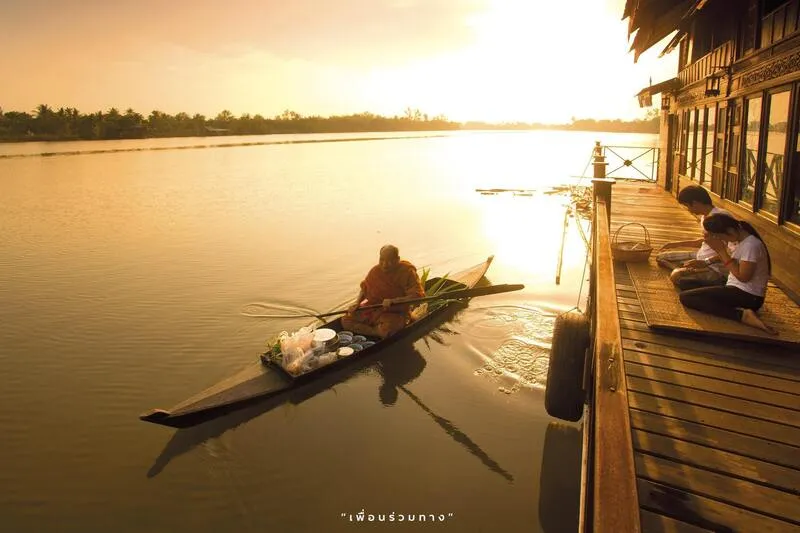
Evenings along the Bang Pakong in Paet Riew have a distinct atmosphere. River breezes cool the air, and the river’s width creates an open, expansive sky view. Sunsets often cast vivid orange–gold reflections across the surface, especially from late rainy season into the cool season when skies are clearer. If you want the best “photos and mood,” arrive about 1 hour before sunset and stay a bit after the sun dips below the horizon—this is when locals come out to walk, exercise, and relax by the river the most.
Riverfront tourism is also strongly linked to local food culture. Many key ingredients in the area have roots in the river and its basin. That is why many Chachoengsao riverside restaurants highlight fresh seafood and classic Thai dishes—think grilled fish, spicy soups, sour curries, and stir-fried spicy plates that pair perfectly with a “breeze-and-view” setting. When a restaurant sits right by the water, the meal becomes more than flavor; the river itself becomes the backdrop, slowing the pace, extending conversations, and making the experience feel like a genuine break from big-city rush.
Historically and culturally, the Bang Pakong has been a setting for the formation of “blended communities,” including local Thai residents, Chinese communities, and people who migrated from nearby areas for trade and settlement. The rise of riverside markets and numerous temples in the town area is a social marker of long-standing population clustering here. A major spiritual anchor is Wat Sothon Wararam Worawihan, located near the river in town. It remains a powerful draw for the city to this day. This deep faith also fuels strong “pilgrimage tourism,” where visitors who come to pay respects often continue on to markets, food, and nearby sightseeing—keeping the river-town economy moving.
Economically, agriculture in the Bang Pakong Basin is a major income base, including rice farming, orchards, and aquaculture in some areas. Fertile alluvial soils and reliable access to water make riverside zones suitable for diverse food production. Chachoengsao also serves as a bridge between agriculture and services: it is both a distribution point for local products and a short-haul tourism city for Bangkok residents. River-based economics therefore blends “resource-based economy” (water producing food and raw materials) with “experience-based economy” (the river’s image driving tourism spending).
Modern urban development has added another role for the riverfront: a “public wellness space” for both body and mind. Walkways, seating areas, and photo spots let residents connect with nature without leaving the city. For visitors, this benefit may not show up clearly in photos, but it is immediately felt—relaxation from watching flowing water and hearing wind and river sounds. This kind of travel does not require “intense activities” to create meaningful memories.
Ecologically, beyond the simple idea of “beautiful views,” the Bang Pakong is an ecosystem with clear relationships between upstream, midstream, and downstream zones. Tributaries deliver water and sediments, the midstream carries dense human settlement and diverse water uses, while the downstream is tide-influenced and forms an important transition zone for many aquatic species. Such ecosystems naturally depend on “river continuity” and “appropriate water quality” to support life cycles. In areas with high water demand and major infrastructure development, maintaining a balanced relationship between use and ecosystem health becomes the key to long-term sustainability.
From a visitor’s perspective, what makes a Bang Pakong trip feel “complete and worthwhile” is linking the river experience with Paet Riew’s landmarks in one coherent route. Many highlights sit close to the river and are easy to combine. Starting with Wat Sothon Wararam Worawihan sets a calm, devotional tone. Then, Talad Ban Mai 100 Years Market adds a living lesson in riverside commerce and local snacks. End with dinner by the river as sunset becomes the backdrop. If you have extra time, Wat Chin Prachasamoson (Leng Hok Yi) is a standout for Chinese-inspired architecture and reinforces Chachoengsao’s multicultural river-town identity.
The riverfront is also excellent for photography because the visual elements are varied: wide water scenes, light reflections, community life, market textures, and temple architecture all within a compact area. A single day trip can produce multiple moods—soft morning light, lively midday market scenes, and romantic evening tones by the water. The best results often come during gentle light and when you allow time to sit still and wait for the right moment of light, wind, and ripples—“beauty that rewards patience.” That is one reason the Bang Pakong feels different from places built purely for quick check-ins.
For families, the Bang Pakong riverfront is a practical destination because the activities are not physically demanding. Children can enjoy walking, watching boats, seeing open water, and eating familiar foods. Adults can relax and also visit revered temples nearby. Another advantage is convenience: Chachoengsao town is close to Bangkok, so planning is simple. A same-day trip is realistic, but staying 1 night lets you experience the quieter morning riverside atmosphere and cover nearby highlights without rushing.
A useful reminder for visitors is “respect for place and community.” Riverfront areas include both public zones and living neighborhoods. Park only in appropriate areas, avoid blocking traffic, and do not litter. If you plan to photograph people or private homes, be mindful and ask permission—especially in older market areas and heritage communities. Small gestures like these keep river tourism friendly and help preserve the place’s appeal long-term.
Ultimately, the Bang Pakong River as a “Chachoengsao attraction” is not just a viewpoint; it is the story of an entire city shaped by water—geography, ecology, trade history, devotional culture, and proud local food. When you travel with this wider lens, you do not only see a flowing river; you see how a river has formed a city. That deeper understanding is what makes the Bang Pakong a place worth returning to more than once.
Getting There From Bangkok, you can drive via the Bang Na–Trat route and main highways toward Chachoengsao town, typically taking about 1–1.30 hours depending on traffic. Set your destination to the “Bang Pakong Riverfront, Chachoengsao Municipality Area,” or use Wat Sothon Wararam Worawihan as a reference point and continue to the riverside walkway/restaurant zone. Another option is the Eastern Line train to Chachoengsao Station, then take local transport into the riverfront area in town.
| Place Name | Bang Pakong River (แม่น้ำบางปะกง) |
| Address | Riverside Area, Na Mueang Subdistrict, Mueang Chachoengsao District, Chachoengsao 24000 (โซนริมแม่น้ำในเขตเทศบาลเมืองฉะเชิงเทรา) |
| Place Summary | The eastern region’s main river, sustaining Chachoengsao–Prachinburi through agriculture, fisheries, riverside communities, and a signature riverfront travel experience in Paet Riew. |
| Highlights | Sunset views and cool river breezes in Chachoengsao town, walkable riverfront vibe, close to major temples and a historic riverside market, many riverside seafood restaurants, and a freshwater–brackish system linking upstream ecology to the sea. |
| Open Days / Hours | Open Daily / 24 Hours (Public riverfront access) |
| Fees | No Admission Fee |
| Facilities | Riverside Walkway (Some Sections), Seating Areas, Photo Spots, Nearby Parking (Varies By Area) |
| Nearby Tourist Attractions | 1) Wat Sothon Wararam Worawihan — 2 km — Tel. 038-511-048 2) Talad Ban Mai 100 Years Market — 3 km — Tel. 097-259-6438 3) Wat Chin Prachasamoson (Leng Hok Yi) — 4 km — Tel. 038-511-069 4) Marupong Park — 5 km 5) Robinson Lifestyle Chachoengsao — 6 km |
| Popular Restaurants Nearby | 1) Ban Mai Rim Nam — 3 km — Tel. 038-512-064 2) Kung Nang Restaurant — 4 km — Tel. 038-513-414 3) Krua Mae Som Kleng Riverside — 7 km — Tel. 094-681-6636 4) Krua Im Suk Riverside — 12 km — Tel. 062-332-2422 5) Eakanake Restaurant — 4 km — Tel. 081-949-1394 |
| Popular Accommodations Nearby | 1) JK Living Hotel & Service Apartment — 4 km — Tel. 092-742-9929 2) Heaven Hotel Chachoengsao — 6 km — Tel. 094-343-0444 3) Morocc Hotel — 6 km — Tel. 093-235-2888 4) Suntara Wellness Resort & Hotel — 8 km — Tel. 081-548-0114 5) Grand Royal Plaza Hotel — 7 km — Tel. 038-981-561 |
| Contact Number | TAT Chachoengsao Office — Tel. 038-514-009 |
Frequently Asked Questions (FAQ)
Q: How long is the Bang Pakong River?
A: It is commonly described as roughly 230 kilometers long, from its upstream confluence area in Prachinburi to the river mouth reaching the Gulf of Thailand.
Q: Where does the Bang Pakong River begin?
A: It begins at the confluence of the Nakhon Nayok River and the Prachinburi River around Bang Tan Subdistrict, Ban Sang District, Prachinburi, then flows into Chachoengsao.
Q: What time is best for visiting the Bang Pakong Riverfront in Chachoengsao?
A: Late afternoon to early evening is usually the most beautiful, especially from about 1 hour before sunset until shortly after, when the light and river breeze are at their best.
Q: If I only have one day, what nearby places should I combine with the riverfront?
A: A popular route is Wat Sothon Wararam Worawihan → Talad Ban Mai 100 Years Market → Wat Chin Prachasamoson (Leng Hok Yi) → a riverside seafood dinner, all within convenient distances in town.
Q: Is there an admission fee to visit the Bang Pakong Riverfront?
A: No. The riverfront is a public area. You only pay for optional services you choose, such as meals or any local boat activity available at the time of your visit.
Q: Where can I get up-to-date travel information for Chachoengsao?
A: You can contact the TAT Chachoengsao Office for updated information on attractions, routes, and local activities.
 Bang Pakong River Map
 Category:
  Group:
  Last Update: 3 DayAgo
Comment
 Nearby Attractions
| Keyword (Advance) |
 Region
|
 Muang Chachoengsao(