

 Home
Home Chiang Mai(




Rating: 4.5/5 (4 votes)
 |
|  Map
Map 
 Have Map
  No Map
Chachoengsao attractions
Attractions in Thailand
Open Days: Saturday–Sunday and Public Holidays
Opening Hours: 09.00–16.00
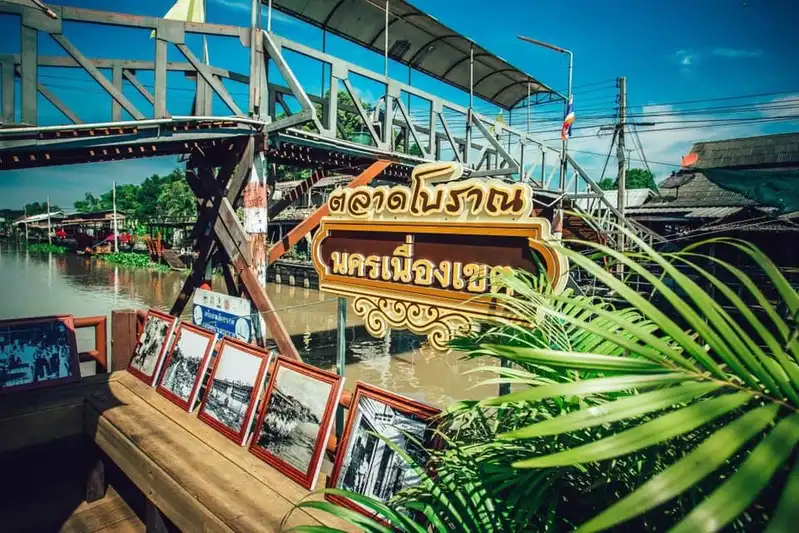
Nakhon Nueang Khet Ancient Market is a riverside community market in Chachoengsao Province with a history of more than 130 years. Its charm lies in the old wooden houses that line the canal, the walkways on both banks, and the bridges that make it easy to cross back and forth. Inside, you will find local street foods, vintage-style coffee stalls, and a Thai–Chinese spiritual dimension reflected in the community shrines. This makes it ideal for a relaxed half-day to one-day trip from Bangkok—strolling, tasting local flavors, and capturing genuine waterside scenery. If you want to experience a slower, more authentic side of Chachoengsao, this market is a worthwhile choice because its main appeal is not only the shops, but the living canal-side way of life you can still read through the layout of the market, the wooden houses, and the unhurried rhythm of people spending time by the water.
Nakhon Nueang Khet Ancient Market sits along Khlong Nakhon Nueang Khet in Mueang Chachoengsao District, Chachoengsao Province. The first impression often feels like stepping back in time: rows of wooden houses running parallel to the canal, a mix of wooden and concrete walkways that let you stroll continuously along the banks, and bridges that act like “viewpoints” of the entire market. Standing on a bridge, you can clearly see both sides of the canal—small breezy shops, visitors browsing for snacks, and a lively yet comfortably calm atmosphere that never feels overly crowded. Most importantly, it still feels like a real community market, not a staged set built only for photos.
The roots of Nakhon Nueang Khet Ancient Market are closely tied to Khlong Nakhon Nueang Khet, once a major lifeline of canal-side communities. This canal was dug under the royal initiative of King Chulalongkorn (Rama V) to create an important transport route linking key areas. After completion, it was granted the name “Khlong Nakhon Nueang Khet”, suggesting, in meaning, an extension of the capital’s reach through a network of canals. Geographically and economically, the canal was far more than a new waterway—it opened opportunities for trade, travel, and structured settlement along its banks, which later developed into an active commercial hub.
The market area also has a strategic feature: it lies near a junction of multiple waterways. Where a newly dug canal connected with older natural canals, a “water crossroads” emerged—a key position for commerce in the era when boats were the primary means of transport. With branching routes in several directions, traders from different areas could come to buy and sell, exchange goods, and distribute supplies onward with ease. During the market’s most prosperous years, staple trade items were closely linked to the local agricultural economy and canal-side commerce, including rice, fresh produce, everyday household goods, and products brought in through regional merchant networks.
Socially, Nakhon Nueang Khet Ancient Market reflects a long-standing Thai–Chinese relationship embedded in the area. The community traditionally included Thai people of Chinese descent as well as Chinese settlers, forming an essential foundation of the local settlement. Many livelihoods were anchored to the pier, the shopfront, and daily trading routines. Images of families running shops in front of their homes, neighbors supporting one another, and intermarriage across cultures are part of what defines a true canal-side community. This is why the market is not merely a tourist attraction—it is a living page of history.
Over time, the importance of waterways gradually declined as road networks expanded. Many markets became quieter as commerce shifted onto land. Yet Nakhon Nueang Khet Ancient Market retains something modern markets cannot replicate: a traditional market structure that recalls the era when people and canals were inseparable. For this reason, the Nakhon Nueang Khet Subdistrict Municipality has played a key role in reviving and organizing the market area as a cultural tourism destination, so that younger generations and visitors can recognize the value of canal-side heritage through real experience, not only through written history panels.
What makes the market especially enjoyable today is the feeling of being able to “slow down.” The space is easy to navigate, and the canal-side walkways help you follow the line of shops without losing your way. It works well for families out for a gentle stroll and also for solo travelers who want to photograph or simply find inspiration. Stalls offer simple dishes that are easy to eat on the go, such as curry-and-rice, noodles, grilled items, and fried snacks, along with Thai desserts and old-fashioned drinks like vintage-style coffee or brewed tea. At certain times, you may also find seasonal fruits and fresh vegetables from local orchards, so the visit becomes more than just taking pictures—you can leave with everyday local flavors and produce that still feel rooted in community life.
The canal atmosphere becomes most vivid when you let your senses do the work: you hear the familiar greetings of neighbors, smell food drifting with the canal breeze, and see sunlight reflecting off the water and the wooden facades. If you pay attention to details, you will notice that parts of the old architecture still hold their original identity—windows, hinges, wooden railings, and modest shop signs. The age of the place does not feel neglected; instead, it becomes a “surface of time” that adds visual and emotional value to the setting.
Another dimension that sets Nakhon Nueang Khet Ancient Market apart from ordinary markets is the presence of community shrines and local belief systems within the same area. The market is home to shrines respected by the Thai–Chinese community, including Tai Jue Ia Shrine and Pun Thao Kong Shrine. Their presence is not merely an extra photo stop—it reflects the structure of Thai–Chinese communities in which shrines function as spiritual centers, places of emotional anchoring, and gathering points during important festivals. Visiting the market therefore offers not only food and everyday life, but also a layer of faith woven naturally into daily routines.
When paying respect at community shrines, it is best to do so with care, especially by dressing modestly and behaving respectfully. Photography should be done without disturbing rituals or other worshippers. If you wish to pray for blessings, the key is to remain calm and follow any guidance provided by the caretakers. After leaving the shrine and returning to the market walkways, many visitors feel the trip offers both a sense of fullness in taste and in spirit—one of the quiet strengths of canal-side community markets like this.
In terms of activities, the market is not only about eating and shopping. It can also feature cultural tourism elements that add atmosphere, such as live music or local food demonstrations at certain times. This helps the market function as more than a selling space—it becomes a small stage where the community tells its own story through lived experience. On busy days, you will see that each shop does not simply sell products; it also carries memories and local pride.
For travelers who want to make the most of the visit, arriving in the morning is ideal because the weather is more comfortable, it is easier to walk for longer, and food and fresh items tend to be available in greater variety. Late morning to just before noon often feels perfectly balanced—more lively, but not overly packed. If you are coming primarily to eat, starting with savory dishes and finishing with coffee and Thai sweets captures the most authentic “old market” mood, because the gradual rhythm of eating naturally matches the canal-side pace of the place.
A half-day plan is easy: give yourself time to explore both banks of the canal, crossing the bridges back and forth to absorb the full atmosphere, then choose a few foods you want to try, take a short break by the water, and finally pick up local produce or snacks to bring home. If you prefer a full one-day trip, the market works well as a morning starting point, after which you can continue to well-known temples or key attractions in Chachoengsao in the afternoon, creating a day that blends heritage community scenes with major landmarks in a natural flow.
Getting There is straightforward for travelers from Bangkok and nearby areas. If you drive, start from Bangkok toward Chachoengsao Province, then continue into Mueang Chachoengsao District and Khlong Nakhon Nueang Khet Subdistrict. A helpful sign that you are close is when the canal-side community scenery becomes more visible and the access roads begin to lead into the market area. It is wise to allow a little extra time for parking on busy weekend mornings, especially later in the morning when more visitors arrive.
If you travel by public transport, a practical approach is to reach Chachoengsao town center first and then take a local taxi or hired vehicle to Khlong Nakhon Nueang Khet Subdistrict and the market area. Once you arrive, the market can be explored on foot without needing additional transport, since the layout is a continuous walking route with bridges connecting both sides. The key preparation is to visit on the correct open days—Saturday, Sunday, or public holidays—and time your arrival for when most stalls are operating.
What many visitors love most is the feeling of being “truly on the canal.” The canal remains the heart of community life, and the most classic photo angles are often found on the bridges and along the canal-side walkways where you can see rows of wooden shops stretching along the water. If you are a photography-focused traveler, it helps to walk slowly and capture small details such as simple shop signs, cups and plates in a coffee stall, boxes of Thai sweets, or reflections on the water—elements that tell the story of the market more effectively than wide-angle shots alone.
Food is another quiet strength of this market: it feels home-style, comforting, and genuinely made. It suits travelers who like tasting a few different dishes in modest portions, then taking a break with a cold drink or old-style coffee before continuing the walk. If you want to buy something to take home, Thai desserts, seasonal fruits, or certain dry snacks are often convenient choices. Part of the fun is strolling and discovering small, unassuming stalls that invite you to try something new, because the best flavors in markets like this are often hidden within simplicity.
If you wonder who this market is best for, it fits travelers who want both pleasure and meaning. Families often enjoy it because it is easy to walk and offers many food options. Couples like it for the gentle canal-side mood and abundant photo spots. Culture-focused visitors appreciate the visible traces of Thai–Chinese community life and the shrines that anchor local faith. And anyone who wants a break from city speed will likely enjoy how the market encourages you to slow down and notice your surroundings.
In the end, Nakhon Nueang Khet Ancient Market feels like a conversation between past and present. The past lives in the wooden houses, the canal-aligned layout, the memory of waterway trade, and the shrines the community respects. The present appears in the smiles of vendors, the everyday dishes still being cooked, and visitors who help keep the market alive. If you are looking for a Chachoengsao destination that feels authentic without needing heavy embellishment—rich in images, stories, and atmosphere—this market is one place worth experiencing in person at least once.
| Place Summary | A historic riverside community market along Khlong Nakhon Nueang Khet with over 130 years of heritage, featuring wooden shop-houses on both canal banks, canal-side walkways, and bridges. Ideal for a relaxed stroll, local food tasting, photography, and experiencing Thai–Chinese canal culture. |
| Address | Khlong Nakhon Nueang Khet Subdistrict, Mueang Chachoengsao District, Chachoengsao 24000, Thailand |
| Highlights | Classic canal-side market atmosphere, old wooden architecture, bridge viewpoints for photos, local foods and vintage-style drinks, Thai–Chinese community heritage, and nearby community shrines for blessings. |
| Period | Rama V era (waterway expansion and canal commerce), continuing to the present |
| Key Context | The digging of Khlong Nakhon Nueang Khet and the emergence of waterway junctions supported trade, settlement, and Thai–Chinese canal communities, shaping a thriving canal-side market. |
| Name Origin | The market name is tied to Khlong Nakhon Nueang Khet, a canal dug under royal initiative and granted its name during the Rama V period. |
| Travel | Drive from Bangkok to Chachoengsao, continue to Mueang Chachoengsao District and Khlong Nakhon Nueang Khet Subdistrict, park and explore on foot / By public transport, reach Chachoengsao town center first, then take a local taxi to the market. |
| Current Status | Open on Saturdays–Sundays and Public Holidays, 09.00–16.00 |
| Facilities | Canal-side walkways, bridges connecting both banks, food and drink stalls, scenic canal viewpoints (other facilities may vary by day and local management). |
| Fees | No official admission fee information (generally a community tourism area; expenses depend on purchases). |
| Contact Number (Verified) | 038-592035, 081-1539919 |
| Nearby Attractions (Approx. Distance) | 1) Khlong Suan 100-Year Market – 12 km 2) Wat Sothon Wararam Worawihan – 14 km 3) Ban Mai 100-Year Market – 16 km 4) Bang Khla Floating Market – 28 km 5) Wat Saman Rattanaram – 32 km |
| Popular Restaurants Nearby (Approx. Distance + Phone) | 1) Ban Lek Thi 1 Pak Mor Noodles – 0.04 km – 084-321-1884 2) Tam Kieng Khlong – 0.20 km – 098-9935574 3) Lung Kala Fresh Coffee & Southern Kitchen – 0.10 km – 099-045-9299 4) Ban Rod Nakhon Nueang Khet – 2.0 km – 095-5571779 5) Siam Si Yaek – 0.20 km – 087-032-2877 |
| Popular Accommodations Nearby (Approx. Distance + Phone) | 1) The Chill Classic House – 12 km – 038-513717 2) JK Living Hotel & Service Apartment – 13 km – 092-7429929 3) Heaven Hotel Chachoengsao – 18 km – 038-511-150 4) Suntara Wellness Resort & Hotel – 18 km – 033-590-250 5) Ban Mai Hotel – 16 km – 038-513347 |
Frequently Asked Questions (FAQ)
Q: What days is Nakhon Nueang Khet Ancient Market open?
A: It is open on Saturdays, Sundays, and public holidays.
Q: What are the opening hours of Nakhon Nueang Khet Ancient Market?
A: The market generally operates from 09.00 to 16.00.
Q: Can I visit the market without a private car?
A: Yes. Travel to Chachoengsao town center first, then take a local taxi or hired vehicle to Khlong Nakhon Nueang Khet Subdistrict and the market area.
Q: What are the top highlights for visitors?
A: The main highlights are the canal-side wooden market atmosphere on both banks, walkways and bridges, local foods, and the Thai–Chinese community shrines.
Q: How long should I spend at the market?
A: Most visitors spend around 2 to 4 hours for strolling, eating, and photos. It can also be part of a full one-day Chachoengsao trip.
Q: Are there places to pray for blessings within the market area?
A: Yes. Community shrines such as Tai Jue Ia Shrine and Pun Thao Kong Shrine are respected local sites where visitors may pay respects for good fortune.
 Nakhon Nueang Khet Ancient Market Map
 Category:
  Group:
  Last Update: 4 DayAgo
Comment
 Nearby Attractions
| Keyword (Advance) |
 Region
|
 Muang Chachoengsao(