

 Home
Home Chiang Mai(




Rating: 5/5 (1 votes)
 |
|  Map
Map 
 Have Map
  No Map
Ang Thong attractions
Attractions in Thailand
Open Days: Open Daily
Opening Hours: 06:00 – 18:00
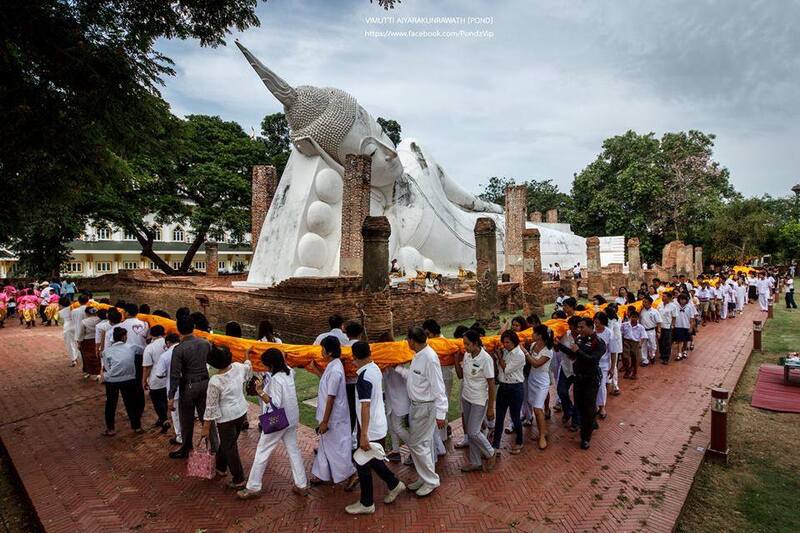
The Robe Offering Tradition for the Reclining Buddha in Ang Thong is one of Central Thailand’s meaningful living traditions, where Buddhist devotion and community spirit come together in a clear, tangible way. The focal point is the great open-air Reclining Buddha at Wat Khun Inthapramun in Pho Thong District, Ang Thong Province. This revered image has long been associated with serenity and remembrance of the Buddha’s Parinirvana—the ultimate teaching on peace, non-attachment, and liberation from suffering. When the temple’s annual festivities arrive, devotees and visitors from many areas travel here to take part in the robe offering rite, make merit, listen to Dhamma teachings, and join community activities that turn the temple grounds into a shared space of unity and cultural continuity.
In Buddhist tradition, the “Reclining Buddha” represents the Buddha’s final passing into Parinirvana, a profound symbol of calm and release. Offering a new cloth robe to the image is therefore regarded as an act of deep reverence—an offering that carries both spiritual meaning and the intention for blessings, well-being, and inner steadiness. For the local community, the tradition is equally important as a communal merit-making practice. People meet, coordinate, share responsibilities, and support the event together, reinforcing social bonds and affirming local identity through real participation year after year. This is why the robe offering is not merely a seasonal spectacle; it is a ceremony that keeps religion and everyday community life moving forward side by side.
Ang Thong is a province known for strong cultural roots and long-standing temple-centered communities. Wat Khun Inthapramun, beyond its role as a place of worship, functions as a community anchor where merit-making, local customs, and intergenerational learning naturally converge. The robe offering tradition is typically prepared with care: a new cloth (often yellow or gold in keeping with Buddhist symbolism) is readied in advance, and the large robe cloth requires coordinated teamwork. From folding and carrying the cloth into the ceremonial area, to assigning people to hold each end and align the drape properly, the process depends on collective cooperation. Before the robe is placed, monks usually chant blessings to mark the act as auspicious, and the actual draping often unfolds in a quiet, focused atmosphere because participants understand they are performing a sacred offering before one of the area’s most important Buddha images.
After the robe offering, the day commonly continues with classic merit-making activities such as offering food to monks, presenting necessities, listening to sermons, and joining community initiatives around the temple. Depending on the year, there may be local stalls, regional food, and community products, adding a gentle social dimension while still preserving the core spirit of reverence. Visitors are encouraged to dress modestly, avoid loud noise in ceremonial zones, maintain respectful behavior near the Buddha image, and follow guidance from temple staff and volunteers. For many families, attending the tradition is also a way to pass values forward: elders share customs and practical know-how, working-age residents manage coordination and logistics, and younger people learn by doing—helping set up, keeping the grounds clean, and assisting visitors. This natural transfer of knowledge is a key reason the tradition remains vibrant and relevant.
As cultural tourism, the robe offering tradition stands out as an example of respectful, place-based experience. The heart of the event is a real community ceremony rather than a staged scene. Visitors who come with genuine curiosity will witness how faith is practiced, how a community organizes itself, and how local life continues around the temple—often through simple, memorable details such as local food, neighborly hospitality, and shared responsibility. Spending more time in the area can reveal Ang Thong’s quiet cultural richness, where the depth of meaning is found not in spectacle, but in the steady rhythm of traditions that people continue to live.
Getting There From Bangkok, travel via Asia Road (Highway 32) toward Ang Thong Province, then continue to Pho Thong District and Inthapramun Subdistrict. You can search “Wat Khun Inthapramun” on navigation apps for direct directions. If traveling by public transport, take a bus or van from Mochit Bus Terminal to Ang Thong town, then continue by local transport or a hired ride to the temple. Morning or late afternoon is recommended to avoid the heat, as the Reclining Buddha area is outdoors. Bring drinking water, a hat, or an umbrella for comfort, especially on festival days when visitor numbers are higher.
Ultimately, the robe offering tradition for the Reclining Buddha in Ang Thong is more than an annual merit-making event. It is a living bridge between generations, a shared space where communal goodwill becomes visible through action, and a meaningful opportunity for visitors to experience Buddhist values in a form that is tangible and calm. Those who arrive with respect for the place often leave with more than photos—they leave with a clearer understanding of how Central Thailand’s temple traditions remain active, sincere, and deeply rooted in community life.
| Place Name | Wat Khun Inthapramun (วัดขุนอินทประมูล) |
| Address | Inthapramun Subdistrict, Pho Thong District, Ang Thong 14120, Thailand |
| Place Summary | A major Ang Thong temple that enshrines a large open-air Reclining Buddha and serves as the spiritual center of the annual robe offering tradition. |
| Highlights | Massive open-air Reclining Buddha, serene worship atmosphere, and a well-known Central Thailand merit-making tradition held during the annual temple festival. |
| Tradition / Ritual | Robe Offering Tradition for the Reclining Buddha (offering a new cloth robe to the Buddha image, merit-making, chanting, listening to Dhamma, and community activities during the annual festival). |
| Open Days | Open Daily |
| Opening Hours | 06:00 – 18:00 |
| Abbot / Caretaker (Latest) | Phra Khru Wiset Chaiwat (Luang Pho Sawoey) – Acting Abbot (Updated 2026-02-25) |
| Contact Number | 086-981-5615 |
| Getting There | Private Car: Asia Road (Highway 32) to Ang Thong, then to Pho Thong District – Inthapramun Subdistrict / Public Transport: Mochit → Ang Thong town, then local transport or hired ride to the temple |
| Current Status | Open To Visitors And Worshippers As Usual |
| Nearby Tourist Attractions With Distance | 1) Wat Tha It – 1.8 km 2) Wat Sangkratai – 4.5 km 3) Wat Muang (Ang Thong) – 7.5 km 4) Wat Chaiyo Worawihan – 8.4 km 5) Ang Thong City Pillar Shrine – 9.6 km |
| Popular Restaurants Nearby | 1) Pad Thai Shop (Near The Temple) – 0.1 km – 092-849-6771 2) Pha Kaew Pla Phao – 1.0 km – 083-825-3980 3) Ton Makham Restaurant – 1.1 km – 035-691-451 4) Im Aroi Restaurant – 3.0 km – 089-900-1827 5) Krua Hansa (Pho Thong) – 6.0 km – 089-820-8562 |
| Popular Accommodations Nearby | 1) Tofun Resort Ang Thong – 5.5 km – 096-997-3568 2) Blue House Ang Thong – 6.9 km – 080-640-9465 3) Bualuang Hotel Ang Thong – 7.4 km – 035-611-116 4) IKKYU 2 Ang Thong – 7.7 km – 086-559-6642 5) Suphorn Grand Hotel Ang Thong – 8.2 km – 081-551-2828 |
| Facilities | Parking Area, Outdoor Worship Space For The Reclining Buddha, Merit-Making Areas And Community Activity Zones (Additional Market And Service Points During Festival Days) |
| Fees | No Admission Fee (Donations Welcome) |
Frequently Asked Questions (FAQ)
Q: Where is the robe offering tradition for the Reclining Buddha in Ang Thong held?
A: It is held at Wat Khun Inthapramun in Pho Thong District, Ang Thong Province, which enshrines the great open-air Reclining Buddha.
Q: What does robing the Reclining Buddha symbolize?
A: It is an act of deep reverence toward the Parinirvana Buddha image, symbolizing peace and liberation, and it is also a major merit-making tradition for blessings and well-being.
Q: What are the opening hours of Wat Khun Inthapramun?
A: The temple is open daily from 06:00 – 18:00. Morning or late afternoon is recommended to avoid the heat, as the Reclining Buddha area is outdoors.
Q: Is there an admission fee?
A: There is no admission fee. Visitors may donate as they wish and should maintain respectful behavior within the temple grounds.
Q: What should I wear when visiting during the tradition?
A: Dress modestly. Avoid revealing clothing, keep a respectful demeanor in ceremonial areas, and follow the guidance of temple staff and volunteers.
Q: How can I contact the temple for the latest festival schedule?
A: Call the temple at 086-981-5615 to confirm the annual festival dates and participation details before your visit.
 Phra Non Robe Ceremony Tradition Map
 Category:
  Group:
  Last Update: 3 DayAgo
Comment
 Nearby Attractions
| Keyword (Advance) |
 Region
|
 Muang Ang Thong(