

 Home
Home Chiang Mai(




Rating: 4.4/5 (5 votes)
 |
|  Map
Map 
 Have Map
  No Map
Ang Thong attractions
Attractions in Thailand
Open Days: Open daily
Opening Hours: Please contact the temple to confirm the exact opening hours on your travel date
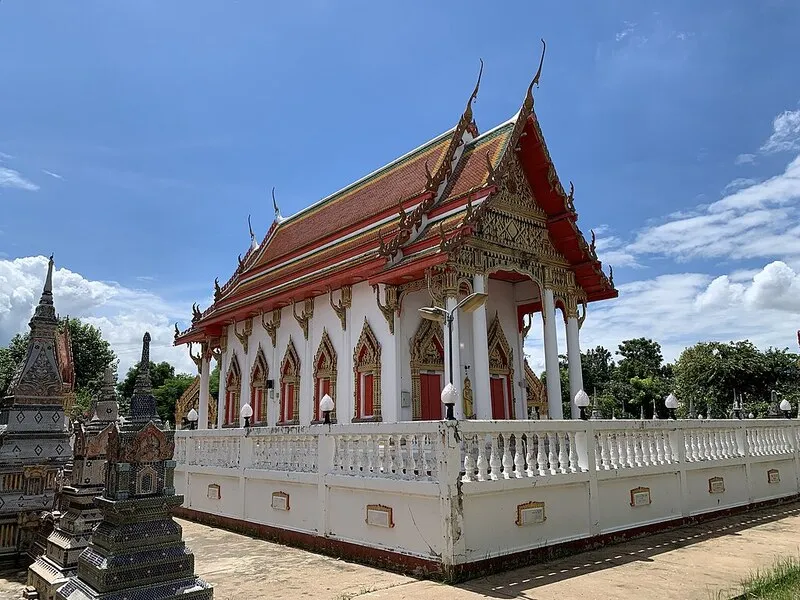
Wat Sra Ket in Chaiyaphum Subdistrict, Ang Thong Province, is an old riverside temple on the eastern bank of the Chao Phraya River where multiple “layers of time” sit clearly within the same place. One layer comes from local history tied to the community’s former name (“Ban Sra Ket”), while another belongs to national history because the area called Ban Sra Ket is mentioned in the Royal Chronicles around B.E. 2128, in connection with troop movements and a military pursuit led by King Naresuan the Great and King Ekathotsarot in the late Ayutthaya war context. For visitors, this means Wat Sra Ket is not simply a “river temple” that you stop by to pay respects; it is also a vantage point for reading the cultural landscape of Thailand’s central floodplain through a living religious site. Once you step inside, you can sense the identity of a riverine community temple that remains part of everyday life while also carrying long-term collective memory of the locality.
Chaiyaphum Subdistrict is directly shaped by water. Located along the Chao Phraya River on low-lying central plains, the area has long depended on waterways for transportation and livelihoods. In this kind of social structure, a temple is rarely only a place for rituals; it is also a community anchor in social and cultural terms. It becomes a space where elders pass stories to younger generations, where merit-making events bring relatives back together, and where communal memory is preserved through ceremonies and continuous, practical use. This is why Wat Sra Ket suits travelers who want to see Ang Thong through the lens of “life along the Chao Phraya” rather than treating the province as merely a stopover.
One reason Wat Sra Ket carries more historical weight than many temples on a similar route is that there is a recorded reference to “Ban Sra Ket” in the Royal Chronicles stating that around B.E. 2128 the King of Chiang Mai set up a camp at Ban Sra Ket, after which King Naresuan the Great and King Ekathotsarot pursued and defeated the opposing forces. This kind of detail changes the experience from a simple “check-in at an old temple” into standing within a real geography that once served as a backdrop for political and military events in the Ayutthaya era. When you connect the written record to the actual riverside terrain, it becomes easier to understand why floodplain waterways were strategic: for moving troops, securing supplies, and establishing camps that needed reliable water sources and natural transport corridors.
Beyond the Ayutthaya-era layer, Wat Sra Ket also carries a significant modern layer of shared memory. Records note that in B.E. 2513, the present King and Her Majesty the Queen visited Wat Sra Ket to perform a royal merit-making rite in honor of King Naresuan the Great. This indicates that Wat Sra Ket and the Ban Sra Ket area have continued to be regarded as historically meaningful at a level where the state and national institutions could conduct symbolic ceremonies. In other words, the temple is not only a local religious site; it is also a place where national memory and community memory intersect in a tangible way.
Viewed as a cultural tourism destination, Wat Sra Ket does not need “grand landmark” scale to be compelling. Its strength lies in the authenticity of place that you feel from the riverside atmosphere and the everyday rhythm of a working community temple. Travelers who arrive unhurriedly often gain more, because they can observe how local people actually use the space. Faith is not expressed only through major ceremonies; it also appears in small routines such as stopping by to pay respects before a journey, making modest offerings according to one’s means, dedicating merit to departed relatives, or visiting on Buddhist observance days with family. These details form the “cultural capital” of a community temple, and they offer deeper value for learning-oriented travel than sightseeing that stays only at the surface.
If you come with the intention of paying respects, a fitting approach at a riverside temple is to begin by calming your mind, then walk through the grounds gradually. You may start by paying respects to the principal Buddha image in the main hall, making your wish quietly and respectfully, then move to other key points in the temple to observe how the religious space relates to the river environment. Riverside temples often have an atmosphere that makes quiet reflection easier than temples in busy urban settings. When you slow down, you begin to notice wind, water, and the everyday sounds of a Chao Phraya community—an experience that feels different from rushing through temples for numbers.
From a photography standpoint, riverside temples naturally lend themselves to gentle documentary images, especially in the morning when the light is softer and the atmosphere calmer. You can photograph architecture and general ambience, but do so respectfully: avoid photographing individuals who are worshipping without permission, and avoid using flash in inappropriate areas. If monks or elderly worshippers are nearby, keep your voice low and give way politely. These basics help ensure cultural travel does not disturb the sacred tone of a community’s spiritual space.
Temple etiquette remains essential. Dress modestly; avoid clothing that is too short or revealing; do not speak loudly in ritual areas; and avoid walking directly in front of someone who is praying or meditating. If you travel with children, it helps to explain that a temple is a sacred place where calm behavior matters. Also walk carefully, as some parts of a temple may have uneven ground or slippery paths during the rainy season. Small courtesies like these make the visit pleasant for both visitors and the local community.
Another dimension that makes Wat Sra Ket useful for history-and-locality storytelling is the connection between the subdistrict’s former name and the temple name. It is said that Chaiyaphum Subdistrict was formerly known as “Ban Sra Ket” and belonged to the Wiset Chai Chan area. This invites an accessible way to read local history: many place names in Thailand’s central floodplain reflect geography and livelihood patterns—especially ties to water (“sra,” or pond), agriculture, canals, and settlement along waterways. In that sense, reading village and temple names becomes a friendly, tangible method for interpreting local history.
For travelers who want a value-packed itinerary, Wat Sra Ket can be placed on a “temple visit and cultural learning” route in Ang Thong. The distance from Ang Thong town to the Chaiyaphum area is manageable by car, and it is easy to connect onward to other major temples and cultural sites in the province. For a day trip, you might link Wat Sra Ket with temples known for important Buddha images or with community learning points in nearby zones. This way, the trip balances spiritual practice and cultural understanding without turning into a rushed checklist. The goal becomes quality time with place and a clear story you can bring back.
Getting There The most convenient way to reach Wat Sra Ket is by car or motorcycle, since it is located within a riverside community area, and having your own transport makes it easier to continue to other destinations in Ang Thong afterward. The most straightforward method is to use an online map and search for “Wat Sra Ket Ang Thong,” then follow the pinned navigation route directly to the temple. Along the way, watch for the province’s main roads and the turn-offs into Chaiyaphum Subdistrict. As you approach the Chao Phraya riverside, the road scenery becomes more clearly “river community” in character. Drive carefully, respect local traffic flow, and park where you do not block temple entrances or nearby homes.
To make the visit more meaningful, it helps to set a simple intention before you go—such as coming to pay respects for peace of mind, coming to learn about Ban Sra Ket in the Royal Chronicles, or coming to capture riverside temple imagery. With a clear purpose, you can use your time more effectively without trying to do everything at once, and your post-trip storytelling becomes more coherent—ideal for cultural travel writing that aims for both readability and credibility.
For practical coordination, Wat Sra Ket has a phone contact number that can be used if you wish to ask about merit-making events, group visits, or to confirm opening hours on your specific travel date. Checking in advance reduces misunderstanding—especially if you are traveling with elderly family members or planning a structured offering. Community temples sometimes host internal events or rearrange spaces for specific-day activities, so confirming ahead is both respectful and professional for cultural travelers.
In summary, Wat Sra Ket is a destination with multiple layers of value in one place. The first layer is its calm, genuine atmosphere as a Chao Phraya riverside community temple. The second layer is its link to the locality’s former name and the Wiset Chai Chan context, which reveals settlement roots in the central floodplain. The third layer is the recorded reference to Ban Sra Ket in the Royal Chronicles around B.E. 2128. The fourth layer is the modern shared memory of the royal visit in B.E. 2513, which reinforces that this place retains significance in Thai historical consciousness. When you visit without rushing, Wat Sra Ket offers more than photos—it offers a story with roots, time depth, and real ties to Ang Thong’s people and landscape.
| Place Name | Wat Sra Ket |
| Address | Chaiyaphum Subdistrict, Chaiyo District, Ang Thong Province (Eastern Bank of the Chao Phraya River) |
| Place Summary | A historic riverside temple in Chaiyo District associated with the name “Ban Sra Ket” and cultural history, suitable for calm worship and learning about the central floodplain’s layered memory |
| Key Highlights | Peaceful Chao Phraya riverside setting, historically referenced “Ban Sra Ket” context around B.E. 2128, a learning-oriented cultural stop with convenient connections to major Ang Thong temples |
| Recorded Historical Notes | Ban Sra Ket is referenced in chronicles around B.E. 2128, and a royal visit to Wat Sra Ket is recorded in B.E. 2513 in honor of King Naresuan the Great |
| Open Days | Open daily |
| Opening Hours | Please contact the temple to confirm the exact opening hours on your travel date |
| Temple Phone | 084-427-1760 |
| Abbot / Current Caretaker | Phra Khru Wiwat Khema Khun |
| Nearby Attractions (Route Distance) | 1) Wat Chaiyo Worawihan – approx. 6 km 2) Wat Pamok Worawihan – approx. 18 km 3) Wat Sang Kratai (abandoned temple with banyan cover) – approx. 20 km 4) Ang Thong National Museum / Town learning zone – approx. 16 km 5) Wat Khun Inthapramun (reclining Buddha) – approx. 28 km |
| Popular Restaurants Nearby (Route Distance) | 1) Krua Ang Thong – approx. 16 km – Tel. 081-851-2952 2) Niramit Restaurant – approx. 16 km – Tel. 035-631-052 3) Pinto – approx. 18 km – Tel. 035-662-589 4) Kitchen Chaiyo (Km. 59) – approx. 12 km – Tel. 062-194-1568 5) Pae Rungthara (Riverside Raft Restaurant) – approx. 14 km – Tel. 063-229-9632 |
| Popular Accommodations Nearby (Route Distance) | 1) Bualuang Hotel Ang Thong – approx. 16 km – Tel. 035-611-116 2) Bualuang Boutique Resort Ang Thong – approx. 18 km – Tel. 081-495-8884 3) Suphorn Grand Hotel Ang Thong – approx. 17 km – Tel. 081-551-2828 4) Rim Chon Resort – approx. 22 km – Tel. 035-851-566 5) Panpree Resort Ang Thong – approx. 20 km – Tel. 035-632-678 |
Frequently Asked Questions (FAQ)
Q: Which days is Wat Sra Ket open?
A: It is open daily.
Q: Where is Wat Sra Ket located?
A: It is in Chaiyaphum Subdistrict, Chaiyo District, Ang Thong Province, on the eastern bank of the Chao Phraya River.
Q: What historical events are recorded in connection with Wat Sra Ket?
A: The area known as “Ban Sra Ket” is referenced in records around B.E. 2128, and it is associated with the Ayutthaya-era war context involving King Naresuan the Great and King Ekathotsarot.
Q: Which number should I call to confirm opening hours before visiting?
A: Call 084-427-1760.
Q: Who is the current abbot of Wat Sra Ket?
A: Phra Khru Wiwat Khema Khun.
Q: How much time should I plan for a visit?
A: Around 30–60 minutes is typically sufficient for worship, enjoying the riverside atmosphere, and making merit at a relaxed pace. If you plan to take photos or read historical context on site, allow extra time.
 Wat Sra Ket Map
 Category:
  Group:
  Last Update: 6 HourAgo
Comment
 Nearby Attractions
| Keyword (Advance) |
 Region
|
 Muang Ang Thong(