

 Home
Home Chiang Mai(




Rating: 2.9/5 (7 votes)
 |
|  Map
Map 
 Have Map
  No Map
Ang Thong attractions
Attractions in Thailand
Open Days: Daily
Opening Hours: 08:00 – 17:00
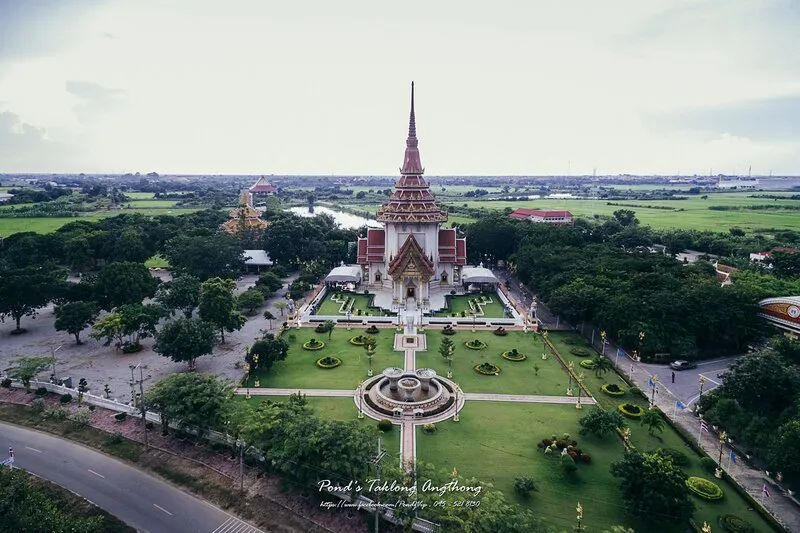
Wat Chantharangsi (Mueang Ang Thong District) is a faith-based temple that is easy to reach from the Asian Highway, best known for its “two-sides-of-the-road” layout that makes a visit feel like a gentle crossing from the community’s devotional zone to a grand architectural zone in a calm, well-paced rhythm. With 1–2 hours, you can cover both Luang Pho Yok and the main sanctuary area of Luang Pho Sot without rushing, and on weekdays the atmosphere is noticeably quieter—ideal for focused worship.
Wat Chantharangsi (Wat Chantharangsi), Ang Thong is one of those temples that travelers on the Asian Highway deliberately stop for, because the first impression it gives is simple but memorable: easy to access, yet impressively grand. From the moment you follow the sign into Ban Na in Hua Phai Subdistrict, you can sense that this is not a place designed only for photos, but a living religious space where local faith remains central to everyday life. What sets Wat Chantharangsi apart is its split layout on opposite sides of the road. That structure naturally creates an ordered route, a clear sequence, and built-in “pause points” for the mind. One side is the community’s devotional heart, where visitors come to pay respect to Luang Pho Yok; the other side is defined by a monumental building scale and the presence of Luang Pho Sot, an experience that feels both serene and spiritually uplifting.
If you view Wat Chantharangsi as a cultural destination, the key is not walking fast to cover every corner, but “reading the rhythm of the place” and moving in a way that matches the accumulated faith of the community. The temple is a local (royal-recognized) monastery under the Mahanikaya order, with a clear historical timeline: it was established in 2446 B.E. and received its consecrated boundary (Wisungkhamsima) on 31 July 2494 B.E. The grand structures that people often talk about can make the temple seem like a modern landmark, but once you align the timeline, it becomes clear that the temple has long been part of community life and later expanded with major architecture to serve as a spiritual center for visitors in an era of easier travel.
The charm becomes unmistakable when you notice that “openness” is the temple’s visual language. The grounds are arranged to feel airy and comfortable, with enough space for worshippers to keep respectful distance without competing for room. On quieter weekdays, you can hear the wind through the trees, birdsong, and occasional chanting drifting from inside the buildings. It makes prayer feel uncomplicated: no hurry, no pressure. On weekends, the atmosphere becomes naturally livelier, as many people visit to make merit. Some visitors associate the temple with the communal act of giving and receiving—such as occasional alms or food service—so if you arrive on a busy day, the best approach is to take a brief moment to settle your mind, then move gently with the flow, without cutting in or crowding, and with special care not to disturb those praying or meditating inside.
When you begin on the side that functions as the community’s spiritual core, you will often hear people mention Luang Pho Yok. In many Thai devotional contexts, the word “yok” is sometimes connected to symbolic ideas of lifting obstacles or shifting one’s circumstances, but the most meaningful way to worship here is to keep the mind aligned rather than to chase dramatic expectations. The most beautiful form of faith starts with composure and an intention that does not harm others. Luang Pho Yok is therefore not only a sacred image, but also a point of emotional grounding that helps visitors slow down, breathe deeper, and return to daily life with clearer awareness. If you wish to make a vow or prayer, it is best to begin by centering yourself, recollecting the Triple Gem, renewing your commitment to wholesome actions, and wishing for the strength to do what is right—then making offerings or donations according to your means, in a way that does not inconvenience others.
Across the road is the visual hallmark that many people associate with Wat Chantharangsi: a grand four-gabled sanctuary structure and the main area enshrining Luang Pho Sot (Phra Mongkhon Thep Mun), a revered name among many merit-making travelers. The temple features a four-gabled hall topped by a five-tiered spire, approximately 48 meters high, 24 meters wide, and 33 meters long. Architecture on this scale immediately communicates intention. The building is not only about spectacle—it is designed to quiet the mind, invite stillness, and make the rush of ordinary life feel naturally left behind outside.
Inside, the hall enshrines a large metal casting of Luang Pho Sot, with a lap width of 6 meters 9 inches and a height of 9 meters 9 inches. Those proportions help you visualize the true scale without relying on vague descriptions of “big” or “small.” As you move closer, the golden-toned surface reflects light with depth, especially from morning to late morning or in the afternoon when sunlight hits at the right angle. The atmosphere feels dignified rather than harsh. Many visitors describe an instinctive sense of calm and reverence, which is the special quality of a sacred space that is arranged to help people become peaceful more than to simply amaze the eye.
What makes Wat Chantharangsi more meaningful than a quick architectural stop is the way it connects everyday life and lived faith in a tangible way. When you see locals arriving without hurry, elderly visitors praying with focus, or families bringing children to learn proper temple etiquette, you can sense that the temple functions as a “classroom of calm” without long lectures. Serenity is carried through open spatial design, easy walkways, and clear worship points that gently help people set down heavy thoughts, little by little.
If you want more than photos, the best way to experience Wat Chantharangsi is to balance your time between the two sides of the road. Begin with Luang Pho Yok to “set your inner foundation” through quiet worship and slower breathing, then cross to the sanctuary side to appreciate the architecture and the presence of Luang Pho Sot. Many people linger in front of the hall because the open forecourt allows you to pause without blocking anyone, and it is also a strong viewpoint to take in the structure as a whole. Instead of taking a photo and rushing on, try standing still for a moment and observing your own state of mind—the kind of experience that often stays longer than any image.
Wat Chantharangsi also has art details and local narratives that help people remember Luang Pho Yok more vividly. It is often mentioned that Luang Pho Yok is a stucco Buddha image associated with Ayutthaya-era artistry and is a key devotional point within the ordination hall. The name “Luang Pho Yok” is commonly linked to the idea that the image can sway, reflecting how many Thai sacred sites preserve faith through community language and shared stories. For visitors, however, the essential principle remains etiquette and composure: regardless of how strongly you believe in such narratives, respecting the place and not disturbing practitioners is the heart of visiting a temple well.
Another reason Wat Chantharangsi stays in people’s memory is that it offers “photogenic viewpoints with meaning.” The beauty is not only visual; it reveals the intention of the builders and the ongoing care of the temple. For photographers, morning to late morning brings softer light that suits architectural detail and overall tone, while afternoon light can make the surface of the Luang Pho Sot image look especially luminous. If tranquility matters more than photos, weekdays are the best choice, because walking through open space without crowds makes natural sounds more audible and turns worship into a personal, unhurried moment.
In terms of lived temple culture, Wat Chantharangsi receives visitors consistently and is sometimes associated with communal merit-making activities such as food service on weekends. This reflects a temple that is truly “alive,” because such giving is not only about feeding people, but also about creating a practical way for the community to practice generosity. If you arrive on a day when food is offered, the best manners are to take only what you will finish, avoid cutting lines, and offer a respectful thanks to those organizing and assisting. If you plan to visit as a large group, contacting the temple ahead of time helps everything run smoothly.
Getting There For visitors driving a private car, Wat Chantharangsi is well suited to those approaching from the Asian Highway toward Ang Thong city. The route is generally straightforward and comfortable compared with more remote rural temples. A practical approach is to use Ang Thong city as your anchor point, then follow local roads toward Hua Phai Subdistrict, watching for temple signage and continuing a short distance into the area. Once on site, parking is typically available, and walking inside the temple grounds is relatively easy thanks to the open layout and clear circulation. If you prefer not to drive, a workable plan is to travel into Ang Thong city first, then continue by local taxi or hired vehicle, clearly stating “Wat Chantharangsi, Hua Phai Subdistrict” to avoid confusion with similarly named places elsewhere.
As for timing, weekdays offer a calmer atmosphere, while weekends tend to be busier as more visitors come to make merit. If you want to feel a more active, community-focused temple rhythm, weekends can be rewarding, but the essentials remain the same: dress respectfully, keep your voice low, avoid climbing or entering restricted areas, and be mindful when taking photos so you do not disturb those chanting or meditating—especially inside the main buildings where quiet is particularly important.
Seen through the lens of faith-based travel, Wat Chantharangsi offers a rare combination: approachable community devotion through Luang Pho Yok, and monumental architecture with a strong sense of stillness through the sanctuary and Luang Pho Sot. Its key strength is accessibility for travelers with limited time: you can stop, worship, and continue your trip without complicated navigation, and still connect onward to other important Ang Thong sites in a single day without exhausting travel. For anyone who wants to begin knowing Ang Thong through a temple with clear history and a strong visual identity, Wat Chantharangsi remains a well-balanced, genuinely worthwhile choice.
| Name | Wat Chantharangsi (Wat Chantharangsi) |
| Address | Hua Phai Subdistrict, Mueang Ang Thong District, Ang Thong, Thailand |
| Place Summary | An easy-to-reach faith-focused temple, distinguished by its “two-sides-of-the-road” layout that guides visitors from the community devotional zone (Luang Pho Yok) to a monumental architectural zone (four-gabled sanctuary and Luang Pho Sot) in a calm, well-sequenced visit. |
| Highlights | 1) Two-side layout across the road that creates a natural visiting sequence 2) Luang Pho Yok as the community faith focal point 3) Large four-gabled sanctuary topped with a five-tier spire 4) Large metal casting of Luang Pho Sot enshrined inside 5) Open, airy grounds suitable for unhurried worship. |
| History / Period | Established in 2446 B.E.; received Wisungkhamsima on 31 July 2494 B.E. |
| Key Evidence / Notes | Verified historical timeline (establishment and Wisungkhamsima), and published architectural dimensions of the sanctuary and the Luang Pho Sot image, plus the listed abbot name from a verifiable reference. |
| Open Days | Daily |
| Opening Hours | 08:00 – 17:00 |
| Fees | No admission fee (donations are voluntary). |
| Facilities | Parking area, open walkways, clearly separated worship zones (facilities may vary depending on on-site arrangements). |
| Abbot (Latest) | Phra Khru Phithak Chantharangsi Chotiyano |
| Current Status | Open for worship and faith-based visits. |
| Contact Number | 035-556-030 |
| Nearby Tourist Attractions With Distance (Approx.) | 1) Wat Champa Lo – 2.9 km 2) Wat Ton Son – 3.4 km 3) Big C Ang Thong Market Area – 2.2 km 4) Khlong Thom Ka Chong Market – 4.2 km 5) Wat Muang (Phra Phuttha Maha Nawamin) – 17 km |
| Popular Restaurants Nearby (Approx. Distance) | 1) Samrap Kab Khao Ang Thong – 0.3 km 2) Local Boat Noodles (Ang Thong Area) – 4 km 3) 10/6 Restaurant – 5 km 4) Ang Thong Steak House 2006 (Ang Thong Branch) – 5 km 5) KFC Lotus Ang Thong – 4 km |
| Popular Accommodations Nearby (Approx. Distance) | 1) Bualuang Boutique Resort Ang Thong – 1.4 km 2) IKKYU 2 Ang Thong – 2.0 km 3) Blue House Ang Thong – 2.0 km 4) Bualuang Hotel (Ang Thong) – 2.5 km 5) Suphorn Grand Hotel – 2.6 km |
Frequently Asked Questions (FAQ)
Q: Where is Wat Chantharangsi located?
A: It is in Hua Phai Subdistrict, Mueang Ang Thong District, Ang Thong, and the main areas are arranged on opposite sides of the road, creating a clear visiting sequence.
Q: What is Wat Chantharangsi best known for?
A: It is known for its two-side layout, devotion to Luang Pho Yok, and the large four-gabled sanctuary that enshrines a monumental image of Luang Pho Sot.
Q: When was Wat Chantharangsi established?
A: The temple was established in 2446 B.E. and received Wisungkhamsima on 31 July 2494 B.E.
Q: How much time should I plan for a visit?
A: To worship and explore both sides without rushing, plan at least 1–2 hours, and add more time if you wish to make offerings or spend quiet time inside the sanctuary.
Q: Is Wat Chantharangsi open every day, and what are the hours?
A: It is generally open daily, with common visiting hours around 08:00 – 17:00.
Q: Is there a contact phone number for the temple?
A: Yes. A published contact number is 035-556-030. If you plan to visit as a large group, calling ahead is recommended.
Q: What should I be especially mindful of on weekends?
A: Weekends can be busier, so keep a respectful pace, avoid loud voices, do not cut lines, and take care not to disturb chanting or meditation, especially indoors.
Q: What is appropriate attire for visiting the temple?
A: Dress modestly, avoid overly short or tight clothing, and follow basic temple etiquette such as keeping quiet and respecting restricted areas.
 Wat Chantharangsi Map
 Category:
  Group:
  Last Update: 1 DayAgo
Comment
 Nearby Attractions
| Keyword (Advance) |
 Facebook Fanpage
 Region
 Art, Culture and Heritage
 Landmarks and Memorials(
 Royal Palace(
 Art, Craft Centres, Tradition(
 Museums(
 Historical Houses and The Ancient City(
 Educational Places
 Educational Gardens, Farm(
 Other religious and spiritural sites(
 Research and Development
 Royal Project(
 Suburban Living
 Village, Community(
 Local Market(
 Floating Market(
 Nature and Wildlife
 River, Canal(
 Other natural attractions(
 Entertainment and Agricultural
 Farm, Parks, Gardens and Ecotourism(
 Outdoor and Adventure Activities(
 Shopping
 Shopping and Night Market(
 Travel Articles, Recipes
 Travel Review, Food Review(
 Central Thai Cuisine, Central Thai food recipes(