

 Home
Home Chiang Mai(










Rating: 4/5 (1 votes)
 |
|  Map
Map 
 Have Map
  No Map
Chiang Mai attractions
Attractions in Thailand
Open Days: Daily
Opening Hours: 09:00–17:00
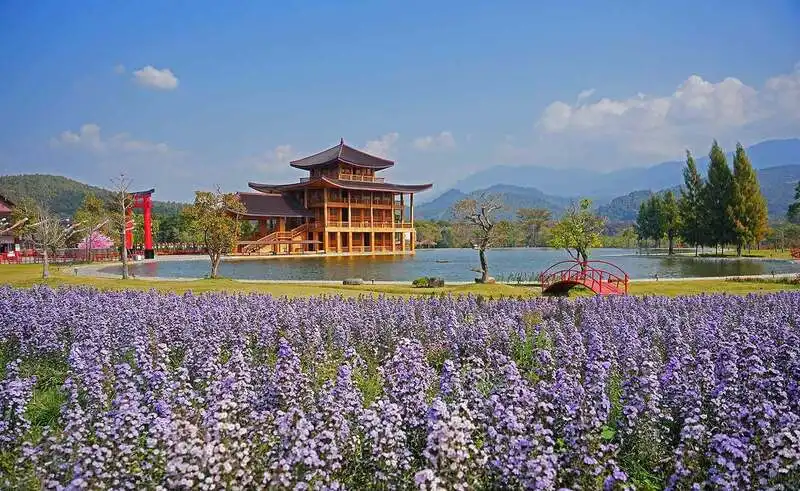
Hinoki Land, located in Sri Dong Yen Subdistrict of Chai Prakan District in Chiang Mai, is one of Northern Thailand’s most distinctive cultural–themed destinations. Spread across more than 83 rai of land, this Japanese-inspired complex blends the serenity of Lanna highlands with the refined aesthetics of traditional Japanese architecture. Visitors often describe the experience as “stepping into Japan without leaving Chiang Mai,” where the scent of fragrant hinoki wood mingles with cool mountain air, creating an atmosphere unlike anywhere else in the region.
The heart of Hinoki Land lies in its extensive use of authentic hinoki cypress, a highly valued wood in Japan known for its durability, natural resistance to termites, and refreshing aroma. For centuries, hinoki has been associated with purity in Shinto beliefs and has been used to build temples, shrines, and the residences of nobility. Walking through Hinoki Land, visitors immediately notice the gentle scent of the wood permeating the air — a scent traditionally believed to calm the mind and invite clarity.
Approaching the complex, the landscape gradually opens into a wide, peaceful space framed by the northern mountains. The transition from rural roadside scenery to the intentional calm of Hinoki Land is noticeable. The soundscape changes first — from village life to a quiet rustle of wind through trees, interrupted only by footsteps on wooden walkways. This slow, sensory shift is part of the design, encouraging visitors to leave behind the rush of everyday life as they enter a new cultural realm.
One of the most iconic scenes inside the complex is the long pathway lined with bright red torii gates. Traditionally, torii gates signify the threshold between the physical world and the sacred domain in Shinto tradition. Walking beneath these gates, visitors feel as though they are transitioning into a space where time softens and silence deepens. With each step, the vibrant red frames the distant mountains, creating a visual rhythm that mirrors famous Japanese spiritual routes.
At the end of the torii walkway stands the magnificent Hinoki Castle, constructed entirely from 100% hinoki wood. Its pillars, 8 meters tall and 8 inches thick, rise like living sculptures. Sunlight filters through the spaces between beams, drawing long shadows across the polished wooden floors. The structure is not just a display of craftsmanship; it is a reinterpretation of Japanese castles through the lens of Northern Thailand’s landscape. Many visitors describe the interior as meditative — a place where the aroma of wood and the softness of natural light evoke a sense of quiet introspection.
The design of the castle incorporates subtle Japanese concepts such as “Ma” — the importance of empty space. Pathways encourage slow movement, gentle awareness, and appreciation of the environment. Each pause between steps becomes part of the experience. Rather than overwhelming the senses, the architecture allows them to rest, opening a peaceful dialogue between visitor and place.
Outside, a broad reflective lake surrounds the castle. On clear days, its surface becomes a natural mirror, doubling the image of the castle and the torii gates. In the early morning, light mist drifts across the water, creating scenes reminiscent of calm mountain villages in Japan. Photographers often visit during sunrise or late afternoon, when the interplay of light and water gives the scenery an ethereal quality.
Continuing deeper into the grounds, visitors arrive at the charming Japan Town, a recreation of a traditional Japanese street. Wooden façades, warm lanterns, narrow walkways, and mountain mist collectively give the area an atmosphere similar to historic towns like Takayama or Kanazawa. Here, visitors slow their pace naturally, drawn into the quiet nostalgia created by the architecture and landscape.
Another favorite spot is the Hinoki Studio, where visitors can dress in traditional Japanese attire — kimono, yukata, or even samurai outfits. With the authentic wooden backdrops and torii gate corridors, the studio provides memorable photographic experiences. Many families, couples, and travel bloggers come here specifically for these picture-perfect moments.
The Hinoki Coffee Shop offers a place to unwind with matcha drinks, Japanese-inspired desserts, and views overlooking the lake. What makes the café special is not just the menu but the pervasive aroma of hinoki that fills the entire room, creating a relaxing sensory retreat after hours of walking.
The Hinoki Food Hall completes the cultural immersion with a range of Japanese dishes such as ramen, sushi, curry rice, alongside comforting Northern Thai classics like hung-lay curry and nam prik ong. The food hall becomes a gathering point — a place where travelers share tables, exchange stories, and enjoy the quiet breeze passing through the open spaces.
Because the complex spans over 83 rai, Hinoki Land is ideal for slow travel. Visitors can spend hours wandering through gardens, wooden walkways, and scenic viewpoints. Mornings often feature soft gold light and gentle fog, while afternoons highlight the detailed textures of wood and stone. The scenery shifts constantly with time and weather, giving each visit a unique charm.
Getting There Hinoki Land is accessible via Highway 107 (Chiang Mai–Fang–Tha Ton). The journey from Chiang Mai is approximately 130–140 kilometers and takes around 2–2.5 hours. The road is mostly paved and well-marked. Upon reaching Sri Dong Yen Subdistrict, large signs clearly guide visitors to the entrance. Those traveling without private vehicles may take a bus to Chai Prakan town center and continue via local songthaew taxi.
| Name | Hinoki Land (Japanese Cultural Village) |
| Location | Sri Dong Yen Subdistrict, Chai Prakan District, Chiang Mai, along Highway 107 |
| Characteristics | Japanese wooden architecture built from 100% hinoki cypress, torii gate walkway, Japanese castle, photo studio, Japan Town, lake viewpoint |
| Nearby Places | - Wat Sri Dong Yen (2 km) - Fang Town (25 km) - Fang Hot Springs (30 km) - Doi Ang Khang (40 km) |
| Popular Restaurants Nearby | - Ratchanon Restaurant, Chai Prakan (3 km, Tel. 053-469-123) - Baan Suan Chai Prakan Restaurant (5 km, Tel. 081-765-6634) |
| Popular Accommodations Nearby | - Chai Prakan Resort (4 km, Tel. 053-469-199) - Fang Modern Hotel (25 km, Tel. 086-439-1843) |
| Facilities | Parking, restrooms, restaurants, café, photo spots, large open spaces |
| Fees | Entrance fees vary by promotional period |
Frequently Asked Questions
Q: How much time should I spend at Hinoki Land?
A: Most visitors spend between 1–3 hours exploring the castle, torii gates, Japan Town, and food hall.
Q: What is the best time of day to visit?
A: Early morning and late afternoon offer the best lighting for photography, especially around the lake and torii gates.
Q: Does Hinoki Land offer traditional Japanese costumes?
A: Yes, the Hinoki Studio provides kimono, yukata, and samurai outfits for rent.
Q: Can I get there without a private car?
A: Yes, take a bus to Chai Prakan town and continue by local songthaew taxi to the entrance.
Q: Is Hinoki Land suitable for children?
A: Absolutely. The area is spacious, safe, and full of visually engaging attractions.
 Hinoki Land Map
 Category:
  Group:
  Last Update: 3 MonthAgo
Comment

Photo Gellery(9) 
 Thank you photo(9) from: BannmaihomHinoki