

 Home
Home Chiang Mai(




Rating: 4.4/5 (7 votes)
 |
|  Map
Map 
 Have Map
  No Map
Prachuap Khiri Khan attractions
Attractions in Thailand
Open Days: The community can be visited every day, but homestay activities or community-based programs should be arranged in advance.
Opening Hours: Daytime is the most suitable period, approximately 08:00 – 17:00.
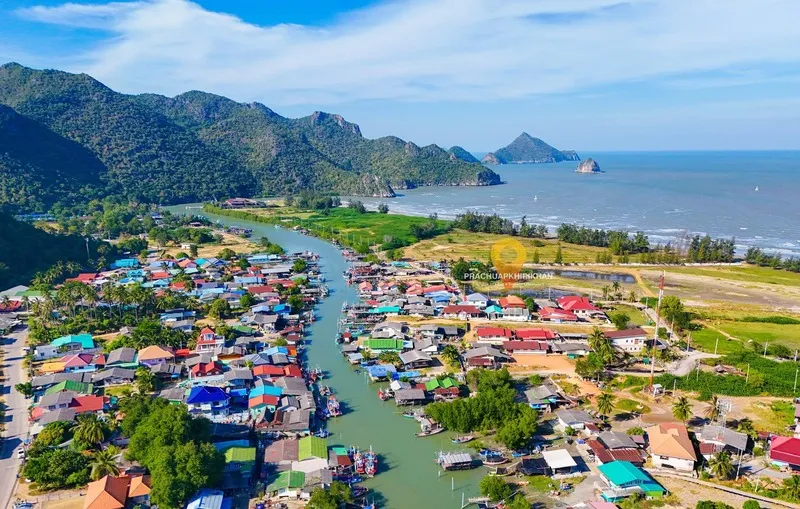
Ban Bang Pu is an old fishing village in Sam Roi Yot District, Prachuap Khiri Khan Province, with a character that clearly sets it apart from more mainstream seaside destinations. This place is not only about beautiful beaches or famous caves. It is also a living community with real fishing boats, real canals, and a visible relationship between local people and nature. Ban Bang Pu is located within Khao Sam Roi Yot National Park, a coastal landscape distinguished by limestone mountains, mudflats, mangrove forests, beach forests, and shallow marine waters. This setting gives the village a rare kind of richness, where nature, culture, and local ways of life come together in a highly harmonious way.
One of the strongest impressions of Ban Bang Pu is the feeling of being a “canal-side village that still breathes.” Visitors will find fishing boats lined up along the waterway, houses closely tied to the sea and tidal channels, and an atmosphere that has not been artificially staged for tourism. It remains, above all, a real working community. Walking through the village, visitors can immediately sense its calmness, simplicity, and warmth, and can clearly see that nature is not separate from the people here, but is part of everyday life itself.
In historical terms, Ban Bang Pu developed as a fishing community on the coastal plain of the Khao Sam Roi Yot area, one of the more unusual landscapes in the lower central region of Thailand. This area combines ancient limestone mountains with shoreline zones enriched by nutrient-rich muddy sediment. Around the mouth of Bang Pu Canal, these natural conditions created an ideal habitat for many aquatic species, leading local people to settle here and develop fishing as a natural livelihood. According to community information, Ban Bang Pu is located in Moo 8, Sam Roi Yot Subdistrict, around 35 kilometers from the district office and about 249 kilometers from Bangkok. This gives the village both the peaceful atmosphere of a coastal settlement and the practical convenience of being reachable from a major city.
The geography of Ban Bang Pu is distinctive because it is surrounded by mountains on three sides, while the fourth side opens toward the Gulf of Thailand. This gives the area both the character of a coastal village and the atmosphere of a foothill settlement at the same time. Natural canals flowing into the sea are at the heart of community life, serving as transport routes for fishing boats, nurseries for marine life, and ecological systems that sustain the people who live here. The beauty of Ban Bang Pu therefore comes not only from the beach, but from the interaction of all these elements together—mountains, canals, mangrove forests, beach forests, and the sea.
The main occupation in Ban Bang Pu is coastal fishing, which closely reflects the local environment. The muddy, nutrient-rich canal mouth attracts many small fish and marine species, including blue swimming crabs, hermit crabs, fiddler crabs, sesarmid crabs, and many other aquatic animals that form the economic foundation of the community. Ban Bang Pu is therefore not simply a scenic village, but a place of real economic importance for local families. The sight of fishing boats lined up along the canal is not merely picturesque; it is a direct reflection of a way of life that continues every day.
The fishing life of Ban Bang Pu is also connected to local knowledge about seasons, tides, currents, and changing coastal conditions. Villagers need to know when it is best to go out to sea, when to store equipment, and which species are likely to appear in the canal or near the estuary at different times. This knowledge is not only a professional skill; it is also a form of cultural heritage passed down within the community. It helps visitors understand that living sustainably with the sea requires a deep and practical understanding of nature.
In terms of natural resources, Ban Bang Pu is especially remarkable because it is located in an area with both mangrove forest and beach forest ecosystems. Mangroves can be found along Bang Pu Canal, Khao Daeng Canal, and branching waterways, with important plant species such as sea poon trees, small-leaf mangroves, sea milkwood, and red mangroves. These plants act as natural barriers against waves, help reduce soil erosion, and provide nursery grounds for young aquatic animals. For this reason, the mangrove forests around Ban Bang Pu can truly be described as an important “nursery of the sea,” essential to both the ecosystem and the village’s fishing-based way of life.
The beach forest is another ecosystem that adds greatly to the charm of Ban Bang Pu. In areas not regularly flooded by seawater, there are coastal plants such as casuarina, portia tree, Indian almond, local coastal shrubs, and wild lime. This gives the shoreline a sense of shade and natural beauty typical of tropical coasts. The diversity of these plant species means that Ban Bang Pu is not simply a fishing village facing the sea, but a place with real ecological and landscape richness.
The marine resources in the Khao Sam Roi Yot area, including Ban Bang Pu, are highly abundant. According to surveys by the national park, dozens of fish species have been recorded here, along with important aquatic species such as banana prawns, squid, and blue swimming crabs. This abundance makes Ban Bang Pu much more than a small seaside village. It is part of a coastal ecosystem with great significance for both conservation and the local economy. A visit here is therefore an opportunity to see clearly how “healthy nature” and “a sustainable community” are directly connected.
When speaking of the places that have helped make Ban Bang Pu better known, the starting point is clearly Bang Pu Beach, a quiet and peaceful beach suitable for relaxing, walking, and enjoying the sea without crowds. Unlike the beaches of larger tourist towns, this one has not been dominated by commercial activity. Its appeal lies in its simplicity and natural atmosphere. Those who enjoy the sea in a quieter setting will immediately feel that Bang Pu Beach has a different mood from more famous coastal destinations, and it is especially well suited to visitors who want to rest both their eyes and their minds.
Another nearby place of equal importance is Laem Sala Beach, one of the most significant beaches within Khao Sam Roi Yot National Park. The atmosphere there is calm, framed by both mountains and sea, and ideal for travelers who enjoy nature at an unhurried pace. Beyond being a place to relax, Laem Sala Beach is also important as the main starting point for the route to Phraya Nakhon Cave, making it an area where sea, forest, and cave landscapes connect beautifully.
Tham Kaeo, or Kaeo Cave, is another attraction that adds depth to a trip to Ban Bang Pu. The cave is known for its beautiful stalactites and stalagmites, as well as an interior atmosphere that evokes mystery beneath the limestone mountains. At certain times, light entering the cave creates dramatic shadows and highlights that are particularly appealing to visitors interested in natural exploration. As a result, travelers coming to this area do not only see a fishing community, but also experience the geological wonder of the karst landscape for which Khao Sam Roi Yot is famous.
The national highlight of the area is Phraya Nakhon Cave, which is under the care of Khao Sam Roi Yot National Park and lies about 500 meters from Laem Sala Beach. Inside the cave stands the famous “Kuha Kharuehat Pavilion,” a beautiful four-gabled royal pavilion that has become an iconic symbol of Prachuap Khiri Khan Province. What makes Phraya Nakhon Cave especially remarkable is the shaft of natural sunlight that shines through the cave opening and illuminates the pavilion at certain times of day, creating an image of both great beauty and historical importance. A visit here is therefore at once an experience of nature, architecture, and history.
When all these attractions are considered together, it becomes clear that Ban Bang Pu is far more than an ordinary canal-side settlement or fishing village. It is a center for a remarkably complete travel experience. Visitors can begin the day watching the rhythm of fishing life along the canal, continue to Bang Pu Beach or Laem Sala Beach, hike to Phraya Nakhon Cave, explore Kaeo Cave, and end the day with fresh seafood in a canal-side village atmosphere. It is difficult to find this kind of itinerary elsewhere, because here nature, community life, and history are linked in such an organic way.
Another reason Ban Bang Pu is such an appealing place is that the community has begun to develop tourism without abandoning its own roots. The village offers homestays and canal-side restaurants that allow visitors to experience the real atmosphere of the community more closely. Staying in such a place differs greatly from staying in a large hotel, because guests are able to observe the rhythm of village life from morning to evening, see fishing boats come and go, eat seafood closely tied to its source, and experience the friendliness of local people at first hand.
Tourism in Ban Bang Pu is therefore especially suitable for travelers who appreciate a balance between relaxation and learning. If you want the sea, it is here. If you want caves and mountains, they are here. If you want to observe village life, it is here. And if you want to learn about coastal ecosystems, the evidence is all around you. Being located within Khao Sam Roi Yot National Park makes Ban Bang Pu an especially clear example of how communities and protected areas can coexist, which is one of the most important issues in sustainable tourism today.
For those who enjoy photography, Ban Bang Pu offers far more visual variety than many people expect. There are scenes of fishing boats along the canal, mangrove forests in the warm light of late afternoon, quiet beaches, silhouettes of limestone hills, and cave interiors shaped by natural light. Morning visits bring fresh air and soft light ideal for photographing the village, while late afternoon is perfect for enjoying the canal and sea in warm tones that create a particularly peaceful and romantic mood.
Getting There From Bangkok, travelers can drive south via Rama II Road and continue onto Phet Kasem Road toward Prachuap Khiri Khan Province. Upon reaching Sam Roi Yot District, turn onto Road No. 1025 and continue toward Ban Bang Pu. The total journey usually takes around 3–4 hours, depending on traffic conditions. Those not traveling by private car can also use air-conditioned bus services and then continue locally by hired transport. Overall, the route is reasonably convenient and works well either as a one-day trip or as an overnight stay for those who want to explore the area in greater depth.
In summary, Ban Bang Pu is one of the most interesting tourism communities in Prachuap Khiri Khan Province because it brings together sea, canals, mangrove forest, caves, history, and fishing life within one area. Visitors do not only see natural beauty, but also gain a deeper understanding of how rich coastal resources directly shape community life. Ban Bang Pu is therefore suitable for travelers seeking relaxation, nature lovers, those interested in local culture, and anyone who wants to experience Khao Sam Roi Yot in a way that feels deeper and more alive than simply stopping for photographs.
| Place Name | Ban Bang Pu |
| Location | Moo 8, Sam Roi Yot Subdistrict, Sam Roi Yot District, Prachuap Khiri Khan Province |
| Address | A canal-side community within Khao Sam Roi Yot National Park, near the route to Laem Sala Beach and Phraya Nakhon Cave |
| Place Summary | An old fishing village within Khao Sam Roi Yot National Park, known for its canal-side community life, coastal ecosystems, and convenient access to famous natural attractions |
| Highlights | Canal-side fishing life, mangrove forests, beach forests, rich marine resources, and proximity to Laem Sala Beach, Kaeo Cave, and Phraya Nakhon Cave |
| Community Character | A fishing community located on a coastal plain, surrounded by mountains on three sides and connected to the sea by natural canals |
| Suitable Activities | Walking along the beach, observing fishing boats, photographing the community, learning about coastal ecology, staying in a homestay, and combining the trip with Laem Sala Beach, Kaeo Cave, and Phraya Nakhon Cave |
| Getting There | From Bangkok, take Rama II Road and continue onto Phet Kasem Road toward Sam Roi Yot District, then use Road No. 1025 to reach the community. The total distance is approximately 249 km |
| Current Status | An active residential community with homestays, canal-side restaurants, and an important role as a nature and community-based tourism destination in the Khao Sam Roi Yot area |
| Coordinates | Approximately 12.1980, 100.0030 |
| Nearby Attractions | 1. Bang Pu Beach – within the community 2. Laem Sala Beach – approximately 3 km 3. Phraya Nakhon Cave – approximately 4 km 4. Kaeo Cave – approximately 4 km 5. Bueng Bua, Khao Sam Roi Yot National Park – approximately 18 km |
| Nearby Restaurants | 1. Krua Ladda – approximately 13 km – Tel. 087-160-4494 2. Jim Daeng Seafood – approximately 14 km – Tel. 093-248-9911 3. Chicken and Bee: Good Food and Organic Farm – approximately 18 km – Tel. 092-054-5645 4. Garfield Seafood Sam Roi Yot – approximately 15 km – Tel. 081-943-0241 5. Thai Thai Restaurant – approximately 15 km – Tel. 084-932-4872 |
| Nearby Accommodations | 1. Dolphin Bay Resort – approximately 14 km – Tel. 032-825-190, 095-775-7357 2. Long Beach Inn – approximately 14 km – Tel. 086-064-5841, 032-559-068 3. Selisa Beach – approximately 14 km – Tel. 032-559-334, 098-990-5336 4. The Green Beach Resort – approximately 15 km – Tel. 082-232-9935 5. The Beach Resort – approximately 15 km – Tel. 085-289-3785 |
Frequently Asked Questions (FAQ)
Q: Where is Ban Bang Pu located?
A: Ban Bang Pu is located in Moo 8, Sam Roi Yot Subdistrict, Sam Roi Yot District, Prachuap Khiri Khan Province, within Khao Sam Roi Yot National Park.
Q: What is interesting about Ban Bang Pu?
A: The highlights of Ban Bang Pu include canal-side fishing life, rich mangrove ecosystems and marine life, as well as its role as a gateway to Laem Sala Beach, Kaeo Cave, and Phraya Nakhon Cave.
Q: Is Ban Bang Pu close to Phraya Nakhon Cave?
A: Yes, it is very close and can easily be combined into the same day trip, with Laem Sala Beach serving as the main starting point before visiting Phraya Nakhon Cave.
Q: What type of traveler is Ban Bang Pu suitable for?
A: It is suitable for travelers who enjoy nature, community life, photography, quiet beaches, and destinations that combine sea, caves, and local culture in one area.
Q: Can visitors stay overnight in Ban Bang Pu?
A: Yes, overnight stays are possible in the surrounding area, with both community homestays and resorts in the Sam Roi Yot zone available depending on travel style.
Q: When is the best time to visit Ban Bang Pu?
A: It can be visited all year round, but periods with milder weather and less rain are the most comfortable, especially if you plan to hike to caves or explore several attractions in one day.
 Ban Bang Pu Map
 Category:
  Group:
  Last Update: 15 HourAgo
Comment
 Nearby Attractions
| Keyword (Advance) |
 Region
|
 Muang Prachuap Khiri Khan(