

 Home
Home Chiang Mai(




Rating: 3.3/5 (6 votes)
 |
|  Map
Map 
 Have Map
  No Map
Prachuap Khiri Khan attractions
Attractions in Thailand
Open Days: Daily
Opening Hours: 09:00 – 15:45
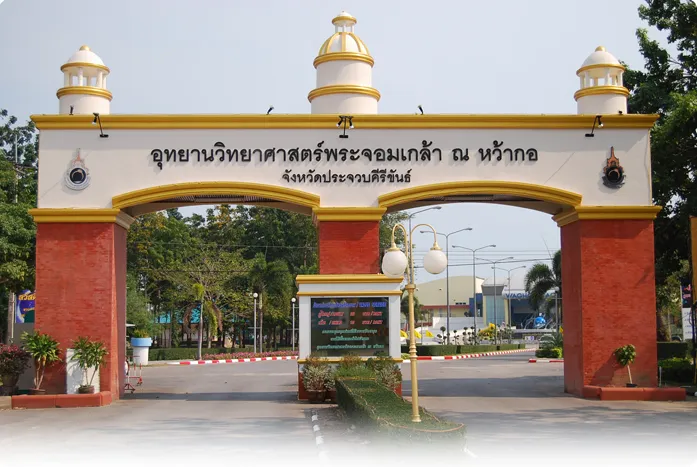
King Mongkut Memorial Park of Science and Technology at Waghor is a major attraction in Prachuap Khiri Khan that brings together history, science, astronomy, nature, and an aquarium in one place. The greatest significance of this site is that it was the location from which King Mongkut accurately predicted and observed a total solar eclipse, making it an important landmark in the history of Thai science. Today, the park welcomes the public to learn through exhibitions, activity bases, science camps, and natural spaces, making it suitable for families, students, and travelers who want to explore Prachuap in a way that is both educational and enjoyable.
King Mongkut Memorial Park of Science and Technology at Waghor is one of the most important knowledge-based tourist attractions in Prachuap Khiri Khan Province and a destination of great historical significance to Thailand. The site is located in Khlong Wan Subdistrict, Mueang Prachuap Khiri Khan District, along a peaceful coastal area not far from Prachuap Khiri Khan town. Its uniqueness does not lie only in being a large science park, but also in how it connects the story of King Mongkut, Thai astronomy, modern science, coastal ecology, and public learning for all ages in one compelling destination.
When people speak of Waghor, many think of the important historical event in which King Mongkut accurately calculated a total solar eclipse two years in advance. This was not only astonishing evidence of his royal genius, but also proof that he possessed profound astronomical knowledge and could correctly explain natural phenomena through science. It is therefore no surprise that Thailand later honored him as the “Father of Thai Science” and used Waghor as the site of a science park with strong symbolic meaning.
The History of Waghor and the Total Solar Eclipse In the 19th century, astronomy was becoming an important scientific field in the Western world. In Siam, King Mongkut took a serious interest in astronomy and studied it extensively. Using mathematics and astronomy, he calculated that on 18 August 1868, a total solar eclipse would be visible at Waghor, on the coast of what is now Prachuap Khiri Khan Province. His calculation was highly accurate, and when the day arrived, he personally came to observe the event together with scientists, diplomats, and representatives from many countries.
That event left a remarkable impression because it clearly demonstrated that scientific knowledge could be tested and verified, rather than being based only on belief or speculation. The royal journey made Waghor a significant landmark in the history of Thai astronomy and helped later generations recognize the role of science in Thai society more clearly. Although the eclipse itself was a single event, its meaning has shaped the identity of this place ever since.
Later, in 1990, King Mongkut Memorial Park of Science and Technology at Waghor was established to honor King Mongkut and to develop this area into a comprehensive learning center for science, technology, astronomy, and the environment. The King graciously bestowed the name “King Mongkut Memorial Park of Science and Technology at Waghor,” giving the site importance in history, education, and tourism all at once.
The Importance of Waghor Park to Thai Science This park was not created merely to commemorate the past. It also plays a real role in spreading scientific knowledge to the public. It is a place where students, teachers, academics, and the general public can learn through exhibitions and activities in a tangible way. The Ministry of Education has promoted the park as an important out-of-classroom learning center, offering camps, science activities, environmental programs, stargazing sessions, hands-on experiences, and group learning opportunities that make science feel more accessible.
One of Waghor’s great strengths is its ability to make science feel tangible. Visitors do not simply stand and read information panels; they can see models, interactive media, and exhibitions designed for self-guided learning. The content is also connected to Thailand’s own context, such as Thai monarchs and astronomy, Gulf of Thailand coastal ecosystems, and the use of technology in daily life. This makes the learning experience here feel more local and more closely related to real life than more abstract science centers.
The Structure and Main Zones of the Park Inside King Mongkut Memorial Park of Science and Technology at Waghor, there are 3 main connected buildings and 25 learning bases. Overall, the park is divided into 3 main learning groups: science, technology, and energy; astronomy and space; and nature and environment. This layout allows visitors to choose their route according to their interests. Some may focus on astronomy, some may enjoy the aquarium most, while families with children often prefer to explore all zones in order to combine knowledge and enjoyment in one visit.
The science, technology, and energy group explains the basics of science in everyday life and connects them with transportation, careers, energy, and computers. Exhibitions in this zone help visitors understand that science does not exist only in laboratories, but is embedded in the systems we use every day, whether for travel, communication, or energy production that supports modern life.
The astronomy and space group is the core heart of the park because it directly connects with the total solar eclipse event at Waghor. Visitors can learn about the solar system, the universe, astronomical observation, space technology, and the role of Thai monarchs in astronomy. What makes this zone especially interesting is the way it turns vast cosmic topics into something easy to understand through images, models, and a sequence of content that guides visitors from nearby celestial bodies like the sun and moon to the wider scale of outer space.
The nature and environment group is another highly popular zone because it offers knowledge about natural resources, coastal ecosystems, marine life, and the Waghor Aquarium, which is one of the main highlights of the site. Inside the aquarium, there are displays of marine fish, freshwater fish, and brackish-water fish, along with an underwater tunnel that allows visitors to experience the underwater world from a more immersive perspective. There is also a butterfly garden and outdoor natural space that extend the learning experience from the buildings into the real environment.
Waghor Aquarium: A Family-Friendly Highlight If asked which part of Waghor Park is the most popular, many travelers would point to the Waghor Aquarium. This is a zone where both children and adults can enjoy themselves together. Parents can use it as a learning space about the diversity of aquatic life, while children are often fascinated by the large tanks and underwater tunnel, which create the feeling of walking through a real marine world.
The appeal of the Waghor Aquarium lies not only in the number of species on display, but also in the way the exhibitions help visitors understand habitats, the differences between seawater, brackish water, and freshwater, and the fragility of marine ecosystems. Visitors therefore gain both enjoyment and knowledge at the same time, which is one of Waghor’s major strengths compared with aquariums or museum-style attractions that focus mainly on visual beauty.
Featured Activities Inside the Park In addition to permanent exhibitions, King Mongkut Memorial Park of Science and Technology at Waghor is also well known for camps and group activities, especially science camps, environmental camps, and stargazing activities. These programs are popular with schools and educational institutions. They make the park more than just a short visit destination and turn it into a place of deeper learning that can be experienced over several days.
Another interesting activity is the Walk Rally for groups, which is ideal for taking children and youth through learning stations with missions, questions, and real-world observation tasks. This makes learning more fun and participatory than simply standing and listening to explanations. In this sense, Waghor Park is thoughtfully designed around the needs of actual users, especially students and families.
For those who wish to stay overnight, the park also offers accommodation and camping areas that can host a large number of visitors, making it suitable for educational camps and group programs. Although general tourists often choose to stay in Prachuap Khiri Khan town or around Khlong Wan, the fact that the park can support overnight stays reinforces its role as a place for in-depth learning rather than only a brief stop.
The Atmosphere of Visiting Waghor What makes Waghor appealing is not only the content inside, but also the overall atmosphere. The park is spacious, shaded, and open, so it does not feel cramped like some enclosed educational buildings. Visitors can move comfortably between indoor exhibitions and outdoor spaces. Visiting in the morning is especially pleasant because the weather is not too hot, and it is also easy to continue on to nearby attractions such as Khlong Wan, Ao Manao, or Prachuap Khiri Khan town afterward.
For families with young children, Waghor is an excellent destination because it offers things children naturally enjoy, such as fish tanks, tunnels, and interactive activities, while adults can also appreciate the historical and astronomical content. Those who enjoy reading and taking time with detailed exhibitions can also stay here for many hours without feeling that the content becomes repetitive, because each zone has its own clearly distinct focus.
Getting to King Mongkut Memorial Park of Science and Technology at Waghor If traveling by private car from Bangkok, visitors can take Highway No. 4, or Phetkasem Road, directly to Prachuap Khiri Khan Province. The route is convenient and suitable for a family trip or a drive heading south. Once in Prachuap Khiri Khan town, simply continue toward Khlong Wan Subdistrict following the signs to the park.
If traveling by public transportation, visitors can take a bus or van from Bangkok to Prachuap Khiri Khan and then continue by local transport to the park. Those who prefer rail travel can get off at either Waghor Station or Prachuap Khiri Khan Station, then continue by local transport to the park. This is a good choice for travelers who want a relaxed journey and time to visit several places in the province.
Overall, King Mongkut Memorial Park of Science and Technology at Waghor is an exceptionally well-rounded attraction in Prachuap Khiri Khan because it combines history, science, nature, and educational entertainment in one place. Visitors do not simply come to see a beautiful site or take photos; they also gain a deeper understanding of why Waghor matters to Thailand in terms of science and education. That is precisely why this park is more than an ordinary tourist attraction; it is a place that deserves to be explored with real attention.
| Place Name | King Mongkut Memorial Park of Science and Technology at Waghor |
| Address | 181 Moo 4, Khlong Wan Subdistrict, Mueang Prachuap Khiri Khan District, Prachuap Khiri Khan Province 77000 |
| Summary | An important science- and history-focused attraction in Thailand, established to honor King Mongkut and developed into a public learning center for science, astronomy, technology, and nature. |
| Highlights | A historic site of King Mongkut’s observation of the total solar eclipse, 25 learning bases, Waghor Aquarium, an underwater tunnel, astronomy exhibitions, and science camp activities. |
| Background and History | Waghor was the place where King Mongkut personally observed the total solar eclipse in 1868. Later, the park was established in 1990 to honor him and promote science education for the public. |
| Main Learning Groups | Science, Technology, and Energy / Astronomy and Space / Nature and Environment |
| Featured Activities | Walk Rally, science camps, environmental camps, stargazing, aquarium visits, and group activities |
| Open Days | Daily |
| Opening Hours | 09:00 - 15:45 |
| Admission Fee | Adults 50 baht / Children 30 baht |
| Contact Numbers | 032-661098 - 101, 032-661103, 032-661726 - 7 ext. 247 |
| Getting There | Accessible by private car, public bus, or train. Visitors can get off at either Waghor Station or Prachuap Khiri Khan Station and continue by local transport to the park. |
| Nearby Tourist Attractions | 1. Waghor Aquarium, approximately 0.2 km, Tel. 032-661098 2. Ao Manao, approximately 12 km 3. Khao Chong Krachok, approximately 11 km 4. Prachuap Khiri Khan City Pillar Shrine, approximately 11 km 5. Khao Ta Mong Lai Forest Park, approximately 14 km 6. Khlong Wan Market, approximately 4 km |
| Nearby Restaurants | 1. @T Terrace Restaurant, approximately 0.5 km 2. Krua Baan Pran, approximately 1 km 3. Rosana Cafe X Library, approximately 2 km 4. Krua Jae Nee, approximately 3 km 5. Whalecome Cafe X Kallapangha, approximately 3.5 km 6. Somtam Khlong Wan, approximately 3.5 km |
| Nearby Accommodations | 1. Lipda Resort, approximately 2 km, Tel. 032-661-941, 092-635-8668 2. Sea Smile Resort, approximately 3 km, Tel. 095-406-8811 3. Tri-Shawa Resort, approximately 6 km, Tel. 085-494-5454, 089-925-4199, 085-240-4029 4. Pruksa Resort Prachuap Khiri Khan, approximately 10 km, Tel. 086-667-1857 5. Golden Beach Boutique Resort, approximately 11 km, Tel. 095-590-7406, 032-601-626 |
Frequently Asked Questions (FAQ)
Q: Where is King Mongkut Memorial Park of Science and Technology at Waghor located?
A: It is located in Khlong Wan Subdistrict, Mueang Prachuap Khiri Khan District, Prachuap Khiri Khan Province, not far from Prachuap Khiri Khan town.
Q: Is Waghor Park open every day?
A: Yes, it is open daily, with exhibition hours from 09:00 to 15:45.
Q: How much is the admission fee for Waghor Park?
A: The admission fee is 50 baht for adults and 30 baht for children.
Q: What are the main highlights of Waghor Park?
A: The key highlights are the history of King Mongkut’s observation of the total solar eclipse, the science and astronomy learning zones, as well as Waghor Aquarium and its underwater tunnel.
Q: Who is Waghor Park suitable for?
A: It is ideal for families, schoolchildren, university students, and travelers interested in science, nature, and Thai history.
Q: Can I travel to Waghor Park by train?
A: Yes. You can get off at either Waghor Station or Prachuap Khiri Khan Station, then continue by local transport to the park.
Q: How much time should I allow for visiting Waghor Park?
A: Visitors should generally allow at least 2–3 hours if they want to explore several zones, especially the aquarium and the science exhibitions.
 Website: www.waghor.go.th
 Tel: 032661098, 032661726-7
 Fax: 032661727
 King Mongkut Memorial Park of Science and Technology at Waghor Map
 Category:
  Group:
  Last Update: 18 HourAgo
Comment
 Nearby Attractions
| Keyword (Advance) |
 Facebook Fanpage
 Region
 Art, Culture and Heritage
 Historical Sites and Monuments(
 Landmarks and Memorials(
 Royal Palace(
 Art, Craft Centres, Tradition(
 Art Gallery(
 Educational Gardens, Farm(
 University
 Places of Worship
 Temple(
 Other religious and spiritural sites(
 Research and Development
 Royal Project(
 Suburban Living
 Village, Community(
 Local Market(
 Floating Market(
 Nature and Wildlife
 National Parks and Marine Reserves(
 Mountain (Doi)(
 Dam, Reservoir, Lake(
 Waterfalls(
 Caves(
 River, Canal(
 Bays and Beaches(
 Islands(
 Other natural attractions(
 Entertainment and Agricultural
 Animal camps and shows(
 Farm, Parks, Gardens and Ecotourism(
 Waterpark(
 Outdoor and Adventure Activities(
 Shopping
 Shopping and Night Market(
 Travel Articles, Recipes
 Travel Review, Food Review(