

 Home
Home Chiang Mai(




Rating: 2.9/5 (13 votes)
 |
|  Map
Map 
 Have Map
  No Map
Prachuap Khiri Khan attractions
Attractions in Thailand
Open Days: Open daily
Opening Hours: 08:00 – 16:30
Huai Yang Waterfall National Park, Prachuap Khiri Khan Province, is a national park known for its waterfalls, watershed forests, and natural trails along the Tenasserim Range. It is suitable for travelers who want to relax in a shaded forest setting, enjoy waterfall swimming, take short nature walks, or even pursue more adventurous routes such as climbing Khao Luang. Major highlights include Huai Yang Waterfall, Khao Lan Waterfall, Huai Hin Dat Waterfall, Kha On Waterfall, and the Khao Luang viewpoint, which offers beautiful views across the Tenasserim mountain range.
Huai Yang Waterfall National Park is one of the important natural attractions in Prachuap Khiri Khan Province and a protected area with its own distinctive charm. While it may not be as widely known in mainstream tourism as some marine national parks or larger conservation areas, for travelers who appreciate lush forest landscapes, the sound of flowing streams, and the calm atmosphere of the Tenasserim mountains, this park is a destination of real value. Most of the park consists of complex high mountains along the Tenasserim Range, an important watershed forest system for western and upper southern Thailand. As a result, the area is home to several waterfalls, many small streams, and the year-round moisture that continues to sustain the surrounding ecosystem.
The park covers parts of Mueang District, Thap Sakae District, and Bang Saphan District in Prachuap Khiri Khan Province, with an area of about 161 square kilometers, or around 100,625 rai. The terrain is mainly mountainous and part of the Tenasserim Range, with elevations in many areas ranging from about 200 to 800 feet above sea level, and some sections rising higher near the ridge line that forms a natural border between Thailand and Myanmar. What makes this area special is not only the number of waterfalls it contains, but also its role as the source of important waterways that nourish the plains and communities below.
Huai Yang Waterfall National Park was officially declared a national park on December 8, 1991, and it became the 70th national park of Thailand. The declaration reflects the importance of the watershed forest along the Tenasserim Range, which is not only a valuable natural resource but also a landscape of great scenic beauty that deserves long-term protection. From a tourism perspective, national park status has also helped the area receive more systematic care in terms of trail management, accommodation planning, and the preservation of its natural environment in as complete a condition as possible.
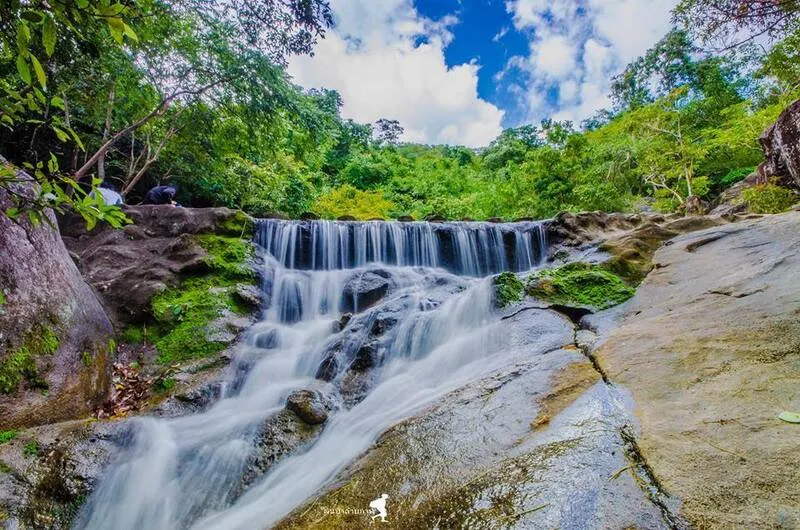
When people speak of Huai Yang Waterfall National Park, the name most often mentioned is naturally “Huai Yang Waterfall,” located close to the park headquarters. It is a waterfall that is easy to reach and suitable for nearly all kinds of visitors, whether families, student groups, casual travelers looking for light relaxation, or people wanting to stop during a trip further south. The attraction of Huai Yang Waterfall lies in its shaded setting and the beauty of its successive tiers. The water flows over rock formations and creates natural pools in some sections, and because it is located not far from the park office, it has long served as the central focus of tourism within the park.
The appeal of Huai Yang Waterfall is not limited to the beauty of the waterfall itself, but also includes the atmosphere of the surrounding forest, which creates a cool and refreshing feeling from the moment visitors arrive. The steady sound of falling water, bird calls from the upper canopy, and the scent of damp earth beneath the forest shade all combine to create an authentic natural experience. Many visitors choose to spend the morning or late morning here, relaxing, swimming, or walking along the nature paths arranged by the park, as this is the time when the weather is still pleasant and the light in the forest feels especially soft.
Looking more closely at Huai Yang Waterfall itself, the waterfall has a total of 7 tiers. The lower tiers are relatively low cascades flowing over rock surfaces into natural pools that are fairly easy to access, making them suitable for general visitors and families who want to relax without walking too far into the forest. Tiers 1 and 2 are ideal for enjoying the atmosphere, taking photos, and sitting to listen to the water, as the path is still manageable and close to the starting point. Tier 3 is often regarded as the best level for swimming, since it has a more convenient pool and a particularly pleasant atmosphere for relaxation. Tiers 4 and 5 are better suited to visitors who want to continue upward for more scenic views of the waterfall, especially Tier 5, which is often described as the most visually impressive part of Huai Yang Waterfall in terms of both the flow of water and the surrounding rock formations. The upper tiers beyond that are more suitable for visitors who want to continue exploring the natural surroundings and should be approached with greater caution, as the trail becomes steeper and more natural in character. In that sense, Huai Yang Waterfall offers several experiences in one place, from easy relaxation and swimming in the lower levels to a fuller immersion in the waterfall and forest landscape above.
When is the best time to visit Huai Yang Waterfall? The park has a noticeably different character in each season. During the rainy season, roughly from May to October, the waterfall is at its most powerful and beautiful. The water flows strongly through all levels, the surrounding forest becomes lush and vibrant, and the overall atmosphere feels especially fresh. This is the best season for people who want to see the waterfall at its fullest, though visitors should prepare for rain, slippery trails, and should always check path conditions before traveling. During the cool season, around November to February, the weather is comfortable and walking conditions are easier. This is a very suitable time for exploring multiple waterfall tiers, relaxing, camping, or combining the trip with nearby coastal destinations such as Hat Wanakon and Ban Krut, because the weather is generally clear and ideal for visiting several places in one journey. During the hot season, around March to April, the water may not be as full as in the rainy season, but the park is still suitable for swimming in the more accessible tiers, especially for visitors looking for a refreshing place to cool off without doing a demanding mountain hike. It is also convenient for a one-day plan that combines a waterfall visit in the morning with a seaside stop in the afternoon. In short, the rainy season is best for seeing the waterfall at its most spectacular, but the cool season offers the best balance for easy travel, comfortable walking, and combining multiple attractions in Prachuap Khiri Khan.
Suggested 1-Day / 2-Day-1-Night Itinerary For travelers with limited time who still want to experience the highlights efficiently, a 1-day itinerary can begin in the morning at Huai Yang Waterfall National Park, spending time relaxing, swimming, and exploring the main waterfall levels. Around late morning or midday, continue to Hat Wanakon National Park to shift from mountain forest scenery to the coast, enjoy the sea breeze, relax along the beach, and take photos of the shoreline. The day can end with a stop at Ban Krut, where visitors can enjoy the sea, walk along the beach, or go up to Wat Tang Sai and watch the sunset. For those who want a more relaxed pace, a 2-day, 1-night itinerary works very well. Spend the first day fully exploring Huai Yang Waterfall National Park, visiting the main waterfall area and relaxing either in the park zone or at accommodation near Huai Yang Beach. In the evening, check in at Ban Krut or at one of the seaside resorts in the area. On the second day, begin with the peaceful atmosphere of Ban Krut Beach, then continue to Hat Wanakon for seaside relaxation or coastal nature activities. This style of trip combines the freshness of waterfalls, the calm of watershed forest, and the comfort of the sea in one route, making it highly suitable for travelers who want to experience Prachuap Khiri Khan’s natural side without driving excessively far during each part of the day.
Beyond Huai Yang Waterfall itself, the park also contains several other waterfalls that broaden the variety of travel experiences available here. One of them is “Khao Lan Waterfall,” another beautiful waterfall in the park. Reaching Khao Lan requires leaving Phetkasem Road and turning onto a local road that passes through communities and green areas before entering the waterfall zone. Its charm lies in its quiet atmosphere and relatively private natural setting, making it suitable for travelers who want to leave the main tourist area behind and experience a calmer, more secluded side of nature.
Another place worth mentioning is “Huai Hin Dat Waterfall,” which in some local sources is also referred to as “Huai Din Dat Waterfall.” Its most distinctive feature is its fairly wide lower stream and the closely spaced waterfall tiers set within a relatively steep landscape. This waterfall is especially suited to travelers who like more rugged nature and want to see mountainous terrain more clearly than in an easy roadside waterfall setting. Access may require more time and planning than the waterfall near the park headquarters, but the experience is clearly different and rewarding in its own way.
“Kha On Waterfall,” also known to some as “Thap Mon,” is another destination that makes Huai Yang Waterfall National Park more than just an ordinary waterfall park. This waterfall lies deeper in the southern section of the park, near the border area, and offers the kind of forest waterfall beauty that shifts the mood of travel from simple recreation to a more serious sense of nature exploration. Because the surrounding area remains strongly forested, visitors who reach it often feel they have entered a landscape that is genuinely quiet, peaceful, and far removed from distraction.
For hiking enthusiasts, Huai Yang Waterfall National Park also offers a feature that sets it apart from many other waterfall parks: the “Khao Luang forest” and the trail leading to the summit of Khao Luang. This forms part of the Tenasserim Range, which extends in a complex pattern along the Thai–Myanmar border. The trail to Khao Luang is about 7 kilometers long and takes around 5 hours to complete. Its destination is a summit at an elevation of approximately 1,251 meters, where hikers can enjoy impressive views of the ridgelines and forests of the Tenasserim mountains. This kind of route makes the park not only a destination for general tourism, but also a place that clearly appeals to adventure travelers and those interested in conservation landscapes.
From an ecological point of view, Huai Yang Waterfall National Park is highly valuable because it is a watershed forest feeding many streams that flow down to the lowlands below. The year-round moisture of the forest helps maintain balanced humidity and soil fertility. At the same time, it provides habitat for many plant and animal species. Although many travel articles focus only on the waterfalls, the true charm of this park lies in the way all of its elements work together, from the ridges, upper forest, and hillside streams to the pools formed by the waterfall levels and the communities that depend indirectly on these natural water sources.
The atmosphere around the park headquarters is another reason why Huai Yang Waterfall is so suitable for genuine relaxation. The area is shady and orderly in the way that national parks often are when nature remains the core focus. Visitors who like to slow down will immediately sense the difference from commercial tourist sites, because the area feels open yet not crowded, with tree shade, the sounds of water and forest wind, and an overall sense that it is ideal for sitting quietly, camping, or simply spending time listening to nature.
In terms of overnight stays, the park provides some accommodation, and visitors who wish to camp should generally check with the park before traveling, as regulations and site readiness may change depending on the season and management policy at the time. For those seeking more comfort, the areas around Huai Yang and Thap Sakae also offer a number of seaside resorts and nearby accommodations. These are particularly suitable for organizing a 2-day, 1-night or 3-day, 2-night trip, spending one day in the park and another relaxing by the sea near Ban Krut or beaches close to Huai Yang.
Getting There Huai Yang Waterfall National Park is not difficult to reach for travelers using a private car. From Prachuap Khiri Khan town, drive south along Phetkasem Road until around kilometer markers 350–351, where there is a right-hand turn leading another 7 kilometers to the park headquarters. The final section is suitable for ordinary passenger vehicles, making an easy day trip quite convenient. Alternatively, travelers arriving by train can get off at Huai Yang Railway Station and continue into the park by motorcycle taxi.
For travelers who want to expand their route, Huai Yang Waterfall National Park also connects well to other attractions in Prachuap Khiri Khan, including beaches, seaside temples, and nearby national parks such as Hat Wanakon National Park, Ban Krut Beach, Wat Tang Sai, Ao Manao, and King Mongkut Memorial Park of Science and Technology at Waghor. This kind of route gives a trip greater balance, allowing travelers to combine mountain nature, waterfalls, coastline, and scenic viewpoints within a single itinerary.
Viewed as a whole, Huai Yang Waterfall National Park is valuable for much more than just waterfall recreation. It is a watershed forest on the Tenasserim Range, a quiet place for rest, a natural field for hikers, and a living classroom of ecology where visitors can see the relationship between mountains, forest, waterfalls, and surrounding communities in a very real way. For Prachuap Khiri Khan Province, it is therefore another destination that deserves to be understood in depth, not simply as a place to check off on a travel list, but as a way to understand another dimension of the region’s natural character.
| Name | Huai Yang Waterfall National Park |
| Location | Covers areas in Mueang District, Thap Sakae District, and Bang Saphan District, Prachuap Khiri Khan Province |
| Place Summary | A national park on the Tenasserim Range, known for waterfalls, watershed forest, nature trails, and hiking routes to Khao Luang |
| Highlights | Huai Yang Waterfall near the park headquarters with a shaded and relaxing atmosphere, Khao Lan Waterfall, Huai Hin Dat Waterfall, Kha On Waterfall, the hiking trail to Khao Luang, and views across the Tenasserim Range |
| Area | About 161 square kilometers, or around 100,625 rai |
| Declaration History | Declared a national park on December 8, 1991, and became the 70th national park of Thailand |
| Getting There | From Prachuap Khiri Khan town, drive south along Phetkasem Road to kilometer 350–351, then turn toward the park headquarters for about 7 kilometers, or take the train to Huai Yang Station and continue by motorcycle taxi |
| Current Status | Open to visitors during park operating hours and remains a popular natural retreat for Thap Sakae District and nearby areas |
| Contact Number | 084-701-2795 |
| Nearby Attractions with Distance | 1. Hat Wanakon National Park – about 12 km – Tel. 063-142-1121 2. Ban Krut Beach – about 22 km – Tel. 085-179-5818 3. Wat Tang Sai – about 24 km – Tel. 081-926-8159 4. Ao Manao – about 55 km – Tel. 032-661-088 5. King Mongkut Memorial Park of Science and Technology at Waghor – about 48 km – Tel. 032-661-098 |
| Nearby Restaurants with Distance | 1. Pla Talay Restaurant, Thap Sakae Beach – about 10 km – Tel. 081-190-6416 2. Laem Kum Seafood Restaurant – about 16 km – Tel. 089-254-2755, 089-914-4009 3. Sirarun Resort Restaurant – about 16 km – Tel. 032-510-300, 084-801-5445 4. Mumsa Beach Resort & Restaurant – about 18 km – Tel. 090-967-0007 5. Sunshine Paradise Resort Restaurant – about 15 km – Tel. 081-829-8123 |
| Nearby Accommodations with Distance | 1. Sunshine Paradise Resort – about 15 km – Tel. 081-829-8123 2. Sirarun Resort – about 16 km – Tel. 032-510-300, 084-801-5445 3. Nishaville Resort – about 9 km – Tel. 032-616-333 4. Tubb Beach Natural Resort – about 8 km – Tel. 081-827-4235 5. Coastal Calm Beach Front & Pool Villa – about 8 km – Tel. 063-826-9146 |
Frequently Asked Questions (FAQ)
Q: Which province is Huai Yang Waterfall National Park in?
A: Huai Yang Waterfall National Park is in Prachuap Khiri Khan Province and covers areas in Mueang District, Thap Sakae District, and Bang Saphan District.
Q: What is Huai Yang Waterfall National Park known for?
A: The park is known for being a watershed forest area on the Tenasserim Range, with several waterfalls, a shaded atmosphere, and nature trails suitable for both general visitors and serious hikers.
Q: Is Huai Yang Waterfall far from the park headquarters?
A: Huai Yang Waterfall is very close to the park headquarters, making it the main attraction that is easy to access for relaxation, swimming, and nature walks.
Q: Can Huai Yang Waterfall National Park be visited in every season?
A: In general, the park can be visited in different parts of the year, but the rainy season and the period just after it are usually when the waterfalls are at their most beautiful, while the cool season is ideal for hiking and relaxing in pleasant weather.
Q: Is Huai Yang Waterfall National Park suitable for an overnight trip?
A: Yes. It works well for overnight travel, either by staying in park accommodation or at nearby seaside resorts around Huai Yang and Ban Krut, which makes it easy to combine nature and beach travel in one trip.
Q: Are there any recommended hiking routes for serious walkers?
A: Visitors who enjoy hiking can ask about the route to Khao Luang within the park, which offers beautiful views of the Tenasserim Range, but preparation and consultation with park staff are recommended beforehand.
Q: What attractions are near Huai Yang Waterfall National Park?
A: Popular nearby places include Hat Wanakon National Park, Ban Krut Beach, Wat Tang Sai, Ao Manao, and King Mongkut Memorial Park of Science and Technology at Waghor.
 Website: www.dnp.go.th
 Huai Yang Waterfall National Park Map
 Category:
  Group:
  Last Update: 21 HourAgo
Comment
 Nearby Attractions
| Keyword (Advance) |
 Region
|
 Muang Prachuap Khiri Khan(