

 Home
Home Chiang Mai(










Rating: 3.3/5 (11 votes)
 |
|  Map
Map 
 Have Map
  No Map
Chiang Mai attractions
Attractions in Thailand
Open Days: Daily (recommended to check the latest announcement on the official page before you go)
Opening Hours: generally 08.30–16.30
The Royal Agricultural Station Inthanon is one of those places that makes “visiting Doi Inthanon” mean more than just chasing cold air, snapping photos, and heading back down. This is a working Royal Project site you can actually feel and understand on the ground—from cool-climate crop research and livelihood support for highland communities, to long-term care of headwater forests. If you want a Chiang Mai trip that blends nature, beautiful gardens, crisp air, and a clear view of how Royal Initiative projects have changed lives, this station delivers the full picture without needing any “pretty storytelling.”
The story begins with a hard reality from the past. Many highland areas once faced shifting cultivation, opium poppy growing, and deforestation. These issues didn’t only harm local livelihoods—they also rippled outward into national security concerns and the wider health of headwater watersheds. His Majesty the King clearly recognized this “chain of problems,” and expressed the royal intention to help hill communities settle with stable farmland, promote legal crops to replace opium, and transfer modern agricultural knowledge so families could earn honest, sustainable income. At the same time, it reduced long-term pressure on upstream forests.
In February 1979, the Royal Project Foundation established the “Inthanon Royal Project Research Station” on roughly 150 rai. The purpose was to research and develop cool-climate crops and test production systems suitable for highland conditions, then apply those research results to strengthen livelihoods for farming households around the station. Over time, the site’s role expanded beyond research into a model area for highland agriculture, natural resource management, and learning-based tourism. It was later elevated to what we know today as “The Royal Agricultural Station Inthanon,” reflecting that the work here is not only in laboratories—it is embedded in real communities and across an entire mountain landscape.
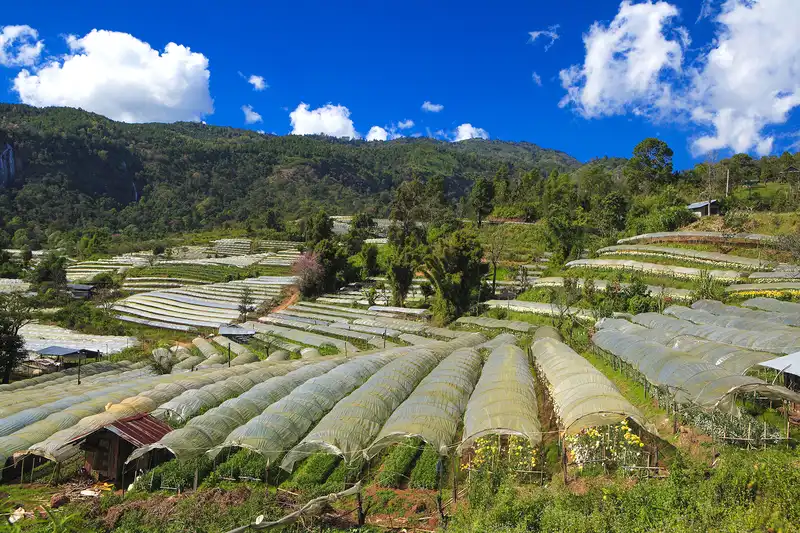
The station’s terrain is a steep, valley-and-slope landscape. A watershed ridge divides water flow into two directions: to the east, water drains toward the Ping River; to the west, it drains toward the Chaem River. At around 1,300 meters above sea level, the climate stays relatively cool and supports many types of cool-climate plants. Tourists may see it as a “beautiful garden on a mountain,” but in practice, altitude, average temperature, humidity, and slope are key conditions that determine what can be grown, how it should be cultivated, and how soil and water must be managed without damaging the mountain over the long run.
As a visitor, you’ll most strongly feel the station’s “agricultural learning tourism” approach—it makes research feel accessible. You can explore plots of cool-climate vegetables, seasonal flowers, hydroponics, and horticultural trials that connect directly to livelihoods in surrounding communities. The station’s special value isn’t simply that crops look good—it’s that the systems are designed so agriculture can truly support families while still coexisting with headwater forests.
One area many people come specifically for is the “80th Anniversary Garden” (a commemorative garden), created in 2007 to honor His Majesty the King’s 80th birthday. The garden features rhododendrons and seasonal ornamentals, so the atmosphere shifts through the year. In some seasons, you’ll find bright color; in others, thick greenery and that fresh post-rain feel. What makes this garden feel especially good is that it reads as a living research-and-landscape space—not an overly staged attraction. It’s easy on the eyes and calm in the chest.
Another highlight for plant lovers is the fern conservatory and display area. It serves as a collection point for rare and near-threatened fern varieties of economic and horticultural importance, with more than 50 genera and around 140 species. Walking through ferns at high altitude helps you see how carefully humidity, temperature, and light are managed—and why some plant groups truly belong in mountain conditions more than lowlands.
Next is the ornamental flower greenhouse. It showcases many decorative plants promoted by the Royal Project Foundation, such as orchids, begonias, anthuriums, impatiens, and other ornamentals that thrive in cool air. This zone makes the station’s intent clear: developing plants as both “beauty” and “livelihood” at the same time. Ornamental plants are a practical income pathway for highland communities, without relying on illegal crops like in the past.
If you like something a bit unusual, the carnivorous plant greenhouse is a surprise highlight. You may see pitcher plants, butterworts, and various Sarracenia types. Carnivorous plants tend to slow people down, because they’re a vivid example of how living things adapt to highly specific environments. If you’re traveling with kids or anyone who likes nature with a story, this zone often becomes an unexpected favorite.
Rhododendrons are another signature theme of the Royal Agricultural Station Inthanon. The station cultivates Rhododendron species including azaleas and many rhododendron varieties. Some are important in international plant markets, while others have been propagated from naturally occurring highland plants in Thailand, such as Rhododendron arboreum (locally known as “kham daeng” or “kham doi”), found in high areas like Doi Inthanon and Doi Ang Khang. This section shows that highland flower beauty isn’t just about “planting for looks”—it comes from serious selection work and deep understanding of the mountain’s natural conditions.
If you want to add a human layer to your trip, stopping by Khun Klang Hmong Village and its local market is a strong connection point. You’ll see everyday highland life, clothing styles, local handicrafts, and seasonal farm products for sale. It makes “the Royal Project” feel close and real: it’s in what we buy, in income circulating back into community development, and in the stronger, more stable choices available to people on the mountain today.
Another advantage of the Royal Agricultural Station Inthanon is its location within the broader Doi Inthanon National Park route, making it easy to plan a continuous day. If you want to reach Thailand’s highest point at 2,565 meters, you can continue driving upward. If you want the twin royal chedis—Phra Mahathat Naphamethanidon and Phra Mahathat Naphaphonphumisiri—for panoramic views and famous flower gardens, they are along the same route. The charm is that you don’t have to choose only one highlight; in a single day you can combine gardens, research learning, community life, and nationally iconic viewpoints.
Waterfalls are another major pillar of the Inthanon route. Wachirathan Waterfall is a well-known large waterfall on the mountain road, a great place to pause, breathe, and photograph a dramatic vertical curtain of water. Within the station area, you can also visit Siriphum Waterfall and the nearby “Suan Luang Siriphum” nature garden—a short, easy nature walk of about 500 meters through lush vegetation. It’s a good option if you want real forest atmosphere without a long hike.
Shopping for souvenirs is one more reason a visit to the Royal Agricultural Station Inthanon ends on a satisfying note. There are many Royal Project products, including seasonal cool-climate vegetables and fruits, coffee, honey, fruit jams, juices, potted plants, and dried flowers. If you’re interested in highland textiles and crafts, you may also find handwoven items transformed into skirts, shoulder bags, shirts, scarves, and household textiles like tablecloths—great for travelers who want a meaningful souvenir that supports local communities.
Getting There From Chiang Mai city, the common route follows Highway 108 (Chiang Mai–Hot) to around kilometer marker 57 (about 1 km before Chom Thong town), then turns right onto Highway 1009 (Chom Thong–Inthanon). Continue uphill to around kilometer marker 31, where there is a right turn toward Ban Khun Klang; drive about 1 km to reach the station. The total distance from Chiang Mai city to the station is roughly 91 km and typically takes about 1 hour 30 minutes. In general, all types of cars can use the route, but the road is mountainous with many curves; during the rainy season there may be fog and slippery sections, so allow extra time and drive carefully.
For food and accommodation, the station provides on-site guesthouses for travelers who want to stay close to the main attractions. There are also homestay or village-stay options in nearby communities such as Ban Mae Klang Luang, which suits travelers who want to wake up to mist, enjoy community coffee, and stroll through a relaxed terraced-field atmosphere. Dining within the Royal Project zone also makes the trip smoother, especially with menus featuring highland ingredients like trout, fresh salad greens, and seasonal produce.
If you want a “balanced” itinerary without overexerting yourself, a simple plan is to arrive in the morning, fully explore the gardens and greenhouses, shop for produce and souvenirs around midday or afternoon, then continue to the twin royal chedis or stop at Wachirathan Waterfall depending on your preferences. If your priority is maximum cold air and iconic views, you can save the summit area for later afternoon. If you prefer softer light for photos, start at the summit early and flow down to the station later in the morning—both approaches work well on the same route.
| Name | The Royal Agricultural Station Inthanon (สถานีเกษตรหลวงอินทนนท์) |
| Location | 202 Moo 7, Ban Khun Klang, Ban Luang Subdistrict, Chom Thong District, Chiang Mai |
| Highlights | Royal Project highland learning station with a commemorative garden, fern conservatory, ornamental flower greenhouses, carnivorous plant displays, and cool-climate crop demonstration/research areas |
| Zones Summary | 80th Anniversary Garden (commemorative garden) featuring rhododendrons and seasonal flowers; Fern greenhouse with rare/near-threatened fern collections; Ornamental flower greenhouse (e.g., orchids, begonias, anthuriums, impatiens); Carnivorous plant greenhouse (e.g., pitcher plants, butterworts, Sarracenia); Rhododendron and azalea section for viewing/learning; Highland agriculture demonstration plots (cool-climate vegetables and hydroponics); Royal Project products and souvenir sales area |
| Key Years | Research station established in 1979; 80th Anniversary Garden created in 2007 |
| Key Evidence / Significance | Highland agriculture research and demonstration work + commemorative garden zone + specialized plant collections in greenhouses |
| Name Origin | Named after Doi Inthanon and its role as a Royal Agricultural Station of the Royal Project Foundation in this area |
| Travel | From Chiang Mai: Highway 108 to km 57 (before Chom Thong), then Highway 1009 uphill to km 31, turn right toward Ban Khun Klang about 1 km; total distance approx. 91 km |
| Current Status | Open for visits and learning (recommended to check the latest updates before travel, especially during the rainy season or maintenance periods) |
| Contact Number | 053-286777, 053-286778 |
| Nearby Attractions (approx. distance) | Khun Klang Hmong Market ~0.5 km; Siriphum Waterfall / Suan Luang Siriphum ~1 km; Ban Mae Klang Luang ~5 km; Wachirathan Waterfall ~11 km; Twin Royal Chedis ~10 km; Kew Mae Pan trailhead ~11 km; Doi Inthanon summit ~17 km |
| Popular Restaurants Nearby (approx. distance) | Royal Project Inthanon restaurant ~0 km Tel. 053-286-728, 053-286-777; Royal Project welfare canteen/restaurant ~0–1 km Tel. 065-238-8142; Mae Klang Luang Fresh Coffee (Khun Yosae) ~5 km Tel. 081-021-8927; Mae Klang Luang Riverside (food/coffee) ~5 km Tel. 083-469-8948, 061-457-4735; At Home Pizza Mae Klang Luang Inthanon ~5 km Tel. 086-731-6724 |
| Popular Accommodations Nearby (approx. distance) | MaeKlangLuang View Resort ~5 km Tel. 086-189-4075; Touch Star Resort ~30 km Tel. 053-033-594, 092-419-4142; Inthanon Highland ~30 km Tel. 053-802222-4; Inthanon Riverside Resort ~35–45 km Tel. 081-530-5767; Mae Klang Luang Villa ~5 km Tel. 082-946-6651; (community option) Rang Bon Doi ~5 km Tel. 081-168-0382 |
| Facilities | Garden and greenhouse walking areas, Royal Project product shop, parking (may vary by operational zone), restrooms (check the on-site service points on your visit day) |
| Fees | May depend on national park and service-zone conditions (recommended to check the latest official announcement before travel) |
Frequently Asked Questions (FAQ)
Q: What is the best time of year to visit the Royal Agricultural Station Inthanon?
A: You can visit year-round. Late-year to early-year cooler months are comfortable for walking and photography. The rainy season is very green, but roads may be slippery and foggy, so allow extra travel time.
Q: What kind of vehicle do I need to get to the Royal Agricultural Station Inthanon?
A: In general, any car type can be used, but the route is mountainous with many curves. Check your vehicle condition and drive carefully, especially during the rainy season.
Q: What are the must-see highlights inside the station?
A: The 80th Anniversary Garden, the fern greenhouse, the ornamental flower greenhouse, the carnivorous plant displays, seasonal rhododendrons/flowers, and the Royal Project product shopping area.
Q: Is the Khun Klang Hmong Market far from the station?
A: It’s very close and convenient for picking up community products and souvenirs. It’s a great stop either before entering the gardens or on the way back.
Q: If I only have one day, how should I plan my trip?
A: Start at the station in the morning, explore the gardens and greenhouses, shop for produce/souvenirs, then continue to the twin royal chedis or stop at Wachirathan Waterfall along Highway 1009. Budget extra time for fog and mountain curves.
Q: Where should I stay if I want a nearby community-style experience?
A: Ban Mae Klang Luang is a popular option nearby, with homestays/community stays and cafés—great for morning mist and local highland atmosphere.
Q: How can I contact the Royal Agricultural Station Inthanon?
A: Use the station phone numbers listed in the summary table, and follow the official page for the latest announcements and updates.
 The Royal Agricultural Station Inthanon Map
 Category:
  Group:
  Last Update: 16 HourAgo
Comment
 Nearby Attractions
| Keyword (Advance) |
 Facebook Fanpage
 Region
 Art, Culture and Heritage
 Historical Sites and Monuments(
 Landmarks and Memorials(
 Royal Palace(
 Art, Craft Centres, Tradition(
 Museums(
 Educational Places
 Museum for Study(
 Educational Gardens, Farm(
 Training Center(
 University
 Places of Worship
 Temple(
 Mosque(
 Other religious and spiritural sites(
 Suburban Living
 Village, Community(
 Local Market(
 Nature and Wildlife
 National Parks and Marine Reserves(
 Mountain (Doi)(
 Dam, Reservoir, Lake(
 Waterfalls(
 Hot Springs(
 Caves(
 River, Canal(
 Other natural attractions(
 Entertainment and Agricultural
 Zoos and Aquariums(
 Animal camps and shows(
 Stadium(
 Farm, Parks, Gardens and Ecotourism(
 Waterpark(
 Theater(
 Outdoor and Adventure Activities(
 Shopping
 Shopping and Night Market(
 Restaurant
 Michelin Star(
 Michelin Guide(
 Call Customer Service in Tourism
 Call Customer Service in Tourism(
 Travel Articles, Recipes
 Travel Review, Food Review(
 Food Menu, North Recipes(
 Thai Desserts, North Recipes(