
 Home
Home North(
 Chiang Mai(


Rating: 4/5 (5 votes)
 |
|  Map
Map 
 Have Map
  No Map
Nonthaburi attractions
Attractions in Thailand
Operating day: daily
Operating time: 08.00 - 17.00
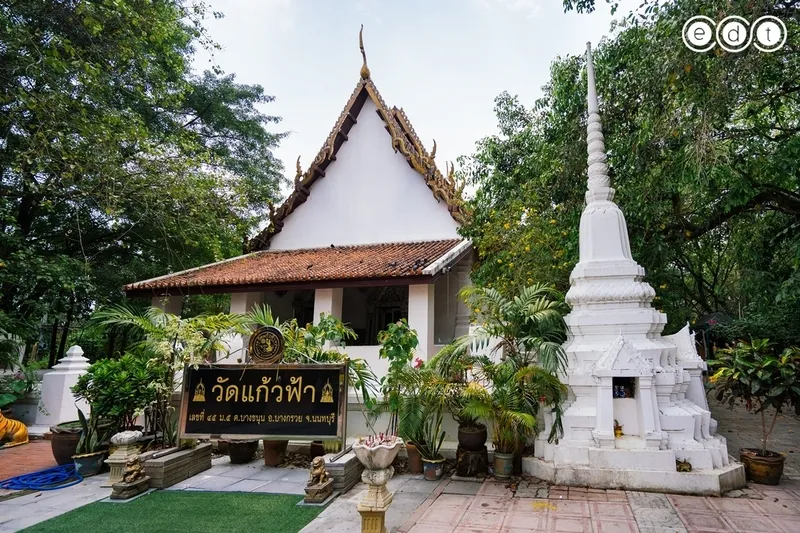
Wat Kaew Fa is an old riverside temple in Bang Khanun, Bang Kruai, Nonthaburi, standing quietly along Khlong Bangkok Noi. It is one of those places that immediately feels different from a modern city temple. Visitors come here not only to pay respect to Luang Pho Yai, the temple’s revered principal Buddha image, but also to admire an old Ayutthaya-era ordination hall, ancient boundary stones, old chedis, and the lingering atmosphere of a canal-side community where history still feels close.
What makes Wat Kaew Fa especially interesting is the way it combines faith, local memory, and historical architecture in one compact temple compound. It is not famous because of grand scale or flashy decoration. Its appeal comes from age, quiet dignity, and the sense that the site has carried stories across several centuries. For travelers interested in old temples near Bangkok, local cultural heritage, or lesser-known places in Nonthaburi, this temple has genuine depth.
The temple stands in Moo 5 of Bang Khanun Subdistrict in Bang Kruai District, an area historically shaped by waterways and canal-based settlement. In the past, temples along canals were more than religious spaces. They were landmarks, community centers, resting points for travelers, and anchors of local identity. Wat Kaew Fa still reflects that old landscape. Even though the surrounding area has continued to develop, the temple retains the calm, grounded atmosphere of a traditional canal-side monastery.
Wat Kaew Fa is closely associated with a historical narrative from the early Ayutthaya period. Local and tourism sources preserve the tradition that the temple was founded around B.E. 2095 during the reign of King Maha Chakkraphat. Its name is linked to Prince Kaeo Fa, the son of King Chairacha. After King Chairacha’s sudden death, the young prince ascended the throne, but the period that followed was politically unstable and violent. Later memory connected the temple’s name with this royal episode, giving Wat Kaew Fa a distinctive place among older temples in Nonthaburi.
That connection matters because it gives the temple more than architectural importance. It turns Wat Kaew Fa into a site of historical remembrance. The temple is often discussed not just as an old Buddhist monastery, but as a place where the memory of Ayutthaya’s turbulent royal history was preserved through local devotion. Whether visitors arrive with a religious purpose or a historical one, they quickly notice that this is a temple with a strong story behind its name.
The most important sacred object inside the temple is Luang Pho Yai, the old principal Buddha image enshrined in the old ordination hall. This image remains the spiritual heart of the temple. Many worshippers come specifically to pay respect to Luang Pho Yai, make merit, and spend quiet time in prayer. The experience of seeing the image inside the old ubosot is especially memorable because the surrounding architecture still carries the weight of age. The atmosphere feels solemn, intimate, and deeply rooted in place.
The old ordination hall is one of the temple’s most valuable architectural features. It is an old brick-and-mortar structure built with load-bearing walls and designed in a form often described as having a curved base like the hull of a Chinese junk or trading vessel. This boat-like base gives the building a distinctive profile and makes it stand out among historic temples in the Nonthaburi area. The ordination hall is not only old; it is visually meaningful, especially for visitors interested in Thai architectural history.
Inside the hall, the sacred atmosphere is reinforced by multiple Buddha images and attendant figures arranged around the principal image. The interior does not feel like a museum display. It still functions as a religious space. That living continuity is one of Wat Kaew Fa’s greatest strengths. The temple is valuable not because its remains are frozen in time, but because history and worship still coexist within the same space.
Outside the ordination hall, the compound contains several other features worth noticing. There are old red sandstone sema stones, old enclosure elements, and corner chedis around the sacred area. These architectural components help visitors understand that the temple’s importance lies in the whole historic layout, not just in a single structure. The arrangement of the old hall, the surrounding sacred markers, and the rear chedi suggests a carefully planned ritual landscape that once defined how worshippers moved through the compound.
Behind the old ordination hall stands a chedi with a refined traditional form that adds another layer to the temple’s historical character. Together with the sema stones and the old hall, it helps create a visual narrative of how temple architecture in the central plains developed over time. For visitors with an interest in Thai art history, Wat Kaew Fa offers more than a quick photo stop. It rewards careful observation.
At the same time, Wat Kaew Fa remains a place of active devotion. Many people visit to make merit, pray for encouragement in life, and pay respect to the sacred images associated with the temple. This balance between lived belief and historical depth makes the site appealing to a broad range of visitors. Some arrive as worshippers. Others come as cultural travelers. Many end up appreciating both aspects by the time they leave.
The temple also reflects a larger truth about Nonthaburi. The province is often seen as part of the metropolitan fringe of Bangkok, yet many of its canal communities preserve older layers of settlement, faith, and craftsmanship. Wat Kaew Fa is a good example of that continuity. A visit here shows how history survives not only in famous royal monuments, but also in local temples that continue to serve their communities.
For photographers and cultural travelers, the temple has several compelling visual highlights. The old boat-shaped ordination hall is the obvious centerpiece, but the rear chedi, boundary stones, and canal-side surroundings also contribute to the atmosphere. The best approach is to move slowly through the compound and take in the details rather than rush from one photo angle to another. The mood of the site is one of quiet reflection.
As with any active temple, respectful behavior is essential. Visitors should dress modestly, speak softly, and be mindful when photographing sacred areas. This is especially important inside and around the old ordination hall, where both worship and heritage preservation matter. A thoughtful visit allows the temple to be appreciated in the spirit it deserves.
Wat Kaew Fa works very well as part of a half-day or one-day cultural route in Bang Kruai. The surrounding area includes several other old temples and community attractions, making it easy to combine a visit here with nearby temple stops or a canal-side local itinerary. That makes it suitable for independent travelers, temple enthusiasts, and anyone looking for a quieter cultural experience close to Bangkok.
Another reason the temple stands out is its emotional tone. It feels close to the city, yet far from urban speed. Visitors do not need a long journey to get here, but once inside the grounds, the pace changes. The combination of old architecture, local faith, and waterside setting creates a reflective atmosphere that many travelers now actively seek.
Getting There is easiest by private car. Set your destination to Wat Kaew Fa in Bang Khanun, Bang Kruai, Nonthaburi. From Bangkok, travelers commonly approach the area via Ratchaphruek Road or Borommaratchachonnani Road before entering local roads in Bang Kruai and continuing into Bang Khanun. Parking is available at the temple. For public transport users, one practical option is to travel toward the Bang Bamru area and continue by local transport into Bang Kruai. This also works well for travelers planning to visit several temples in the same district on the same day.
Morning is often the most pleasant time to visit, especially for those who want a quieter atmosphere and softer light for photography. Weekdays are usually more peaceful than major Buddhist holidays or weekend peak hours. Even so, the temple remains active and meaningful as a place of worship, so it never feels empty in a lifeless way. Instead, it feels lived-in, respected, and quietly enduring.
For travelers searching for an old temple in Nonthaburi with real historical texture, a canal-side setting, and a strong spiritual atmosphere, Wat Kaew Fa is a rewarding destination. It may not be the most widely promoted temple in the region, but that is part of its charm. This is a place where architecture, memory, devotion, and local heritage still meet in a very direct and human way.
| Name | Wat Kaew Fa |
| Location | Bang Khanun, Bang Kruai, Nonthaburi |
| Address | 45 Moo 5, Soi Bang Khanun Soi 4, Ban Khlong Wat Sak–Ban Khlong Wat Khonon Road, Bang Khanun, Bang Kruai, Nonthaburi 11130 |
| Coordinates | 13.817828, 100.465237 |
| Highlights | Old Boat-Shaped Ordination Hall, Luang Pho Yai, Ancient Red Sandstone Boundary Stones, Historic Chedis, Canal-Side Temple Atmosphere |
| History | An ancient temple traditionally dated to around B.E. 2095 during the reign of King Maha Chakkraphat, with a historical association to Prince Kaeo Fa of Ayutthaya |
| Name Origin | The temple name is linked to Prince Kaeo Fa, a royal figure remembered in the political history of early Ayutthaya |
| Key Features | A Brick Ordination Hall With A Curved Junk-Like Base, Multiple Buddha Images Inside, Old Sema Stones, Enclosure Elements, And Historic Chedis Around The Sacred Area |
| Travel Information | Best Reached By Car Via Ratchaphruek Road Or Borommaratchachonnani Road Into Bang Kruai And Bang Khanun; Public Transport Users Can Continue From The Bang Bamru Area By Local Transport |
| Current Status | Active Temple Open For Worship And Visits |
| Open Days | Daily |
| Opening Hours | Open All Day |
| Facilities | Parking |
| Main Areas / Zones | Old Ordination Hall, Luang Pho Yai, Ancient Boundary Stone Area, Corner Chedis, Rear Historic Chedi |
| Abbot / Caretaker | Phra Sophon Rattanaphon (Paisan Kittibhadto) |
| Main Contact Number | 094-971-8686 |
| Nearby Tourist Attractions | 1) Wat Chalo – About 3 km 2) Wat Bot Bon – About 4 km 3) Wat Uthayan – About 4 km 4) Wat Tanot – About 5 km 5) Wat Takian Floating Market – About 6 km |
| Nearby Restaurants | 1) Wan La Yum By Ple – About 1 km, Tel. 064-863-0324 2) MATA Garden – About 2 km 3) Chomchei – About 4 km 4) Suki Garden – About 5 km 5) Khum Thonglang – About 6 km |
| Nearby Accommodations | 1) Maleewana Hotel & Resort – About 4 km 2) The Rich Ratchapruek Hotel & Residence – About 5 km 3) Ruean Rim Nam Resort – About 6 km 4) Livotel Express Hotel Bang Kruai Nonthaburi – About 7 km 5) Bella B Hotel Bang Kruai Rama 7 – About 8 km |
Frequently Asked Questions (FAQ)
Q: Where is Wat Kaew Fa located?
A: Wat Kaew Fa is located in Bang Khanun Subdistrict, Bang Kruai District, Nonthaburi, along Khlong Bangkok Noi.
Q: What is Wat Kaew Fa known for?
A: It is known for its old boat-shaped ordination hall, Luang Pho Yai, ancient sandstone boundary stones, historic chedis, and its strong association with local Ayutthaya-era memory.
Q: Why is the temple name historically important?
A: The name is linked to Prince Kaeo Fa, making the temple part of a broader historical narrative connected to early Ayutthaya politics.
Q: Who is Luang Pho Yai?
A: Luang Pho Yai is the revered principal Buddha image enshrined inside the old ordination hall and remains the spiritual focus of the temple.
Q: What is the best way to get to Wat Kaew Fa?
A: The easiest way is by private car, using Ratchaphruek Road or Borommaratchachonnani Road and then entering the local roads of Bang Kruai and Bang Khanun.
Q: Is Wat Kaew Fa suitable for cultural travelers?
A: Yes. It is a rewarding place for travelers interested in old temples, canal-side communities, Thai religious architecture, and local history close to Bangkok.
 Tel: 024475446, 028799971
 Wat Kaew Fa Map
 Category:
  Group:
  Last Update: 1 DayAgo
Comment
 Nearby Attractions
| Keyword (Advance) |
 Region
|
 Muang Nonthaburi(