

 Home
Home Chiang Mai(













Rating: 3.5/5 (6 votes)
 |
|  Map
Map 
 Have Map
  No Map
Bangkok attractions
Attractions in Thailand
Open Days: Generally daily (the station building and main hall are usually accessible depending on the station’s operations; check announcements or ask staff in advance if you need a specific service)
Opening Hours: No single fixed time for “all services” (some services have their own hours, such as luggage storage often around 04:00 – 23:00; please verify before you go)
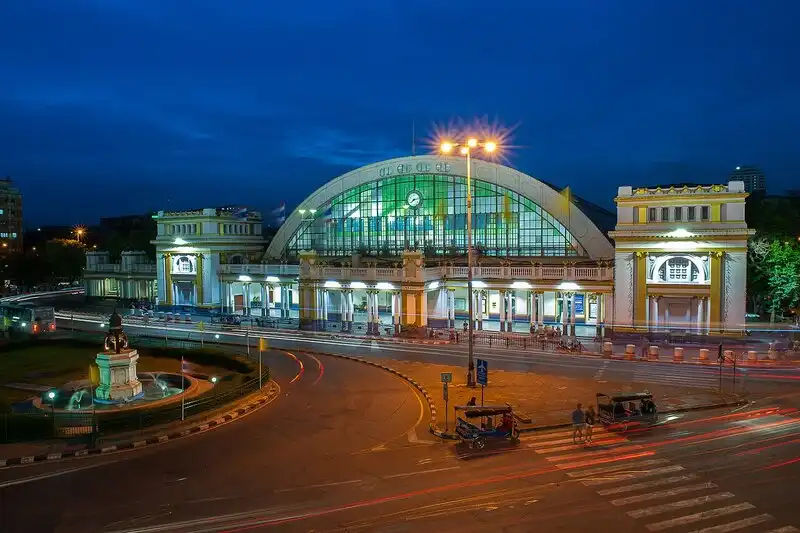
Bangkok Railway Station (Hua Lamphong) is the kind of place you’ll still want to step into even if you’re not catching a train. Just walking through the front entrance and looking up at the grand hall makes it obvious why so many people tie their travel memories to this building. The sweeping arched roof and stained-glass details give the light a mood of its own—something newer stations can’t really replace. The atmosphere feels quietly powerful, not because it tries to, but because of the building’s age, its real daily use, and the generations of people who have passed through.
Historically, construction began in the late reign of King Rama V in 1910 (B.E. 2453) and the station officially opened on 25 June 1916 (B.E. 2459), according to the State Railway of Thailand. That timeline matters because Hua Lamphong became a kind of “front gate” of the city for rail travel at a time when trains were reshaping how people understood distance across the country. Stories like the ceremonial electrical signal that welcomed the first train into the station may sound formal today, but if you imagine what it meant then—seeing the future arrive right in front of you—it’s easy to understand why this station is treated as a shared heritage of Bangkok.
Hua Lamphong sits in Rong Muang, Pathum Wan District, along Rama IV Road, in a location that connects Bangkok’s inner city with ease. You can head to Yaowarat, Sam Yan, the historic old-town area, or continue onward by rail in the roles the station still serves today. One of its biggest advantages is public transport connectivity, especially the MRT Hua Lamphong station right in front, with a direct pedestrian link that makes moving in and out straightforward. That’s why this place remains a common meeting point for both Thai travelers and international visitors.
In terms of its current role, Hua Lamphong hasn’t disappeared—it has shifted. Since around 2023, most long-distance services have moved to Krung Thep Aphiwat Central Terminal. As a result, Hua Lamphong has gradually changed from “the hub of every route” into a station with more specific functions. At the same time, it has become even more of a destination for people who come simply to experience classic Bangkok architecture and the atmosphere of an earlier era.
What makes Hua Lamphong special isn’t only that it’s old—it’s that it’s old and still genuinely used. You’ll notice details that are rarely done the same way today: the proportions of the hall designed to hold large crowds, stained-glass ventilation panels that soften the interior light by design, and elements like the dome clock that visually anchors the entire façade. These aren’t just pretty features; they speak to the station’s value in history, architecture, and craftsmanship, all living in the same place.
If you’re visiting Hua Lamphong as a traveler, the most effective plan is usually: come for the building, then “flow outward” to the neighborhoods around it. There’s a lot within a short radius—Wat Traimit and Yaowarat aren’t far, while the Sam Yan–Chula area offers cafés and food variety, and other museums or old-town landmarks are easy to reach by MRT or taxi. While you’re inside, slow down a little. Follow the curve of the roof, watch the light through the stained glass, and pay attention to how people move through the space. You can leave with a story without buying a single souvenir.
Getting There: The simplest way is the MRT Blue Line to Hua Lamphong station, then walk through the direct link into the railway station. If you’re coming from Siam, Sam Yan, or Silom, MRT saves a lot of energy and avoids traffic. Another option is taxi or ride-hailing: set your pin to “Hua Lamphong Railway Station” or “Bangkok Railway Station (Hua Lamphong),” and allow extra time during rush hours because Rama IV Road and nearby intersections can get heavily congested.
A small note before you go: Hua Lamphong still functions as a working station in some areas, so basic courtesy helps everyone share the space well. Avoid blocking main walkways while taking photos, don’t step into platforms or staff-only areas unnecessarily, and keep an eye on personal belongings as you would in any busy public place. If you plan to use specific services—like luggage storage or ticket information—check official channels or call ahead, because “opening hours” can differ by service point.
In the end, if you think of Hua Lamphong as a place to visit, it’s not a theme-park attraction and it doesn’t rely on staged exhibitions. Instead, it offers “the real city” as its content. Some people come for architectural photos, some wait for friends and accidentally fall into the rhythm of announcements and metal wheels, and some visit for the first time and feel like they’ve seen it before in films or old family photos. However you arrive, Hua Lamphong tends to do the same thing: it shows you how Bangkok traveled into the present—and gently nudges you to travel a little further, without rushing.
| Name | Bangkok Railway Station (Hua Lamphong) |
| Location | Rong Muang, Pathum Wan, Bangkok (in front of MRT Hua Lamphong) |
| Key Characteristics | Grand arched hall/dome architecture, stained-glass details, classic railway-station atmosphere, an iconic Bangkok travel landmark |
| Period | Construction began in 1910 (B.E. 2453); officially opened 25 Jun 1916 (B.E. 2459) |
| Key Evidence | Historical and architectural information published by the State Railway of Thailand (SRT) |
| Name Origin | Commonly called “Hua Lamphong” after the historic neighborhood name; used alongside the official name “Bangkok Railway Station” |
| Travel | MRT Blue Line to Hua Lamphong, then walk through the link into the station / taxi and public transport are convenient (allow extra time for traffic) |
| Current Status | Still operating with more specialized roles; most long-distance services have moved to Krung Thep Aphiwat Central Terminal |
| Facilities | Waiting areas, some shops/food options, passenger service points (availability may vary by day/service) |
| Contact Numbers (Verified Only) | Passenger Services: 0-2220-4221 / Same-day ticket sales: 0-2220-4910 to 11 / Group ticket reservations (Bangkok Station): 0-2220-4902 |
| Nearby Attractions (Approx. Distance) | Wat Traimit (Golden Buddha) – 0.8 km Yaowarat Road (Chinatown) – 1.6 km Sampeng Market – 2.0 km Samyan Mitrtown – 2.1 km Jim Thompson House – 3.0 km |
| Popular Restaurants Nearby (Approx. Distance + Phone) | Jae Oh (Chula area) – 2.6 km – 081-682-8816 Thipsamai Pad Thai (Pratu Phi) – 3.7 km – 0-2226-6666 Jok Samyan (Chula Soi 11) – 2.2 km – 0-2216-4809 Song Wat Coffee & Roasters – 2.3 km – 065-858-5229 Savoey Restaurant (Sukhumvit 26 branch) – 8.0 km – 0-2055-6258 |
| Popular Accommodations Nearby (Approx. Distance + Phone) | The Twin Towers Hotel Bangkok – 1.3 km – 0-2216-9555 Mandarin Hotel Bangkok – 2.3 km – 0-2238-0230 Pathumwan Princess Hotel – 2.9 km – 0-2216-3700 Hotel Royal Bangkok (Chinatown) – 2.2 km – 0-2225-0026 ASAI Bangkok Chinatown – 2.0 km – 0-2220-8999 |
Frequently Asked Questions (FAQ)
Q: Is Hua Lamphong Station still open?
A: Yes. It is still operating, but most long-distance services have moved to Krung Thep Aphiwat Central Terminal, so Hua Lamphong now serves more specific roles and is also a major architectural landmark.
Q: What’s the easiest way to get to Hua Lamphong?
A: Take the MRT Blue Line to Hua Lamphong station, then use the direct pedestrian link into the railway station. It’s convenient and helps avoid Bangkok traffic.
Q: When is the best time to visit for photos?
A: Morning to late afternoon works well because the light brings out the stained-glass and the spacious hall. If you want fewer crowds, try visiting outside peak commuting hours.
Q: What should I look for inside the building?
A: The grand arched hall, stained-glass details, and the dome clock are key highlights that give the station its distinctive character.
Q: Which phone number should I call for station services?
A: Start with “Passenger Services” or “Same-day ticket sales” using the numbers listed in the summary table, which compile the SRT service contacts.
 Bangkok Railway Station (Hua Lamphong) Map
 Category:
  Group:
  Last Update: 17 HourAgo
Comment

Photo Gellery(10) 
 Thank you photo(1) from: Demio
|
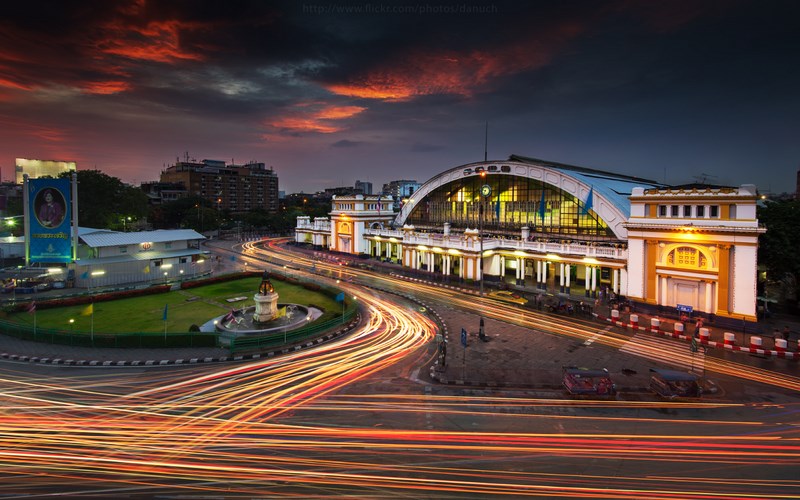
 | ● Photographer: Pornpisanu Poomdee ● Link: pixpros.net ● Ref: flickr.com/photos/demio5100 |
Thank you photo(9) from: Stop Box
|
|
|
|
|
|
|
|
|
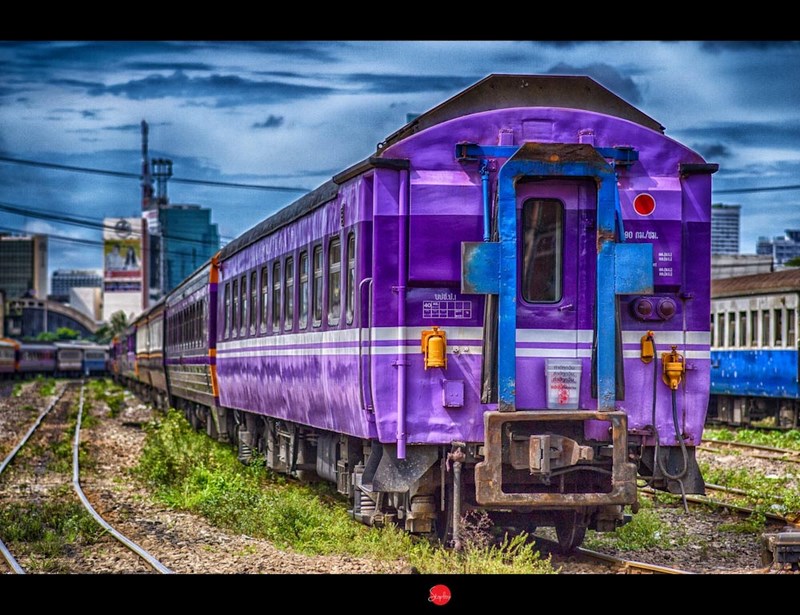
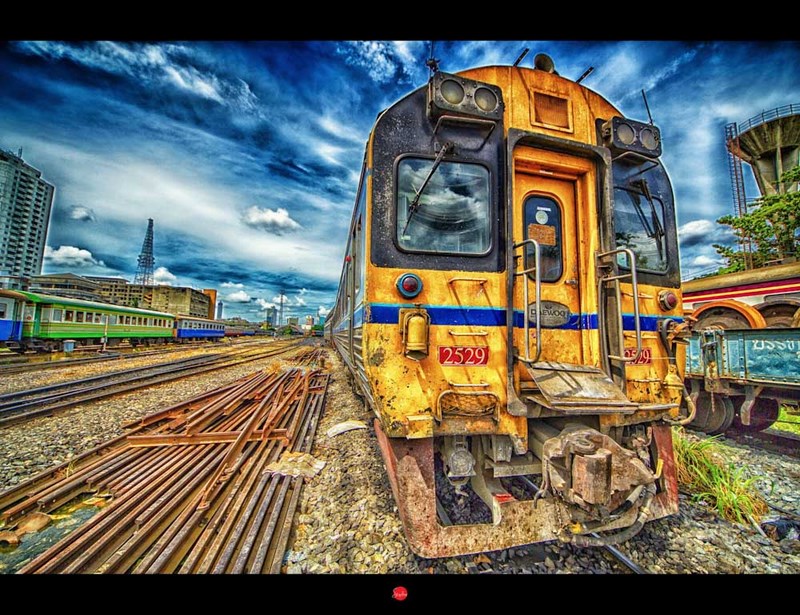
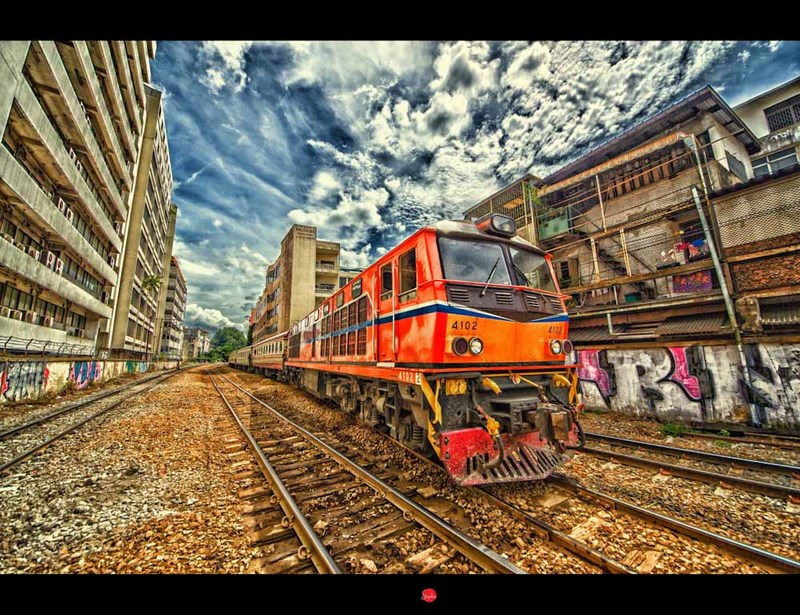
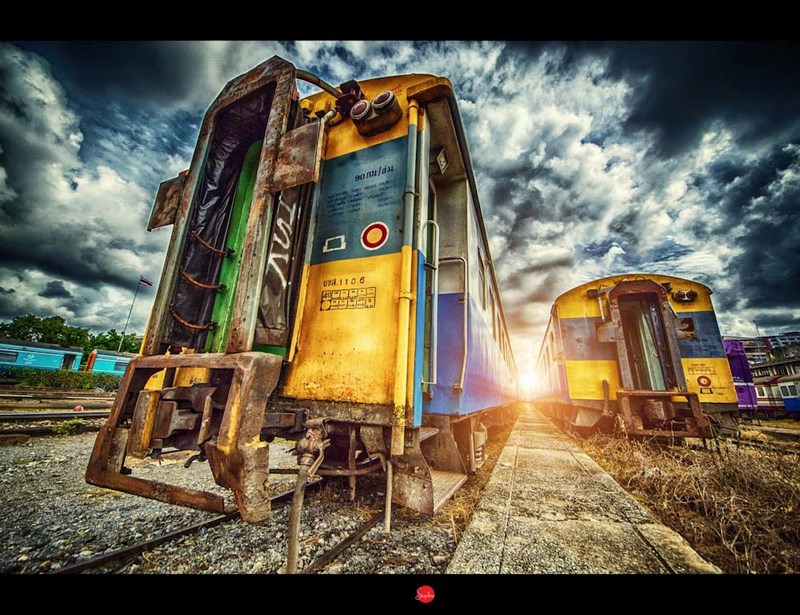
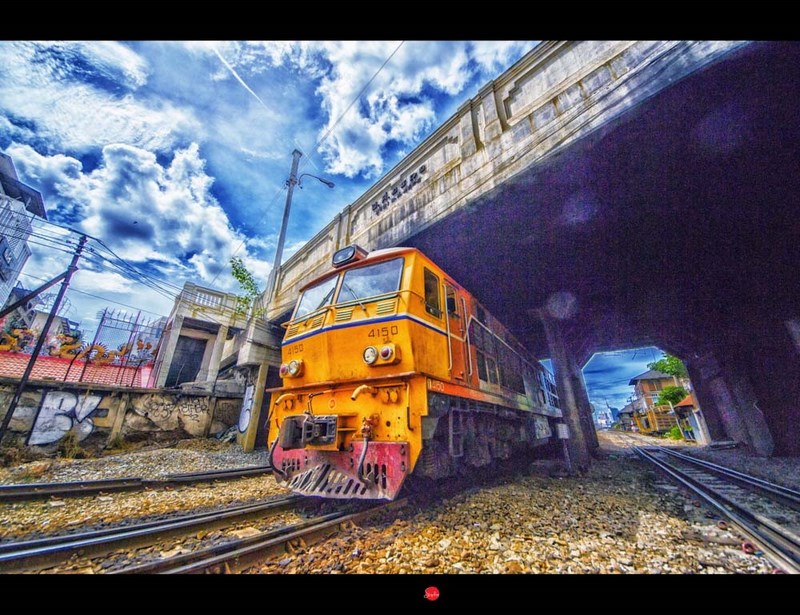
 | ● Photographer: Stop Box Studio ● Link: blog.stopboxstudio.com ● Ref: facebook.com/stopboxstudio |
● Copyright Photography. (800*500)
● View full size images from the photographer.
● View full size images from the photographer.
 Nearby Attractions
| Keyword (Advance) |
 Region
|
 Phra Nakhon(