
 Home
Home North(
 Chiang Mai(


Rating: 3.4/5 (5 votes)
 |
|  Map
Map 
 Have Map
  No Map
Chiang Mai attractions
Attractions in Thailand
Open Days: Monday–Sunday (closed on public holidays)
Opening Hours: 09:00–16:00
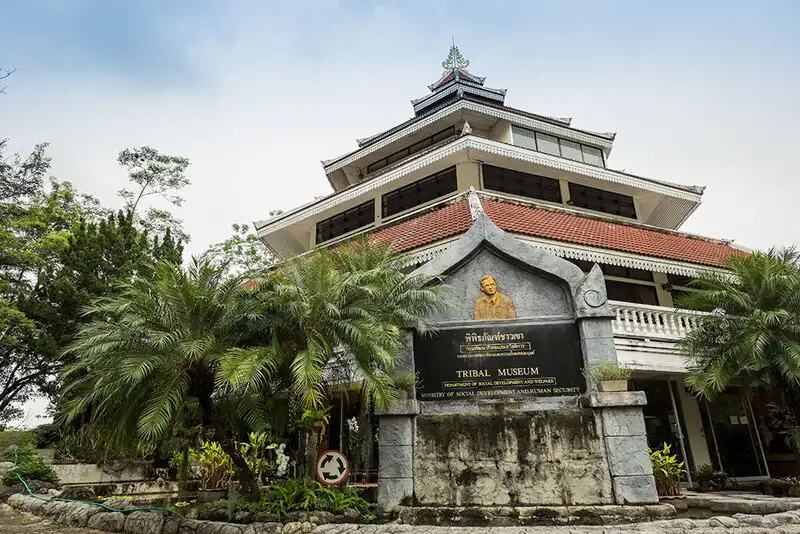
Hill Tribe Museum (Highland People Discovery Museum) in Chiang Mai is a specialized ethnological museum that gently invites visitors to step closer to the lives of people living in the highlands. It is located within Lanna Queen Sirikit Botanic Garden (Rama IX Lanna Park) on Chotana Road in the Chang Phueak area, surrounded by the greenery of gardens and a large pond. This makes a visit here more than just entering an exhibition building — it becomes an experience of spending time in “another world” of Northern Thailand, one that is often seen only through photographs or second-hand stories rather than through direct contact. The museum is under the responsibility of the Highland Research and Development Institute, formerly under the Department of Public Welfare and later the Department of Social Development and Welfare, within the Ministry of Social Development and Human Security. Its mission is to collect and present knowledge about highland peoples so that both local residents and city dwellers can learn about and better understand one another.
The main exhibition at the Hill Tribe Museum presents the cultures and ways of life of nine highland ethnic groups: Karen, Hmong (Meo), Yao, Lisu, Akha, Lahu (often called Musoe in older texts), Lua, Thin, and Khmu. There is also information about the Mlabri, or “Phi Tong Luang” (literally “spirits of the yellow leaves”), a small group with a semi-nomadic forest-based lifestyle. Each group has its own language, attire, belief system, and settlement pattern. Walking through the museum is therefore not merely about looking at beautiful traditional costumes; it is a gradual process of absorbing how each group views the world, how they relate to forests, mountains, and water sources, and how they build rules and social norms for living together in their communities.
Inside the main building, the exhibition areas are arranged systematically by theme and by ethnic group. Visitors can see traditional costumes from each group, full of distinctive patterns, colors, and craft techniques — such as the intricate geometric embroidery of the Hmong, the detailed red-and-black garments of the Yao, or the woven and plain fabrics of the Karen that reflect their strong connection to farming life. Some outfits are used in daily life, while others are reserved for important rituals such as weddings, housewarming ceremonies, or annual festivals. This makes it clear that clothing here is not just about aesthetics; it functions as a social language that signals status, age, gender, role, and the roots of the wearer.
In addition to clothing, the museum showcases everyday tools and utensils, agricultural implements, hunting equipment, musical instruments, basketry, and bamboo containers — all of which record the careful and knowledgeable use of natural resources by highland communities. Standing in front of a back-carrying basket, a wooden plow, a machete, or gongs, drums, and wind instruments from various groups helps visitors understand that survival in these communities does not primarily depend on modern technology but on wisdom and knowledge drawn from nature and passed down through many generations.
Another fascinating part of the museum is its presentation of beliefs and rituals among the different groups, including ancestral worship, spirits that protect the village, rain-invoking ceremonies, healing rites, and everyday taboos related to forests and water sources. These may seem distant from the lives of modern city dwellers, but as you read the descriptions and look at the ritual objects — such as altars, offerings, bamboo cups, or protective charms — it becomes easier to understand that these belief systems function to maintain balance between humans and nature and to provide emotional security for members of the community.
The Hill Tribe Museum also features outdoor displays of “traditional houses” in the form of small-scale highland village compounds in the garden. This allows visitors to see house forms of different groups in a setting that approximates their real environment, from raised wooden houses of Karen communities to bamboo houses with thatched roofs of other groups, and the open hearth space that forms the heart of family gatherings. Walking into a reconstructed house, or observing the roof structure, bamboo walls, and spatial layout, helps tie together what visitors see in the indoor exhibition with how people actually live in their homes on the highlands.
The museum’s role goes far beyond simply storing and displaying objects. It also functions as a key center of ethnographic information about the highlands, serving as a research resource for students, academics, and anyone interested in understanding social and cultural systems from different perspectives. The museum regularly develops its content and activities, organizing academic workshops, talks on highland ways of life, cultural events, and occasionally inviting community representatives from different ethnic groups to share their lived experiences directly with visitors. This opens up space for “culture bearers” to tell their own stories instead of being spoken for solely by others.
At the same time, the Hill Tribe Museum reflects contemporary social change in the highlands, including issues of education, migration, tourism, and the impacts of state policies on natural resource management. Some parts of the exhibition and media highlight that these communities are not frozen in time; they are constantly adapting. Seeing depictions of both the past and the present side by side allows visitors to understand that the term “hill tribe” does not refer to people who are somehow behind or outside modernity, but rather to groups who must find their own way to stand in a rapidly changing world.
For travelers interested in cultural learning, the Hill Tribe Museum is therefore much more than a photo spot. Spending one to two hours here to walk slowly through the displays, read the information, and visit the outdoor model houses offers a comprehensive picture of highland diversity far beyond visiting just a single village. Starting your exploration of highland cultures at the museum, and only then travelling on to real communities in various districts of Chiang Mai or neighboring provinces, will help you travel with more understanding and respect for the people whose lands you are entering.
Getting There is quite convenient, as the museum is located within Rama IX Lanna Park on Chotana Road in the Chang Phueak area. If you are driving from downtown Chiang Mai, take Chotana Road (Highway 107) heading toward Mae Rim. Pass Khuang Sing Intersection and continue a short distance, then look for signs for Rama IX Lanna Park and the Hill Tribe Museum on the left-hand side. There is parking available within the park. Those staying near the old city moat or Nimmanhaemin Road can reach the museum in about 10–15 minutes by car. If you do not have a private vehicle, you can take a red songthaew or local taxi and simply tell the driver you are going to “Hill Tribe Museum, Rama IX Lanna Park, Chotana Road” — most drivers will be familiar with the route, making the round trip from the city relatively easy.
Regarding opening hours, the Hill Tribe Museum is currently open to visitors from Monday to Sunday, 09:00–16:00, and closed on public holidays. Admission is free, and visitors are welcome to enter without paying any fee, although donations to support the museum’s work and the preservation of the collections are appreciated. Before travelling during festival periods or long holidays, it is advisable to check the museum’s latest announcements or call in advance to confirm opening days and hours. For more information or to arrange group visits, you can contact the museum at 0 5321 0872 or 0 5322 1933, which are the current listed telephone numbers for the museum and responsible unit.
After completing a visit to both the indoor exhibitions and the outdoor highland house models, many people leave the Hill Tribe Museum with a different feeling than when they arrived. A term like “hill tribe” that may once have sounded like a broad, generalized label begins to break apart into distinct groups, each with a clear identity, dignity, and long-standing history tied to forests and mountains. The museum thus serves not only as a repository of cultural evidence but also as a small space where visitors can reflect on their own perspectives about difference and learn that cultural diversity is a vital part of the beauty of Thailand, deserving to be viewed with respect and genuine understanding.
| Name | Hill Tribe Museum (Highland People Discovery Museum) |
| Location | Within Rama IX Lanna Park (Lanna King Rama IX Garden), Chotana Road, Chang Phueak Subdistrict, Mueang Chiang Mai District, Chiang Mai 50300. Located north of the city center, near Chiang Mai National Museum and Wat Jed Yod. |
| Main Features | A specialized ethnological museum that systematically collects and displays objects, traditional costumes, tools, musical instruments, model houses, and educational media related to highland peoples in Northern Thailand. The museum comprises multi-level indoor exhibition areas and an outdoor section featuring model highland houses in the park, making it an ideal place to gain an overview of hill tribe cultures. |
| Period / Era | Established around the 1960s as a center for displays and research on highland ethnic groups, later developed into the Highland People Discovery Museum under the Department of Social Development and Welfare. It reflects 20th-century interest in ethnology, development of highland communities, and state engagement with marginal areas. |
| Key Evidence | Traditional clothing of Karen, Hmong, Yao, Lisu, Akha, Lahu, Lua, Thin, Khmu, and Mlabri groups; examples of agricultural and hunting tools; traditional musical instruments; basketry and bamboo containers; model highland houses; and photographic, documentary, and audiovisual materials on everyday life and rituals. |
| Name Origin | Originally known as the “Hill Tribe Museum” in line with its mission to collect and exhibit cultures of highland peoples. Its formal institutional name later became the “Highland People Discovery Museum” to emphasize its role as a comprehensive learning center about highland populations. However, among tourists and the general public, it is still widely referred to simply as the “Hill Tribe Museum.” |
| Travel | From downtown Chiang Mai or the old city moat, take Chotana Road (Highway 107) heading toward Mae Rim. Pass Khuang Sing Intersection and continue a short distance, then look for signs for Rama IX Lanna Park and the entrance to the Hill Tribe Museum on the left-hand side. The distance from the old city moat is about 3–4 km, taking roughly 10–15 minutes by car. If using a red songthaew or taxi, specify “Hill Tribe Museum, Rama IX Lanna Park, Chotana Road” as your destination. Parking is available within the park for those arriving by private car. |
| Current Status | Open to visitors as a specialized ethnological museum under a government agency, functioning both as a cultural tourism destination and as an information center on highland peoples. The museum periodically organizes academic activities and cultural events. |
| Opening Days & Hours | Open Monday–Sunday from 09:00–16:00, closed on public holidays. Visitors are advised to check the museum’s latest announcements before visiting during festival periods or long holidays. |
| Admission Fee | No admission fee is charged. The museum is open free of charge to the public and tourists, although voluntary donations to support operations and conservation of the collections are welcome. |
| Facilities | Parking area within Rama IX Lanna Park, restrooms for visitors, shaded garden areas for relaxation, walking paths around the pond, bilingual exhibition signage (Thai and English), and staff available to provide information for individual and group visits. |
| Nearby Attractions | Chiang Mai National Museum (about 1 km), Wat Jed Yod (approximately 1–2 km), Wat Lok Moli and the old city moat area (about 3–4 km), Nimmanhaemin Road (around 4 km), and Chiang Mai Zoo and Huay Kaew Waterfall (about 5–6 km). |
| Popular Restaurants Nearby | Along Chotana Road and around Khuang Sing Intersection, there are several local eateries, coffee shops, and khao soi restaurants within about 1–2 km of the museum. The old city and Nimmanhaemin areas (roughly 3–4 km away) offer a wide variety of Northern Thai restaurants and cafes, making it easy to combine a museum visit with a meal nearby. |
| Popular Accommodations Nearby | The areas along Chotana Road, Khuang Sing, and Nimmanhaemin Road offer a range of accommodations, from guesthouses and hostels to boutique hotels, generally located 3–5 km from the museum. These locations are convenient for visitors who wish to stay in Chiang Mai city and make a half-day trip to the museum by private car, red songthaew, or taxi. |
| Contact Number | Tel. 0 5321 0872, 0 5322 1933 (Hill Tribe Museum / Highland People Discovery Museum, within Rama IX Lanna Park) |
Frequently Asked Questions (FAQ)
Q: On which days is the Hill Tribe Museum (Highland People Discovery Museum) open?
A: The museum is generally open from Monday to Sunday, 09:00–16:00, and closed on public holidays. However, during festival periods or long holidays, visitors are recommended to check the latest information from the museum or call ahead before visiting.
Q: Is there an admission fee for the Hill Tribe Museum?
A: At present, the Hill Tribe Museum does not charge an admission fee. Entry is free for the general public and tourists, although visitors are welcome to make voluntary donations to support the museum’s operations and upkeep of the collections.
Q: Which ethnic groups are represented in the exhibitions at the Hill Tribe Museum?
A: The museum presents the cultures of several highland ethnic groups, including Karen, Hmong, Yao, Lisu, Akha, Lahu, Lua, Thin, and Khmu, as well as information on the Mlabri (Phi Tong Luang). Their cultures are shown through traditional clothing, tools, musical instruments, model houses, and educational media.
Q: How much time should I set aside to visit the Hill Tribe Museum?
A: If you would like to walk around comfortably, read exhibition panels, and see the outdoor model houses, it is recommended to allow about 1–2 hours. Those with a deeper interest in ethnology or educational purposes may wish to spend more time, depending on their focus.
Q: How can I get to the Hill Tribe Museum if I do not have a private car?
A: You can take a red songthaew from key points in Chiang Mai city such as the old city moat, Tha Phae Gate, or Nimmanhaemin Road, and ask the driver to drop you at the Hill Tribe Museum or Rama IX Lanna Park on Chotana Road. From there, it is just a short walk to the museum. Taxis and ride-hailing services are also convenient options.
Q: Is the Hill Tribe Museum suitable for children and families?
A: Yes. It is a very suitable destination for families who want children to learn about the cultures and ways of life of highland ethnic groups. The museum features both indoor exhibitions and outdoor garden areas, making for an enjoyable visit. Parents should, however, supervise children and make sure they do not touch fragile objects or climb on model structures, in order to preserve the exhibits and ensure safety.
Q: Are visitors allowed to take photos inside the Hill Tribe Museum?
A: In general, visitors may take photographs of the exhibition areas and overall atmosphere, but they should respect any posted signs and follow staff instructions if certain areas or specific objects have photography restrictions. This helps to protect the collections and maintain a good learning environment for everyone.
 Tel: 053210872, 053221933
 Highland People Discovery Museum Map
 Category:
  Group:
  Last Update: 3 MonthAgo
Comment
 Nearby Attractions
| Keyword (Advance) |
 Region
|
 Muang Chiang Mai(